
Posted: 08 Oct 2020 04:08 AM PDT
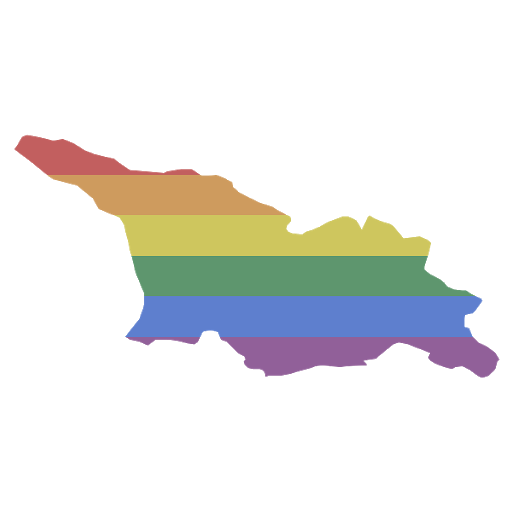
The Fifth Section of the European Court of Human Rights has issued its judgment in the case of Aghdgomelashvili and Japaridze v Georgia. The case concerns discriminatory ill‑treatment by the police on the grounds of sexual orientation and gender identity, and the absence of an effective domestic investigation of this ill-treatment.
The case was lodged over nine years ago, in January 2011, and communicated in 2014 (which I detailed here at the time).
Today’s judgment is issued on International Lesbian Day 2020.
The facts
The applicants, Ms Aghdgomelashvili and Ms Japaridze, were born in 1969 and 1979 respectively and live in Tbilisi.
Ms Aghdgomelashvili is a co-founder of the Inclusive Foundation (IF), a LGBT non-governmental organisation in Georgia.
At the time of the events complained about, Ms Aghdgomelashvili was working at the IF as a part-time programme manager, and was acting head of the organisation, whilst Ms Japaridze was working there as a programme officer in charge of office administration.
On 15 December 2009, someone rang the doorbell at the IF. As soon as the door was opened, up to 17 men and women, all dressed in civilian clothing, rushed into the office. Presenting themselves as police officers, they announced that they were there to conduct a search of the IF office.
The police officers started asking about the IF’s activities and, having realised that they had entered the premises of an LGBT organisation, suddenly became aggressive and started displaying homophobic behaviour.
The police officers started referring to the women present at the IF as “not Georgians”, “sick people” and “perverts who should receive medical treatment”.
Inaccurately assuming that a transgender person present was male, male police officers tried to make friends with her and enquired sarcastically whether the women at IF were interested in men at all.
Some of the police officers threatened to reveal the sexual orientation of the women gathered in the office to the public, and to their parents and relatives. They also threatened to hurt their family members. The officers said that they wished those in the office were men, because in that case they would use physical force on them. One of the police officers ripped a poster, which depicted two men embracing, off the wall and tore it to pieces, adding that he would burn the place down if he had matches.
The police officers then announced that some of the women had to be strip-searched, including Ms Aghdgomelashvili and Ms Japaridze. The strip-searches were conducted in the office toilet by the female police officers. Most of the women were searched in groups of two to three, and some of them were asked to take off their underwear. They stood barefoot on the cold floor, while the police officers who were carrying out the searches made denigrating remarks such as “dykes”.
All the women concerned felt that the strip-searches were carried out to humiliate them, as the police officers carrying out the searches paid little attention to the clothes that they asked the women to remove.
Investigation of the police activity
On 9 January 2010, Ms Aghdgomelashvili and Ms Japaridze filed a complaint with the Chief Public Prosecutor’s Office (“the CPPO”), the Tbilisi city public prosecutor’s office (“the Tbilisi Prosecutor”) and the head of the General Inspectorate of the Ministry of Internal Affairs (“the General Inspectorate of the MIA”), listing the abuses of power committed by the police officers during the search of the IF office and requesting that the authorities look into the matter and respond accordingly.
On 8 February 2010, Ms Aghdgomelashvili and Ms Japaridze enquired with the General Inspectorate of the MIA and the CPPO about their complaint. They explicitly requested that the investigating authorities take into consideration the influence that the women’s perceived sexual orientation and gender identity had had on the police behaviour.
On 14 April 2011, Ms Aghdgomelashvili and Ms Japaridze received a letter from the Tbilisi Prosecutor informing them that an investigation into the case was ongoing under Article 333 of the Criminal Code of Georgia (abuse of official powers). On 28 June 2011, Ms Aghdgomelashvili and Ms Japaridze received a further letter from the Tbilisi Prosecutor, reiterating that a pre-trial investigation into the case was ongoing under Article 333 of the Criminal Code of Georgia. The letter stated “a range of early investigative measures have already been implemented in relation to this criminal case. Other pertinent investigative measures are planned and will be implemented, for the purpose of a thorough investigation”. No other information was provided.
The investigation into the possible abuse of power by the police officers has still not been concluded.
Complaint to the Court
Ms Aghdgomelashvili and Ms Japaridze complained under Article 3 (prohibition of torture) alone and in conjunction with Article 14 (prohibition of discrimination) of the Convention.
Ms Aghdgomelashvili and Ms Japaridze also complained under Article 8 of the Convention and Article 1 of Protocol No. 12 to the Convention, which the Court decided required no separate examination.
Ms Aghdgomelashvili and Ms Japaridze’s principle complaints were that police officers had subjected them to ill-treatment during the search of the IF office on 15 December 2009; that no effective investigation into the police abuse had been conducted; and that those violations of the State’s negative and positive obligations had been conditioned by the relevant domestic authorities’ discriminatory attitudes towards Ms Aghdgomelashvili and Ms Japaridze’s actual and/or perceived sexual orientation and/or their LGBT-related activities.
The Court’s judgment
Alleged inadequacy of the investigation
The Court observed that Ms Aghdgomelashvili and Ms Japaridze lodged a criminal complaint concerning the police abuse but the Government had not shown that a single investigative act was ever undertaken, and no conclusive findings had been produced. This prohibitive delay was itself incompatible with the State’s obligation under Article 3 of the Convention to carry out an effective investigation, especially since the task of identifying the perpetrators of Ms Aghdgomelashvili and Ms Japaridze’s ill‑treatment was far from arduous.
The Court stated that the protraction of the investigation exposed the domestic authorities’ long-standing inability – “which can also be read as unwillingness” (§ 40) – to examine the role played by homophobic and/or transphobic motives in the alleged police abuse.
The Court noted there had been a pressing need to conduct a meaningful inquiry into the possibility that discrimination had been the motivating factor behind the police officers’ conduct, given the well-documented hostility against the LGBT community in the country at the material time.
The Court held, therefore, that the domestic investigation into Ms Aghdgomelashvili and Ms Japaridze’s allegations of ill-treatment with discriminatory intent by the police had been ineffective, since the Government had not demonstrated that a single investigative measure had ever been undertaken in practice.
As such, therefore, there had been a violation of Article 3 (under its procedural limb) taken in conjunction with Article 14 of the Convention.
Alleged ill-treatment
The Court asked two questions: (1) did the impugned acts of the police officers reach the requisite threshold of severity to fall within the ambit of treatment proscribed by Article 3 taken in conjunction with Article 14 of the Convention; and (2) was homophobic and/or transphobic hatred a causal factor in the impugned conduct of the police officers?
The Court stated that it had “no hesitation in answering both questions in the affirmative”, in the light of the police officers’ conduct during the search of the IF’s office on 15 December 2009 (§ 47).
The Court concluded that the “wholly inappropriate conduct of the police officers” during the search of the IF office on 15 December 2009 was motivated by homophobic and/or transphobic hatred and must necessarily have aroused in the applicants feelings of fear, anguish and insecurity which were not compatible with respect for their human dignity (§ 49).
Such conduct by the police reached the threshold of severity within the meaning of Article 3 taken in conjunction with Article 14 of the Convention.
As such, therefore, there had been a violation of Article 3 (under its substantive limb) read together with Article 14 of the Convention.
Short commentary
The Court’s judgment makes an important contribution to its evolving jurisprudence on the interplay between Article 3 and Article 14 of the Convention in respect of acts of hatred (both physical and speech acts) against LGBT people.
In 2015, also in a case against Georgia, the Court held, for the first time, that ill-treatment perpetrated by private individuals against gay men and lesbians taking part in public assemblies – in the form of “violence, which consisted mostly of hate speech and serious threats, but also some sporadic physical abuse” – created “fear, anxiety and insecurity” severe enough to reach the relevant threshold under Article 3 taken in conjunction with Article 14 of the Convention (Identoba and Others v Georgia, § 79). On this basis, the Court found that the failure of national authorities to conduct effective investigations into these episodes, with a view to unmasking “the bias motive” and identifying “those responsible for committing the homophobic violence”, meant that they fell short of their procedural obligation under Article 3 taken in conjunction with Article 14 (Identoba and Others v Georgia, § 80).
The significance of the Court’s previous jurisprudence was that it established that the Convention obliges national authorities to explicitly investigate bias-motived crimes committed on grounds of sexual orientation, because not to do so would mean that “prejudice-motivated crimes would unavoidably be treated on an equal footing with ordinary cases without such overtones, and the resultant indifference would be tantamount to official acquiescence to or even connivance with hate crimes” (Identoba and Others v Georgia, § 77).
The judgment in Aghdgomelashvili and Japaridze adds to this, because it focuses on ill-treatment of LGBT people by police officers rather than private individuals. As such, it reminds national authorities that if state agents (such as police officers) engage in acts of “hatred” against LGBT people then this will amount to a substantive violation of Article 3 in conjunction with Article 14 of the Convention. Moreover, if national authorities fail to adequately investigate their own state agents, in order to uncover their homophobic or transphobic bias, then this will also amount to a procedural violation of Article 3 in conjunction with Article 14 of the Convention.
The Court’s willingness to extend to LGBT people the protection of Article 3 taken in conjunction with Article 14, which began as recently as 2012 (X v Turkey), is of vital importance and significance. Aghdgomelashvili and Japaridze is a further stage on the Court’s journey to securing the human dignity of LGBT people in a way that is consistent with the aims of the Convention.
Relevant publications
In 2012, the European Court of Human Rights held, for the first time, that the discriminatory treatment of an individual on the grounds of his sexual orientation amounted to a violation of art.3, alone and in conjunction with art.14, of the European Convention on Human Rights. This judgment is highly significant given that individuals in Europe have been arguing since 1959 that forms of ill-treatment based on sexual orientation amount to a violation of art.3 of the Convention. In this article we provide a critical analysis of the evolution of the Court’s art.3 jurisprudence in order to assess the ways in which this has developed the protection of sexual minorities in Europe. We identify major gaps in this protection, most notably in respect of asylum, and argue that the Court’s art.3 jurisprudence should be further evolved to address these. Using the example of same-sex marriage, we conclude with a consideration of how sexual minorities might better and more creatively use art.3 in the future to address discrimination against them.
“Sexual Orientation Equality in Central and Eastern Europe: The Role of the European Convention on Human Rights“
For six decades the European Convention on Human Rights has been a beacon of hope for people in Europe suffering discrimination on the grounds of sexual orientation. Since the early 1990s, following the expansion of the Council of Europe to include 22 former communist states, the Convention has become an important means by which to promote sexual orientation equality in Central and Eastern Europe. In this article we provide a systematic examination of how the Convention is being used, in the European Court of Human Rights, to challenge sexual orientation discrimination in Central and Eastern European states. We discuss those issues that have been raised before the Court relating to sexual orientation discrimination in these states and, in turn, assess how the Court has developed Convention jurisprudence to address them. We situate this analysis in the broader context of the contribution of Central and Eastern European states to shaping the approach of the Council of Europe’s statutory organs to sexual orientation equality, which influences the work of the Court. Our overall conclusion is that, notwithstanding certain limitations and problems, there is significant scope for sexual minorities in Central and Eastern European states to use the Convention more systematically to challenge aspects of sexual orientation discrimination.
Ill-treatment of LGBT people in Georgia by police is a violation of ECHR
(c) Paul Johnson – Posted: 08 Oct 2020 04:08 AM PDT
The Fifth Section of the European Court of Human Rights has issued its judgment in the case of Aghdgomelashvili and Japaridze v Georgia. The case concerns discriminatory ill‑treatment by the police on the grounds of sexual orientation and gender identity, and the absence of an effective domestic investigation of this ill-treatment.
The case was lodged over nine years ago, in January 2011, and communicated in 2014 (which I detailed here at the time).
Today’s judgment is issued on International Lesbian Day 2020.
The facts
The applicants, Ms Aghdgomelashvili and Ms Japaridze, were born in 1969 and 1979 respectively and live in Tbilisi.
Ms Aghdgomelashvili is a co-founder of the Inclusive Foundation (IF), a LGBT non-governmental organisation in Georgia.
At the time of the events complained about, Ms Aghdgomelashvili was working at the IF as a part-time programme manager, and was acting head of the organisation, whilst Ms Japaridze was working there as a programme officer in charge of office administration.
On 15 December 2009, someone rang the doorbell at the IF. As soon as the door was opened, up to 17 men and women, all dressed in civilian clothing, rushed into the office. Presenting themselves as police officers, they announced that they were there to conduct a search of the IF office.
The police officers started asking about the IF’s activities and, having realised that they had entered the premises of an LGBT organisation, suddenly became aggressive and started displaying homophobic behaviour.
The police officers started referring to the women present at the IF as “not Georgians”, “sick people” and “perverts who should receive medical treatment”.
Inaccurately assuming that a transgender person present was male, male police officers tried to make friends with her and enquired sarcastically whether the women at IF were interested in men at all.
Some of the police officers threatened to reveal the sexual orientation of the women gathered in the office to the public, and to their parents and relatives. They also threatened to hurt their family members. The officers said that they wished those in the office were men, because in that case they would use physical force on them. One of the police officers ripped a poster, which depicted two men embracing, off the wall and tore it to pieces, adding that he would burn the place down if he had matches.
The police officers then announced that some of the women had to be strip-searched, including Ms Aghdgomelashvili and Ms Japaridze. The strip-searches were conducted in the office toilet by the female police officers. Most of the women were searched in groups of two to three, and some of them were asked to take off their underwear. They stood barefoot on the cold floor, while the police officers who were carrying out the searches made denigrating remarks such as “dykes”.
All the women concerned felt that the strip-searches were carried out to humiliate them, as the police officers carrying out the searches paid little attention to the clothes that they asked the women to remove.
Investigation of the police activity
On 9 January 2010, Ms Aghdgomelashvili and Ms Japaridze filed a complaint with the Chief Public Prosecutor’s Office (“the CPPO”), the Tbilisi city public prosecutor’s office (“the Tbilisi Prosecutor”) and the head of the General Inspectorate of the Ministry of Internal Affairs (“the General Inspectorate of the MIA”), listing the abuses of power committed by the police officers during the search of the IF office and requesting that the authorities look into the matter and respond accordingly.
On 8 February 2010, Ms Aghdgomelashvili and Ms Japaridze enquired with the General Inspectorate of the MIA and the CPPO about their complaint. They explicitly requested that the investigating authorities take into consideration the influence that the women’s perceived sexual orientation and gender identity had had on the police behaviour.
On 14 April 2011, Ms Aghdgomelashvili and Ms Japaridze received a letter from the Tbilisi Prosecutor informing them that an investigation into the case was ongoing under Article 333 of the Criminal Code of Georgia (abuse of official powers). On 28 June 2011, Ms Aghdgomelashvili and Ms Japaridze received a further letter from the Tbilisi Prosecutor, reiterating that a pre-trial investigation into the case was ongoing under Article 333 of the Criminal Code of Georgia. The letter stated “a range of early investigative measures have already been implemented in relation to this criminal case. Other pertinent investigative measures are planned and will be implemented, for the purpose of a thorough investigation”. No other information was provided.
The investigation into the possible abuse of power by the police officers has still not been concluded.
Complaint to the Court
Ms Aghdgomelashvili and Ms Japaridze complained under Article 3 (prohibition of torture) alone and in conjunction with Article 14 (prohibition of discrimination) of the Convention.
Ms Aghdgomelashvili and Ms Japaridze also complained under Article 8 of the Convention and Article 1 of Protocol No. 12 to the Convention, which the Court decided required no separate examination.
Ms Aghdgomelashvili and Ms Japaridze’s principle complaints were that police officers had subjected them to ill-treatment during the search of the IF office on 15 December 2009; that no effective investigation into the police abuse had been conducted; and that those violations of the State’s negative and positive obligations had been conditioned by the relevant domestic authorities’ discriminatory attitudes towards Ms Aghdgomelashvili and Ms Japaridze’s actual and/or perceived sexual orientation and/or their LGBT-related activities.
The Court’s judgment
Alleged inadequacy of the investigation
The Court observed that Ms Aghdgomelashvili and Ms Japaridze lodged a criminal complaint concerning the police abuse but the Government had not shown that a single investigative act was ever undertaken, and no conclusive findings had been produced. This prohibitive delay was itself incompatible with the State’s obligation under Article 3 of the Convention to carry out an effective investigation, especially since the task of identifying the perpetrators of Ms Aghdgomelashvili and Ms Japaridze’s ill‑treatment was far from arduous.
The Court stated that the protraction of the investigation exposed the domestic authorities’ long-standing inability – “which can also be read as unwillingness” (§ 40) – to examine the role played by homophobic and/or transphobic motives in the alleged police abuse.
The Court noted there had been a pressing need to conduct a meaningful inquiry into the possibility that discrimination had been the motivating factor behind the police officers’ conduct, given the well-documented hostility against the LGBT community in the country at the material time.
The Court held, therefore, that the domestic investigation into Ms Aghdgomelashvili and Ms Japaridze’s allegations of ill-treatment with discriminatory intent by the police had been ineffective, since the Government had not demonstrated that a single investigative measure had ever been undertaken in practice.
As such, therefore, there had been a violation of Article 3 (under its procedural limb) taken in conjunction with Article 14 of the Convention.
Alleged ill-treatment
The Court asked two questions: (1) did the impugned acts of the police officers reach the requisite threshold of severity to fall within the ambit of treatment proscribed by Article 3 taken in conjunction with Article 14 of the Convention; and (2) was homophobic and/or transphobic hatred a causal factor in the impugned conduct of the police officers?
The Court stated that it had “no hesitation in answering both questions in the affirmative”, in the light of the police officers’ conduct during the search of the IF’s office on 15 December 2009 (§ 47).
The Court concluded that the “wholly inappropriate conduct of the police officers” during the search of the IF office on 15 December 2009 was motivated by homophobic and/or transphobic hatred and must necessarily have aroused in the applicants feelings of fear, anguish and insecurity which were not compatible with respect for their human dignity (§ 49).
Such conduct by the police reached the threshold of severity within the meaning of Article 3 taken in conjunction with Article 14 of the Convention.
As such, therefore, there had been a violation of Article 3 (under its substantive limb) read together with Article 14 of the Convention.
Short commentary
The Court’s judgment makes an important contribution to its evolving jurisprudence on the interplay between Article 3 and Article 14 of the Convention in respect of acts of hatred (both physical and speech acts) against LGBT people.
In 2015, also in a case against Georgia, the Court held, for the first time, that ill-treatment perpetrated by private individuals against gay men and lesbians taking part in public assemblies – in the form of “violence, which consisted mostly of hate speech and serious threats, but also some sporadic physical abuse” – created “fear, anxiety and insecurity” severe enough to reach the relevant threshold under Article 3 taken in conjunction with Article 14 of the Convention (Identoba and Others v Georgia, § 79). On this basis, the Court found that the failure of national authorities to conduct effective investigations into these episodes, with a view to unmasking “the bias motive” and identifying “those responsible for committing the homophobic violence”, meant that they fell short of their procedural obligation under Article 3 taken in conjunction with Article 14 (Identoba and Others v Georgia, § 80).
The significance of the Court’s previous jurisprudence was that it established that the Convention obliges national authorities to explicitly investigate bias-motived crimes committed on grounds of sexual orientation, because not to do so would mean that “prejudice-motivated crimes would unavoidably be treated on an equal footing with ordinary cases without such overtones, and the resultant indifference would be tantamount to official acquiescence to or even connivance with hate crimes” (Identoba and Others v Georgia, § 77).
The judgment in Aghdgomelashvili and Japaridze adds to this, because it focuses on ill-treatment of LGBT people by police officers rather than private individuals. As such, it reminds national authorities that if state agents (such as police officers) engage in acts of “hatred” against LGBT people then this will amount to a substantive violation of Article 3 in conjunction with Article 14 of the Convention. Moreover, if national authorities fail to adequately investigate their own state agents, in order to uncover their homophobic or transphobic bias, then this will also amount to a procedural violation of Article 3 in conjunction with Article 14 of the Convention.
The Court’s willingness to extend to LGBT people the protection of Article 3 taken in conjunction with Article 14, which began as recently as 2012 (X v Turkey), is of vital importance and significance. Aghdgomelashvili and Japaridze is a further stage on the Court’s journey to securing the human dignity of LGBT people in a way that is consistent with the aims of the Convention.
Relevant publications
In 2012, the European Court of Human Rights held, for the first time, that the discriminatory treatment of an individual on the grounds of his sexual orientation amounted to a violation of art.3, alone and in conjunction with art.14, of the European Convention on Human Rights. This judgment is highly significant given that individuals in Europe have been arguing since 1959 that forms of ill-treatment based on sexual orientation amount to a violation of art.3 of the Convention. In this article we provide a critical analysis of the evolution of the Court’s art.3 jurisprudence in order to assess the ways in which this has developed the protection of sexual minorities in Europe. We identify major gaps in this protection, most notably in respect of asylum, and argue that the Court’s art.3 jurisprudence should be further evolved to address these. Using the example of same-sex marriage, we conclude with a consideration of how sexual minorities might better and more creatively use art.3 in the future to address discrimination against them.
“Sexual Orientation Equality in Central and Eastern Europe: The Role of the European Convention on Human Rights“
For six decades the European Convention on Human Rights has been a beacon of hope for people in Europe suffering discrimination on the grounds of sexual orientation. Since the early 1990s, following the expansion of the Council of Europe to include 22 former communist states, the Convention has become an important means by which to promote sexual orientation equality in Central and Eastern Europe. In this article we provide a systematic examination of how the Convention is being used, in the European Court of Human Rights, to challenge sexual orientation discrimination in Central and Eastern European states. We discuss those issues that have been raised before the Court relating to sexual orientation discrimination in these states and, in turn, assess how the Court has developed Convention jurisprudence to address them. We situate this analysis in the broader context of the contribution of Central and Eastern European states to shaping the approach of the Council of Europe’s statutory organs to sexual orientation equality, which influences the work of the Court. Our overall conclusion is that, notwithstanding certain limitations and problems, there is significant scope for sexual minorities in Central and Eastern European states to use the Convention more systematically to challenge aspects of sexual orientation discrimination.







 International and Comparative SOGIESC Law - Professor Andreas R Ziegler