This is a blog is related to my academic work in the International Academic Forum on SOGIESC Law but meant to serve anyone who wants to contribute to improve the protection of human rights worldwide. It is intended to keep interested readers informed about legal developments relating to sexual orientation, gender expression and identity and sex characteristics (SOGIESC). Hopefully, it will make it easier to find correct legal information about the developments in all regions of the world and, in particular, with regard to international law.
Invitation to submit your views and news on SOGIESC issues
Just as a reminder: Everyone is welcome to submit information or thoughts on SOGIESC issues on this page and the related social media accounts. We welcome submissions of any kind.
he US Department of Education (DOE) announced on Monday that it will rescind agreements previous presidential administrations had with certain schools to interpret Title IX to include protections for transgender and gay students.
The DOE Office for Civil Rights (OCR) issued a press release that said it has terminated agreements with Cape Henlopen School District, Delaware Valley School District, Fife School District, La Mesa-Spring Valley School District, Sacramento City Unified, and Taft College. Agreements were established under the former Biden and Obama administrations that interpreted Title IX to extend to transgender and gay students.
The OCR’s new interpretation removes federal requirements for the schools to continue faculty training on pronoun usage and allow students to use restrooms of their preferred gender identity. Explaining its decision, the OCR stated:
Resolution agreements are used by OCR to require schools to take specific actions to resolve noncompliance with federal civil rights law. Previous Administrations distorted the law contrary to its plain meaning to police discrimination on the basis of “gender identity,” not sex, and imposed resolution agreements with no legal foundation, but rather, based on an ideologically-driven interpretation of Title IX. They illegally saddled school districts with Title IX violations for actions such as “improper use of preferred pronouns” or “asking questions about a student’s preferred gender.”
The change comes after a Kentucky federal court in January ruled that the Biden administration’s interpretation of Title IX was illegal.
Assistant Secretary for Civil Rights Kimberly Richie said one of the purposes of this change is to protect female athletes, stating:
While previous Administrations launched Title IX investigations based on ‘misgendering,’ the Trump Administration is investigating allegations of girls and women being injured by men on their sports team or feeling violated by men in their intimate spaces…
Belarus parliament passed a bill on Thursday criminalizing propaganda of LGBTQA+ relationships, sex change, childfree lifestyle, and pedophilia, with punishment including fines, community service, or arrests. Belarus drafted the bill in February 2024. The bill will now go to President Lukashenko, who is expected to sign it.
Belarus decriminalized the LGBTQA+ movement in 1994, following the collapse of the Soviet Union, but same-sex marriage has not been recognized in the country. In 2024, the Ministry of Culture of the Republic of Belarus classified the LGBTQA+ movement as “non-traditional sexual relationship or behavior,” the same classification that is given to necrophilia, pedophilia, and voyeurism. In September of the same year, 15 LGBTQA+ individuals were arrested by Belarusian authorities, with some being subject to physical and psychological abuse. Others were forced to flee the country.
Belarus is mimicking Russia’s anti-LGBTQ+ policies: Russia passed the bill prohibiting LGBTQ+ propaganda in 2022. European Court of Human Rights found that the 2013 version of the same law was discriminatory. In 2023, Russia banned gender-affirming surgeries and labeled the LGBTQ+ movement as “extremist”. In 2024, Russia relabeled the LGBTQ+ movement as a terrorist organization. The crackdown on the LGBTQA+ community in Russia continued in the form of bar raids, fines for Telegram posts, fines on bookstores for LGBTQA+ books, fines to Apple, criminal proceedings, and more. In 2024, Russia banned propaganda of a childfree lifestyle and outlawed propaganda of abortions a year later.
International organizations and rights groups have also been voicing concerns over LGBTQA+ rights in Kazakhstan, Turkey, Hungary, Georgia, and Bulgaria.
Idaho’s governor signed a bill into law on Tuesday that prohibits transgender individuals from using bathrooms and changing rooms that align with their gender identity.
The bill applies to those who enter such spaces “knowingly and willfully.” First offenses carry a misdemeanor penalty of up to one year in prison. Repeat violations, including those that occurred in other states with similar laws, trigger felony charges with a maximum sentence of five years.
Bill opponents condemned it as part of a continuous attack on transgender individuals. ACLU of Idaho legal director Paul Carlos Sorwick called it part of “an overall campaign” that targets transgender individuals. State Sen. Ron Taylor (D) said some constituents told him they would leave Idaho, fearing their children would be arrested. Planned Parenthood Alliance Advocates of Idaho called the bill one of “the most extreme anti-transgender bathroom ban in the nation.” Nikson Mathews, Idaho Democratic Queer Caucus chair, said Idaho legislators have shifted “from refusing to protect [LGBTQ+ individuals] to actively targeting us.”
This is the latest in anti-transgender legislation out of Idaho. In 2023, state Senate Bill 1100 restricted all bathrooms and changing rooms in public K-12 schools to sex assigned at birth. It also permitted students to recover up to $5,000 for each time a transgender student entered a restroom that did not align with their biological sex. The ACLU reported that the law pushed trans-students into separate, “private” facilities.
In 2025, Idaho House Bill 264 expanded such coverage to bathrooms and sleeping quarters in various public institutions. Namely, these include correctional facilities, domestic violence shelters, juvenile correctional centers, and state universities.
In 2025, the UCLA School of Law’s Williams Institute found no evidence that transgender restroom access increases violent victimization of strangers. A 2013 Williams Institute study found that transgender people face significant risks in gender-segregated facilities. Among respondents, 68 percent reported verbal harassment and nine percent reported physical assault. ACLU of Idaho argued the new law forces transgender individuals to choose between entering unsafe spaces or risking criminal charges.
In 2025, 574 people in Switzerland had their gender entry changed in the civil status register, according to provisional data published on Thursday. Such a change has been possible in the Alpine country since 2022. +Get the most important news from Switzerland in your inbox The Federal Statistical Office said authorities made 312 gender-entry changes from “man” to “woman” in 2025. Conversely, 262 entries were changed from “woman” to “man”. The greatest number of gender-entry changes took place in the canton of Zurich (120), whereas none recorded in the small eastern canton of Appenzell Inner Rhodes. According to the Statistical Office, more than half of the requests (56%) were made by people under the age of 25. Those under the age of 16 require the consent of their legal representative to request such a change. The Swiss register of persons recognises the genders male and female. The entry is made at birth and is mandatory: that is, it must be made even if the gender cannot be …
President Droupadi Murmu on Tuesday assented to the Transgender Persons (Protection of Rights) Amendment Bill, 2026, a measure that Amnesty International says restricts the ability of transgender and gender-diverse individuals to self-identify. Aakar Patel, chair of Amnesty International India’s board, criticized the law, stating: “This regressive law dilutes safeguards and deepens state intrusion into the lives of transgender people.”
The Transgender Persons (Protection of Rights) Amendment Bill, 2026, was passed by voice vote in both houses of Parliament on March 25, completing its legislative approval process. Opposition leaders raised concerns over the expedited process and urged that the bill be referred to a standing committee for broader consultation with stakeholders. Under the amended framework, transgender individuals are required to undergo a series of official verification procedures before their gender identity can be legally recognized by authorities.
The amendment introduces a narrower definition of “transgender,” limiting recognition to specified socio-cultural categories and biological variations. It also removes a separate definition of intersex persons, grouping them within the broader transgender category. Additionally, the law establishes criminal penalties for “compelling,” “forcing” or “alluring” a person or child to present as transgender, with punishments extending up to life imprisonment.
Legal observers note that the amendment departs from principles articulated by the Supreme Court in NALSA v. Union of India of 2014, in which the Court recognized gender identity as a matter of personal autonomy and affirmed the right to self-identification without mandatory medical intervention. The new framework replaces the Court’s recognition of self-identification with a system requiring certification by a medical board and subsequent recognition by a District Magistrate, raising concerns among critics about increased state oversight and potential inconsistencies with constitutional protections and international human rights standards.
The legislation was enacted despite objections from a Supreme Court-appointed expert committee on transgender rights, which had recommended withdrawing the bill and conducting further consultations with affected communities. The committee explicitly asked the government to withdraw the bill and engage in meaningful consultation with transgender communities. However, the government proceeded with the legislation.
Meanwhile, the Rajasthan High Court cautioned that legislative changes cannot dilute constitutional guarantees, particularly those recognized in prior Supreme Court rulings, signaling the potential for future legal challenges to the amendment.
The US Supreme Court ruled Tuesday that Colorado’s ban on conversion therapy for minors violates the First Amendment when applied to counselors who use only talk therapy, a landmark decision with sweeping implications for how states regulate speech by licensed health care professionals. The court voted 8-1 to reverse a lower court ruling that had […]READ MORE ▸
_____________________________________________
POLICY NEWS Supreme Court rules against Colorado’s ban on conversion therapy (c)
Supreme Court rules against Colorado’s ban on conversion therapy
Today, the Supreme Court ruled against Colorado’s law banning licensed mental health care providers from practicing conversion therapy on minors. Conversion therapy refers to treatments provided to a person for the purpose of changing their sexual orientation or gender identity. Williams Institute research estimates that 698,000 LGBT adults have been exposed to conversion therapy, including 350,000 who had been subjected to the treatments as adolescents. Conversion therapy is a discredited and harmful practice. In an amicus brief filed with the Court in Chiles v. Salazar, Williams Institute scholars presented extensive evidence of the impacts of conversion therapy on LGBT people, demonstrating both its ineffectiveness at achieving its main purpose—making a person not LGBT—and the harms reported by those who have experienced the treatments. Major medical associations, including the American Medical Association and the American Psychological Association, oppose the practice and consider it unethical. The Court’s decision did not endorse conversion therapy or address whether the practice is harmful or ineffective. In fact, it gave almost no consideration to the potential for harm or Colorado’s interest in protecting its residents from those harms. Instead, the Court narrowly focused on whether the law infringed upon the free speech rights of the petitioner, Kaley Chiles. Specifically, the Court considered whether the law regulated conduct, which the state has more leeway to restrict, or speech, which receives greater protections under the First Amendment. Eight justices joined the majority opinion that held that Colorado’s law regulates speech, rather than conduct. As a result, the Court held that the law should have been treated with more skepticism in the lower courts. Justice Ketanji Brown Jackson disagreed with the majority and acknowledged the lasting psychological harm associated with conversion therapy. As she explained, “Ultimately, scientific evidence supports the conclusion that the anticipated harms from conversion therapy are twofold. First, conversion therapy stigmatizes the patient, telling them that their gender identity or sexual orientation is something to be fixed, rather than accepted. This rejection can lead to shame and guilt, which in turn can cause long-term emotional distress. Second, conversion therapy sets patients up to fail by giving them an unattainable goal.” The case will now return to the Tenth Circuit Court of Appeals, where it will be reconsidered in light of the Supreme Court’s decision. While bans like Colorado’s may not survive today’s decision, the case does not signal that conversion therapy is safe or effective, for minors or adults. The case also does not foreclose other avenues for survivors to take legal action against providers when they have been harmed or defrauded by the practice. Courts in several states, including California and New Jersey, have indicated that conversion therapy is a fraudulent commercial practice, allowing legal claims against providers under state consumer protection laws. In addition, the case does not require insurers to cover conversion therapy for minors. Several states, including New York and Minnesota, prohibit Medicaid or private insurers from covering conversion therapy. Despite today’s decision, there remain pathways to challenging or curtailing the practice of conversion therapy in the future. While the Court’s decision establishes that states cannot categorically ban therapists from using talk therapy to discourage a person’s identification as LGBT, it doesn’t undermine what the evidence shows. At the Williams Institute, we believe that this evidence will have its day in court.
Today, the Supreme Court ruled against Colorado’s law banning licensed mental health care providers from practicing conversion therapy on minors. Conversion therapy refers to treatments provided to a person for the purpose of changing their sexual orientation or gender identity. Williams Institute research estimates that 698,000 LGBT adults have been exposed to conversion therapy, including 350,000 who had been subjected to the treatments as adolescents. Conversion therapy is a discredited and harmful practice. In an amicus brief filed with the Court in Chiles v. Salazar, Williams Institute scholars presented extensive evidence of the impacts of conversion therapy on LGBT people, demonstrating both its ineffectiveness at achieving its main purpose—making a person not LGBT—and the harms reported by those who have experienced the treatments. Major medical associations, including the American Medical Association and the American Psychological Association, oppose the practice and consider it unethical. The Court’s decision did not endorse conversion therapy or address whether the practice is harmful or ineffective. In fact, it gave almost no consideration to the potential for harm or Colorado’s interest in protecting its residents from those harms. Instead, the Court narrowly focused on whether the law infringed upon the free speech rights of the petitioner, Kaley Chiles. Specifically, the Court considered whether the law regulated conduct, which the state has more leeway to restrict, or speech, which receives greater protections under the First Amendment. Eight justices joined the majority opinion that held that Colorado’s law regulates speech, rather than conduct. As a result, the Court held that the law should have been treated with more skepticism in the lower courts. Justice Ketanji Brown Jackson disagreed with the majority and acknowledged the lasting psychological harm associated with conversion therapy. As she explained, “Ultimately, scientific evidence supports the conclusion that the anticipated harms from conversion therapy are twofold. First, conversion therapy stigmatizes the patient, telling them that their gender identity or sexual orientation is something to be fixed, rather than accepted. This rejection can lead to shame and guilt, which in turn can cause long-term emotional distress. Second, conversion therapy sets patients up to fail by giving them an unattainable goal.” The case will now return to the Tenth Circuit Court of Appeals, where it will be reconsidered in light of the Supreme Court’s decision. While bans like Colorado’s may not survive today’s decision, the case does not signal that conversion therapy is safe or effective, for minors or adults. The case also does not foreclose other avenues for survivors to take legal action against providers when they have been harmed or defrauded by the practice. Courts in several states, including California and New Jersey, have indicated that conversion therapy is a fraudulent commercial practice, allowing legal claims against providers under state consumer protection laws. In addition, the case does not require insurers to cover conversion therapy for minors. Several states, including New York and Minnesota, prohibit Medicaid or private insurers from covering conversion therapy. Despite today’s decision, there remain pathways to challenging or curtailing the practice of conversion therapy in the future. While the Court’s decision establishes that states cannot categorically ban therapists from using talk therapy to discourage a person’s identification as LGBT, it doesn’t undermine what the evidence shows. At the Williams Institute, we believe that this evidence will have its day in court.
Supreme Court strikes down Colorado conversion therapy ban as applied to talk therapy for minor
The US Supreme Court ruled Tuesday that Colorado’s ban on conversion therapy for minors violates the First Amendment when applied to counselors who use only talk therapy, a landmark decision with sweeping implications for how states regulate speech by licensed health care professionals.
The court voted 8-1 to reverse a lower court ruling that had upheld the law, finding that Colorado’s statute discriminates based on viewpoint by allowing counselors to affirm a minor’s sexual orientation or gender identity but prohibiting them from helping clients who wish to change those things.
Justice Neil Gorsuch, writing for the majority, said the law “censors speech based on viewpoint” and cannot survive under the First Amendment simply because the state labels talk therapy as professional conduct.
“The First Amendment is no word game,” Gorsuch wrote. “And the rights it protects cannot be renamed away or their protections nullified by mere labels.”
The case was brought by Kaley Chiles, a licensed mental health counselor who argued that Colorado’s 2019 law prevented her from helping clients reach their own stated goals through conversation alone.
Justice Elena Kagan, joined by Justice Sonia Sotomayor, concurred but wrote separately to note that a viewpoint-neutral law restricting speech in medical settings would present “a different and more difficult question.”
Justice Ketanji Brown Jackson was the lone dissenter, warning the ruling could make speech-based medical treatments “effectively unregulatable” and that the decision “plays with fire.”
Jackson argued the court had long recognized that states may regulate the practice of medicine, including treatments delivered through speech, without triggering heightened constitutional scrutiny.
Twenty-five other states have enacted similar conversion therapy bans. The decision is expected to prompt legal challenges to those laws across the country. However, its practical reach will depend on how lower courts apply the ruling’s distinction between viewpoint-based and viewpoint-neutral restrictions on professional speech.
The five-day summer school on SOGI 2026 in International Law is held at Leiden University; in 2026 from 29 to 31 July in the Hague and continuing on 3 and 4 August in Leiden. The dates for 2026 have been chosen to allow participants to also take part in the WorldPride Human Rights Conference (5 to 7 August in Amsterdam) and other events of WorldPride, EuroPride and Pride Amsterdam (all from 25 July to 8 August).
This year’s edition is directed again by Prof. Andreas R. Ziegler (President of the Swiss Society of International Law as well as a Full Professor at the University of Lausanne who was the leading force behind the publication of the hashtag#OxfordHandbookonLGBTILaw 2026 (hashtag#SOGIESC)) and Elias Tissandier-Nasom, PhD candidate at Leiden Law School. Professor Kees Waaldijk, the founder of this programme, continues to serve as honorary co-ordinator.
Curious about what this year’s edition has to offer?
The IOC’s shift in position on trans women in elite sports is seismic, but new president Kirsty Coventry is reflecting a changed political climate
Over 10 tightly worded pages, the IOC now states that the female category must be protected for fairness and safety reasons, and makes it clear that SRY screening – a sex test using saliva or a cheek-swab – will be used to determine biological sex.
Press Release In a historic judicial victory and an unprecedented step toward securing the right to health and medical care, the Administrative Judiciary Court issued a ruling in favor of the Cairo 52 Legal Research Institute’s client. This ruling is the first of its kind to vindicate transgender individuals in Egypt regarding their fundamental right to health. It annuls the negative decision and the failure of the “Sex Reassignment Committee” at the Egyptian Medical Syndicate to complete the medical procedures for one of the Institute’s transgender clients, legally compelling the committee to complete the process.
Case Background, the Client’s Suffering, and Systematic Obstruction
The details of the case date back to when the plaintiff submitted an official request to the “Sex Reassignment Committee,” the legal body tasked with reviewing gender transition requests in Egypt, headquartered at the Medical Syndicate. The request was supported by precise medical reports and examinations confirming the client’s prolonged psychological and hormonal therapy, and the inevitability of surgical intervention as a necessary treatment to save their life and enable them to live normally. This was especially urgent given the stark contradiction between their physical appearance and the identity recorded in official documents, which had completely paralyzed their life.
Despite fulfilling all medical requirements and the unanimous consensus of the treating physicians on the necessity of surgical intervention, the request remained locked in government drawers for years without justification. This procrastination occurred alongside the Sex Reassignment Committee’s general suspension of receiving and reviewing requests from this community, which constitutes numerous grave constitutional violations, undermining the right to health, the right to equality, and the principle of non-discrimination. This intentional delay and freezing prompted the Institute to resort to the Administrative Judiciary Court to stop this blatant violation and demand the realization of the client’s constitutional right to health.
Legal Defenses Presented by the Cairo 52 Legal Team
During the litigation process, the Cairo 52 Legal Team submitted legal memoranda based on a set of fundamental defenses, most notably:
State of Medical Necessity and the Right to Health: The legal team emphasized that the client’s condition is a real, medically recognized organic and psychological condition requiring treatment. Surgical intervention in this context constitutes a “state of medical necessity that permits prohibitions” to save the patient, grounded in the Constitution’s guarantee of healthcare as a fundamental pillar of life. Plea of Unconstitutionality Due to Suspected Discrimination and Deprivation of Transgender Individuals from Treatment: The team argued that denying or obstructing treatment specifically for transgender individuals constitutes clear discrimination and a violation of the principle of equality guaranteed by the Constitution. Depriving this group of their medical rights is an explicit violation of the constitutional right to health, which the state must guarantee to all citizens without discrimination. The Negative Administrative Decision: The team stressed that the refusal of the concerned authorities to complete the examinations and issue the necessary permits constitutes an unlawful negative administrative decision, stripping the client of their right to life and rendering them “morally, socially, and legally dead.” Plea of Unconstitutionality Regarding the Committee’s Composition (Flaw in Technical Competence): The legal team argued the invalidity of the “Sex Reassignment Committee’s” composition for violating the Constitution by including a religious member (a representative of Al-Azhar) in what is supposed to be a purely medical and technical committee. The defense asserted that religious jurisprudence is not a reference for evaluating a health condition, and that evaluation must be exclusively limited to scientific experts. Reasoning and Verdict of the Court In its reasoning, the court did not uphold the defense’s plea regarding the unconstitutionality of the committee’s composition and the exclusion of the religious member. However, it vindicated the client in the substantive part of the lawsuit regarding the administration’s failure, concluding the following:
Condemning the Medical Syndicate’s Inaction: The court confirmed that the Egyptian Medical Syndicate failed to provide evidence of sending the client’s medical reports to Al-Azhar. The court considered this conduct an unjustified refusal to complete the prescribed procedures for examining the client’s case. Clearing Al-Azhar of Responsibility: The court established that the Islamic Research Academy did not fail in its role; rather, it requested the completion of medical reports for several cases, including the client’s, but the Medical Syndicate failed to send them, thereby obstructing Al-Azhar’s role in providing a religious opinion. The Verdict: Consequently, the court ruled to accept the lawsuit in form, and in substance, to “annul the contested negative decision” (which is the Medical Syndicate’s refusal to complete the procedures), with all its ensuing legal consequences. This legally compels the Sex Reassignment Committee to complete the examinations and present its medical opinion to Al-Azhar to seek a religious opinion as a procedural condition before issuing the final approval. The Cairo 52 Legal Research Institute affirms that this ruling—despite our continuous reservations regarding the involvement of non-medical entities in health self-determination and the deprivation of individuals’ medical decision-making autonomy—represents a significant legal victory and an effective tool to advance the files of transgender individuals currently stuck in the drawers of government committees. The Institute calls on the Ministry of Health and the Medical Syndicate to promptly execute the ruling and to respect the constitutional right to health and bodily integrity without delay.
To know more about the situation of accessing healthcare for trans people in Egypt, read our study: Understanding the Needs and Challenges of Transgender People Accessing Gender-Affirming Healthcare in Egypt: A Mixed Methods Study.


 Today, the Supreme Court ruled against Colorado’s law banning licensed mental health care providers from practicing conversion therapy on minors. Conversion therapy refers to treatments provided to a person for the purpose of changing their sexual orientation or gender identity. Williams Institute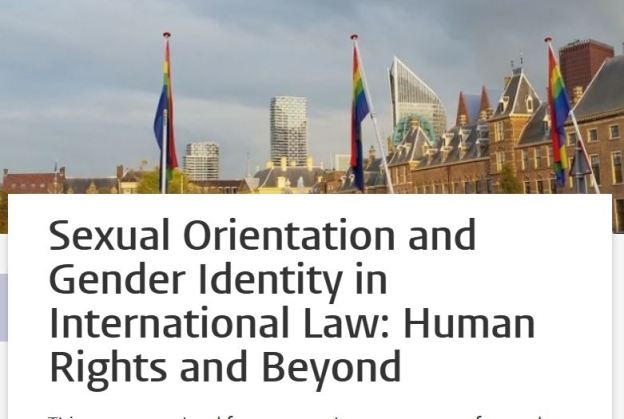
 International and Comparative SOGIESC Law - Professor Andreas R Ziegler