Tag Archives: transgender

Repost: Sarthak Gupta, State Bodies (on India: Transgender Persons (Protection of Rights) Amendment Act, 2026)

On 30 March 2026, the Transgender Persons (Protection of Rights) Amendment Act, 2026 (“New Trans Rights Act”), received Presidential Assent, completing a legislative process that took less than three weeks from introduction to law. The Bill had cleared both Houses of Parliament amid Opposition walkouts and protests, without pre-legislative public consultation, without referral to a Parliamentary Standing Committee, and without engagement with the National Council for Transgender Persons. What emerged was a law authored without the people most governed by it.

TState Bodies he New Trans Rights Act reorganises the terms on which transgender lives become intelligible to law. Its animating logic, that trans identity is an “acquirable characteristic” the state must verify rather than an irreducible human experience it must recognise, directly confronts the constitutional architecture erected by the Indian Supreme Court in previous case law. The Act re-medicalises identity, re-bureaucratises recognition, and risks criminalising both community kinship (guru/chela) structures and legitimate gender-affirming care.

Who is a “transgender person”?

Under the existing Transgender Persons (Protection of Rights) Act, 2019 (“2019 Act”), a transgender person was defined as “a person whose gender does not match with the gender assigned to that person at birth”, broad, inclusive of trans men, trans women, genderqueer persons, and persons with intersex variations, and expressly independent of surgical or hormonal intervention. Section 4(2) codified the right to self-perceived gender identity. The New Trans Rights Act removes both.

The new definition of ‘transgender person’ proceeds in two limbs. The first covers only persons with named socio-cultural identities (kinner, hijra, aravani, jogta, eunuch), persons with specified intersex variations, and persons forcibly compelled to assume a transgender identity through mutilation or surgical, chemical, or hormonal procedures. The second limb is a proviso that excludes persons with “self-perceived sexual identities.” This is a form of indirect discrimination within the trans community, wherein the hierarchy of recognisability is artificially created by privileging identities that are either culturally codified or medically verifiable over those that are self-perceived.

Trans men, trans women, non-binary persons, and genderqueer individuals, none of whom necessarily belong to the named socio-cultural communities and none of whom necessarily present intersex variations, are excised from the statute entirely. They constitute a substantial portion of persons who have historically sought certificates of identity under the 2019 Act and who face documented discrimination in education, employment, and healthcare.

This narrowing stands in tension with decades of scholarship demonstrating that gender-variant identities in South Asia are neither fixed nor reducible to discrete socio-cultural categories. Hijra identities themselves are internally diverse, religiously syncretic, and historically fluid (see Reddy and Loh), while the imposition of rigid classificatory frameworks often reflects colonial and postcolonial state logics rather than lived realities (see Dutta & Roy). It also stands in direct contradiction to NALSA’s foundational holding that “transgender” is an umbrella term embracing a wide range of identities and experiences, and that any attempt to confine it to specific socio-cultural communities imports precisely the classificatory errors the Court sought to dismantle (see NALSA, para 19; para 81 (Sikri J.)).

The State’s justification for the narrowing rests on three grounds: (a) that the prior definition was “vague,” (b) that it made it “impossible to identify the genuine oppressed persons,” and (c) that it was incompatible with several existing statutory enactments. Each ground fails on examination. The vagueness argument misunderstands gender identity. Identity is not vague; it is complex, because it is internally experienced rather than externally observable. NALSA engaged precisely this complexity and concluded that self-determination, not medical verification, was the constitutionally appropriate response (see NALSA, para 19). To call self-determination a source of vagueness is to restate the biomedical premise the Court rejected. The impossibility argument is contradicted by the data,  i.e., over 32,000 certificates had been issued as of March 2026 with 5,566 rejected applications, demonstrating a functioning, not unworkable, system. The incompatibility argument is the most constitutionally dangerous, for it recasts rights-bearing identity as administratively suspect. The Statement of Objects and Reasons asserts that a statute conferring rights cannot define its beneficiary class by reference to an “acquirable” characteristic. Applied consistently, this logic would undermine every protective statute defining its beneficiaries by reference to religion, belief, or disability. What is presented as a technical objection is, in substance, an argument against rights themselves.

The inclusion of persons “forcibly compelled” to assume a transgender identity as a definitional category of transgender persons is analytically incoherent. Such persons are victims of abduction and bodily harm, not transgender persons in any meaningful sense. Their inclusion conflates identity with victimisation and stigmatises the entire category by associating transgender identity with coercion and violence. It also produces a legal absurdity. A person forcibly castrated and compelled to present as a hijra, even though hijra identity is constituted not by bodily presentation but by community membership, kinship, and social belonging, qualifies under the new definition, while a trans man who has lived his gender identity for decades, sought no surgery, and belongs to no named socio-cultural community, does not. This conflation echoes anthropological misreadings that collapsed hijra identity into practices of emasculation (see Hossain), ignoring its social, ritual, and kinship dimensions (see Nanda).

The Medical Board as Gatekeeper

The New Trans Rights Act inserts a new provision, i.e., Section 2(aa), which defines an “authority” as a medical board headed by a Chief Medical Officer or Deputy Chief Medical Officer. By amending Section 6 of the 2019 Act, the District Magistrate is now required to examine the recommendation of this authority before issuing a certificate of identity. The District Magistrate may also take the assistance of “other medical experts.” The 2020 Trans Rights Rules, enacted under the 2019 Act, had expressly clarified that no medical or physical examination would be required as a precondition to the issuance of a certificate.  The New Trans Rights Act reverses this entirely.

The change may appear procedural. It is not. In NALSA, the Court held that self-determination of gender identity falls within personal liberty under Article 21 of the Constitution, and directed legal recognition without conditioning it on medical procedures. (see NALSA, para 69 and para 74). This holding was subsequently affirmed in Navtej Singh Johar, where the Court grounded the right to identity in “individual autonomy and liberty, equality for all sans discrimination of any kind, recognition of identity with dignity” as the “cardinal constitutional ideals” (see Navtej, para 3, Majority Opinion). Where the 2019 Act treated self-declaration as the trigger for administrative processing, the New Trans Rights Act places a medical board between the person and the state. Recognition is now conditional on institutional validation. A right has become a permission.

The medical board model also carries a structural constitutional problem visible in another domain. Persons with disabilities in India have long experienced the perverse consequences of medical boards applying inconsistent standards, the same individual receiving different disability percentages from different boards, with real consequences for education and employment. The analogy is instructive: where identity or entitlement is mediated through expert certification, arbitrariness becomes structural rather than exceptional. As Rahul Bajaj notes, in Vikash Kumar v. UPSC, the Supreme Court directly addressed the misuse justification for restricting disability facilities. Its response was unequivocal: the mere possibility of misuse cannot justify denying a benefit to an entire class. The same logic compelled this Court in Navtej to hold that the existence of Section 377, justified on the same speculative misuse rationale, was unconstitutional (see Navtej, para 95). The New Trans Rights Act’s implicit justification, preventing fraudulent identity claims, founders on exactly this reasoning. The Statement of Objects and Reasons identifies no specific, documented pattern of fraud under the 2019 Act. Speculative misuse cannot justify systemic exclusion.

There is a deeper epistemological problem. The new definition retains socio-cultural identities, hijra, kinner, aravani, jogta, alongside intersex variations, but a medical board can assess only the latter. Whether a person belongs to the hijra socio-cultural community requires engagement with community history, lived experience, and social belonging, questions for which medical expertise is the wrong instrument. NALSA itself acknowledged this when it observed that hijras “belong to a distinct socio-religious and cultural group” whose identity is determined not by biology but by social belonging (see NALSA, para 70).

The Surveillance of Trans Bodies

The New Trans Rights Act also amends the mandatory hospital reporting requirement in Section 7 in two ways. The word “may” is replaced with “shall,” making it mandatory for persons who undergo gender-affirming surgery to apply for a revised certificate. A new sub-section 1A requires medical institutions to furnish details of such persons to the District Magistrate and the authority.

The mandatory disclosure requirement raises serious concerns about the right to privacy. State interference with privacy must be backed by law, serve a legitimate state aim, and be proportionate. The first condition is met. The other two are not. The Statement of Objects and Reasons identifies no legitimate aim served by requiring hospitals to report gender-affirming surgeries to district authorities. The Amendment’s overall orientation, toward verification and control of who qualifies as transgender, suggests the aim is surveillance rather than welfare. The Yogyakarta Principles, which NALSA expressly adopted as a framework, specifically prohibit compelling any person to “undergo medical procedures, including surgery, sterilization or hormonal therapy” as a condition of legal recognition, and equally prohibit state surveillance of gender identity as a condition of protection (see NALSA, para 22; Yogyakarta Principle 18) Mass surveillance of a constitutionally protected characteristic cannot constitute a legitimate state aim under Puttaswamy. India’s data protection law further requires consent for processing personal health data, a requirement the mandatory reporting provision bypasses without justification.

The practical consequence is a chilling effect on access to care. Trans persons who would otherwise seek legitimate medical transition may avoid hospitals to evade state reporting, being driven toward unregulated and unsafe alternatives. In Navtej, the Court expressly recognised that the existence of provisions targeting LGBT persons, regardless of enforcement, produces a chilling effect that “builds insecurity and vulnerability into the daily lives” of those communities. The surveillance apparatus, ostensibly protective, may function to harm.

The New Offences and Their Paradoxes

The substituted Section 18 adds serious new offences: kidnapping combined with grievous hurt to force assumption of transgender identity attracts ten years to life for adults and mandatory life imprisonment for children; forcing a person to present as transgender and engage in begging or servitude attracts five to ten years for adults and ten to fourteen years for children. The State justification, addressing documented abduction and forced bodily modification, is not without foundation or any data. But the provisions as drafted are simultaneously over-inclusive and under-inclusive.

The gharana system, the structured kinship network of guru and chela that organises community life for hijra, kinner, and related groups, has historically been the primary social safety net for gender non-conforming persons abandoned by natal families (see Goel). The new offences in clauses 18(e) to 18(h) are structured around “allurement,” “inducement,” “deception,” and “compulsion”, undefined and elastic terms. Gharanas, the only home many trans persons have known, could be mischaracterised as sites of allurement or inducement, exposing community leaders to prosecution for acts of bona fide care. Police in India have historically harassed hijra communities under vagrancy provisions. New legislative categories carrying life imprisonment will not be applied with greater discernment. As Gopi Shankar Madurai observes, the new clauses target external perpetrators while leaving internal exploitative hierarchies untouched, effectively legitimising the exploitative dimensions of established community structures while criminalising the protective ones.

The inclusion of “surgical, chemical, or hormonal procedures” within “grievous hurt” risks criminalising legitimate gender-affirming care. Medical professionals assisting voluntary transitions may fear prosecution under provisions not clearly confined to coercive contexts. The concern extends further: hormonal procedures prescribed for polycystic ovary syndrome, menopause, or cancer fall within the literal language of the provision. The phrase “outwardly present a transgender identity” compounds this by treating transgender identity as a performance, something one can be compelled to do rather than something one is. NALSA held that “values of privacy, self-identity, autonomy and personal integrity are fundamental rights guaranteed to members of the transgender community under Article 19(1)(a)” (see NALSA, para 66). Reducing identity to an “outward presentation” enshrines in criminal law the stereotype that trans identity is a choice of appearance, precisely the stereotype that has sustained centuries of stigma and violence against trans communities.

Finally, the asymmetry in penalties exposes the Amendment’s true priorities. The existing offences,  physical abuse, sexual abuse, and forced displacement of transgender persons retain a two-year maximum sentence, a sentence community advocates have challenged as grossly inadequate. The Amendment creates life imprisonment as maximum punishment for forcing a child to present as transgender (Section 18(e)(f), but leaves at two years the maximum for sexually or physically abusing a transgender person (Section 18(d). The legislation is more concerned with managing the boundaries of transgender identity than with protecting transgender lives.

Conclusion

The Trans Rights Act arrives at a moment when India’s constitutional jurisprudence on gender identity, rooted in NALSA and awaiting elaboration in the pending challenge to Section 7 of the 2019 Act, was poised to move forward. Instead, it re-medicalises identity, re-bureaucratises recognition, and narrows protection at the precise moment the community needed welfare, upliftment, and expansion of rights. The state’s interest in precise definitions and administrative clarity is legitimate, but the Trans Rights Act pursues it at the direct expense of protection, treating identity, that most intimate of human attributes, as a claim requiring verification rather than a person requiring recognition. The Constitution still stands. So does the directive in NALSA. Whether courts will act on that directive remains to be seen, but the legislative record is now clear, and it is not a flattering one.

Disclaimer: The post was submitted before the bill was passed.

The post State Bodies appeared first on Verfassungsblog.

Idaho criminalizes transgender bathroom use

Idaho’s governor signed a bill into law on Tuesday that prohibits transgender individuals from using bathrooms and changing rooms that align with their gender identity.

The bill applies to those who enter such spaces “knowingly and willfully.” First offenses carry a misdemeanor penalty of up to one year in prison. Repeat violations, including those that occurred in other states with similar laws, trigger felony charges with a maximum sentence of five years.

Bill opponents condemned it as part of a continuous attack on transgender individuals. ACLU of Idaho legal director Paul Carlos Sorwick called it part of “an overall campaign” that targets transgender individuals. State Sen. Ron Taylor (D) said some constituents told him they would leave Idaho, fearing their children would be arrested. Planned Parenthood Alliance Advocates of Idaho called the bill one of “the most extreme anti-transgender bathroom ban in the nation.” Nikson Mathews, Idaho Democratic Queer Caucus chair, said Idaho legislators have shifted “from refusing to protect [LGBTQ+ individuals] to actively targeting us.”

This is the latest in anti-transgender legislation out of Idaho. In 2023, state Senate Bill 1100 restricted all bathrooms and changing rooms in public K-12 schools to sex assigned at birth. It also permitted students to recover up to $5,000 for each time a transgender student entered a restroom that did not align with their biological sex. The ACLU reported that the law pushed trans-students into separate, “private” facilities.

In 2025, Idaho House Bill 264 expanded such coverage to bathrooms and sleeping quarters in various public institutions. Namely, these include correctional facilities, domestic violence shelters, juvenile correctional centers, and state universities.

In 2025, the UCLA School of Law’s Williams Institute found no evidence that transgender restroom access increases violent victimization of strangers. A 2013 Williams Institute study found that transgender people face significant risks in gender-segregated facilities. Among respondents, 68 percent reported verbal harassment and nine percent reported physical assault. ACLU of Idaho argued the new law forces transgender individuals to choose between entering unsafe spaces or risking criminal charges.

The post Idaho criminalizes transgender bathroom use appeared first on JURIST – News.

India passes transgender rights amendment, prompting concerns over compliance with Supreme Court precedent

President Droupadi Murmu on Tuesday assented to the Transgender Persons (Protection of Rights) Amendment Bill, 2026, a measure that Amnesty International says restricts the ability of transgender and gender-diverse individuals to self-identify. Aakar Patel, chair of Amnesty International India’s board, criticized the law, stating: “This regressive law dilutes safeguards and deepens state intrusion into the lives of transgender people.”

The Transgender Persons (Protection of Rights) Amendment Bill, 2026, was passed by voice vote in both houses of Parliament on March 25, completing its legislative approval process. Opposition leaders raised concerns over the expedited process and urged that the bill be referred to a standing committee for broader consultation with stakeholders. Under the amended framework, transgender individuals are required to undergo a series of official verification procedures before their gender identity can be legally recognized by authorities. 

The amendment introduces a narrower definition of “transgender,” limiting recognition to specified socio-cultural categories and biological variations. It also removes a separate definition of intersex persons, grouping them within the broader transgender category. Additionally, the law establishes criminal penalties for “compelling,” “forcing” or “alluring” a person or child to present as transgender, with punishments extending up to life imprisonment.

Legal observers note that the amendment departs from principles articulated by the Supreme Court in NALSA v. Union of India of 2014, in which the Court recognized gender identity as a matter of personal autonomy and affirmed the right to self-identification without mandatory medical intervention.  The new framework replaces the Court’s recognition of self-identification with a system requiring certification by a medical board and subsequent recognition by a District Magistrate, raising concerns among critics about increased state oversight and potential inconsistencies with constitutional protections and international human rights standards.

The legislation was enacted despite objections from a Supreme Court-appointed expert committee on transgender rights, which had recommended withdrawing the bill and conducting further consultations with affected communities. The committee explicitly asked the government to withdraw the bill and engage in meaningful consultation with transgender communities. However, the government proceeded with the legislation. 

Meanwhile, the Rajasthan High Court cautioned that legislative changes cannot dilute constitutional guarantees, particularly those recognized in prior Supreme Court rulings, signaling the potential for future legal challenges to the amendment.

The post India passes transgender rights amendment, prompting concerns over compliance with Supreme Court precedent appeared first on JURIST – News.

UN experts call on the UK to ensure equal rights for women, girls, and transgender individuals

UN experts call on the UK to ensure equal rights for women, girls, and transgender individuals

A group of UN experts on Friday called for the United Kingdom to guarantee that the current reviews of statutory guidance under the Equality Act 2010 align with international human rights standards and provide the equal enjoyment of rights for women and girls, including the transgender community.

The group of experts expressed appreciation of the government’s assurances that the legislative review would be conducted in a non-discriminatory manner, commenting, “The present review represents an important opportunity for the United Kingdom to reaffirm its long-standing commitment to equality, dignity and the rule of law, and to ensure that the human rights of all are upheld in practice.”

This new development comes amid a changing legal horizon characterized by years of intense litigation, a polarized social climate, and conflicting guidance from equality organizations regarding the intersection of gender identity and biological sex. In April 2025, the UK Supreme Court ruled in For Women Scotland v The Scottish Ministers that references to “sex,” “man,” and “woman” in the Equality Act 2010 refer to an individual’s biological sex. This means that the legal sex of transgender individuals, which is determined by their possession of a Gender Recognition Certificate (GRC), is no longer considered their “sex” for the purposes of the Equality Act, rendering the marginalized community more vulnerable to exclusion from single-sex services and affecting their ability to challenge sex-based discrimination.

Following the 2025 ruling, organizations such as the Equality and Human Rights Commission (EHRC), the official regulator of the Equality Act 2010, began updating its guidelines to clarify that service providers were legally entitled to restrict access to single-sex spaces such as bathrooms based on biological sex. The interim guidance provided by the EHRC was challenged by the Good Law Project, which stated that it was legally flawed, a harmful interpretation of the Supreme Court ruling, and produced only nine days after the publication of the Supreme Court’s judgment, with minimal consultation on the issue sought.

The High Court dismissed the case on February 13, 2026, as it found that the Supreme Court’s ruling was properly applied and that the Good Law Project lacked the proper standing to bring the case, since it did not suffer direct harm as a result of the decision. In light of this, the group of UN experts pushed for the United Kingdom to ensure that the review process was inclusive and complied with international human rights frameworks such as Article 2(2) of the International Covenant on Economic, Social and Cultural Rights (ICESCR), which prohibits discrimination based on gender identity.

The post UN experts call on the UK to ensure equal rights for women, girls, and transgender individuals appeared first on JURIST – News.

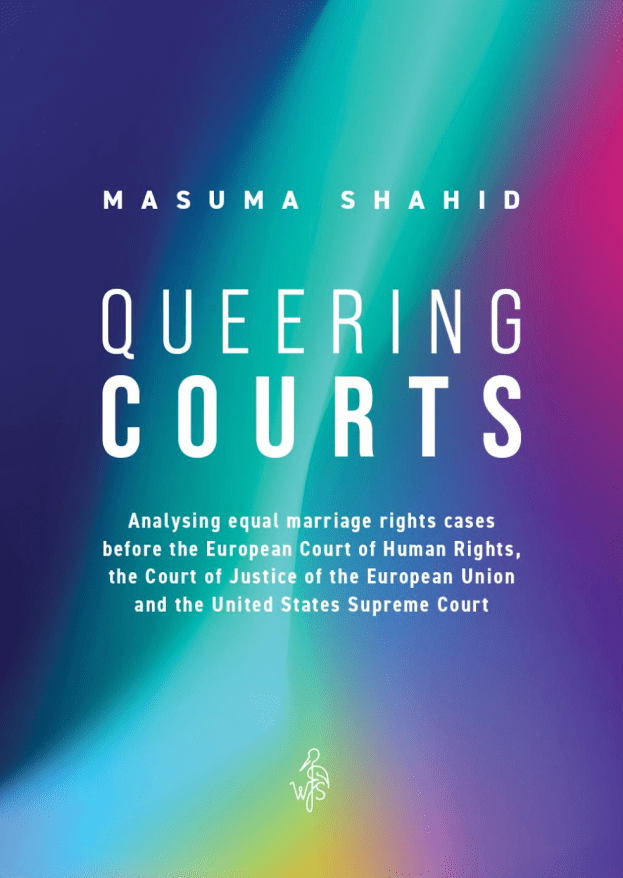
New SOGIESC publication: ‘Queering Courts’

New SOGIESC publication: ‘Queering Courts’

 The monograph ‘Queering Courts’ is now also available outside of the Low Countries through Amazon (https://www.amazon.com/Queering-Courts-Analysing-marriage-European/dp/B0GK94TXKJ/ref=sr_1_1.

New SOGIESC publication: ‘Queering Courts’

With the use of queer legal theory, ‘Queering Courts’ analyses how courts such as the European Court of Human Rights, the Court of Justice of the European Union, and the United States Supreme Court interpret and apply the notions of ‘sex’, ‘gender’, ‘sexuality’ and ‘sexual orientation’ in their equal marriage rights case law.

The research reveals that courts interpret the notions as binary constructs with the dominance in the hierarchies commonly anchored on certain heteronormative beliefs. This results in the discrimination, non-inclusivity and ‘othering’ of all that do not fall within the dominant part of the hierarchies, making them thus ineligible to enjoy ‘full’ or ‘equal’ marriage rights. While the decision-making of the courts is influenced by factors such as history, culture, religion, politics, etc., judicial self-restraint is oftentimes exercised for credibility, legitimacy, and authority reasons. The research suggests that courts should ‘queer’ their approaches for more inclusive, diverse, and universal adjudication. Until then, the enjoyment of full equal marriage rights is only for the heterosexually privileged.

– Dr Alina Tryfonidou: “Queering Courts is an exceptional and timely contribution to the literature on the equal marriage rights of same-sex couples. Dr. Shahid offers a masterful and crystal-clear analysis of the jurisprudence of three major courts – the ECtHR, the CJEU and the US Supreme Court – engaging rigorously with their case law while illuminating, through the lens of queer legal theory, how these courts understand and deploy the concepts of sex, gender, sexuality and sexual orientation. Written in crisp, accessible language and grounded in original scholarly insight, this book provides a refreshing, innovative and genuinely enlightening perspective. A delight to read and a significant intervention in the field.”

45 UN experts renew call for gender centered approach to reach human rights goals

45 UN experts renew call for gender centered approach to reach human rights goals

45 UN human rights experts reaffirmed on Thursday that gender must remain central to the fight for equality and human rights worldwide.

The statement was signed by UN special procedure mandate holders from various countries, jointly emphasizing that “binary conceptions of sex” result in an incomplete picture of the “social and cultural factors that shape identity and lived experience.” Thus, the experts urge that “[g]ender-based discrimination must be addressed alongside sex-based discrimination.”

According to the experts, employing a gender-based perspective advances human rights and equality goals due to a more comprehensive appreciation of how “roles, expectations, and hierarchies manifest in education, health, culture, at the workplace or with respect to social, economic, and political opportunities.” As such, the experts call on states and other stakeholders to reaffirm their commitment to gender equality and integration of a gender-based practice in international law. This call is consistent with the goals and objectives outlined in the UN’s Sustainable Development Goals, particularly Goal 5 on gender equality.

The value of recognizing intersectional forms of discrimination, including those based on sexual orientation and gender identity, was also supported by the work of the Independent Expert on protection against violence and discrimination based on sexual orientation and gender identity (SOGI). The current Independent Expert mandate is held by South African scholar Graeme Reid and was recently renewed by the UN Human Rights Council.

The UN experts’ statement comes amidst issues of gender-based discrimination across borders. In mid-July, the UN highlighted persistent gender gaps in sports, calling on member states to address gender inequalities. More specifically, in the US, several states, including Tennessee and Oklahoma, have made efforts to ban gender-affirming care for minors. Meanwhile, the UN also recently condemned the Taliban’s “gender apartheid” in Afghanistan, urging that dismantling these barriers is key to reaching gender equality.

The post 45 UN experts renew call for gender centered approach to reach human rights goals appeared first on JURIST – News.

Transgender judge appeals to ECHR over UK Supreme Court’s “biological sex” ruling

Transgender judge appeals to ECHR over UK Supreme Court’s “biological sex” ruling

Dr. Victoria McCloud, the UK’s first openly transgender judge, lodged an appeal on Monday with the European Court of Human Rights (ECHR) against a Supreme Court ruling that defined “woman” and “sex” in the Equality Act 2010 solely by biological criteria, excluding transgender women with Gender Recognition Certificates (GRCs). McCloud had previously sought leave to intervene in the case, but her request was refused without explanation.

The appeal, filed by the Trans Legal Clinic in partnership with W-Legal, invokes Article 6(1) of the European Convention on Human Rights, arguing that the Supreme Court’s refusal to allow McCloud to intervene in the case breached her right to a fair trial. It highlights the exclusion of transgender voices from judicial proceedings directly affecting their rights, stating: “[f]or the trans community, it embodies a simple truth: there must be no more conversations about us, without us.”

In an interview with The Guardian, McCloud said that the ruling breaches not only Article 6, but also Articles 8 and 14 of the European Convention, which safeguard privacy, family life, and protection from discrimination. She decried the judgment’s practical consequences, including unsafe access to gendered spaces and conflicting legal statuses that, she argued, leave transgender people caught “as two sexes at once” under domestic law.

Among those representing McCloud are Oscar Davies, the UK’s first out non-binary barrister, and Olivia Campbell-Cavendish, the first out Black trans lawyer and founder of the Trans Legal Clinic, which has launched a crowdfunding drive to support the case. According to Trans Legal Clinic’s statement, this marks the first trans-led legal team to bring a case to the ECHR in the UK.

McCloud’s ECHR challenge arrives amid widespread backlash to the ruling. Critics warn that it could undermine transgender protections across public services, schools, and criminal justice, and exacerbate risks within gendered spaces.

The post Transgender judge appeals to ECHR over UK Supreme Court’s “biological sex” ruling appeared first on JURIST – News.

Saint Lucia court strikes down gay sex ban

Saint Lucia court strikes down gay sex ban

Protestors in Saint Lucia condemning the nation's homosexuality laws in 2012.

Protestors in Saint Lucia condemning the nation’s homosexuality laws in 2012. (Getty)

A Saint Lucia court has struck down a set of laws criminalising homosexuality, in a major win for LGBTQ+ rights in the Caribbean.

Judges in the eastern Caribbean nation ruled on Tuesday (29 July) that laws banning so-called “gross indecency” and “buggery” were unconstitutional.

The High Court of Saint Lucia argued that the colonial-era laws unfairly targeted LGBTQ+ people and contravene fundamental human rights, including rights to privacy, freedom of expression, and protection from discrimination.

It is now the fifth country in the Eastern Caribbean region to decriminalise same-sex activity after Antigua & Barbuda, Barbados, Dominica, and St Kitts & Nevis.

Only five countries in the Western Hemisphere continue to ban private, consensual same-sex activity – Grenada, Guyana, Jamaica, and Saint Vincent and the Grenadines. Trinidad and Tobago decriminalised homosexuality in 2018, but reversed its decision in March 2025.

Saint Lucia prime minister, Philip J Pierre.
Saint Lucia prime minister, Philip J Pierre. (Getty)

Téa Braun, CEO of the Human Dignity Trust, told PinkNews that the ruling marked “another significant legal milestone” for the LGBTQ+ community both in the Caribbean and worldwide.

“[The ruling] demonstrates the importance of the courts when lawmakers fail to respect fundamental human rights,” Braun continued. “We extend our heartfelt congratulations to the litigants and activists who have tirelessly pursued justice.”

Saint Lucia’s anti-gay laws, which were inherited from the British during the colonial period, were retained in 2004 after the island nation updated its Criminal Code. Those found in violation of the law faced up to 10 years’ imprisonment.

In 2021, a human rights tribunal found that laws criminalising homosexuality violate international fundamental human rights laws.

You may like to watch

Issued by the Inter-American Commission on Human Rights, the ruling found that the Jamaican government had violated multiple international laws by criminalising homosexuality in the nation.

Despite the ruling, homosexuality is still illegal in the region, which is among one of the worst for LGBTQ+ rights, according to Equaldex.

More: https://www.thepinknews.com/2025/07/30/saint-lucia-court-homosexuality/

Hong Kong court rules sex-segregated public conveniences breach equality and privacy rights

Hong Kong court rules sex-segregated public conveniences breach equality and privacy rights

A Hong Kong court ruled Wednesday that the segregation of the sexes in public conveniences is unconstitutional for its disproportionate interference with transgender individuals’ right to privacy and equality. Judge Russell Coleman directed the government to review its regulations on the gender recognition scheme relating to access to public conveniences within 12 months.

The government conceded that the segregation by biological sex at birth is unconstitutional after the city’s top court ruling on another gender marker case. The only dispute that remained standing was whether the court could adopt a proper remedial construction to the statute.

Senior Counsel Tim Parker for the applicant argued that the law should recognize the real-life experience of a transgender individual and allow them, whose real-life experience is certified by a psychiatrist through a gender identity letter, to use washrooms conforming to their identified gender. Judge Coleman rejected this proposition, ruling that the government and the legislature, rather than the court, are in a better position to draw the line between male and female at law.

Judge Coleman also rejected the government’s proposal to recognize the gender marker on the individual’s HKID card for the purpose of accessing a public convenience. He reasoned that the proposal risks conflating the government’s policy with the law. He further reiterated that the gender marker on the HKID card is not conclusive on the legal recognition of a person’s gender and the associated rights under the law.

The judicial review concerns a criminal offense under the Public Conveniences (Conduct and Behaviour) Regulation, which prohibits any individuals from using opposite-sex public washrooms. In January 2023, the applicant challenged that the segregation based on biological sex at birth infringed on transgender individuals’ rights to equality and privacy.

Local transgender advocacy group Quarks welcomed the ruling. In a statement, the group urges the government to abolish the discriminatory statute and legislate for gender recognition.

In February 2023, the city’s top court ruled in another case that the requirement for full sex re-assignment surgery to alter gender marker on HKID card is unconstitutional. The court held that requiring transgender individuals to undergo the most invasive surgical intervention was disproportionate because it may not be medically necessary in the range of treatments for gender dysphoria.

In April 2024, the government revised its policy to allow pre-operative transgender individuals to change their sex entry. Nonetheless, the policy still requires the applicants to have received hormonal treatment for two years and submit blood test reports when required to have their identified gender reflected on their HKID card.

The post Hong Kong court rules sex-segregated public conveniences breach equality and privacy rights appeared first on JURIST – News.

USA: Supreme Court upholds Tennessee’s law banning gender-affirming care for youth

USA: Supreme Court upholds Tennessee’s law banning gender-affirming care for youth

POLICY NEWS       Supreme Court upholds Tennessee’s law banning gender-affirming care for youth   Today, the Supreme Court upheld Tennessee’s law banning access to gender-affirming care for transgender youth. Williams Institute research shows that an estimated 1.6 million people ages 13 and older in the U.S. identify as transgender. The decision impacts the 112,400 transgender youth ages 13-17 who live in Tennessee and 24 other states that have similar laws banning access to gender-affirming care for transgender youth.     While impacting thousands of transgender youth and their families, the decision does not affect access to care for the youth living in states that do not ban access to hormones and puberty blockers. Many of these states have shield laws that protect access to care for youth and their families and safeguard providers who offer care. These states could offer access to care for transgender youth living in states with bans who can travel to them. Research shows that these bans deny young people access to care endorsed by every major medical association in the U.S. and negatively impact providers. In response to a recent Williams Institute survey, 29% of providers in states without bans reported that they had received threats to their workplace related to the provision of gender-affirming care, and 26% had been personally threatened online. Over half (55%) of providers have experienced a recent increased demand for care among youth, and many reported long waitlists. Today’s decision upholds state laws that ban access to gender-affirming care for youth. However, it was decided on narrow grounds, which leaves open avenues to legally challenge other laws and policies that limit transgender people’s participation in areas such as the military, education, and health care.   For example, the majority opinion leaves open the question of whether sufficient evidence of animus toward transgender people by the government could result in a different outcome. It also did not determine whether classifications based on transgender status are entitled to heightened scrutiny, allowing Equal Protection challenges to other forms of discrimination against transgender people to proceed. The Court’s decision extends only to laws that implicate both minors and medical care. The opinion also doesn’t impact other constitutional arguments, including the fundamental rights of parents to make decisions about their children’s medical care, the responsibility to protect incarcerated transgender people, or the First Amendment rights to obtaining a valid passport and fully participating in public education. Additionally, Justice Alito stated in his concurring opinion that Bostock is now “entitled to the staunch protection we give statutory interpretation decisions,” so any efforts to overturn workplace nondiscrimination protections for transgender people are likely to fail. Notably, the Justices’ written opinions depart from language used in executive actions by the Trump administration, which denies the existence of transgender people or portrays them as trying to commit fraud in the military context. In its first sentence, the majority opinion cites the Williams Institute’s estimate of the transgender population and includes references that use respectful language, an marked departure from the administration’s rhetoric regarding transgender people.  “Today’s decision will directly impact the health care decisions of thousands of transgender youth and their families,” said Christy Mallory, Interim Executive Director and Legal Director at the Williams Institute. “But based on research and the personal stories of transgender people, the Supreme Court affirmed that transgender people of all ages exist, they have experienced discrimination, and constitutional and other legal arguments remain available to challenge such discrimination.”   Rectangle: Rounded Corners: Read the Decision
Alternate text
The Williams Institute at UCLA School of Law is an academic research institute dedicated to conducting rigorous, independent research on sexual orientation and gender identity law and public policy.

________________________________________________________

The US Supreme Court issued an opinion on Wednesday upholding a 2023 Tennessee law restricting minors’ access to gender affirming care in the state.

The 2023 Tennessee law, SB1, prohibits medical procedures that alter a minor’s hormonal balance, remove a minor’s sex organs, or otherwise change a minor’s physical appearance when undergone with purpose of enabling a minor to identify with an identity inconsistent with the minor’s sex, or treating discomfort from discordance between the minor’s assigned sex and asserted identity. The law emphasizes that it only prohibits the medical procedures when the purpose is for gender-affirming reasons.

Shortly before the law was supposed to take effect in 2023, three Tennessee families who have transgender children and one physician brought suit against the state of Tennessee. The plaintiffs argued that the Tennessee law violated their equal protection rights under the Fourteenth Amendment because the law classifies on the basis of sex and discriminates against transgender persons. The Biden Administration ended up joining the plaintiffs in their action, and the case later became known as US v. Skrmetti.

A district court originally blocked the law, calling it unconstitutional, but in a tight decision, the US Court of Appeals for the Sixth Circuit reversed, allowing the law to become effective as proceedings continued. The Supreme Court approved the plaintiff’s writ of certiorari and, in a 6-3 decision, upheld the law. Chief Justice John Roberts’ majority opinion, which is joined in or concurred with by all of the conservative justices, states that the Court has decided this law sets age- and use-based limits on medical care and exercises the states’ authority to regulate medicine. Therefore, this law must be reviewed under rational basis review, which passes.

Chief Justice Roberts concludes his opinion with a statement on the Supreme Court’s role in policy debates in the US:

The voices in these debates raise sincere concerns; the implications for all are profound. The Equal Protection Clause does not resolve these disagreements. Nor does it afford us license to decide them as we see best. Our role is not “to judge the wisdom, fairness, or logic” of the law before us, but only to ensure that it does not violate the equal protection guarantee of the Fourteenth Amendment. Having concluded it does not, we leave questions regarding its policy to the people, their elected representatives, and the democratic process.

In a dissent joined by the other two liberal justices, Elena Kagan and Ketanji Brown Jackson, Justice Sonia Sotomayor writes that she wholly disagrees with the majority’s use of rational basis review to analyze this law. She states this law discriminates against transgender adolescents and should have been held to intermediate scrutiny for this reason. Justice Sotomayor warns of the dangers that leaving the rights of transgender persons in the hands of a “political whim.”

The decision comes amid the strongly polarized debate over transgender rights in the US after multiple states have enacted similar laws to SB1 and laws relating to the restriction of transgender athletes’ participation in women’s sports.

The post US Supreme Court upholds Tennessee law prohibiting gender-affirming care for minors appeared first on JURIST – News.