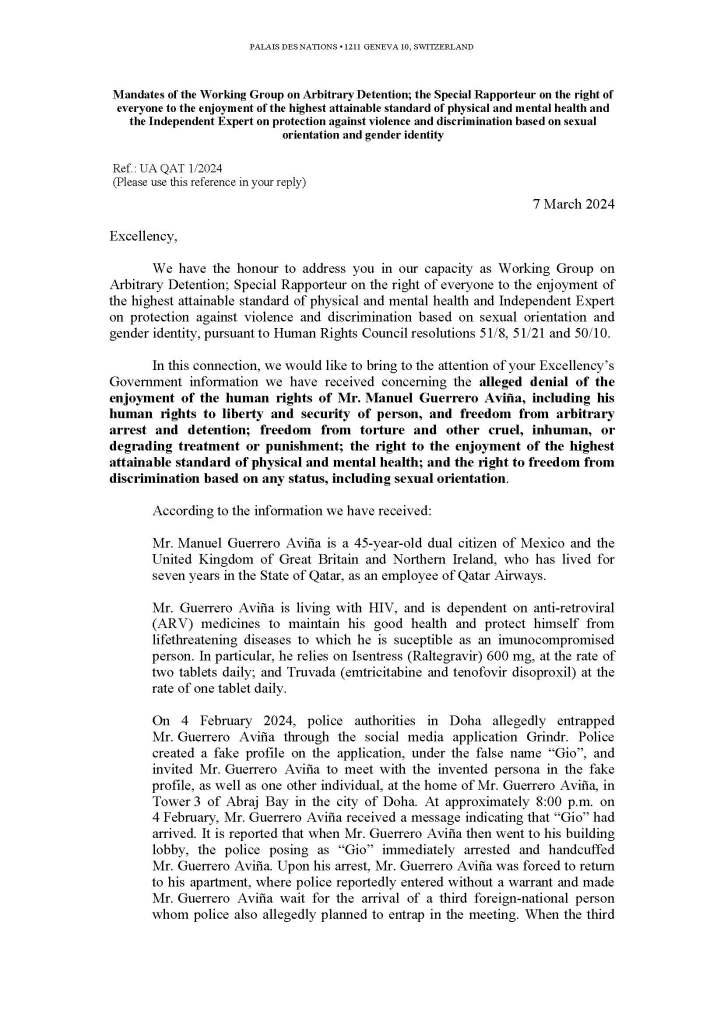
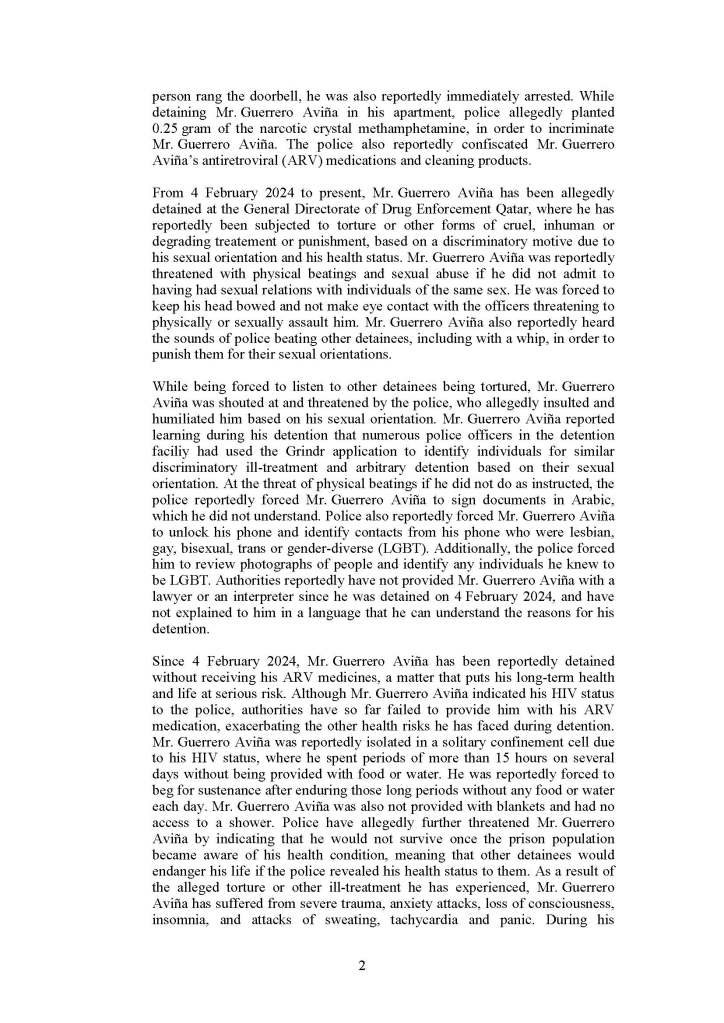
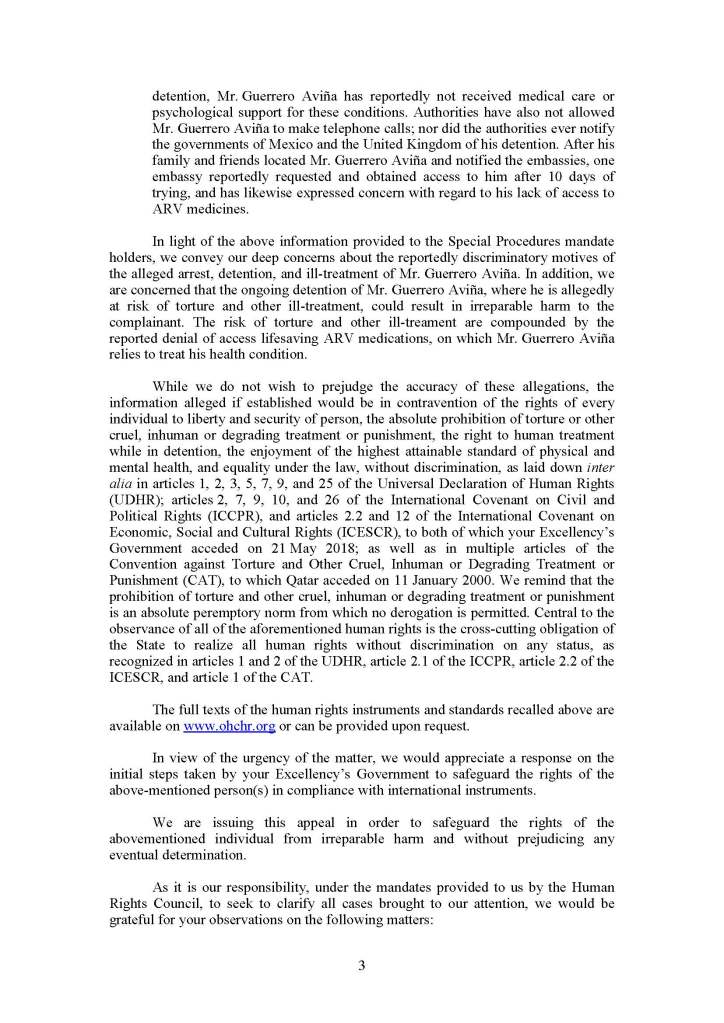
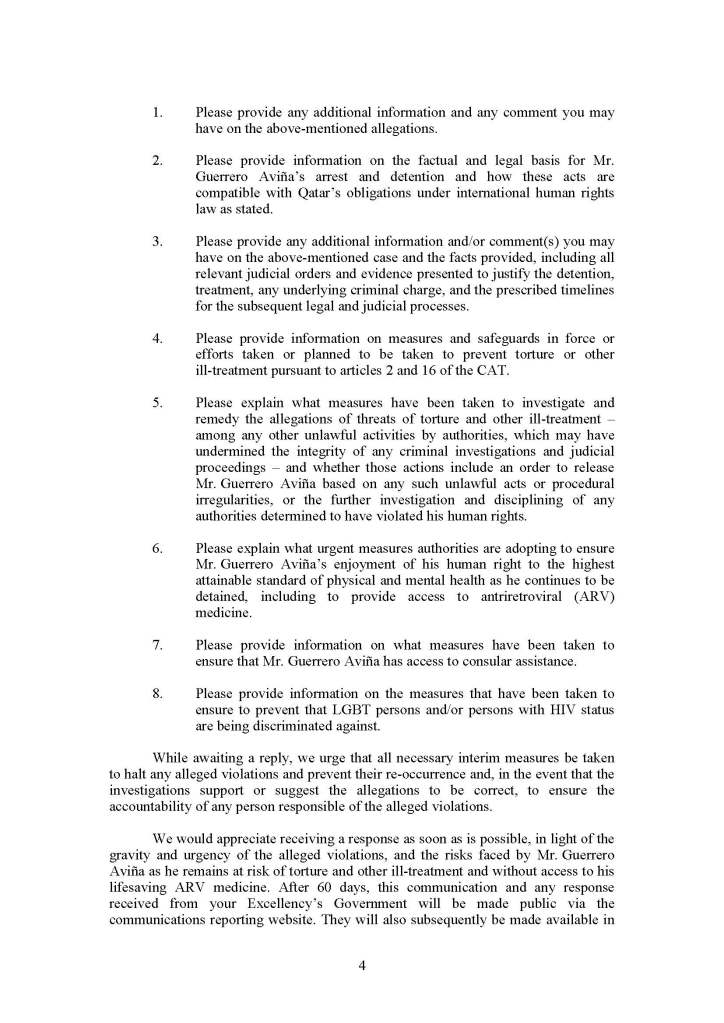
Author Archives: Andreas R. Ziegler

US State Department issues worldwide travel warning ahead of Pride month

US State Department issues worldwide travel warning ahead of Pride month

The US State Department issued a “Worldwide Caution” alert on Friday warning US citizens overseas to exercise increased caution amid fears of potential terrorist-inspired violence against LGBTQI+ persons and events. The alert is given two weeks before the start of Pride month in June, known for parades and events that celebrate LGBTQI+ communities.

The State Department advised citizens traveling abroad to be cautious and vigilant in tourist spots, especially if they attend Pride celebrations and places that are usually visited by the LGBTQI+ community.

Additionally, citizens traveling abroad were urged to enroll in the Smart Travel Enrollment Program (STEP) to receive information and alerts from US Embassies about safety conditions in destination countries. This program helps embassies to contact US citizens in cases of emergency, including natural disasters or civil rest, and connect them to their families and friends.

The alert coincided with the commemoration of the International Day Against Homophobia, Biphobia, Interphobia and Transphobia by Secretary of State Anthony Blinken. Blinken wrote on X that the US is committed to promoting the safety and dignity of LGBTQ+ persons as a component of advancing national interests.

Earlier this month, the FBI and the Department of Homeland Security issued a similar statement warning of the potential targeting and exploitation of LGBTQIA+ large gatherings by foreign terrorist organizations. The statement brought to attention past attempts targeting the LGBTQIA+ community, including the Pulse Nightclub shooting in Orlando which left 49 killed or repeated published messages from ISIS to its followers to conduct attacks on the LGBTQI+ venues and events.

The post US State Department issues worldwide travel warning ahead of Pride month appeared first on JURIST – News.

Peru protesters call for repeal of legislation classifying transgender identities as mental illnesses

Peru protesters call for repeal of legislation classifying transgender identities as mental illnesses

Hundreds of demonstrators marched Friday in Peru’s capital Lima to call for the repeal of recent legislation that classifies transgender individuals as having a mental illness to provide them access to health benefits.

The law includes transgender identities as mental health conditions in the country’s Essential Health Insurance Plan, which outlines the health conditions covered by health insurance policies. Activists, including Gianna Camacho of the Coordinacion Nacional LGTBIQ+, said the law was transphobic and offensive because it defined their identity as an illness.

The Peruvian government approved a law last week that classifies people who identify as transgender, cross-dressers, and those with gender identity disorders as having “illnesses” that qualify them for mental health services from both public and private providers.

Following this occurrence, around 500 protesters took to the streets of Lima, the capital of Peru, to voice their demands for the repeal of the recently approved law.

The Peruvian Ministry of Health released a statement shortly after the law’s enactment, expressing its opposition to the stigmatisation of LGBTQ+ individuals and clarifying that the legal language aims to enhance health coverage. The ministry further stated that it does not consider sexual orientation and gender identity an indicator of illness, and condemned the practice of conversion therapy. The ministry said that it would not repeal the decree, arguing that doing so would remove “the right to care” as provided by the country.

The protests coincided with the International Day Against Homophobia, a yearly event since 2005 that marks the removal of homosexuality, once considered a mental illness, from the World Health Organisation’s International Classification of Diseases on May 17, 1990.

The post Peru protesters call for repeal of legislation classifying transgender identities as mental illnesses appeared first on JURIST – News.

Nouvelle publication: Le statut des couples de même sexe dans la jurisprudence strasbourgeoise: (obs. sous Cour eur. dr. h., Gde Ch., arrêt Fedotova et autres c. Russie, 17 janvier 2023)

Nouvelle publication: Le statut des couples de même sexe dans la jurisprudence strasbourgeoise: (obs. sous Cour eur. dr. h., Gde Ch., arrêt Fedotova et autres c. Russie, 17 janvier 2023)

JL Renchon – Revue trimestrielle des droits de l’Homme, 2024

L’arrêt Fedotova c. Russie du 17 janvier 2023 de la Grande Chambre de la Cour
européenne des droits de l’homme fournit l’occasion de faire le point de l’état actuel
de la jurisprudence strasbourgeoise relative au statut juridique à conférer aux …

Plus: https://www.cairn.info/revue-trimestrielle-des-droits-de-l-homme-2024-2-page-497.htm&hl=en&sa=X&d=9723299469472630346&ei=xahHZvHcM9eJ6rQPjeSN2Aw&scisig=AFWwaebvfghO-bNtwkyJq50kdVQI&oi=scholaralrt&html=&pos=0&folt=rel&fols=

Liechtenstein legalizes same-sex marriage in near-unanimous vote

Liechtenstein legalizes same-sex marriage in near-unanimous vote

Liechtenstein’s parliament voted to legalize same-sex marriage on Thursday, making it the 22nd country in Europe to do so.

Lawmakers in the German-speaking microstate voted nearly unanimously in favor of the measure, with 24 of its 25 members supporting it, Liechtensteiner Vaterland reported.

More: https://www.politico.eu/article/liechtenstein-legalizes-same-sex-marriage-in-near-unanimous-vote/

European Union: FRA’s third LGBTIQ survey shows that people still experience hate-motivated violence and discrimination

European Union: FRA’s third LGBTIQ survey shows that people still experience hate-motivated violence and discrimination

Trans and intersex people face even greater victimisation. Yet, signs of progress show that the EU’s and Member States’ efforts can positively affect people’s lives. More LGBTIQ people are open about their sexual orientation, gender identity, gender expression and sex characteristics.

More: https://fra.europa.eu/en/publication/2024/lgbtiq-crossroads-progress-and-challenges

World Bank and IMF can press Ghana to rethink ‘punitive’ LGBTQ law, charities say

World Bank and IMF can press Ghana to rethink ‘punitive’ LGBTQ law, charities say

Charities and campaign groups are calling on bodies to say they may stop funding country if legislation comes into effect

The World Bank and the International Monetary Fund are coming under pressure to use their financial might to persuade Ghana to reconsider a proposed law that could lead to anyone who identifies as LGBTQ+ being jailed for three years.

Charities and campaign groups are calling on the global development bodies to tell Ghana they may stop funding the country if the proposed legislation – which will be challenged in the country’s supreme court next week – comes into effect.

The “promotion of proper human sexual rights and Ghanaian family values” bill recommends jailing anyone convicted of identifying as gay for up to three years, imprisoning “promoters” of gay rights for up to five years, and increasing the term for having gay sex from three to five years.

Elana Berger, executive director of the Bank Information Center, a charity that campaigns for better transparency, accountability and inclusion in development finance, said the World Bank was in a unique position to “persuade Ghana to reconsider” with the prospect of losing its promised $3.8bn (£3bn) of funding.

“We believe that everything the World Bank does should be moral, fair and inclusive,” she said. “Funding a country with this law will lead to discrimination against LGBTQ+ people. We’re not anti the World Bank, but it can do a lot more to improve the inclusion of its projects.”

She said the Ghanian parliament’s vote to pass the bill in February despite the threat of losing World Bank funding suggested “the desire to harm LGBTQ+ people trumps the desire to develop the economy”.

Ghana’s finance ministry has warned that if the law comes into effect it could lead to the country losing $3.8bn in World Bank financing over the next five to six years.

Losing that funding, the ministry said, could “derail” a $3bn bailout programme from the International Monetary Fund (IMF) and its efforts to restructure its $20bn debt pile. “This will in turn trigger a market reaction which will affect the stability of the exchange rate,” the ministry said in a leaked memo.

The World Bank last year halted some funding to Uganda due to the country’s newly passed anti-LGBTQ legislation, which includes the death penalty or life imprisonment for some same-sex acts, saying “fundamentally contradicts the World Bank group’s values”.

“We believe our vision to eradicate poverty on a livable planet can only succeed if it includes everyone irrespective of race, gender, or sexuality,” the bank said. “This law undermines those efforts.”

Winnie Byanyima, executive director of UNAids, said evidence showed that punitive laws such as Ghana’s were “a barrier to ending Aids, and ultimately undermine everyone’s health”.

She added: “Approaches rooted in inclusion of all people have been crucial to Ghana’s progress in the HIV response … if this bill becomes law, it will obstruct access to life-saving services, undercut social protection, and jeopardise Ghana’s development success.”

Genevieve Partington, Amnesty International’s Ghana country director, said: “The bill is one of the most draconian in Africa and seeks to further criminalise lesbian, gay, bisexual and transgender (LGBT) people.

“It also seeks to punish anyone who supports or advocates for LGBT people, including human rights defenders, medical professionals, journalists, teachers, and landlords in violation of the right to freedom of expression and association, with a prison term.”

A spokesperson for the World Bank said: “The bill has not yet been signed into law, and we generally do not comment on draft legislation. We have a longstanding and productive relationship with Ghana.”

An IMF spokesperson said: “We have learned from extensive experience that more inclusive development is more successful development. In this case, we recognise that this bill is being challenged in the courts; it is important to let that process play out.”

During a visit to Ghana earlier this year, Kristalina Georgieva, the IMF’s managing director, said: “At this point, what we know is that citizens in Ghana have challenged the constitutionality [of the law]. I will not comment on the details of the bill. Let’s see what the court have to say.”

The supreme court adjourned its hearing on the proposed law to 17 May.

Source: https://www.theguardian.com/business/article/2024/may/11/world-bank-and-imf-can-press-ghana-to-rethink-punitive-lgbtq-law-charities-say

USA: After Class-Action Lawsuit, Aetna Will Equally Cover Fertility Treatment for LGBTQ+ Couples

USA: After Class-Action Lawsuit, Aetna Will Equally Cover Fertility Treatment for LGBTQ+ Couples

The insurance giant will pay out $2 million to members affected by its previous policy.

Health insurance company Aetna will now equally cover artificial insemination and other fertility treatments for all customers nationally, as part of a settlement in a lawsuit that alleged discrimination against LGBTQ+ people.

The National Women’s Law Center and the law firm Brinckerhoff Abady Ward & Maazel LLP initially filed suit against the insurer in September 2021. The class action lawsuit alleged that Aetna’s definition of infertility led to unequal insurance coverage treatment for LGBTQ+ couples. Heterosexual couples could receive coverage for infertility treatments if they said they were unable to become pregnant after six or 12 months of intercourse. However, LGBTQ+ couples had to pay out of pocket for six or 12 cycles of artificial insemination — which can cost thousands of dollars — before becoming eligible to be covered for additional rounds or for in-vitro fertilization.

More: https://www.them.us/story/aetna-class-action-lawsuit-fertility-ivf-lgbtq-couples

Czechia Constitutional Court rules against legal requirements for gender transition

Czechia Constitutional Court rules against legal requirements for gender transition

The Czech Constitutional Court ruled on Tuesday against a regulation that required surgical procedures for official sex change for trans people. Czech law required transgender people to undergo procedures like sterilization and transformation of the genitals to officially change their gender records.

The Constitutional Court deemed the policy requiring transgender people to undergo sterilization surgeries as contrary to trans people’s fundamental right to protection of bodily integrity, personal autonomy and their human dignity. Furthermore, it considered the rule to be against transgender people’s right to self-determination and personal autonomy. The court further stated that the law is in contravention with the the European Convention on Human Rights. 

The case was brought before the Constitutional Court by a transgender person seeking the official records to prove his gender identity without having to undergo surgical procedures. Various international organizations such as Human Rights Watch previously expressed concern over sterilization laws in the Czech Republic. These laws were labelled as a “violation of the right to health” under the European Social Charter.

Czech Minister of Justice, Pavel Blazek mentioned in a statement on X (formerly Twitter) that this decision gives clear instructions as surgery will stop being a legal condition for official gender transition after more than two years of no political consensus.

The Constitutional Court annulled various provisions of the Civil Code but postponed the enforceability of the ruling. This gives space to the legislators to take appropriate legislative action to propose new regulations that will, according to the court, reflect the fundamental rights of trans people. This decision approximates the Czech Republic towards the standards of human rights protection for transgender people in Europe, as the laws are expected to change.

This decision marks another step towards the recognition of transgender rights, such as showcased by the European Court of Human Rights (ECHR) ruling against medical assessments for legal change of gender in 2013, demonstrating a general European movement in favor of human rights protection for transgender people. With the ruling of the Constitutional Court, the Czech Republic is asserting these human rights standards.

The post Czechia Constitutional Court rules against legal requirements for gender transition appeared first on JURIST – News.

ECHR finds Russia discriminated against LGBTQ teacher

ECHR finds Russia discriminated against LGBTQ teacher

European Court of Human Rights (ECHR) held Tuesday that Russia discriminated against a teacher when she was fired after posting pictures that indicated her sexual orientation.

In the case of A.K. v. Russia, A.K, the applicant, was a teacher in a state school in Russia. In November 2014, a Russian NGO collected on social media private pictures, including that of her kissing other women. After the school received the information, it asked her to quit, regarding such conduct as “her propaganda of non-traditional sexual orientation.” Even though she opposed the decision, she was finally dismissed in December of the same year. After that, she brought complaints before the Russian national courts, but all of them were unsuccessful. As a result, the case was lodged before ECHR in 2016, before Russia left the ECHR.

The ECHR found violations of the right to privacy and the prohibition of discrimination under Articles 8 and 14 of the European Convention of Human Rights. In the judgment, the proportionality of the dismissal was mainly assessed. The court denied the Russian courts’ claim that the dismissal could be justified by her sexual orientation. Additionally, it emphasized that the right to private life covered an individual’s sexual orientation, which can be expressed privately and publicly, while indicating that other ways were available for the school to take for the protection of public morals. Such disproportionate interference led to the violation of her private life, and in conjunction with it, discrimination. The court ordered Russia to pay 22,500 EUR in total to the applicant as compensation.

During the past several years, Russia has strengthened its attacks on the LGBTQ community, labelling expressions of different sexual orientations as propaganda. In 2022, the parliament passed a bill prohibiting the spread of LGBTQ information to any people. At that time, UN High Commissioner for Human Rights Volker Türk expressed deep concern about the violation of LGTQ people’s fundamental rights by the legislation. In March 2024, a Russian watchdog listed the LGBTQ public movement as a terrorist organization, the same as Al-Qaeda and Taliban. LGBTQ people in Russia have faced difficulty not only protecting their human rights, but also expressing their personal sexual orientation publicly and privately.

The post ECHR finds Russia discriminated against LGBTQ teacher appeared first on JURIST – News.

07.05.2024 Judgments and decisions of 7 May 2024
The European Court of Human Rights has today given notification in writing of six judgments and four decisions (link). Dismissal of teacher for photos posted on social media discriminated against her on grounds of her sexual orientation
A.K. v. Russia  
The European Court of Human Rights was set up in Strasbourg by the Council of Europe Member States in 1959 to deal with alleged violations of the 1950 European Convention on Human Rights