Gender affirmation medical procedures on the rise in Switzerland
Leave a reply

Japan Supreme Court declares sterilization requirement for legal recognition of transgender people unconstitutional
The Supreme Court of Japan ruled Wednesday that a law requiring transgender people to be sterilized in order to legally change their gender was unconstitutional. The case was decided unanimously by all fifteen justices hearing the case, and the law requiring sterilization of transgender individuals is now struck down.
Previously, since its introduction in 2004, the law governing how to legally change your gender in Japan was constructed of many steps. The Gender Identity Disorder Special Cases Act states that anyone who appeals to a family court to legally change their gender must: undergo a psychiatric evaluation, “have a physical form that is endowed with genitalia that closely resemble the physical form of an alternative gender,” and be surgically sterilized.
This last requirement was successfully challenged by a transgender woman in the Supreme Court on Wednesday. The Supreme Court held that the existing law “constitutes a significant constraint on freedom from invasive procedures” and thus violates the Japanese Constitution. The court further stated, “The suffering that [transgender people] face in terms of gender is also of concern to society that is supposed to embrace diversity in gender identity.”
This decision comes as a further progression of transgender rights in Japanese courts. Most recently, on October 13, a Japanese court held it to be unconstitutional to require an individual to undergo gender-affirming surgery to obtain identification in line with their gender. Preceding this, the Supreme Court decided in July that banning transgender women from women’s bathrooms was was unlawful.
The post Japan Supreme Court declares sterilization requirement for legal recognition of transgender people unconstitutional appeared first on JURIST – News.
Peru dispatch: Constitutional Court ruling on father’s naming rights when mother’s identity unknown to him is a victory for equality
According to article 20º of the Peruvian civil code: “The child has the first surname of the father and the first surname of the mother”; the last paragraph of article 21º of the same law states: “In case the mother does not reveal the identity of the father, she can register the child with her surnames”. The Peruvian civil code traditionally did not allow fathers to register their children without revealing the identity of the mother, a situation that violated the right of equality.
On September 27th, 2021 Ricardo Moran filed a lawsuit against the National Identity and Civil Status Registry (RENIEC, in Spanish) requesting the registration of his minor children as Peruvian citizens, who were conceived through surrogacy in Texas, United States. RENIAC denied the request because, as noted, Peruvian civil code only allowed the unilateral registration of the children when the identity of the father was unknown, not the identity of the mother. For that reason, Ricardo Moran came to the Constitutional Court of Peru.
In this judicial instance, as opposed to the claims of the judges of the first and second instances, the judges valued the best interest of the child in accordance with the right to identity and nationality of Ricardo Moran’s children, principles and rights protected by conventional treaties and guaranteed by our constitution, in order to establish that even if children were born in another country, they can receive state guardianship if their parents have Peruvian nationality.
Subsequently, the Constitutional Court carried out a proportionality test on the RENIEC’s decision to initially deny the plaintiff’s request, in order to determine whether the right to name, nationality and equality of Ricardo Moran’s children were being violated under the existing civil law stipulating that a father must indicate the identity of the mother to be authorized to register their children. Along these lines, the last paragraph of article 21º of the Peruvian civil code was declared unconstitutional because there were no reasons to protect the differential legal treatment between fathers and mothers who want to register their children without revealing the identity of the other parent. In this way, the Constitutional Court of Peru weighed the right to the name and nationality of minors, which cannot be conditional on the recognition of both parents, whether it is the mother or the father who requests the registration on RENIEC.
This jurisdictional pronouncement marks an important milestone in the process of granting the same civil rights to both men and women in Peru’s civil legislation. Due to its old date (1984), there still are normative provisions in that that continue to perpetuate the management of social problems from a sexist perspective, as is the case in this case. Previously it was not conceived that a man could be a single father, therefore, only the rights of single mothers to register their children were protected. There is still a plurality of regulations currently in force that are not consistent with the Peruvian social reality, which is why the work of constitutional control undertaken by the Constitutional Court is essential and vital to prevent violations of human rights.
The post Peru dispatch: Constitutional Court ruling on father’s naming rights when mother’s identity unknown to him is a victory for equality appeared first on JURIST – News.
Hong Kong appeals court upholds homosexual couple’s equal inheritance rights
Hong Kong’s Court of Appeal upheld homosexual couples’ right to inheritance by dismissing on Tuesday an appeal from the Secretary for Justice. The appeal sought to establish that homosexual and heterosexual couples are not entitled to the same rights under Hong Kong’s inheritance laws.
The case centered around Edgar Ng and Li Yik Ho’s concern over inheritance laws. Ng previously applied for judicial review of Hong Kong’s inheritance laws in 2019 as he was worried that his Li, his homosexual partner, would not be entitled to inherit his properties if he died without a will. The Court of First Instance allowed Ng’s review and found in favor of him in September 2020.
However, the Secretary for Justice appealed against the Court of First Instance’s ruling. Lawyer Abraham Chan represented the Secretary for Justice in the appeal. During the appellate hearing, he espoused that homosexual and heterogenous couples were entitled to different rights under Hong Kong’s inheritance laws because they constitute two materially distinguished groups.
Nonetheless, the Court of Appeal’s three-judge panel unanimously upheld the Court of First Instance’s ruling. The Court of Appeal said that the Secretary for Justice failed on his grounds of appeal and agreed with the Court of First Instance in finding that differential treatment of homosexual and heterogenous couples constituted discrimination against homosexual couples.
Upon receiving Tuesday’s judgment, Li wrote on Facebook:
I hope the Government will respect today’s judgment and at long last give Edgar the respect and dignity he’d always deserved … The present appeal is the 7th case in which the Hong Kong [c]ourts confirmed that there should be legal protection for same-sex couples.
This is not the first time Hong Kong courts have handed down judgments with respect to the rights of homosexual couples. On September 5, the Hong Kong Court of Final Appeal found that the Hong Kong government has a duty to legally recognize homosexual relationships. On October 17, the Hong Kong Court of Appeal dismissed appeals from the Hong Kong Housing Authority which sought to uphold the constitutionality of excluding homosexual couples from legal housing benefits as married couples.
The post Hong Kong appeals court upholds homosexual couple’s equal inheritance rights appeared first on JURIST – News.
USA Cycling to segregate trans athletes in updated policy

More: https://www.thepinknews.com/2023/10/22/usa-cycling-trans-policy-uci/
by Akshat Agarwal – Akshat Agarwal is a doctoral candidate at Yale Law School working on the legal regulation of the family.
The Supreme Court, India’s apex constitutional court, recently delivered its disappointing decision in Supriyo Chakraborty v Union India (Supriyo), rejecting marriage equality in Indian law. The much-awaited decision was heard by a constitution bench (five judges) of the Supreme Court and dealt with far-reaching questions of both Indian constitutional law and family law. The decision is characteristic of the Indian Supreme Court’s ongoing phase of great deference to the executive and legislative branches but also marks a sharp and worrying break from the court’s otherwise progressive jurisprudence on issues of gender and sexuality. …
More: https://verfassungsblog.de/when-discrimination-is-not-enough/
Austria is rehabilitating and compensating victims of criminal persecution for homosexual activities (1945-2002)
The Austrian federal government yesterday passed a bill rehabilitating and compensating the victims of criminal persecution (1945-2002) (revocation of all convictions + compensation for all convicts and for all persons afflicted by criminal investigations).
Compensations are modest:
-> Per conviction: EUR 3.000,–
-> Per each started year of deprivation of liberty: 1.500,– (same amount for 1 day and for one year)
-> Per each set of initiated criminal proceedings: EUR 1.500,–
-> For suffering from particular professional, economic or health detriments or other extraordinary negativ impacts: EUR 1.500,–
The European Court of Human Rights awarded (2002-2006)
-> per conviction: EUR 15.000,– (worth today: EUR 25.000,–)
-> Per month of deprivation of liberty: 5.000,– (worth today: EUR 8.500,–)
-> Per year of deprivation of liberty: 70.000,– (worth today: EUR 117.000,–)
-> For criminal proceedings (resulting in an acquittal): EUR 10.000,– (worth today: EUR 17.000,–)
India Supreme Court fails to legalise same-sex marriage

India’s Supreme Court has declined legalisation of same-sex marriage after a lengthy campaign, and public support, for a change in law.
See: https://www.thepinknews.com/2023/10/17/india-supreme-court-same-sex-marriage/
Canadian Human Rights commissioner resigns over new school pronoun rule to out kids to parents
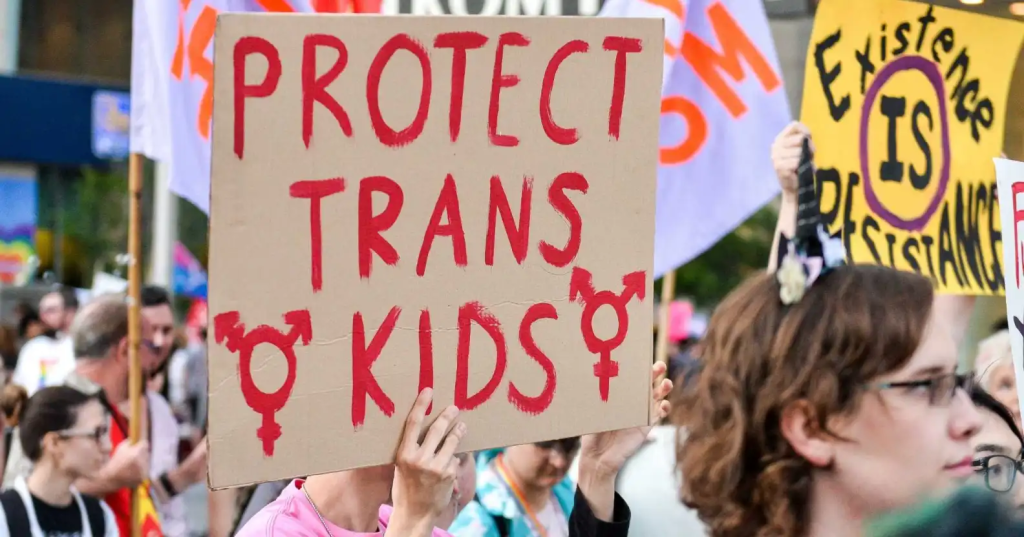
A Canadian human rights commissioner has resigned after her province’s government said it would use a clause in its constitution to pass legislation preventing children under 16 from changing their names or pronouns at school without parental consent.
More: https://www.thepinknews.com/2023/10/17/canada-saskatchewan-heather-kuttai-education-pronouns-trans/
World Medical Association unequivocally condemns so-called “conversion” or “reparative” methods

Adopted by the 64th General Assembly, Fortaleza, Brazil, October 2013 and
revised by the 74th WMA General Assembly, Kigali, Rwanda, October 2023
Individuals who identify as LGBTQIA+ (Lesbian, Gay, Bisexual, Transgender, Queer, Intersex, Asexual, and other identities beyond these) represent a broad and fluid spectrum of natural sexual orientations, gender identities, gender expressions, and sex characteristics. While LGBTQIA+ people may share common cultural and social experiences and shared goals of justice and equity in the face of detrimental, discriminatory treatment and even violence, these are diverse communities facing distinct challenges and with specific needs in healthcare and beyond.
This statement is specifically focused on lesbian, gay, and bisexual people.
Healthcare professionals encounter many aspects of human diversity when providing care, including different natural variations of human sexuality.
A large body of scientific research indicates that being lesbian, gay, or bisexual constitute natural variations of human sexuality without any intrinsically harmful health effects. They do not constitute a disorder or illness that requires treatment or cure and any efforts to do so are contrary to the ethical practice of medicine.
Homosexuality and bisexuality are consequently not included in the World Health Organization’s (WHO) International Classification of Diseases (ICD 11).
However, direct and indirect discrimination, both interpersonally and at the institutional level, anti-homosexual or anti-bisexual legislation and human rights violations, stigmatisation, criminalisation of same-sex partnerships, peer rejection, and bullying continue to have a serious impact upon the psychological and physical health of lesbian, gay, or bisexual people. These negative experiences are perpetuated by a lack of education in society on the different natural variations of human sexuality. They lead to poorer health outcomes, including higher prevalence rates of depression, anxiety disorders, substance misuse, and suicidal ideations and attempts. As a result, the suicide rate among lesbian, gay, or bisexual adolescents and young adults significantly higher than that of their heterosexual peers.
These negative outcomes can be exacerbated by other intersectional factors, including but not limited to national origin, race, ethnicity, gender, age, religion, gender identity, socioeconomic status, or disabilities.
In addition, false and baseless pathologisation of lesbian, gay, or bisexual identities leaves such individuals at risk of being coerced into so-called “conversion” or “reparative” procedures. These harmful and unethical practices, also sometimes referred to as sexual orientation and gender identity change efforts (SOGICE), are intended to suppress or change a person’s natural sexual orientation or gender identity. These methods have no medical indication, lack any evidence of effectiveness, and represent a serious threat to the health and human rights of those subjected to these practices. They can lead to anxiety, depression, low self-esteem, substance abuse, problems with intimacy, and suicide.
Negative experiences in healthcare may affect the patient-physician relationship, leading lesbian, gay, and bisexual individuals to avoid accessing care where it is available. They may also withhold their sexual orientation from physicians due to the resulting lack of confidence that they will receive the appropriate treatment and concerns about the safety and confidentiality of their healthcare environment. Without this information, it may be more challenging for physicians to provide targeted care that takes into account the specific health needs of lesbian, gay, or bisexual patients.
Lesbian, gay, or bisexual physicians, medical students, and other health professionals also face discrimination, disadvantages, marginalisation and bullying in the workplace, in schools, in professional organisations, and beyond. Harmful working and learning environments can lead to stress and burnout, especially among marginalised individuals.
Source: https://www.wma.net/policies-post/wma-statement-on-natural-variations-of-human-sexuality/
 International and Comparative SOGIESC Law - Professor Andreas R Ziegler