Author Archives: Andreas R. Ziegler

USA: American Red Cross eases restrictions on gay and bisexual men blood donations

USA: American Red Cross eases restrictions on gay and bisexual men blood donations

The American Red Cross implemented guidance from the US Food and Drug Administration (FDA) on Monday to relax restrictions on blood donations for gay and bisexual men.

Specifically, the American Red Cross changed its donor assessment questionnaire to remove gender and sexual orientation-specific questions and focus more on an individual’s history. Before, gay and bisexual men were barred from donating blood if they had sex with men in the last three months.

In guidance published by the FDA in May 2023, the agency explained the history of extra restrictions on gay and bisexual donating men stemmed from the Acquired Immune Deficiency Syndrome (AIDS) epidemic that occurred in the 1980s, which disproportionately impacted the LGBTQ+ community. Since then, however, technology has advanced to help detect Human Immunodeficiency Virus (HIV, or the virus that develops into AIDS), and there have been no documented transmissions of HIV or other diseases like Hepatitis B in plasma donations.

The FDA now recommends all individuals regardless of sexual orientation or gender identity disclose any new sexual partners and/or if they recently engaged in anal sex, which has a higher risk of contracting HIV. Additionally, questionnaires should ask about medications used to treat or prevent HIV infections, such as PrEP, which can make HIV levels undetectable for safer sex but possibly still transmit HIV to a person undergoing a blood transfusion.

The American Red Cross’ donor changes fall in line with recent changes in the UK, which expanded blood donation eligibility to gay and bisexual men and updated their questionnaire to be gender- and sexual orientation-neutral. In 2020, Brazil’s Supreme Court found a ban preventing gay and bisexual men who had sex with a man within the past year from donating blood unconstitutional.

The post American Red Cross eases restrictions on gay and bisexual men blood donations appeared first on JURIST – News.

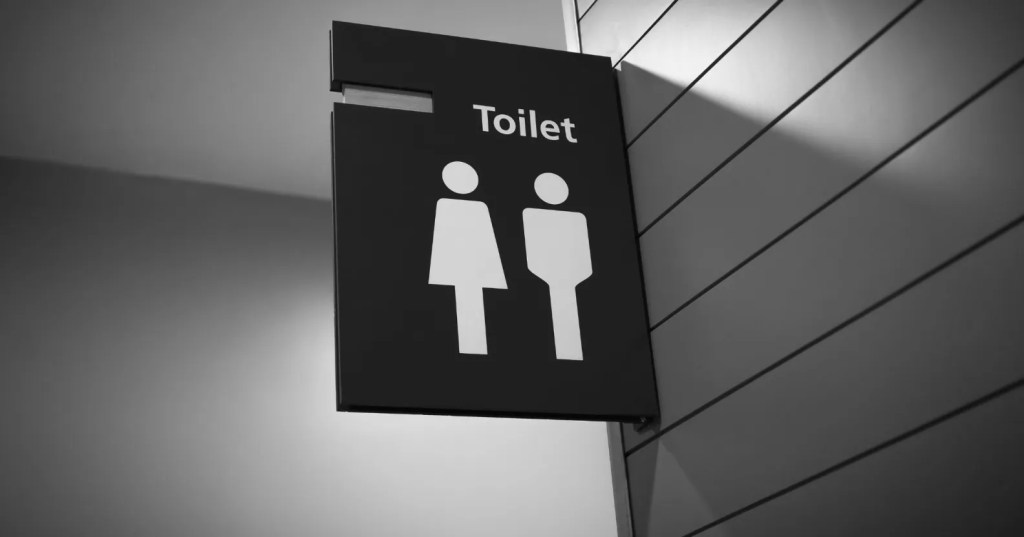
US federal judge upholds Ohio school district’s gender-inclusive bathroom policy

US federal judge upholds Ohio school district’s gender-inclusive bathroom policy

A US federal judge rejected a lawsuit on Monday brought by parents and students of an Ohio school district that challenged the school district’s bathroom policy. US District Judge Michael Newman found that the Bethel Local School District’s decision to establish a gender-inclusive bathroom policy did not violate the parents’ and students’ US Constitutional rights.

The Bethel Local School District’s current bathroom policy—which went into effect in January 2022—allows students to use the bathroom that matches their gender identity. The plaintiffs filed a state lawsuit claiming the school district violated the Ohio Open Meetings Act when it allegedly discussed the bathroom policy for transgender students during an executive session at the end of 2021.

In November 2022, the plaintiffs filed a separate federal lawsuit alleging, among other claims, that the school district violated the US Constitution’s Fourteenth Amendment’s guarantee of parental rights and First Amendment’s free exercise right. On the issue of the Fourteenth Amendment, the court dismissed the challenge because it found it was a limited right in school settings. The court also dismissed the First Amendment issue because it found that the school district did not suppress religious beliefs through its bathroom policy.

Some plaintiffs also claimed their religious beliefs prevented them from using a communal bathroom while a transgender person is also present. They went onto claim that the school district taught fifth graders about transgender identities through reading projects. Ultimately, the court dismissed nearly all claims for a range of reasons from lack of standing to failure to state a claim.

The decision comes only months after LGBTQ+ rights groups declared a state of emergency for LGBTQ+ people within the US.

The state trial, regarding the potential Ohio Open Meetings Act violation, will take place on January 17, 2024. Since the federal claims were dismissed, there will be no federal trial.

The post US federal judge upholds Ohio school district’s gender-inclusive bathroom policy appeared first on JURIST – News.

Wearing a Swatch Pride watch in Malaysia carries a jail term

Wearing a Swatch Pride watch in Malaysia carries a jail term

Malaysia’s government said on Thursday that anyone found wearing a product of the Swiss watchmaker Swatch’s Pride Collection could be jailed for up to three years. All Swatch products containing lesbian, gay, bisexual, transgender or queer elements are banned in Malaysia and those found with them now face up to three years in jail or a fine of up to 20,000 ringgit (CHF3,828). The ban has been published in the Federal Gazette as part of a law that includes distribution and possession. The Home Ministry statement said the products are “detrimental, or possibly detrimental, to morality, public interest and national interest by promoting, supporting and normalising the LGBTQ movement which is not accepted by the general public.” + Read more: gay conversion therapies in Switzerland continue to take a toll Last May, Malaysian authorities had raided Swatch stores and confiscated more than 160 watches from its Pride Collection, which featured rainbow flag colours and messages of love…

More: https://www.swissinfo.ch/eng/business/wearing-a-swatch-pride-watch-in-malaysia-carries-a-jail-term-/48728496

UN rights chief closes office in Uganda, expresses concern over human rights violations (including the enactment of the Anti-Homosexuality Act in May 2023)

UN rights chief closes office in Uganda, expresses concern over human rights violations (including the enactment of the Anti-Homosexuality Act in May 2023)

UN High Commissioner for Human Rights Volker Türk announced the closure of the UN Human Rights office in Uganda on Thursday after the East African country decided not to renew an agreement that allowing the office to operate.

Türk expressed his concern about the condition of human rights in Uganda ahead of the 2026 elections, and warned against retrogression from Uganda’s commitments under international human rights treaties. He urged the Government to ensure the national human rights body can function effectively and independently.

“The Uganda Human Rights Commission, our long-standing partner in the protection and promotion of human rights in the country, is chronically under-funded and under-staffed, and reports of political interference in its mandate undermine its legitimacy, independence and impartiality. I urge the Ugandan government to provide the Commission with adequate human, technical and financial resources so that it may more effectively execute its important mandate”, he said.

On 26 July, The UN Human Rights Committee issued its findings on Brazil, Burundi, Colombia, Cyprus, Lesotho, the State of Palestine and Uganda, which contain the Committee’s main concerns and recommendations on the implementation of the International Covenant on Civil and Political Rights. The Committee expressed deep concern about arbitrary arrest and detention of political opponents, journalists, lawyers and human rights defenders, also the discrimination and persecution based on sexual orientation and gender identity, including the enactment of the Anti-Homosexuality Act in May 2023.

The post UN rights chief closes office in Uganda, expresses concern over human rights violations appeared first on JURIST – News.

USA: Oklahoma governor signs executive order strictly defining ‘male’ and ‘female’, other terms

USA: Oklahoma governor signs executive order strictly defining ‘male’ and ‘female’, other terms

Oklahoma Governor Kevin Stitt signed an executive order on Tuesday amending the definitions of the words “male” and “female”, along with other related words, in the state’s administrative rules and decisions. LGBTQ+ individuals and organizations condemned the move as a targeted attack on transgender people’s rights within the state.

Specifically, the order defines ‘male’ as a person “whose biological reproductive system is designed to fertilize the ova of a female,” while a “female” is a person “whose biological reproductive system is designed to produce ova.” Additionally, the definitions of “man”, “boy”, “woman” and “girl” now must correspond with the definitions of “male” and “female”, respectively. The order also defines a “mother” as the female parent and a “father” as the male parent of a child.

The order also states any state agency which collects statistics, including public schools, much identify each individual as either male or female following its definitions. Finally, the executive order suggests there to be separate-sex facilities, ordering prisons to have separate male and female sections and public schools to have separate boy and girl bathrooms and locker rooms.

Stitt’s Tuesday executive order mirrors a bill that advanced in the Alabama legislature in May, which outlined identical definitions for words like male, female, man and woman.

In a press release, the governor’s office described the executive order as the “first to boldly stand with women… protecting women-only spaces.” However, LGBTQ+ advocacy group Freedom Oklahoma described the order as a “thinly veiled attack on codifying discrimination against transgender women.” Executive Director of Freedom Oklahoma Nicole McAfee stated, “This bill does not protect women, but instead opens the door for further civil rights violations that open all women to being harassed and targeted as they have their femininity assessed and judged by a public who feels increased permission to police gender.”

Showcasing a continued attack on transgender rights in the US, a federal court in July upheld a ban on gender-affirming care for minors in Tennessee. On the other hand, some states like Illinois recently strengthened their LGBTQ+ protections.

The post Oklahoma governor signs executive order strictly defining ‘male’ and ‘female’, other terms appeared first on JURIST – News.

Peruvian high court has ruled in favour of the LGBTQ community by mandating the official registration of foreign same-sex unions in public records

Peruvian high court has ruled in favour of the LGBTQ community by mandating the official registration of foreign same-sex unions in public records

After a gay Peru citizen took legal action against the registration office for rejecting the recording of their marriage conducted abroad, citing a violation of their constitutional rights, the Peruvian high court has ruled in favour of the LGBTQ community by mandating the official registration of same-sex unions in public records.

ECtHR: R.K. v HU 22.06.2023 (absence of effective legal framework for change of legal gender), violation

ECtHR: R.K. v HU 22.06.2023 (absence of effective legal framework for change of legal gender), violation

See: https://hudoc.echr.coe.int/eng?i=001-225330

DISSENTING OPINION OF JUDGE WOJTYCZEK

I respectfully disagree with the views that the application is admissible and that Article 8 has been violated in the instant case. I refer in this respect to the arguments put forward in the joint dissenting opinion written by Judge Pejchal and myself and appended to the judgment in the case of X v. the Former Yugoslav Republic of Macedonia (no. 29683/16, 17 January 2019). I note that further important arguments supporting our view have been provided in the powerful dissenting opinion of Judge Ranzoni appended to the judgment in the case of A.P., Garçon and Nicot v. France (nos. 79885/12 and 2 others, 6 April 2017). In my view, the Convention does not guarantee the right to obtain a change of the registered sex on birth certificates and the High Contracting Parties can choose how to regulate this domain.

Belgium: Parliament approves law on conversion practices (conversion therapy)

Belgium: Parliament approves law on conversion practices (conversion therapy)

Last Thursday the Belgian Parliament approved, with a large majority, a law on conversion practices (conversion therapy). The law will soon become effective (« 10 days after publication in the Moniteur belge »).

The law punishes : practicing conversion therapy, offering conversion therapy, incite persons to undergo conversion therapy and making publicity for conversion therapy.

Nobody can agree with conversion therapy, which means that conversion therapy is also punishable when practiced on consenting adults (in other words : the law is not limited to minors and vulnerable adults).

The text of the new law can be found here : https://www.dekamer.be/FLWB/PDF/55/3429/55K3429003.pdf

The definition of conversion practices is as follows :

« Conversion practice means any practice which consists of a physical intervention or the application of psychological pressure, of which the perpretator assumes or pretends that it is intended to suppress a person’s sexual orientation, gender identity or gender expression regardless of whether this characteristic is actually present or merely alleged by the perpetrator.

Are not considered conversion practices: the assistance and services offered in the context of mental and physical health care in connection with the exploration and development of sexual orientation, gender identity or gender expression of a person.

Are also not considered conversion practices: the treatments or interventions in the context of a social or medical transition offered by healthcare professionals, in accordance with the conditions and within the framework of the law of 22 August 2002 on patients’ rights. »

Last Thursday the Belgian Parliament approved, with a large majority, a law on conversion practices (conversion therapy). The law will soon become effective (« 10 days after publication in the Moniteur belge »).

The law punishes : practicing conversion therapy, offering conversion therapy, incite persons to undergo conversion therapy and making publicity for conversion therapy.

Nobody can agree with conversion therapy, which means that conversion therapy is also punishable when practiced on consenting adults (in other words : the law is not limited to minors and vulnerable adults).

The text of the new law can be found here : https://www.dekamer.be/FLWB/PDF/55/3429/55K3429003.pdf

The definition of conversion practices is as follows :

« Conversion practice means any practice which consists of a physical intervention or the application of psychological pressure, of which the perpretator assumes or pretends that it is intended to suppress a person’s sexual orientation, gender identity or gender expression regardless of whether this characteristic is actually present or merely alleged by the perpetrator.

Are not considered conversion practices: the assistance and services offered in the context of mental and physical health care in connection with the exploration and development of sexual orientation, gender identity or gender expression of a person.

Are also not considered conversion practices: the treatments or interventions in the context of a social or medical transition offered by healthcare professionals, in accordance with the conditions and within the framework of the law of 22 August 2002 on patients’ rights. »

Last Thursday the Belgian Parliament approved, with a large majority, a law on conversion practices (conversion therapy). The law will soon become effective (« 10 days after publication in the Moniteur belge »).

The law punishes : practicing conversion therapy, offering conversion therapy, incite persons to undergo conversion therapy and making publicity for conversion therapy.

Nobody can agree with conversion therapy, which means that conversion therapy is also punishable when practiced on consenting adults (in other words : the law is not limited to minors and vulnerable adults).

The text of the new law can be found here : https://www.dekamer.be/FLWB/PDF/55/3429/55K3429003.pdf

The definition of conversion practices is as follows :

« Conversion practice means any practice which consists of a physical intervention or the application of psychological pressure, of which the perpretator assumes or pretends that it is intended to suppress a person’s sexual orientation, gender identity or gender expression regardless of whether this characteristic is actually present or merely alleged by the perpetrator.

Are not considered conversion practices: the assistance and services offered in the context of mental and physical health care in connection with the exploration and development of sexual orientation, gender identity or gender expression of a person.

Are also not considered conversion practices: the treatments or interventions in the context of a social or medical transition offered by healthcare professionals, in accordance with the conditions and within the framework of the law of 22 August 2002 on patients’ rights. »