This is a blog is related to my academic work in the International Academic Forum on SOGIESC Law but meant to serve anyone who wants to contribute to improve the protection of human rights worldwide. It is intended to keep interested readers informed about legal developments relating to sexual orientation, gender expression and identity and sex characteristics (SOGIESC). Hopefully, it will make it easier to find correct legal information about the developments in all regions of the world and, in particular, with regard to international law.
The Netherlands formally apologized to trans and intersex persons for forcing sterilisation on those who wanted to see their gender legally recognised
AMSTERDAM (Thomson Reuters Foundation) – The Dutch government has agreed to pay about 2,000 trans people who had to undergo sterilisation to legally change their gender 5,000 euros ($5,993) each in compensation.
Until 2014, Dutch trans people who wished to amend the gender on their birth certificate first had to be sterilised and to alter their bodies, through hormones and surgery, to match their new gender….
UK armed forces to allow some candidates with HIV to enlist
The UK’s Ministry of Defence announced Wednesday that it will permit people with Human Immunodeficiency Virus (HIV) to join the armed forces if they no longer have a detectable amount of the virus.
The announcement came on World AIDS Day as part of the Defence Ministry’s continued efforts to recognise breakthroughs in the treatment and prevention of HIV. Under its current policy, people living with HIV cannot join the Armed Forces, and those diagnosed with HIV while serving are no longer deemed “fully fit” to serve. According to the Ministry, the policy change will assist the armed forces in transforming into a more inclusive employer and help remove barriers to ensure that everyone who wishes to serve may do so.
The press release stated that starting immediately, those who do not have HIV but are taking Pre-Exposure Prophylaxis (PrEP) medication to prevent infection may join and serve in the armed forces without restrictions. In addition, service members diagnosed with HIV will be re-recognised as “fully fit” once their HIV is undetectable. The Ministry said that changes to the current policy for people currently living with HIV are expected to take effect in Spring 2022.
The Minister for Defence People and Veterans, Leo Docherty, said, “drug treatment has revolutionised the lives and outcomes of people diagnosed with HIV.” He further added, “as a modern and inclusive employer, it is only right that we recognise and act on the latest scientific evidence. I’m delighted that an exciting and fulfilling career in the armed forces is now open to many more people.”
Interesting Article: Vaughn Rossouw, “Or any other similar criteria”: Towards advancing the protection of LGBTQI detainees against discrimination and sexual and gender-based violence during non-international armed conflict
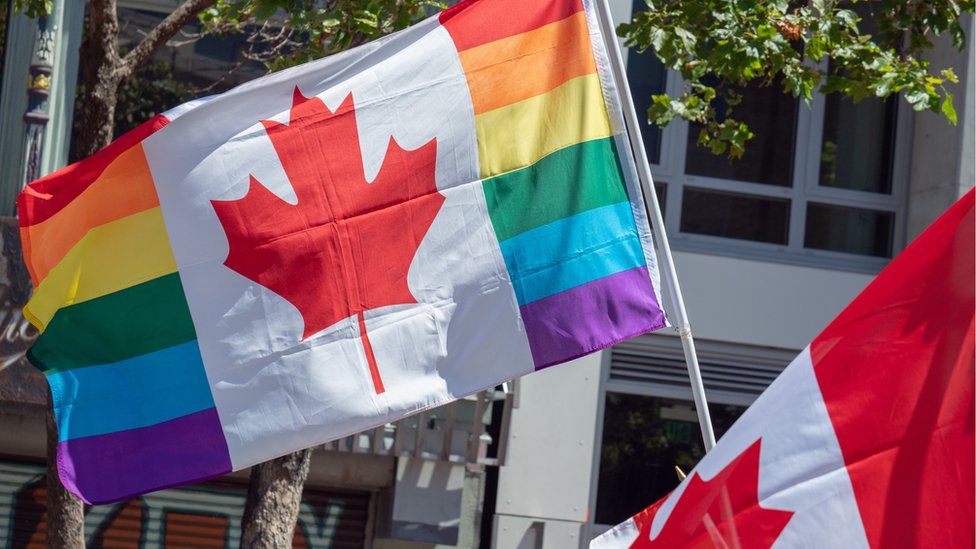
The House of Commons of Canada unanimously adopted a motion Wednesday to pass Bill C-4 banning conversion therapy. The bill became the first to pass Commons in the 44th Parliament, which began on November 20.
The bill defines conversion therapy as a “practice, treatment or service” designed to change or repress a person’s non-heterosexual orientation, non-cisgender identity or gender expression that does not conform to the sex assigned at birth. Ranging from psychoanalytic therapy to electric shocks or nausea-inducing drugs, conversion therapy techniques have widely been discredited as pseudoscientific. Canada’s Department of Justice Minister David Lametti who co-introduced the bill noted that 10% of queer men surveyed were subjected to conversion therapy. He also said that exposure to conversion therapy is associated with drug abuse and suicidal ideation and attempts.
The bill denounces conversion therapy as violating human dignity and equality, recognizing it causes harm to both persons subjected to it and society since it propagates myths and stereotypes about the preference of heterosexuality and cisgender identity and gender expression. Anyone who causes another person to undergo conversion therapy faces imprisonment of up to five years. The bill also criminalizes the promotion, advertisement or derivation of material benefit from conversion therapy with a prison term of up to two years.
In June, backlash ensued when a similar law, Bill C-6, was voted down by 62 Conservative Members of Parliament. While Liberal leader Prime Minister Justin Trudeau claimed in Parliament Wednesday the opposition had signaled resistance again, it was Conservative MP Rob Moore who called for the rapid fast-tracking of the bill through the last two of three reading stages — a motion that was passed unanimously by Commons. The fast-tracking meant that there would be a free vote instead of a recorded vote where each MP must take a stance.
The bill’s passing, called “historic” by MP Mark Gerretsen in Parliament, was celebrated by advocates. The bill has now reached the Senate, where its first reading took place on December 2. If passed by the Senate, the bill will come into force 30 days after receiving royal assent.
Botswana appeals court upholds decriminalization of same-sex sexual relations
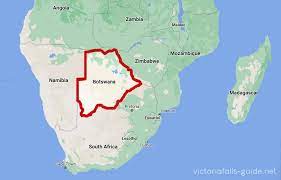
The Botswana Court of Appeal in a unanimous full bench decision Monday upheld a 2019 High Court of Botswana judgment that struck down penal provisions criminalizing same-sex sexual relations.
Judge President Kirby, speaking for Justices Ranowane, Lesetedi, Gaongalelwe and Garekwe, dismissed the appeal filed by the attorney general against the high court’s judgment in Letsweletse Motshidiemang v Attorney General. That judgment struck down as unconstitutional sections 164(a) and 164(c) of the Botswana Penal Code, which prohibited a person from having or permitting another person to have “carnal knowledge against the order of nature” and prescribed imprisonment of up to seven years for such offenses.
Motshidiemang, a gay man, had moved the high court in 2016. He stated that the criminalization of his “only means of full sexual expression” violated his rights to liberty, dignity and equal protection of the law under section 3 and his right to protection from discrimination on the basis of sexual orientation under section 15 of the Botswana Constitution.
The court agreed with Motshidiemang and also held the provisions violative of section 9 of the constitution, which deals with the right to privacy. Following the judgment, a survey recorded a notable decrease in intolerance against the LGBTQ+ community.
However, the attorney general appealed against this decision, largely on grounds that it constituted judicial usurpation of legislative powers. The attorney general also claimed that the decision “departed in an impermissible way” from the 2003 judgment Kanane v. The State, in which the appeals court held that section 164(c) was constitutional because gay men and women did not then constitute a “group or class requiring constitutional protection.”
The appeals court, however, found public attitude on homosexuality in Botswana had changed sufficiently to permit the striking down of the penal provisions — a possibility expressly recognized in Kanane. The court also noted it was empowered by section 18(2) of the constitution to strike down laws that do not pass constitutional muster. However, it chose to retain section 165 since it prescribes the punishment for bestial offenses under section 164(b).
The widely hailed decision makes the appeals court only the second apex court in Africa to decriminalize same-sex relations. The South Africa Constitutional Court was the first to do so in 1999.
Botswana appeals court upholds ruling that decriminalised gay sex
GABORONE, Nov 29 (Reuters) – Botswana’s Court of Appeal on Monday upheld a 2019 ruling that decriminalised gay sex, a decision hailed by gay community as establishing the southern African country as a “true democracy”.
Recently, the European Court of Human Rights ruled in favour of a trans woman in Russia who was denied access to her children because of her gender identity and transition. Read on to find out how this may benefit all trans and LGBTI parents in Europe.
For four long years, A.M. did not see her own children. This was not her decision. She was denied her right to love, care for and nurture the bond with her children because of her gender identity and her transition, after her ex-spouse obtained a court order. Now, the European Court of Human Rights has ruled in her favour in a landmark judgment. This is the first time the court has found a violation of the prohibition of discrimination (Article 14) because of a person’s gender identity. It also found a violation of the applicant’s right to private and family life (Article 8).
A.M., the applicant in the case, is the parent of two children born in 2009 and 2012. After seven years of marriage, in 2015 she separated from her wife and began her legal gender recognition process to live in the gender she identifies with. She continued to see her children for over a year, until a district order obtained by her ex-partner cut off visitation in 2017.
The Russian courts argued that the decision to restrict the applicant’s parental rights was necessary, as contact with the trans parent would have a “negative impact on the mental health and psychological development” of her children. It also claimed that visitation could violate so-called propaganda law, which bans public statements in relation to LGBTI people in Russia.
However, the European Court of Human Rights noted that the domestic courts made their decision “in the absence of any demonstrable harm to the children,” failing to demonstrate that the restriction was justified and well-substantiated. Notably, the court found that the applicant had been discriminated based on her gender identity in comparison to other cis parents, saying that she has been “treated differently from other parents who also seek contact with their estranged children, but whose gender identity matches their sex assigned at birth.” It also added that depriving A.M. of any contact with her children could “have irremediable consequences for relations between the child and the parent with whom that child does not live.”
The court awarded the applicant €9,800, even though she had not asked for pecuniary compensation, concluding that “such damage cannot be compensated for solely by the finding of a violation.”
Every fourth trans person in Europe is a parent and this judgement gives legal security to many of them. Now it has been confirmed that discrimination based on gender identity, prohibited under the European Convention, applies in parental rights cases. If you are a good parent, that’s what matters, irrespective of your gender identity
From a children’s rights perspective, when someone tries to limit parental rights for trans and LGBTI parents more broadly, the main argument used is that it is has detrimental effect on children. In other words: they say children would suffer because of their parent’s gender identity. The court has made clear that it is in the best interest of the child to have a loving parent and that to restrict visitation just because a parent is trans is not a good enough reason.
The European Court of Human Rights is the court of law of the Council of Europe, of which Russia is a member. Judgments of the European Court of Human Rights are binding on all Council of Europe Member States; however, Russia has ignored the rulings several times. In 2020, draft amendments to the Russian Family Code would have seriously negatively affected legal gender recognition procedures. In November these amendments were withdrawn.
“We call upon the Russian authorities to respect the court’s decision and immediately end the discrimination of trans families,” said ILGA-Europe’s Executive Director, Evelyne Paradis.
Listen: Rainbow Family Rights in Europe in 2021 and Beyond
ILGA-Europe’s podcast The Frontline presents a brand-new mini-series looking at the many issues affecting LGBTI parents and their children across Europe
World Athletics confirms transgender and DSD athletes framework to remain following updated IOC framework
Caster Semenyas Kampf gegen die Richtlinien des Leichtathletik-Weltverband werden wohl weitergehen (Bild: Yann Caradec / flickr)
World Athletics has confirmed its eligibility rules will remain in place, despite the International Olympic Committee (IOC) providing a new framework that it suggests governing bodies should follow.
World Athletics rules, which came into effect in 2019, cap athlete testosterone levels at five nanomoles per litre in women’s events from the 400 metres through the mile for differences in sex development (DSD) and transgender athletes.
UNGA: Third Committee experiences heated discussion over language on diversity, sexual orientation and gender identity in a draft related to elections, after sparring on other texts that referenced sexual and reproductive health and rights
The Third Committee (Social, Humanitarian and Cultural) sent 10 draft resolutions to the General Assembly as it concluded its work today, culminating in a heated discussion over language on diversity, sexual orientation and gender identity in a draft related to elections, after sparring on other texts that referenced sexual and reproductive health and rights.



 International and Comparative SOGIESC Law - Professor Andreas R Ziegler
