This is a blog is related to my academic work in the International Academic Forum on SOGIESC Law but meant to serve anyone who wants to contribute to improve the protection of human rights worldwide. It is intended to keep interested readers informed about legal developments relating to sexual orientation, gender expression and identity and sex characteristics (SOGIESC). Hopefully, it will make it easier to find correct legal information about the developments in all regions of the world and, in particular, with regard to international law.
The Holy See makes unprecedented protest of Italy anti-discrimination bill with regard to LGBTI persons
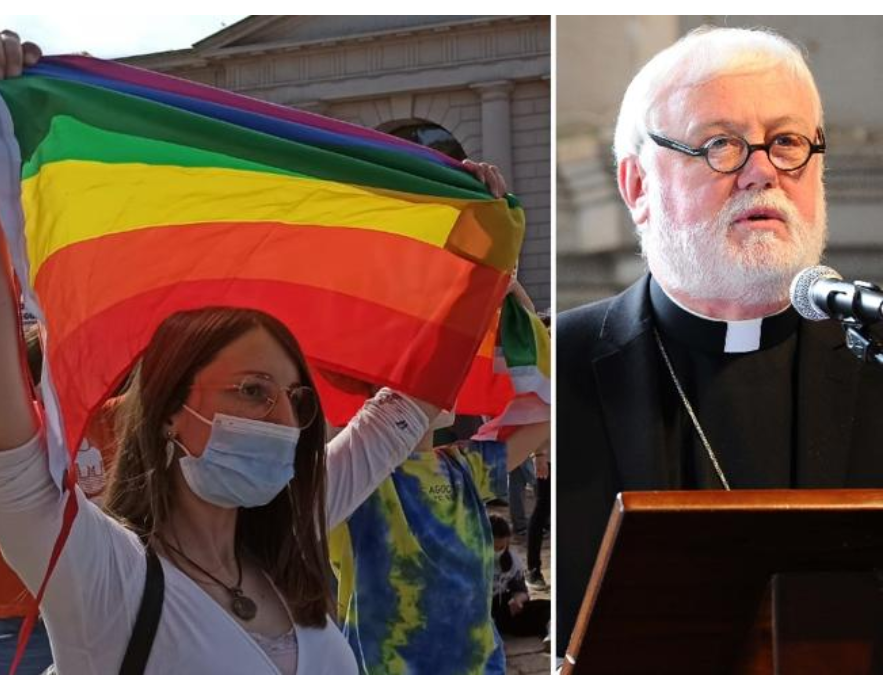
The Vatican [the Holy See] has delivered a protest to Italy’s embassy over a bill intended to combat homophobia, the Corriere della Sera confirmed Tuesday. The “Zan Bill,” named after Democratic legislator Alessandro Zan, is a response to rising homophobic crime that would criminalize discriminatory conduct on the basis of sex, gender, sexual orientation and gender identity.
The Vatican Secretariat of State wrote that such criminalization “would have the effect of negatively impacting the freedoms assured to the Catholic Church,” and in doing so violates the Lateran Pacts, which establish Vatican City as a sovereign state and provide religious freedoms in its relationship with Italy. In particular, the Vatican protests that the bill threatens its religious freedom to oppose adoptions by gay couples and refuse to conduct gay marriages or teach gender theory in Catholic schools in Italy.
One of the main sources of protest is the Vatican’s fear that gender theory calling for equal recognition of nonbinary and transgender people as part of the family will be incompatible with Catholic teachings. Roman Bishops in April protested that the bill’s aims of anti-discrimination “cannot seek that objective through intolerance and by questioning the reality of the difference between men and women.” Vatican officials informed Catholic newspaper Crux that legal protections for gender and sexual expressions reflect “ideological colonization.”
The unusual move by the Vatican to involve itself in Italy’s legislation has been praised by the far-right party in Italy’s Parliament and criticized by the Democratic party and human rights groups. Italian foreign ministry undersecretary Benedetto Della Vedova told the Washington Post that the letter constituted “heavy interference” and noted that the Vatican had not attempted to influence Italy’s legislation in the past.
The Vatican and far-right party argue that freedoms of religion and expression include the protection of traditional family values and sex differences, arguing that opposition on religious grounds should not be criminalized. The Bill seeks to make hate speech against LGBTQ+ people a crime and enact harsher penalties on those who commit violence for homophobic or sexist reasons. According to Rainbow Europe, Italy has some of the weakest laws and policies protecting LGBTQ+ rights in Europe and some of the highest instances of violence.
The bill has passed the Parliament’s Lower House and is currently being debated in a Senate committee.
École d’Été sur l’intersexuation 2021, organisée par le Réseau Francophone de Recherche sur l’Intersexuation (RéFRI)
Les inscriptions se font en ligne en suivant ce lien. L’évènement est ouvert à tou.te.s dans la limite des places disponibles.
Les informations relatives à l’École d’Été sont également en ligne sur notre Carnet Hypothèses. Pour toute question ou renseignement complémentaire n’hésitez pas à nous contacter via reseau.refri@gmail.com.
Atelier : Comment trouver un “terrain” quand on travaille sur l’intersexuation et/ou les variations du développement sexuel ?
Mercredi 25.08 Table-ronde Ethique et Droit de l’intersexuation : Benjamin Moron-Puech, Morgan Carpenter, Steph Lum. Atelier : Quelles statistiques exploitables pour la recherche sur l’intersexuation ?
Jeudi 26.08 Table-ronde : Stratégies politiques et identités communautaires intersexes : Audrey Aegerter, Julius Kaggwa, Sean Saifa Wall. Atelier : Visionnage Hermaphrodites Speak (35’02 min) et échanges.
Vendredi 27.08 Table-ronde : Médecine et enjeux intersexes : Janik Bastien-Charlebois, Deborah Abate , Anna Cominetti. Atelier : Changer les pratiques aujourd’hui : quelles perspectives ?
Samedi 28.08 Atelier : Recommandations aux chercheurs-es pour une recherche sur l’intersexuation respectueuse des droits humains des personnes intersexes. Table-ronde de clôture : Méthodologie de la recherche sur l’intersexuation et positionnalité : Gaëlle Larrieu, Mauro Cabral, Yessica Mestre. Mot de clôture : Loé Petit
Laurence R. Helfer (Duke Univ. – Law; Univ. of Copenhagen – iCourts) & Clare Ryan (Louisiana State Univ. – Law) have posted LGBT Rights as Mega-politics: Litigating before the ECtHR (Law and Contemporary Problems, forthcoming). Here’s the abstract:
Contestations over LGBT rights are now occurring worldwide at multiple levels of governance. The European Court of Human Rights (ECtHR or Strasbourg Court) has become a focal point for these contestations. This article, part of a symposium in Law and Contemporary Problems on International Courts and the Adjudication of Mega-Politics, analyzes the increase in LGBT rights cases before the ECtHR. We argue that two divergent forces are pushing these cases to Strasbourg. First, the Court has dynamically interpreted the European Convention on Human Rights to expand protections for gay men and lesbians by taking account of progressive trends in national laws and policies. Second, the ECtHR has received numerous complaints against Russia, Eastern European, and former Soviet states that routinely violate the bodily integrity and political rights of sexual minorities.
To understand these trends, we coded all ECtHR lesbian and gay rights cases. We divide the case law into three periods—1950 to 1998, 1999 to 2009, and 2010 to 2020—that mark the Court’s evolving approach to these rights. We identify the number of cases in each period, describe important doctrinal trends, and discuss watershed cases that mark shifts in ECtHR jurisprudence. We then pose three questions to investigate the explosion of LGBT legal issues before the ECtHR over the last decade: Why the increase? Why Strasbourg? And why LGBT rights? We conclude by considering the implications of our findings for the ECtHR as a forum for mega-political contestation.
Hungary PM Orban ‘scraps Euros visit’ amid German LGBT row with Uefa
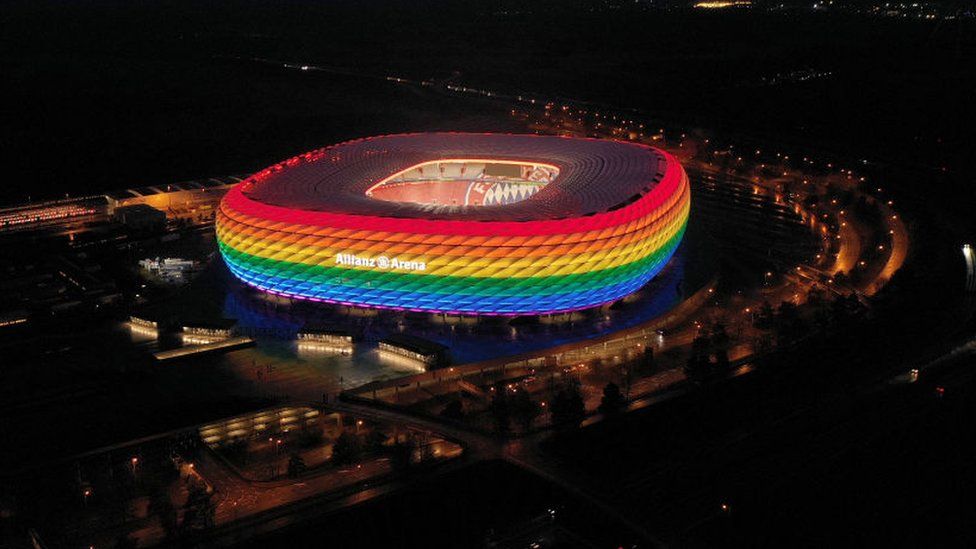
The Munich stadium has lit up before in rainbow colours but Uefa said as an organisation it was politically and religiously neutral
Hours before Hungary’s footballers face Germany in Munich in their final Euro 2020 group stage match, Prime Minister Viktor Orban has cancelled a visit to the game, German reports say.
Earlier Germany and 13 other EU states condemned a Hungarian law that bans portraying homosexuality to under-18s.
Europe’s football governing body has been criticised for not allowing Munich to use rainbow colours in the stadium.
Uefa said it had to deny the request given the political context in Hungary.
German press agency DPA said Mr Orban had cancelled his trip to Munich and was planning to travel to Brussels instead, where an EU leaders’ summit starts on Thursday.
There was no confirmation from the prime minister’s spokesman, who said: “We do not provide information, now as before, on Viktor Orban’s private programme.”
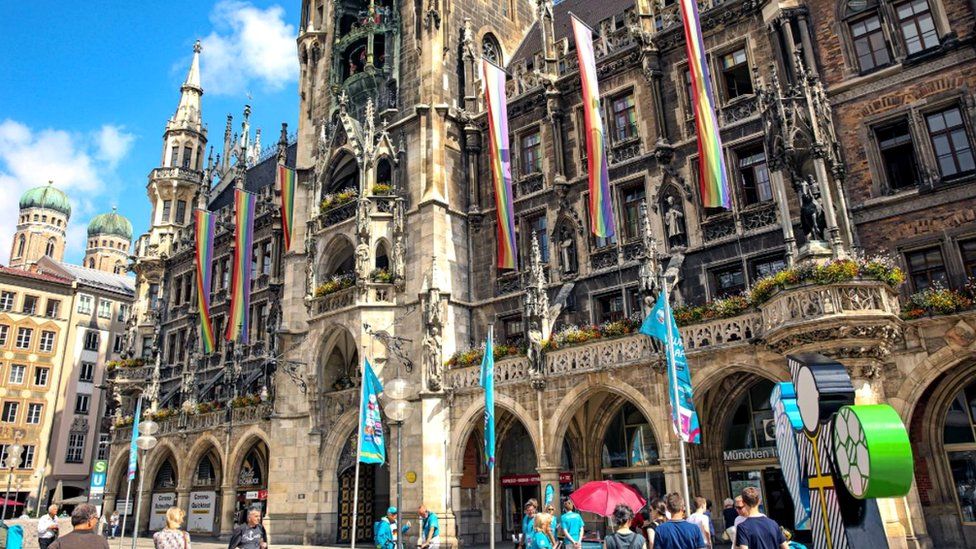
image captionMunich town hall posted a picture on social media showing the facade decorated in rainbow flags
Uefa rejected the request, insisting it was a “politically and religiously neutral organisation”. It later added a rainbow to its logo and said Munich’s request had been political, even though the rainbow symbol was not.
Uefa’s refusal was derided as “shameful” by Mayor Dieter Reiter, while Green party leader Annalena Baerbock called for rainbow colours to be displayed across Germany as a “strong message of diversity”.
Bavarian Premier Markus Söder said Germans had to “stand up against exclusion and discrimination” and Munich’s gay community said rainbow flags would be handed out to fans outside the Allianz Arena ahead of the match at 19:00 GMT.
image captionCampaigners were keen for as many fans as possible to wave rainbow flags inside the Allianz Arena in Munich
German captain Manuel Neuer, who wore a rainbow armband for the first two games, will continue to do so.
Mr Orban told DPA that modern Hungary protected the rights of homosexuals, but “whether the Munich football stadium or another European stadium lights up in rainbow colours is not a state decision”. In Budapest too, he said, rainbow colours were a normal part of the landscape.
Hungarian MPs voted last week to ban depiction or promotion of homosexuality to under-18s, as part of a law against paedophiles.
Justice Minister Judit Varga has rejected condemnation of the anti-LGBT law by 14 EU member states as based on “fake news”. It did not deprive anyone of their rights nor discriminate against any member of society, she insisted, complaining that the countries involved had not contacted Budapest to clarify the true meaning of the law.https://emp.bbc.com/emp/SMPj/2.43.3/iframe.htmlmedia captionViktor Orban in London in May 2021: I’m anti-immigration but not anti-Semitic
Three Hungarian clubs – Ferencvaros, MTK in Budapest and DVSC in Debrecen – said they would light up their stadiums in the red, white and green colours of the national flag.
“Homeland above all,” wrote Ferencvaros president Gabor Kubatov on Facebook. He is also a leading figure in Mr Orban’s ruling Fidesz party.
How broad is the protest?
The outcry against Uefa’s decision has spread far beyond football and politics in Germany.
In Munich alone, the Olympic tower and an enormous wind turbine near the stadium are to be lit up in rainbow colours.
Outside the stadium, a campaign to get as many of the 11,000 supporters as possible to wear stickers or carry flags is being co-ordinated by Christopher Street Day, which organises annual LGBT parades in July across Germany. An estimated 2,000 Hungary fans are expected to attend the game.
Clubs including Stuttgart posted simple messages ahead of the match.
Some of Germany’s biggest companies posted rainbow colours on Facebook and Twitter, including BMW, Volkswagen, Siemens and financial organisations such as Sparkasse and Hypovereinsbank.
Aus Protest gegen das Regenbogen-Verbot der UEFA taucht sich nun auch Münchens Wirtschaft in die Farben des Regenbogens: die Twitter-Profile vom BMW, Siemens, Sparkasse, HypoVereinsbank 👇 pic.twitter.com/VE6ls3Vgne— Stefan Leifert (@StefanLeifert) June 22, 2021
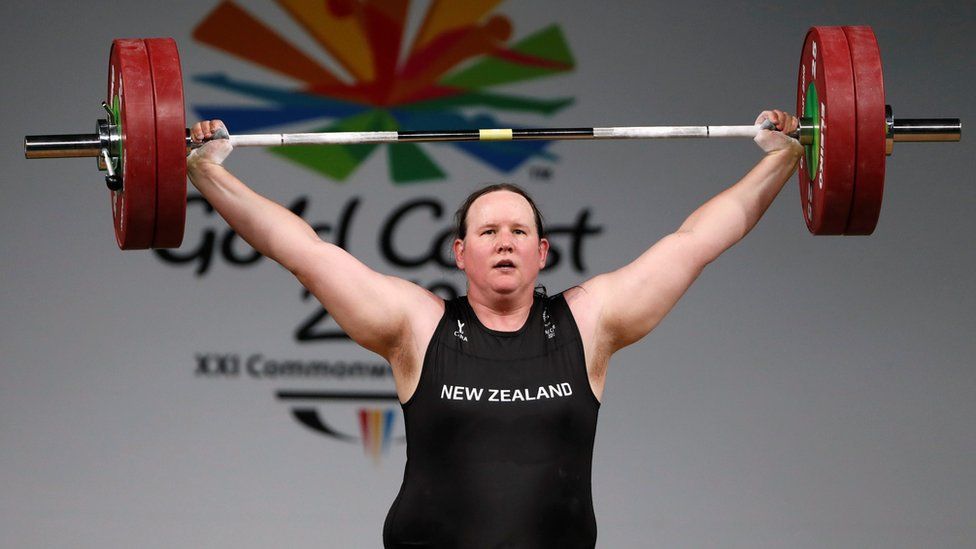
Laurel Hubbard: First transgender athlete to compete officially at Olympics
The 43-year-old became eligible to compete at the Olympics when the International Olympic Committee (IOC) in 2015 changed its rules allowing transgender athletes to compete as a woman if their testosterone levels are below a certain threshold.




 International and Comparative SOGIESC Law - Professor Andreas R Ziegler