This is a blog is related to my academic work in the International Academic Forum on SOGIESC Law but meant to serve anyone who wants to contribute to improve the protection of human rights worldwide. It is intended to keep interested readers informed about legal developments relating to sexual orientation, gender expression and identity and sex characteristics (SOGIESC). Hopefully, it will make it easier to find correct legal information about the developments in all regions of the world and, in particular, with regard to international law.
Lesbian mother of stateless baby takes citizenship fight to top EU court
A baby left without a nationality after she was born in Spain to a same-sex couple from Bulgaria and Gibraltar is at the centre of a test case to be heard by the European Union’s top court on Tuesday (9 February).
Lawyers say Bulgaria has put one-year-old “Baby S” at risk of prolonged statelessness after refusing to provide a birth certificate and citizenship because of discrimination towards her parents’ sexual orientation.
The hearing at the Luxembourg-based court is being seen as an important test case for many other so-called “rainbow families” in Europe who face similar dilemmas.
Experts on statelessness say if “Baby S” cannot acquire citizenship she may not be able to go to school, access healthcare and state benefits, or get jobs later in life.
Her parents, who live near Barcelona, have not yet been able to introduce their daughter to their families abroad because they cannot get her a passport.
After she was born in December 2019, “Baby S” received a birth certificate in Spain listing both her mothers.
However when her Bulgarian mother, who uses the pseudonym Kalina, requested a Bulgarian birth certificate for her daughter so she could apply for citizenship, she said officials told her a baby could not have two mothers.
Bulgaria’s constitution defines marriage as the union of a man and a woman.
“It’s caused us a lot of upset. This discrimination feels very personal and has shocked us,” Kalina told the Thomson Reuters Foundation.
“I want to tell (the court) I’m her mother no matter which country I’m in. It’s very unfortunate that I can be her mother in Spain…but I can’t be her mother in my own home country.”
The couple cannot obtain Spanish citizenship for their daughter as neither of them is a Spanish national.
Gibraltar is a British Overseas Territory located on Spain’s southern tip but British laws mean Kalina’s wife cannot pass on her British citizenship as she acquired it by descent.
Kalina’s lawyer will urge the Court of Justice of the European Union to request Bulgaria provide “Baby S” with a birth certificate and nationality.
The Luxembourg-based court, which ensures EU countries comply with the bloc’s laws, is also considering a similar case where Poland refused to issue a birth certificate for a child born in Spain to Polish and Irish mothers.
“This ruling will be important for many people,” said Kalina’s lawyer Denitsa Lyubenova.
“There are a lot of same-sex couples in Europe in the same position, whose children are at risk of statelessness because EU member states in central and eastern Europe do not recognise their family status.”
European Commission President Ursula von der Leyen has said she will push for mutual recognition of family relations in the European Union under a new strategy to strengthen LGBT+ rights.
“If you are (a) parent in one country, you are (a) parent in every country,” she told the European Parliament last year.
The recent decision of the Czech Constitutional Court (‘CCC’), Pl. ÚS 6/20, against allowing recognition of foreign adoption decisions in Czechia is harmful in outcome and evasive and formalistic in its reasoning.
Angola law prohibiting discrimination based on sexual orientation takes effect
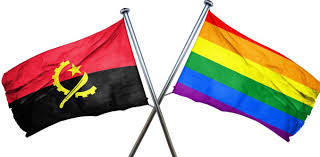
Angola’s revised penal code went into effect Wednesday, not only decriminalizing same-sex relationships, but also banning discrimination on the basis of sexual orientation.
The penal code was approved by the Angolan parliament in 2019, but was not signed by the president into law until November 2020, to take effect in February of this year. It was the first revision of the penal code since Angola gained independence from Portugal in 1975. The original penal code contained holdovers from the colonial era, including banning “vices against nature,” widely understood to mean homosexuality. That provision has been removed in the revised code.
The new code lists sexual orientation as a protected class. Angolans cannot be fired because of their sexual orientation, nor can they be refused goods, services, or any other economic activity because of their sexual orientation. Violators of the prohibition could be subject to up to two years in prison. The code also adds penalties for those who defame or otherwise insult the honor of a person because of their sexual orientation.
The news of the penal code taking effect was met with celebrations online. French politician and noted LGBTQ activist Jean-Luc Romero-Michel called it a “great step forward for human rights which should inspire others.”
Join us online: « LGBT at work : quelques résultats d’une recherche sur les parcours professionnels de personnes LGBT dans le monde du travail », JEUDI 4 MARS | 12h15 – 13h45 | en ligne (ZOOM)
JEUDI 4 MARS | 12h15 – 13h45 | en ligne (ZOOM)
Lorena Parini
« LGBT at work : quelques résultats d’une recherche sur les parcours professionnels de personnes LGBT dans le monde du travail »
Séance externe
COORDINATION
Charlène Calderaro et Muriel Bruttin
INFORMATIONS PRATIQUES
Tous les liens de connexion aux salles virtuelles seront communiqués une semaine avant la séance.
Les séances internes sont ouvertes uniquement aux membres et membres associé·e·s du CEG.
Les séances externes sont ouvertes au public sur inscription.
Pour vous inscrire, merci d’écrire à muriel.bruttin@unil.ch au moins 48h avant la séance.
USA: New Biden executive action bolsters support for LGBTQI+ rights around the world
Yesterday, President Biden issued a memorandum proclaiming the administration’s support for LGBTQI+ people and rights globally. LGBT people continue to face violence, stigma, and discrimination in many parts of the world despite advances in some countries and regions.
A 2019 Williams Institute study that measured changes in acceptance of LGBT people over time across 174 countries found the average level of acceptance has increased since 1981, but progress has been polarized. Other research found a strong association between social acceptance of LGBT people and the existence of laws that recognize and protect the rights of LGBT people. In addition, countries that offer more rights to LGB people enjoy significantly higher per capita GDP than those who do not.
France: Pourquoi a-t-il fallu un #MeTooGay pour qu’émerge vraiment la parole des hommes homosexuels victimes de viol ?
Un drapeau arc-en-ciel lors de la Pride 2020 à Paris. (Photo d’illustration) (AMAURY CORNU / AFP)
La stigmatisation de l’homosexualité et la difficulté de faire souvent partie de la même communauté que son agresseur peuvent expliquer que ce #MeTooGay éclate plus tardivement, analyse le sociologue Sébastien Chauvin. Article rédigé par
Propos recueillis par – Louis Boy France Télévisions Publié le 22/01/2021 19:06 Mis à jour le 22/01/2021 19:10 Temps de lecture : 4 min.
Les récits, glaçants, se multiplient. Le mot clé #MeTooGay s’est installé, depuis la nuit du jeudi 21 au vendredi 22 janvier, parmi les plus utilisés en France sur Twitter, porté par des centaines d’hommes homosexuels témoignant des viols et des agressions sexuelles dont ils ont été victimes.
Le hashtag est né en réaction aux messages d’un utilisateur accusant Maxime Cochard, élu PCF au Conseil de Paris, et son conjoint de viol et d’agression sexuelle. Une vague de témoignages inédite au sein de la communauté gay, même au plus fort du mouvement #MeToo en 2017. Sébastien Chauvin, professeur associé à l’Institut de sciences sociales de l’université de Lausanne (Suisse) et notamment coauteur de Sociologie de l’homosexualité, analyse pour franceinfo le sens de son émergence.
Franceinfo : Y avait-il besoin d’un hashtag spécifique pour que la parole des victimes gay de violences sexuelles se libère et soit entendue comme elle l’est depuis jeudi soir ?
Sébastien Chauvin : Oui, on vient d’en faire l’expérience : il a suffi que le hashtag apparaisse et les témoignages ont afflué. Ça montre qu’il y avait un besoin. Dès le début de #MeToo, il y a eu des témoignages d’hommes, mais ils ont été dilués dans ce mouvement plus général. Récemment, des témoignages ont aussi émergé sur #MeTooInceste, ce qui correspondait d’ailleurs à une spécificité des violences sexuelles commises sur des hommes : selon les travaux de l’Ined, la majorité d’entre elles ont été subies avant 18 ans. Ce contexte peut expliquer que la question ait mis un certain temps à prendre une forme autonome.
Au moment de #MeToo, la question du consentement a aussi pu être reçue comme une question hétérosexuelle. Implicitement, souvent, on maintenait une asymétrie de genre, on parlait des hommes qui devaient demander le consentement à des femmes. Cela a pu empêcher de problématiser cette question entre les hommes.
Cependant, le #MeTooGay a en commun avec #MeToo de parler de violences qui ont un lien avec le patriarcat. Et les témoignages des femmes ont aussi appris aux hommes à voir les violences dont ils étaient victimes comme patriarcales. L’immense majorité des hommes victimes de violences sexuelles sont victimes d’autres hommes.
Est-ce que ce mouvement au sein de la communauté gay reflète aussi des spécificités de violences sexuelles dont ils sont victimes ?
La stigmatisation de l’homosexualité peut jouer un rôle dans la difficulté à faire émerger la parole des victimes. Pour beaucoup de gens qui sont dans le “placard” à cause de cette stigmatisation, porter plainte, c’est aussi faire son coming out. Et le faire auprès d’une police qui peut, parfois, ne pas prendre au sérieux une agression commise à l’intérieur d’un milieu “altérisé”.
C’est aussi un milieu qui a pu se construire autour du droit à la sexualité, de sa valorisation, et de l’idée qu’elle pouvait être une forme de résistance. Cela a pu induire une forme de culpabilité chez certaines victimes. De même que le fait que, contrairement au #MeToo des femmes, dans le #MeTooGay, la communauté gay n’est pas seulement le groupe des victimes. Il est évidemment très difficile pour les femmes de porter plainte, pour de multiples raisons. Mais pour les hommes gay, une spécificité est qu’il n’y avait pas de groupe clairement désigné auprès duquel trouver un appui.
Pourquoi ce hashtag émerge-t-il maintenant, en réaction à cette affaire [l’accusation de viol portée contre l’élu parisien Maxime Cochard et son compagnon] ?
Il y a toujours une part de hasard, mais le fait que ça naisse d’une affaire concernant un responsable politique de gauche n’est pas anodin. Non pas parce que ça se passerait davantage à gauche, mais parce qu’on y trouve l’écosystème nécessaire pour entraîner ces réactions. Comme pour #MeToo [#BalanceTonPorc en France] : rappelons-nous que cela avait été précédé, chez nous, par l’affaire Denis Baupin[du nom d’un responsable d’EELV accusé en 2016 de harcèlement et d’agressions sexuelles par huit élues ou collaboratrices du parti]. Si c’était arrivé en dehors de ce réseau militant, si les accusations avaient visé quelqu’un du show business ou un youtubeur, comme c’est d’ailleurs déjà arrivé, cela n’aurait peut-être pas entraîné un tel mouvement.
Bien sûr, il est né entre des gens jeunes, qui sont sur Twitter, beaucoup aussi de journalistes. Mais cela peut s’élargir, #MeToo aussi avait commencé comme ça. La presse internationale est déjà en train de faire des articles sur ce phénomène français, et mon intuition est que dans 48 heures, il sera mondial.
Qu’est-ce que cette vague de témoignages peut contribuer à changer, pour les victimes et dans les mentalités des agresseurs ?
Je pense que, comme dans le #MeToo hétéro, beaucoup de gens qui savent qu’ils ont subi des choses violentes, mais qui n’avaient pas mis de termes précis dessus, peuvent avoir cette prise de conscience. Et un #MeTooGay peut changer la perception sociale de la parole des homosexuels victimes. Cela permettrait d’éviter, par exemple, la désinvolture avec laquelle on a récemment mis en doute le témoignage de l’écrivain Edouard Louis, dont ce qui frappe, au miroir des témoignages qu’on lit depuis jeudi soir, est la terrible banalité [l’homme accusé par le romancier a été relaxé en décembre 2020, le parquet a fait appel].
Je crois aussi que les mentalités peuvent changer, mais je ne sais pas si ce sera le cas. Il est quand même assez clair qu’il existe une différence générationnelle, que l’on a aussi vu lors de #MeToo. On parle de faits qu’une partie des générations antérieures avaient peut-être trop classés dans une “zone grise”, et que les plus jeunes ne voient pas de la même façon. Cela va faire réfléchir, mais il est possible que ce clivage persiste.
USA: New York governor signs legislation repealing state anti-loitering law that impacted trans women
New York Governor Andrew Cuomo signed legislation Tuesday that repeals a section of the New York penal law that led to arbitrary and discriminatory policing of transgender women and cisgender women of color.
Section 240.37 of the New York penal law, sometimes known as the “walking while trans” ban, prohibited loitering “for the purpose of engaging in a prostitution offense.” The law was originally passed in 1976. While the purpose was to prohibit loitering for the purpose of prostitution, it has largely been used to target law-abiding transgender and cisgender women of color.
According to the lead sponsor of the bill, New York State Senator Brad Hoylman, data from the New York State Division of Criminal Justice Services showed that 91 percent of people arrested under the statute were Black and Latinx. Of those, 80 percent identified as women.
Senate Bill 1351, signed Tuesday, repealed section 240.37. It also amended section 230.01, which deals with affirmative defenses for prostitution.
COVID exposed low tide in America and the “walking while trans” policy is one example of the ugly undercurrents of injustices that transgender New Yorkers—especially those of color—face simply for walking down the street. For too long trans people have been unfairly targeted and disproportionately policed for innocent, lawful conduct based solely on their appearance. Repealing the archaic “walking while trans” ban is a critical step toward reforming our policing system and reducing the harassment and criminalization transgender people face simply for being themselves.
ILGA: “If You Are Parent in One Country, You Are Parent in Every Country”: But still today a child can be stateless in the EU just because it has two mothers
A baby born to two mothers, one from Gibraltar and one from Bulgaria, has become a test case at the European Court of Justice for the freedom of movement of rainbow families in the EU. Read on and find out how to join our campaign for parents without borders!
Born in the EU, Sara is the daughter of a Gibraltar-born mother and a Bulgarian mother. Under EU rules, baby Sara is a Bulgarian citizen. However, Bulgarian authorities do not believe that a child can have two mothers and have denied citizenship to Sara, putting her at risk of statelessness. The Court of Justice of the European Union in Luxembourg will hear Baby Sara’s case on February 9. It is a unique opportunity for the court to take a stand in support of rainbow families and their right to free movement.
“If you are parent in one country, you are parent in every country” said Ursula von der Leyen, President of the European Commission, in her address of the State of the Union in September 2020. However, this is not the reality for many rainbow families, and it has certainly not been the case for baby Sara and her parents so far. Through this case, the Court of Justice of the European Union (CJEU) has the chance to help make President von der Leyen’s words a reality for all families in the EU.
The story of Baby Sara’s family
Kalina* and Jane* got married in 2018 in Gibraltar, Jane’s birthplace. Kalina is from Bulgaria, a member state of the EU. Because it is part of the United Kingdom, since January 1 of this year, Gibraltar has exited the EU.
Baby Sara was born in December 2019 in Spain. Like Bulgaria, Spain is a member state of the EU. Sara’s birth certificate lists Kalina and Jane as her mothers. However, under the national laws of Spain and the UK, Sara could not become a citizen in either country. Not in Spain, because neither of her mothers have Spanish citizenship, and not in the UK, as Jane, who was born of British parentage in Gibraltar, could not transfer British citizenship to Baby Sara, who was born outside the UK.
Therefore, Kalina requested Bulgarian citizenship for their child. Bulgarian authorities rejected the application, arguing that a baby cannot have two mothers, and refused to issue a birth certificate in which the parents are two persons of the same sex. In Bulgaria, same-sex marriages are not allowed. As a result, Sara has no personal identification documents and cannot leave Spain, where the family currently lives.
In the long run, Sara is at risk of statelessness. Without documents, she will not be able to attend school. Kalina lodged a claim against Bulgarian authorities before the Administrative Court of Sofia, which in turn referred four questions to the CJEU asking for clarification. The CJEU will hold a hearing in this case on February 9 by the Grand Chamber, composed of 15 judges.
Why the court should judge in Baby Sara’s favour
“All EU citizens and their families have the right to enjoy freedom of movement,” says Arpi Avetisyan, Head of litigations at ILGA-Europe. “Article 21 of the Treaty on the Functioning of the European Union states that all EU citizens and their family members have the right to move and reside freely within the EU. Through this case, the CJEU has the opportunity to clarify that parentage established in one member state must be recognised across the EU.
“In 2018, the CJEU delivered a judgement on the Coman case, saying that the definition of ‘spouse’ in EU law on freedom of movement includes same-sex couples. Therefore, “arguments on ‘constitutional identity’, namely that Bulgaria does not recognise rainbow families, cannot justify a violation of EU law.”
Severe obstacles for children
Unfortunately, Sara’s situation is not an isolated case. According to Arpi, it is representative of what many rainbow families experience across the EU. “Parents cease to exist when moving from one EU country to another, where birth certificates from another member state are not recognised. These situations create severe obstacles for children in exercising the rights to which they are entitled under European and international law. Among others, the Convention on the Rights of the Child (CRC) is violated, restricting access to education, healthcare, and social security.”
The CJEU must clarify that if you are a parent in one EU country, you are a parent in every EU country. Help make this a reality by joining our #parentswithoutborders campaign!
Authorities in #Bulgaria are not recognising the valid #EU birth cert of the child of a same sex couple. On Feb 9 the CJEU must clarify that if you are a parent in one EU country, you are a parent in every EU country #ParentsWithoutBorders
*Names have been changed Tags: rainbow familiesBulgariaUrsula von der LeyenEuropean Commission
In November 2020, the Constitutional Court of Latvia recognised that the Constitution of Latvia (Satversme) obliges the state to protect all families, including those established by same-sex couples. The judgement was met with considerable political backlash and at the beginning of January prompted the right‑wing party Nacionālā Apvienība to submit an initiative to amend the Satversme with a new, excluding definition of family. Perhaps more worrisome is how the amendment and the associated campaign openly attack the authority of the Constitutional Court.
The essence of the amendments
On 7 January 2021, Nacionālā Apvienība (hereinafter NA) – one of the governing parties – submitted to the Parliament of Latvia (the Saeima) draft amendments (hereinafter draft law) to Article 110 of the Satversme, which provides for the following wording:
“The state protects and promotes marriage – a union between a man and a woman, a family based on marriage, blood relation or adoption, the rights of parents and children, including the right to grow up in a family established by a mother (woman) and a father (man). […].”
Thus, three possible ways in which a family can be formed are outlined: marriage, blood kinship and adoption. Additionally, the abovementioned family must be based on a union of a mother (woman) and a father (man). This definition excludes same-sex couples both due to these explicit clarifications as well as the current lack of ways for the partners of a same-sex couple to assert their union before law.
Despite Prime Minister Krisjanis Karins’ (member of the Jaunā Vienotība party) stance that “[t]his is not the right time to amend the constitution”, on 14 January 2021, 47 MPs voted for the referral of the draft law to all Committees of the Parliament for further review and debate, with the Committee of Legal Affairs being the main responsible. The committees draft an opinion on the draft law and advise on whether the legislative procedure of the draft law should be continued.
With the Judgment, the Constitutional Court recognised the state’s positive obligation to protect all families, including those established by same-sex couples. The applicant – a woman in a same-sex relationship – had challenged the paternal leave legislation. She argued that the state failed to comply with its obligation to protect the family and was discriminating on the basis of sexual orientation as the law did not grant her as the second parent the right to parental leave of ten calendar days after the birth of the partner’s child as it would be in case the other family member was a man (a father).
After the public hearing, the Court reiterated that a family is a social institution based on strong personal ties which are founded on mutual respect and understanding and the existence of which can be confirmed in social reality. Furthermore, the Court emphasised that it would be contrary to the principle of human dignity to hold that the dignity of one person might be less valuable than another person’s dignity. The principle of human dignity prohibits the state from abandoning its obligation to ensure the protection of human rights of a particular individual or a group of individuals. In a democratic state which is based on the rule of law, potentially extant stereotypes in society cannot serve as a legitimate excuse for denying or infringing human rights of a particular individual or a group of individuals.
On this basis, the Court concluded that the legislator had not fulfilled its positive obligation to ensure legal, social and economic protection also to families of same-sex couples.
This is the first statement adopted by a constitutional institution in Latvia calling for the legal protection of same-sex couples. Unsurprisingly, the Judgment was followed by divergent reactions. Some celebrated, as they were finally recognised as equal parents. Others, including some MPs, disregarded the principles of loyal cooperation and respect between constitutional institutions and went so far as to demand the abolition of the Constitutional Court.
All that led to the grand finale – the draft law, as, according to its authors, the Judgement offers an arbitrary interpretation of the concept of family, which does not conform to the will of the legislator expressed in the current wording of Article 110 of the Satversme or to the understanding of the Latvian society.
Consistent case law
The Judgement did not come as a surprise. The Court had elaborated on the notions of family and human dignity in its case law before.
In 2004, the Constitutional Court was faced with the opportunity to apply Article 110 of the Satversme for the first time. It established that the notion of family is not based solely on marriage and that it may include other de facto family ties. In 2019, the Court established that a family is a social institution, based on strong personal ties which are founded on mutual respect and understanding and which can be confirmed in the social reality. The Court had also recognised that the state is obliged to ensure the legal protection of families. In 2020, in a case concerning the obligations in regard to the guaranteed minimum income level deriving from the principle of the welfare state, the Court established that the state is obliged to ensure a just social order, levelling out the most significant social differences in society, fostering social inclusion and ensuring to each group of its inhabitants the possibility to lead a life that conforms to human dignity.
Until now, the Saeima had ignored these developments and citizens’ demands by simply refusing to review collective initiatives and draft laws. Now, however, a law will indeed be reviewed, just not the one expected.
The apparent issue with the draft law is that it dwells on an illusion of a “perfect, heterosexual family” (i.e., a nuclear family) and is oblivious to the complexity of family relationships as they exist in society. According to 2011 data (the most current statistics available), spouses with children accounted only for 32.3% of families in Latvia – meaning that 67.7% of the population lived in families that do not correspond to the narrow definition proposed by the NA. Additionally, the NA has indicated that upon adoption of the draft law one-parent families would also be protected; however, the wording connotes that families consisting, for example, of a child, its mother and grandmother, cannot ensure full respect towards the child’s alleged right to live in the “perfect family” and, therefore, do not deserve to be protected equally (or to be mentioned at all).
Be as it may, the draft law must also be analysed in a broader context.
First, the draft law is an open attack on the role and authority of the Constitutional Court. The role of the judicial bodies performing judicial review on constitutional grounds is to constrain the legislature from using its power against minorities and in violation of individual rights. Moreover, a constitutional court can properly perform its mission only when it possesses the authority to invalidate any public act that violates human and constitutional rights, and when its decisions are effectively protected from override on the part of the public officials whose decisions it reviews.
If the draft law was to be adopted, it would serve as a precedent legitimising the idea that any interpretation of the Constitution contradictory to the political majority’s opinion could be overruled by constitutional amendments. Statements to that effect have already been promoted in the media by highlighting that the aim of the draft law was to correct the Court’s work (or – to be even more direct – its “mistakes”). The same is directly expressed in the the explanatory note of the draft law, which notes that the amendments would allow sparing state resources which otherwise would have to be used for the execution of the Judgement. However, a constitutional court unable to actually perform judicial review due to its judgements being overruled by the legislature is a mere shell of the beacon of human rights it is supposed to be in a democratic state which is based on the rule of Law.
Second, considering the standard for the protection of family enshrined in the Satversme, the premise of the draft law disregards the human dignity of same-sex couples. The legal and policy protection for LGBTQ+ people in Latvia is already the second-lowest of all EU members, making concessions only to Poland. Instead of improving the situation and working towards the inclusion and respect of human rights and full equality of everyone, the draft law would worsen the situation even more.
A Tense Wait
The attempts to undermine the authority of the Constitutional Court by de facto invalidating its judgements and to dehumanize LGBTQ+ people resemble to processes which seem to be prevalent in backsliding democracies, such as Poland and Hungary. The adoption of the draft law could do both – serve as a tool for overruling the Judgement and setting a precedent for similar further activities, and dehumanize sexual minorities. These events could be the envoys of the twilight of Latvian democracy.
However, what is important is that nothing is decided yet. The content of the draft law can still change dramatically as lots of work and debating will take and already is taking place within the committees. Additionally, the requirements for a constitutional amendment are high: the Saeima must hold three sittings with at least two-thirds of the members of the Saeima participating and a majority of not less than two-thirds of the members present voting for the amendment.
Indonesia province publicly canes two gay men under Islamic Sharia law
Officials in Indonesia’s Aceh province publicly caned two men Thursday for breaching the Islamic Sharia law by having a same-sex relationship. Four other people were also caned for a variety of offences.
The two men received 77 lashes each. Of the remaining four, two received 40 lashes for alcohol consumption and the other two received 17 lashes for adultery.
Indonesia’s conservative Aceh province has a strict Islamic criminal code (Qanun Jinayat) that criminalizes adultery, homosexuality, gambling, alcohol and public displays of affection outside of a legally recognized relationship. Homosexuality is not illegal anywhere else in majority-Muslim Indonesia, but Aceh was granted the right to practice Sharia law as part of a peace deal with the Indonesian government in 2006 to end a decades-long separatist war.
The criminal law came into force in 2015. Since then, hundreds of people have been publicly caned. Authorities and vigilantes have been known to raid private spaces and houses to target defectors, especially from the highly persecuted LGBT community.
Numerous human rights groups protested against the harsh punishments of Thursday by deeming them as public torture. Human Rights Watch stated: “The Indonesian government has made commitments in principle to protect LGBT people. But it seems President Joko ‘Jokowi’ Widodo’s slogan of ‘unity in diversity’ does not genuinely extend to protecting everyone – including the two men mercilessly flogged today.”
Whipping is recognized as torture under various international laws and conventions, although the Aceh province continues to use it to target the LGBT community and religious minorities.





 International and Comparative SOGIESC Law - Professor Andreas R Ziegler