This is a blog is related to my academic work in the International Academic Forum on SOGIESC Law but meant to serve anyone who wants to contribute to improve the protection of human rights worldwide. It is intended to keep interested readers informed about legal developments relating to sexual orientation, gender expression and identity and sex characteristics (SOGIESC). Hopefully, it will make it easier to find correct legal information about the developments in all regions of the world and, in particular, with regard to international law.
Greece: Transposition of Directive (EU) 2010/13 on the provision of audio-visual media services (which includes television, internet, music songs etc.(‘Prohibition of incitement to violence or hatred’)
On 19 February 2021, the Greek Parliament voted Law 4779/2021,1 which in Article 8, under the title ‘Prohibition of incitement to violence or hatred’, transposed Article 6 of Directive (EU) 2010/13 that concerned provision of audio-visual media services (including television, internet, music songs etc.).
According to the relevant provision that was finally voted, ‘audiovisual services must not incite violence or hatred against a group of people or members of a group determined on the basis of race, colour, national or ethnic origin, pedigree, religion, disability, sexual orientation, identity or gender characteristics’.
The Royal Spanish Swimming Federation (RFEN) has opened an official investigation regarding the alleged homophobic insults during and after the game Terrassa – Sabadell played on Saturday.
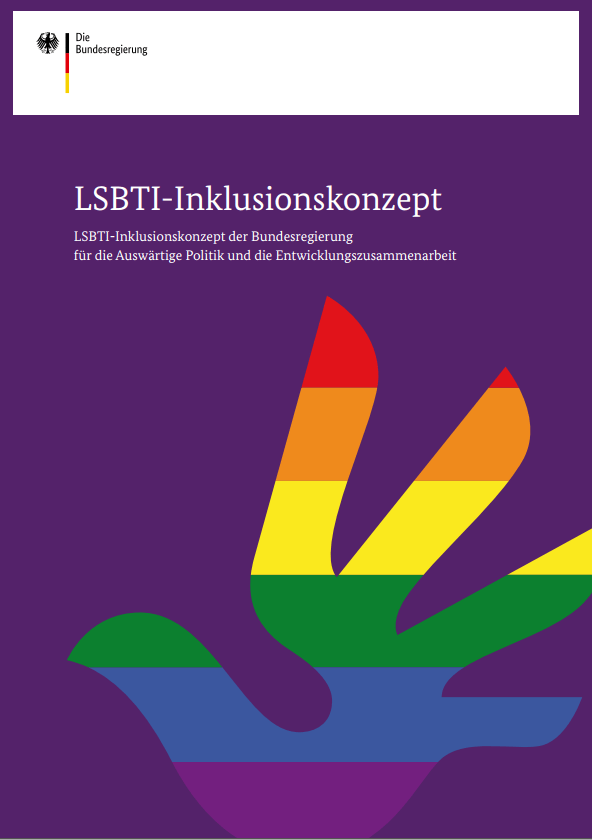
On 3 March 2021 the German Federal Government adopted its LGBTI Inclusion Strategy to promote the inclusion of lesbian, gay, bisexual, transgender and intersex people (LGBTI) in foreign policy and development cooperation
United Nations Free & Equal : Stand Up for LGBTIQ+ Migrants!
Dear friends,
United Nations Free & Equal is launching a new mini-campaign today, this time focusing on the lives and experiences of those of us who are often left unheard – LGBTIQ+ migrants.
For many LGBTIQ+ people, leaving their communities in search of a safer and more welcoming place to call home is the only way to find a job, get access to healthcare or find safety from poverty, family rejection, criminalization, threats and violence. For some, this means moving from a small town to the big city. For others, it can require moving from one part of the world to another – surviving a dangerous journey and staggering odds in order to try to find a place where they can live openly as their true selves. But discrimination doesn’t always stop upon arrival at their destination. Many continue to face prejudice, harassment and violence both based on where they were born as well as based on their sexual orientation, gender identity/expression or sex characteristics. Unable to find a community where they are truly accepted, LGBTIQ+ migrants often struggle with loneliness, helplessness and depression. Even everyday acts that most of us take for granted, such as going to the doctor or opening a bank account, can be dangerous for those who are undocumented because they can lead to deportation or imprisonment. For those who also face marginalization for other reasons, such as their race, ethnicity, age, gender, disabilities, religion or other characteristics, the situation can get even more precarious.
Every human being deserves the freedom to simply be themselves, without facing violence and discrimination. Together we can create a future free from prejudice, where everyone truly belongs – no matter who they are, whom they love or where they come from.
Male Rape in Armed Conflicts: Why We Should Talk About It
By Saipira Furstenberg | 1st July 2014
Sexual violence represents one of the most serious forms of violation of an individual’s human rights. Although statistics for sexual violence against women are significantly higher than for men, it should not be forgotten that rape not only affects the female population, but is also a concern for many men and boys who have been exposed to it, particularly in warfare conflicts.
The issue of sexual assault of men and boys on the current global agenda is not raised nearly enough, and remains largely underreported. The cultural barriers to recognising and addressing male sexual abuse are currently under-researched, and remain primarily a taboo topic. In addition, the lack of widespread institutional recognition of male rape, combined with feminist movements, defining sexual violence as exclusively a women’s issue, has resulted in the failure to include this section of the population in policy and research agendas of governments, donor agencies and academic institutions. This framework has created a lack of attention to male victims in sexual abuse scenarios. Most of the international and national institutions barely acknowledge sexual violence against men that occurs in armed conflicts.
Because the topic of male rape in our often male- dominated culture remains largely unaddressed, there is little understanding about the issue and hence it is considered for many to be an unmentionable subject. As a result, cases of reporting such abuse remain rarer than those for women, mainly because of shame and fear of stigmatisation.
Research focusing on male sexual violence also reveals that there is a lack of adequate services in place to respond to the victim’s needs. A study carried out in 2002 notes that out of 4076 non-governmental organizations that worked in the area of war rape and other forms of political and sexual violence, only 3% mentioned sexual violence against men and boys ‘in their programs and informational literature’. Similarly, there are reports that many international initiatives, while addressing the issue of war rape, lack clear understanding and consensus around the topic in general, and as such remain poorly designed for addressing war rape abuses against men and boys in particular. In the United Nations (UN) Declaration of Commitment to End Sexual Violence in Conflict (September, 2013), there is only one line mentioning that men and boys are also subject to sexual violence. In many of the UN’s key documents, sexual violence is considered solely as a gender issue involving only women and girls. This reflects the lack of mobilisation and understanding by the UN agencies, governments and NGOs on the topic of sexual violence perpetuated against men and boys in conflict zones.
There is a need to address causes of sexual violence and to create greater emergency responses. For our society to end sexual violence around the world, organisations such as the UN should first recognise that men can be as vulnerable as women. It should not be forgotten that although there is a higher prevalence of sexual violence against women in war zones, ultimately both form part of the gender dimension of conflict. The need to put more emphasis on men and boys as victims of sexual violence in the UN Declaration of Commitment to End Sexual Violence in Conflict can perhaps be the first starting point. It is insufficient simply to state that ‘men and boys are also subject to sexual violence’. There is indeed a need to create awareness not only about women’s rights, but more generally about human rights. Only then can we start to break down the wall of silence and adopt proper strategies to bring change in this field.
Saipira Furstenberg is a Doctoral Researcher at the Research Centre for Eastern European Studies at the University of Bremen, Germany. Her current research is focused on the topic of transparency within authoritarian regimes
Source: “Male Rape in Armed Conflicts: Why We Should Talk About It”_2014. Global Perspectives on Human Rights. Oxford Human Rights Hub. Oxford University Press. 253-254.
With regard to the recognition in the European Union of the parentage of a child of a married same-sex couple, Advocate General Kokott recommends that a balance be struck between the national identity of the Member States and the right to freedom of movement of the child and of his or her parents
With regard to the recognition in the European Union of the parentage of a child of a married same-sex couple, Advocate General Kokott recommends that a balance be struck between the national identity of the Member States and the right to freedom of movement of the child and of his or her parents More specifically, a Member State must recognise the parentage of a child for the purposes of the exercise of the rights conferred by EU law on European Union citizens. It may, by contrast, rely on its national identity and its concept of a traditional family in order to refuse to recognise that parental relationship for the purpose of drawing up a birth certificate in accordance with its national law The dispute concerns a married couple consisting of two women, one of whom, V.M.A., is a Bulgarian national, while the other is a national of the United Kingdom; they had a child in Spain, their Member State of residence. In the birth certificate issued by the Spanish authorities, the two women are designated as ‘mothers’ of the child.
V.M.A. therefore applied to the competent Bulgarian authority to issue her with a birth certificate for her daughter, a document which is necessary for the issuing of a Bulgarian identity document, mentioning the two women as parents. The municipality of Sofia (Bulgaria), however, requested her to indicate which of the two spouses is the biological mother, stating that the model Bulgarian birth certificate provides only one box for the ‘mother’ and another for the ‘father’, and that each of those boxes may include only one name. Following V.M.A.’s refusal to supply the requested information, that authority rejected her application.
That rejection is based, according to the municipality of Sofia, on the absence of information concerning the biological mother and on the fact that the registration of two female parents in a birth certificate is contrary to the public policy of Bulgaria, which does not authorise marriages between persons of the same sex. V.M.A. brought an action against that decision before the Administrativen sad Sofia-grad (Administrative Court of the City of Sofia).
That court essentially asks the Court of Justice whether the refusal of the national authorities to register the birth of a Bulgarian child which occurred in another Member State and is attested by a birth certificate in which that Member State designates two mothers is contrary to EU law.
As a preliminary point, Advocate General Juliane Kokott notes that, contrary to what the national court states, it cannot be asserted with certainty that the child is a Bulgarian national. That assertion was contested by the Bulgarian Government, given that Bulgarian nationality is acquired automatically by any person who has at least one Bulgarian parent, whereas in the present case the identity of the biological mother is not known.
The Advocate General states that, even if the child is not a Bulgarian national and is therefore not a European Union citizen, the situation does not fall outside the scope of EU law. In that case, the question remains whether a European Union citizen, V.M.A., who has exercised her right of free movement and has become the mother of a child with her wife pursuant to the law of another Member State, may request that her Member State of origin recognise that situation and issue a birth certificate designating the two women as the child’s parents.
Next, Advocate General Kokott points out that EU law does not govern the rules relating to the establishment of a person’s civil status and, in particular, his or her parentage. Member States must nevertheless exercise their powers in that regard in compliance with EU law. She notes that the right to freedom of movement in the European Union includes the right to lead a normal family life in both the host Member State and the Member State of origin of an EU citizen. In the present case, V.M.A. and her wife validly acquired the status of parents of the child pursuant to Spanish law and they lead an effective family life with their daughter in Spain. The absence of recognition of those family relationships would, however, create serious obstacles to a family life in Bulgaria, even to the point of deterring V.M.A. from returning to her country of origin. The same considerations apply to the situation of the child, provided that she is Bulgarian and thus enjoys the status of an EU citizen. Moreover, pursuant to Bulgarian law, the issuing of a birth certificate is a prerequisite for the issuing of a Bulgarian identity document: a refusal to issue it would therefore undermine the effective exercise of the child’s right to freedom of movement.
The Advocate General is therefore of the view that the refusal of the Bulgarian authorities to draw up the requested birth certificate constitutes an impediment to the rights which EU law confers on V.M.A. and, in so far as her child is a Bulgarian national, on that child.
Next, the Advocate General verifies whether the national identity relied on by Bulgaria may justify that refusal. According to that Member State, the adverse effect on the national identity lies in the fact that the requested birth certificate disregards the concept of a ‘traditional’ family affirmed by the Bulgarian Constitution, which, in that Member State’s view, necessarily means that a child can have only one mother (or father). The Advocate General considers that family law is the expression of a State’s self-image on both the political and social levels. The definition of family relationships for the purposes of domestic family law is therefore liable to form part of the fundamental expression of a Member State’s national identity. This means that a restriction of the intensity of the Court’s review is necessary in order to preserve the existence of areas of substantive powers reserved to the Member States. Consequently, in so far as that essence of national identity is at issue, reliance on that identity may not be subject to a review as to its proportionality.
Nevertheless, according to the Advocate General, the obligation to recognise the family relationships established in Spain for the sole purpose of applying the EU secondary law1) relating to the freedom of movement of citizens does not alter the concept of parentage or marriage under Bulgarian family law; nor does it lead to the introduction of new concepts.
Consequently, such an obligation does not threaten the fundamental expression of national identity, while removing a significant number of the obstacles to freedom of movement, such as the uncertainties surrounding the right of residence of the child’s British mother or the possibility for that mother to move freely with the child. Having regard to the limited impact of that obligation on the Bulgarian legal order, the refusal to recognise the parentage of the child as regards V.M.A. and her wife for those purposes goes beyond what is necessary to preserve the objectives relied on by Bulgaria.
Bulgaria thus may not refuse to recognise the parentage of the child for the purpose of applying the EU secondary law relating to the free movement of citizens on the ground that Bulgarian law does not provide for either the institution of same-sex marriage or the maternity of the wife of a child’s biological mother. If the child is a Bulgarian national, that means, in particular, that Bulgaria must issue her with an identity document or a travel document referring to V.M.A. and her wife as the parents, in order to allow the child to travel with each of her parents individually.
1) In particular Directive 2004/38/EC of the European Parliament and of the Council of 29 April 2004 on the right of citizens of the Union and their family members to move and reside freely within the territory of the Member States, amending Regulation (EEC) No 1612/68 and repealing Directives 64/221/EEC, 68/360/EEC, 72/194/EEC, 73/148/EEC, 75/34/EEC, 75/35/EEC, 90/364/EEC, 90/365/EEC and 93/96/EEC.(OJ 2004 L 158, p. 77) and Regulation (EU) No 492/2011 of the European Parliament and of the Council of 5 April 2011 on freedom of movement for workers within the Union (OJ 2011 L 141, p. 1).
Latvia: Constitutional Court: Higher administrative fee for non-married couples discriminates against same-sex couples
On 8 April 2021 the Latvian Constitutional Court delivered a decision stating that the state fee for testamentary or contractual heirs, which is significantly higher for persons who are not married spouses, discriminates against same-sex couples; in particular, the Latvian state has failed providing proper protection to same sex families.
Case No 2020-34-03
On Compliance of Para 13 of the Cabinet Regulation of 27 October 2009 No. 1250 “Regulation Regarding State Fee for Registering Ownership Rights and Pledge Rights in the Land Register” with Article 91, Article 105 and Article 110 of the Satversme of the Republic of Latvia Adjudicated Applicant: Tiesībsargs Date of the judgment: 08.04.2021. Official publication: 12.04.2021.