Category Archives: Allgemein

In Eswatini, a landlocked country in Southern Africa formerly known as Swaziland, same-sex conduct is still illegal

Here in Eswatini, a landlocked country in Southern Africa formerly known as Swaziland, same-sex conduct is still illegal.

An animated image showing the faces of two people with text reading 'Listen to the Voices of Eswatini'.

The anti-gay law is a remnant of colonial rule but it continues to harm to our community to this day.

That’s why All Out and my organization, Eswatini Sexual and Gender Minorities (ESGM), have asked LGBT+ people in Eswatini to tell the world what it’s like to live in a country where their love is illegal.

Their stories are a powerful reminder that no one should be criminalized for who they are or who they love.

Andreas – listen to the stories and help make the Voices of Eswatini heard around the world.

The times are changing here in Eswatini. The LGBT+ community is stepping out of the shadows, claiming our rights and our place in society.

We’ve started the long and difficult journey to get rid of the laws that make us criminals. Our stories are our weapon. They show how much harm the anti-gay law is doing to our siblings, to our children, and to our neighbors.

By sharing our stories with you, Andreas, and the world, we hope to raise awareness and to get the support that will help us create a bright future for LGBT+ people in our country.

Listen to the stories and share them with your friends.

Thanks for going All Out,
Melusi Simelane,
Eswatini Sexual and Gender Minorities (ESGM)

P.S. Would you like to hear more firsthand from the participants in this project and learn about our fight for LGBT+ rights in Eswatini? Then join me on Wednesday, December 2 for a live chat on Zoom – register here!

Council of Europe Commissioner for Human Rights urges Hungary’s Parliament to postpone the vote on draft bills that, if adopted, will have far-reaching adverse effects on human rights in the country

Council of Europe Commissioner for Human Rights urges Hungary’s Parliament to postpone the vote on draft bills that, if adopted, will have far-reaching adverse effects on human rights in the country

Commissioner urges Hungary’s Parliament to postpone the vote on draft bills that, if adopted, will have far-reaching adverse effects on human rights in the country

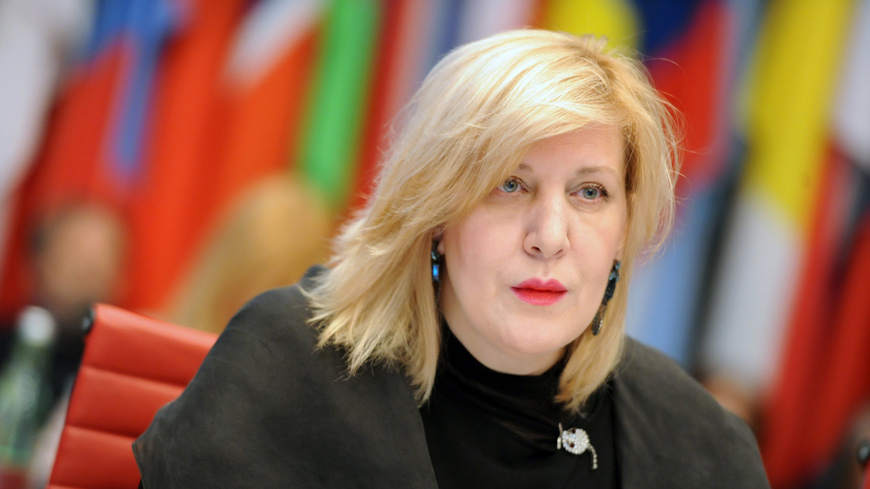
“The Hungarian Government bills submitted to Parliament last week comprising proposals to amend the Constitution and other legislative instruments may have serious adverse effects on human rights in the country”, said the Council of Europe Commissioner for Human Rights, Dunja Mijatović today. “I fear that several proposals contained in the complex legislative package, submitted without prior consultation and relating to matters including the functioning of the judiciary, election law, national human rights structures, scrutiny over public funds, and the human rights of lesbian, gay, bisexual, transgender, and intersex (LGBTI) people, could serve to undermine democracy, the rule of law and human rights in Hungary.”

Read: https://www.coe.int/en/web/commissioner/-/commissioner-urges-hungary-s-parliament-to-postpone-the-vote-on-draft-bills-that-if-adopted-will-have-far-reaching-adverse-effects-on-human-rights-in-

Lawyer: Semenya to go to European Court of Human Rights

Lawyer: Semenya to go to European Court of Human Rights

FILE - In this Sunday, June 30, 2019 file photo, South Africa's Caster Semenya smiles after winning the women's 800-meter race during the Prefontaine Classic, an IAAF Diamond League athletics meeting, in Stanford, Calif. USA. Caster Semenya's lawyer said Tuesday Nov. 17, 2020, they will take her case against the world track and field federation to the European Court of Human Rights in what's likely to be a last-ditch legal challenge against regulations that require the South African and some other female athletes to artificially lower their natural testosterone levels to compete. (AP Photo/Jeff Chiu, File)

CAPE TOWN, South Africa (AP) — Caster Semenya’s lawyer said Tuesday they will take her case to the European Court of Human Rights in what’s likely to be a last-ditch legal challenge against regulations that require the South African and some other female athletes to artificially lower their natural testosterone levels to compete.

Read: https://sports.yahoo.com/lawyer-semenya-european-court-human-rights-182530712–spt.html

Every November 20, on Trans Day of Remembrance (TDoR), we remember those whose lives have been taken away through transphobic violence

Every November 20, on Trans Day of Remembrance (TDoR), we remember those whose lives have been taken away through transphobic violence

This year’s Trans Murder Monitoring report from Transgender Europe shows the highest number of annual kilings since the report was first published 12 years ago.

Trans Day of Remembrance was founded in 1999 and it is the day when we remember trans and gender-diverse people whose lives have been cut short. According to Trans Murder Monitoring by Transgender Europe (TGEU), 350 people have been killed since November 2019, a rise of 6% since last year’s 331. Furthermore, the report shows an alarming and deeply worrying gradual increase per year between 2008 and 2020.

Because the number of unreported cases is unknown, this is only part of the story. What we know is that, globally, almost all the victims were trans women or trans feminine people. Over six in ten were sex workers, 38% of the murders took place on the street, and 22% were killed their own homes. In Europe, half of the victims were migrants.

People, not numbers

This is not just data and figures; these are real, vital, living people who had their lives taken away, people who like you had hopes and dreams, friends, family and people who cared for them. People like Valera, a housekeeper beaten to death in Chelyabinsk, Russia. Or Jessyca Sarmiento, a 38 year-old sex worker who was deliberately run-over by a car in Paris, France. Or 26 year-old Essi Granlund, stabbed to death in a killing that was described by the police as “an argument between two men.”

According to the report, 11 trans people were killed in Europe. You can find out who these people were here.

“Trans women often feel the disgust and misogyny of society, especially when we first transition,” Dinah de Riquet Bons and Sabrina Sanchez, board members of the International Committee on the Rights of Sex Workers in Europe (ICRSE), wrote for ILGA-Europe’s blog last year. “Our bodies and behaviour dismantle binarism, rejecting the patriarchal privilege given to those bodies born with a penis. Embracing femininity makes us disposable; it sends us to the lowest rung on the societal ladder. We lose status, family, friends, communities, work, and possibilities to study. The most affected are those of us who have to struggle with intersectional racist discrimination because of our ethnic diversity.”

Exacerbated circumstances

The COVID-19 pandemic has impacted us all, but especially those who were already vulnerable, and sex workers in particular. Growing racism and police brutality are also putting trans lives at greater risk, especially those of black and migrant women of colour, sex workers, young people and the economically disadvantaged. Our Rainbow Europe Map 2020 showed that only 16 countries in Europe and Central Asia have implemented hate crime law that expressly includes gender identity as an aggravating factor. This year, North Macedonia was the only country to extend protection from hate crime, after amending its Criminal Code to add sexual orientation and gender identity grounds.

3664 trans and gender-diverse people have been murdered worldwide between 2008 and 2020. We cannot lower that number but we can certainly do more to prevent it from increasing in the future. It begins with understanding that all lives are equally valuable, and that many trans lives are vulnerable. It begins with education. It begins with our societies taking responsibility for the protection and valuing of all lives, including the lives of vulnerable trans people.

Credit: Trans Murder Monitoring report, TGEU

https://ilga-europe.org/blog/trans-day-remembrance-2020-honoring-350-lives-cut-short-year

Tags: transTrans Day of Remembrancetransphobiahate crime

Canada: Nova Scotia will now cover the cost of top surgery for non-binary folk in landmark move for inclusive healthcare

Canada: Nova Scotia will now cover the cost of top surgery for non-binary folk in landmark move for inclusive healthcare

Lily Wakefield November 11, 2020

Jaguar Land Rover ordered to pay £180,000 to genderfluid engineer Nova Scotia non-binary

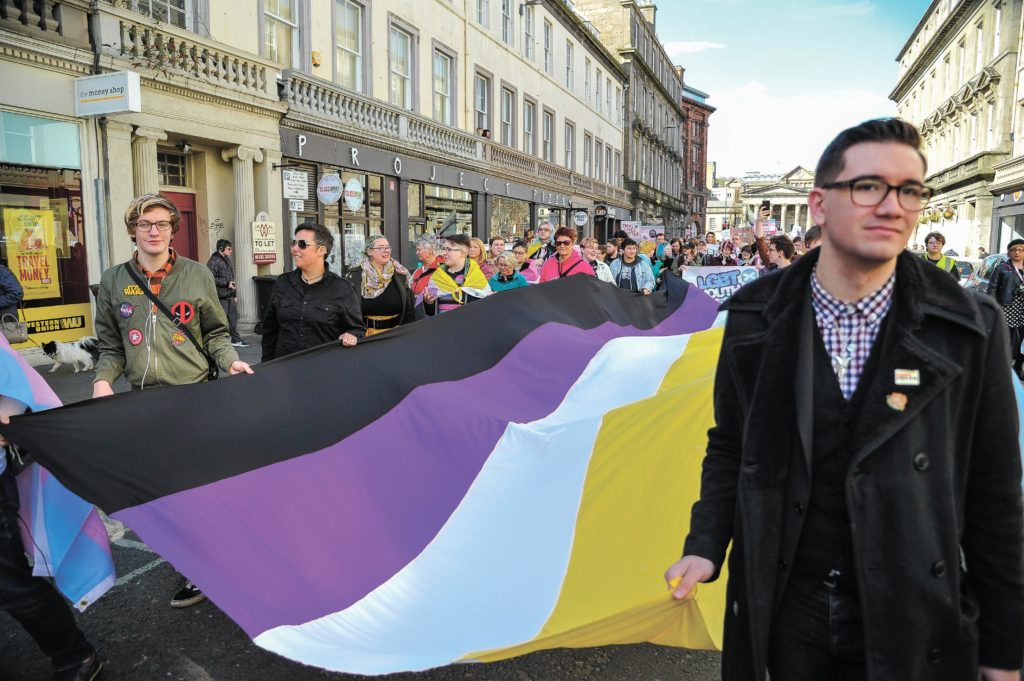
People hold a non-binary flag at Pride. (Stewart Kirby/SOPA Images/LightRocket via Getty)

The Canadian province of Nova Scotia has announced that it will cover the cost of top surgery for non-binary people through its Medical Services Insurance (MSI).

Read: https://www.pinknews.co.uk/2020/11/11/nova-scotia-medical-services-insurance-canada-non-binary-top-surgery-healthcare/

European Court of Human Rightes says convictions for public demonstrations against homophobic laws in Russia violate ECHR

European Court of Human Rightes says convictions for public demonstrations against homophobic laws in Russia violate ECHR

Posted: 11 Nov 2020 07:20 AM PST

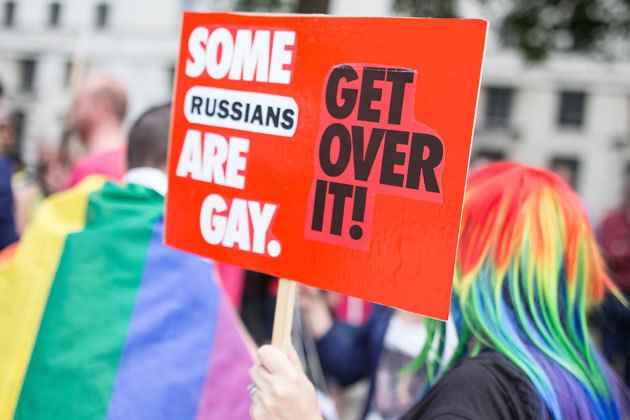
The Third Section of the European Court of Human Rights, sitting as a Committee, has given its judgment in Sozayev and Others v Russia. The case concerns the arrest and conviction of five applicants, in 2013, after they participated in a public assembly in front of the State Duma in Moscow in response to the legislative ban on the “promotion of non-traditional sexual relations among minors”.

The five applicants are Valeriy Valeryevich Sozayev, Ivan Fedorovich Babitskiy, Svetlana Yuryevna Mishina, Yevgeniya Dmitriyevna Samoshkina, and Pavel Vyacheslavovich Samburov.

I wrote about the case when it was communicated in 2016.

The facts

On 6 June 2013 the mass media announced that the second and third readings of the bill banning the “promotion of non-traditional sexual relations among minors” were to take place on 11 June 2013 in the State Duma. 

On 11 June 2013 at around noon a group of opponents of the bill, including the five applicants, came to the entrance of the State Duma building. Journalists were present there, as well as a group of conservative Orthodox Christian activists who were supporting the bill. 

Riot officers from the Moscow Police Department stood between the opponents of the bill and the Christian activists. Christian activists chanted “Moscow is not Sodom!” The bill opponents chanted “Moscow is not Iran” and “Fascism shall not pass”.

At around 12.15 p.m. the police officers surrounded the anti-bill protesters and pushed them into police buses. According to the applicants, none of the activists supporting the bill were apprehended in this way. According to the Government, during the assembly the police also apprehended several supporters of the bill.

The applicants were transferred to various police stations in Moscow where the relevant administrative records were drawn up. The administrative offence records were based on the reports and explanations of the police officers who had arrested the applicants. On the same day, once the administrative records were finalised the applicants were released.

On various dates the domestic courts convicted the applicants under Article 20.2 § 5 of the Code of Administrative Offences and sentenced them to administrative fines.

Relying on the administrative records and reports and explanations of the police officers, the domestic courts found the applicants liable for violating the established procedure for the conduct of a public assembly on account of their participation in the unauthorised gathering. In particular, the courts considered unlawful that some of the applicants shouted slogans and/or failed to verify whether the gathering was legitimate.

Complaints under Article 11

The applicants complained of disproportionate measures taken against them as participants of a peaceful public assembly, namely their arrest followed by their conviction for an administrative offence. They relied, expressly or in substance, on Article 11 of the Convention (some applicants also invoked Article 10 of the Convention but the Court considered this to fall to be examined under Article 11). 

The Court approached the complaints by focusing on the fact that the applicants were arrested, transferred to the police station and charged with administrative offences for the sole reason that the gathering had not been authorised.

In this respect, the Court referred to the leading cases concerning Russia in which it has already found a violation of the Convention in respect of issues similar to those in the present case.

The Court briefly stated:

“Having examined all the material submitted to it, the Court has not found any fact or argument capable of persuading it to reach a different conclusion as to the admissibility and merits of these complaints. Having regard to its case-law on the subject, the Court considers that in the instant case the measures applied to the applicants as peaceful participants in the public assembly did not correspond to a pressing social need and were thus not necessary in a democratic society” (§ 22).

The Court therefore concluded that the applicants had suffered a violation of Article 11 of the Convention.

Complaints under Articles 5 and/or 6

The applicants submitted other complaints which also raised issues under Articles 5 and/or 6 of the Convention. Having examined all the material before it, the Court concluded that these complaints disclosed violations of Articles 5 and 6 of the Convention.

Complaints under Article 14 taken in conjunction with Article 11

The applicants complained that the dispersal of their gathering which called for equality for LGBT people amounted to discrimination on grounds of their sexual orientation and political views. 

The Government submitted that the dispersal of the gathering was not due to the sexual orientation of its participants but due to their failure to comply with the official notification procedure. 

The Court noted that it had found a violation of Article 11 of the Convention on account of the fact that the applicants had been arrested and charged with administrative offences for the sole reason that they had not duly notified the authorities of their gathering. Having regard to this conclusion and in the light of the material submitted to it by the parties, the Court did not consider that the complaint under Article 14 called for a separate examination.

Brief comment

This is a welcome judgment which addresses restrictions on the right to freedom of peaceful assembly generally, and the right to peacefully assemble to object to homophobic and transphobic laws. I would, however, question the Court’s decision to not examine the complaints made by the applicants under Article 14 taken in conjunction with Article 11 of the Convention. 

The applicants “highlighted that the administrative offence records in their cases quoted their slogans in support of the rights of LGBT people and that the courts’ decisions referred to the applicants’ chanting of ‘relevant slogans’ as a part of the behaviour for which they were persecuted” (§ 32). 

Given that the applicants explicitly claimed that their treatment was motivated by discrimination based on sexual orientation, the Court should, in my view, have considered this under Article 14. To not do so runs counter to the Court’s case law on sexual orientation discrimination and, in particular, the established principle that domestic authorities are under an obligation to take all reasonable steps to unmask the role of possible homophobic motives or bias (Identoba and Others v Georgia, § 77)

In this case, the Court appears to have accepted, at face value, the claim of the national authorities that the treatment of the applicants was not due to sexual orientation but, rather, their failure to comply with the official notification procedure required for public assembly. That may or may not be true but it certainly, in my opinion, merited proper consideration under Article 14 of the Convention. 

(c) http://echrso.blogspot.com/2020/11/court-says-convictions-for-public.html

Liechtenstein: Ehe für alle – «Deutlicher lässt sich die Diskriminierung nicht betonen»

Liechtenstein: Ehe für alle – «Deutlicher lässt sich die Diskriminierung nicht betonen»

Liechtenstein: Ehe für alle – «Deutlicher lässt sich die Diskriminierung nicht betonen» Der Liechtensteinische Staatsgerichtshof sieht keine rechtlichen Bedenken im Verwehren der Ehe für alle. 16. November 2020, 22:05 Uhr  18. November 2020, 03:12 Uhr Julia Strauss «Wieso hat der Liechtensteinische Staatsgerichtshof keine rechtlichen Bedenken, gleichgeschlechtlichen Paaren die Ehe zu verwehren?» Dieser Frage ging Lamiss Khakzadeh […]

Liechtenstein: Ehe für alle – «Deutlicher lässt sich die Diskriminierung nicht betonen» — LGBTI Recht in der Schweiz – Droit LGBTI en Suisse – by Professor Andreas R Ziegler

A New Chapter in the Hungarian Government’s Crusade Against LGBTQI People

A New Chapter in the Hungarian Government’s Crusade Against LGBTQI People

Eszter Polgári

On 10 November 2020, the National Assembly passed the Enabling Act authorizing the Government to govern by decree for 90 days in the state of danger. That same evening, the Minister of Justice submitted a whole package of legislative reforms, including the Ninth Amendment to the Fundamental Law of Hungary. In a separate post last week, Viktor Kazai framed the amendments in the context of Hungary’s descent into permanent electoral authoritarianism. We focus on the two provisions, in particular, which would detrimentally affect the rights of the LGBTQI community:

First, a new sentence will be added to Article L declaring that “(t)he mother is a woman, the father is a man”. Second, Article XVI (1) will be complemented by the following provision: “Hungary protects children’s right to their identity in line with their birth sex, and their right to education according to our country’s constitutional identity and system of values based on Christian culture”.

We argue that it will be extremely difficult to deconstruct the institutionalized trans- and homophobia, which the above amendments would further entrench.

The Hungarian Government’s long game

The Government’s conservative stance on families is well-known and has been subject to criticism since 2011. We have argued elsewhere that the restrictive definition of families introduced by the cardinal law on the Protection of Families, limiting families to marriage based unions only, while excluding same-sex unions (both civil and registered partnerships), was in clear contradiction with European human rights standards and the interpretation of the European Court of Human Rights (ECtHR). The above definition was quashed by the Constitutional Court, partly because it excluded marriage-like institutions that only same-sex partners had access to.

A slightly more moderate version of the quashed definition was incorporated into Article L (1) – that already expressly limited marriage to men and women – through the Fourth Amendment to the Fundamental Law in 2013. The current version reads as follows: “Hungary shall protect the institution of marriage as the union of a man and a woman established by voluntary decision, and the family as the basis of the survival of the nation. Family ties shall be based on marriage or the relationship between parents and children.” The Ninth Amendment will define parents’ gender as mother and father, female and male, at the end of the quote.

Implicitly anti-LGBTQI

Although this addition does not seem to be an LGBTQI-related norm at first sight – apart from the gender affiliated with motherhood and fatherhood – the explanatory memorandum of the proposal makes it unquestionably clear: In order to ensure children’s upbringing in dignity, it is necessary to entrench the ruling parties’ belief based on the inalterability of the birth sex, and hence declare that the mother is female and the father is male.

This reasoning is not surprising, bearing in mind that legal gender recognition – the process allowing individuals to change their first name and gender marker in administrative records – was made impossible in May when the act on registry procedures was amended. Instead of ‘sex’, the law now contains ‘sex at birth’, which is defined as ‘the biological sex based on primary sex characteristics and chromosomes’. This provision does not only go against the standards set with regard to legal gender recognition by the ECtHR, but also contradicts a recent decision of the Constitutional Court in the case of a recognized trans refugee in Hungary. The Court called on the legislature to pass rules on legal gender recognition for those legally resident in Hungary. The Ninth Amendment and its explanatory memorandum send a clear message to the trans community – its primary target: The hope to reintroduce legal gender recognition anytime soon are slim.

The devil in the details

The obtuse wording’s real repercussions may only be understood in light of the Omnibus Bill submitted at the same time, amending – among others – the Civil Code and Child Protection Act. The Government’s recent rhetoric has foreshadowed restrictions on becoming an adoptive parent as a single person, in particular for those living with their same-sex partner.

Since October 2020, adoption by single individuals is only possible if no married couple in the country is willing to adopt that child. The newly proposed provisions, as a general rule, explicitly limit adoption to married couples, and it is the minister responsible for family policy who can personally grant exemption for single persons.

The reasoning does not even seek to hide the real reasons for the change. As expressed in the Fundamental Law, marriage-based families are perceived as the desirable formation for a child and this understanding resonates well with the pronouncement of the gender of the parents. In order to be sure that same-sex couples do not sneak in through the back door offered by single-parent adoption, a further control is introduced over the renitent decision-makers in child protection services who – in the best interest of the child – allowed persons living with their same-sex partner to adopt individually.

Discrimination

The legislative changes on adoption raise a number of concerns. First, if single individuals were excluded with reference to their sexual orientation, or such a pattern is discernible, this would be a clear violation of Article 14 in conjunction with Article 8 of the European Convention on Human Rights (ECHR). The Grand Chamber of the ECtHR in E.B. v. France held that the sexual orientation of the person cannot be the sole ground for refusing the authorization of adoption, unless the state can provide particularly convincing and weighty reasons. Second, the Government’s move contradicts the vast amount of research about same-sex parenting that provides undisputable evidence as to their capability to be equally good parents as their different-sex counterparts. Third, it ostracizes – at least on the level of public discourse – hundreds if not thousands of same-sex couples that already provide a healthy and loving environment for their children in Hungary. Finally, it does not serve the interests of children awaiting adoption either. If no married couple is ready to adopt them, instead of trying to find an unmarried parent for them in the country, they are likely to be adopted abroad or kept endlessly in state care.

Institutionalized phobia

The trans- and homophobia behind the Ninth Amendment is most obvious in the new wording of Article XVI (1): Gender identity is based on sex at birth, and education shall reflect Hungary’s constitutional identity and Christian values. It can only be understood as an immediate reaction to the recent controversy around a children’s book featuring well-known tales, reframed to represent minority and marginalized groups, such LGBTQI persons, the Roma, the elderly, people with disabilities or refugees. A leading politician from the far-right Mi Hazánk Mozgalom (Our Country Movement) destroyed a copy of the book, claiming that it was ‘homosexual propaganda’. Joining the discussion, the Prime Minister demanded: ‘Leave our children alone’. Against this background, the Ninth Amendment is unsurprising. With Article XVI (1), the ruling majority wishes to make LGBTQI sensitization programs’ access to schools impossible. It entrenches an educational embargo in the Fundamental Law: no discussion about sexual and gender minorities is welcome.

Christian culture and constitutional identity

Looking at the Ninth Amendment through a non-LGBTQI lens, it neatly complements Article R (4) of the Fundamental Law, that was added by the Seventh Amendment in 2018: “(t)he protection of the constitutional identity and Christian culture of Hungary shall be an obligation of every organ of the State.” In the field of education, it is translated as an objective state duty to provide for education in a Christian spirit. This new provision has to be read together with Article XVI (2) and Article 2 of Protocol No. 1 of the ECHR. The former only recognizes the parents’ right to choose the upbringing to be given to their children, while the latter contains a more specific duty of the state, i.e. to “respect the right of the parents to ensure such education and teaching in conformity with their own religious and philosophical convictions”. Textually, the new wording of Article XVI (1) would not create an immediate violation of the right of the parents to choose how they wish to educate their children. However, it unequivocally proclaims a strong state preference as to the content of instruction, and its chilling effect will prevent schools from giving room to non-conforming views. In the understanding of the ECtHR, rights in the ECHR are counter-majoritarian and in a democracy, based on the rule of law, states have to comply with the sui generis duty of neutrality (e.g. Barankevich v. Russia, par. 30).

Undermining independent oversight

Lastly, on 10 November, the Parliament’s Justice Committee presented a bill that would abolish the Hungarian Equal Treatment Authority (ETA), subsuming its activities under the Hungarian Commissioner for Fundamental Rights. The merger is primarily justified with the need to provide a more efficient institutional structure; bundling competences with the Commissioner would create a procedure that could address discrimination claims in a more comprehensive manner. In a ‘normal’ democracy, this move might even be appreciated. However, Hungary is not a ‘normal’ democracy and the Ombudsman is not an independent actor.

In recent years, the ETA has by far been the most successful body addressing claims on LGBTQI discrimination. In April 2020, the ETA was the only state body that criticized the proposal to ban legal gender recognition, whereas the Commissioner has not made any public statement, nor did he petition the Constitutional Court for constitutional review. We can only speculate about the driving force behind the elimination of the ETA. However, it is important to note that this body has an explicit mandate to address the types of discriminatory practices which the new rules on adoption may result in, as well as the openly homophobic efforts of local authorities to limit freedom of expression of LGBTQI persons that they construe as ‘homosexual propaganda’. While the mandate will not be severed, it will be subordinated by to the Commissioner, who has not shown any interest in protecting the rights of LGBTQI persons.

Final thoughts

The pending legislative amendments hit the LGBTQI community hard and – as it was observed in the previous post on the other changes the Ninth Amendment will bring about – it will be extremely hard to deconstruct the institutionalized trans- and homophobia. And if the proposals are passed, the Government will need to open a new front in their freedom fight against the EU: the EU LGBTQI Equality Strategy 2020-2025 (adopted just two days after the amendments had been tabled) is committed to enhance the protection of cross-border rainbow families and the availability of legal gender recognition.

The post A New Chapter in the Hungarian Government’s Crusade Against LGBTQI People appeared first on Verfassungsblog.


Inauguration d’un Centre universitaire dédié aux sciences des sexualités à Genève

Inauguration d’un Centre universitaire dédié aux sciences des sexualités à Genève

Image
Chères collaboratrices, chers collaborateurs, Chères étudiantes, chers étudiants, Chères et chers partenaires,  

Le champ des connaissances sur les sexualités se déploie aujourd’hui dans de multiples domaines – scientifiques, culturels, sociaux – et exige une approche holistique. Des mutations importantes et rapides ont lieu. Elles concernent autant les pratiques sexuelles et procréatives que la manière dont sont représentées les identités sexuelles.   Pour que les activités de recherche, d’enseignement et d’information scientifique dans ce domaine soient enfin réunies, pour stimuler les synergies entre les disciplines et densifier le dialogue avec la Cité, le Rectorat de l’Université de Genève crée le «Centre Maurice Chalumeau en sciences des sexualités»(CMCSS).   Son inauguration aujourd’hui, 17 novembre 2020, commémore les cinquante ans de l’acceptation du legs de Maurice Chalumeau par l’UNIGE. On rend ainsi hommage à la générosité et à l’esprit résolument pionnier du philanthrope genevois, persuadé que les savoirs ont la capacité de vaincre les «traditions» et «préjugés» discriminants qui pèsent sur les sexualités.   La crise sanitaire que traverse le monde aujourd’hui touche assurément aussi les manières dont les sexualités sont vécues. Or ce nouveau Centre a justement pour vocation, parmi celles qu’il fait siennes, de contribuer à comprendre la nature et la portée des crises dans la sphère de l’intime.   Ces temps si difficiles empêchent que cette inauguration, fruit d’un long processus, soit marquée par un évènement public. Mais, les activités de recherche et de formation, ainsi que les projets en lien avec la Cité du «Centre Maurice Chalumeau en sciences des sexualités» sont d’ores et déjà lancés.     Avec mes meilleures salutations,   Yves Flückiger Recteur    

Visionnez la vidéo de présentation du Centre
Logos

ECtHR criticises Switzerland over gay Gambian

ECtHR criticises Switzerland over gay Gambian

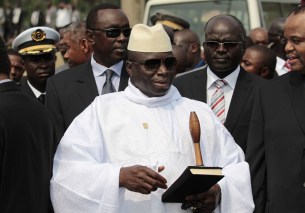
The European Court of Human Rights has ruled against Switzerland’s intended deportation of a homosexual Gambian man, saying Switzerland has not properly examined the risks to which the man would be exposed. In a decision handed down on Tuesday, the court unanimously decided that this would violate Article 3 of the European Convention on Human Rights, which bans inhuman and degrading treatment. The Swiss Federal Court had considered in 2018 that the man’s family network would be enough to protect him from harmful treatment and that the situation of homosexuals in Gambia had improved. The European judges disagreed. They said Switzerland should have made sure that local authorities there were “willing and able” to protect the man against possible mistreatment by non-state actors. The European court decision rests notably on opinions of the British home office and third parties saying Gambian authorities currently refuse to grant protection to LGBT people. The decision may be..

Read: https://www.swissinfo.ch/eng/society/human-rights-court-criticises-switzerland-over-gay-gambian-/46167022