La France a présenté mercredi 14 octobre le “Plan national d’actions pour l’égalité des droits, contre la haine et les discriminations anti-LGBT+ 2020-2023”


La France a présenté mercredi 14 octobre le “Plan national d’actions pour l’égalité des droits, contre la haine et les discriminations anti-LGBT+ 2020-2023”
Indian LGBT+ rights group launches landmark bid to ban conversion therapy after tragic death of bisexual woman

Following the suicide of a young bisexual woman in India, an LGBT+ rights group has filed a petition to the Kerala High Court seeking to ban the practice of conversion therapy.
Surrogacy: Russia wants gay fathers arrested

According to media reports, the Russian state wants to take at least ten clients of surrogacy agencies to court for human trafficking on the grounds of their homosexuality alone – and take their children away from them.
Read (in German): https://www.queer.de/detail.php?article_id=37208&pk_campaign=Nwsl
Egyptian police are using Grindr to hunt and imprison queer people. Once behind bars, it only gets worse from there

Paul Johnson: Chapter on: LGBT People, the Council of Europe and the European Court of Human Rights
Posted: 10 Oct 2020 03:07 PM PDT
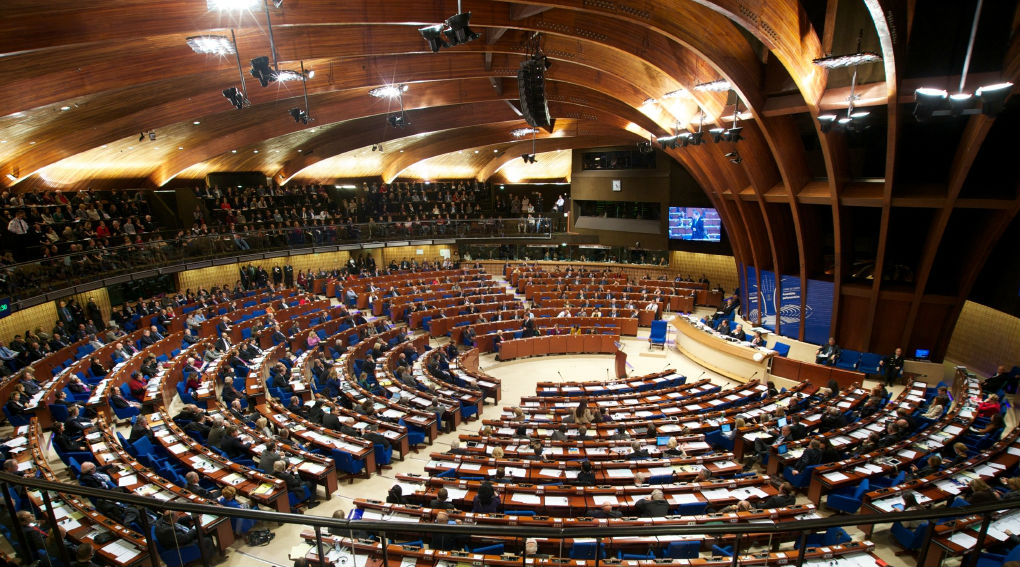
I am really pleased to make available an updated chapter that aims to provide a comprehensive but condensed assessment of the historical development and current state of human rights protection offered to LGBT people by the Council of Europe and, importantly, identify the gaps that currently exist in that protection.
The chapter examines the work of the statutory bodies of the Council of Europe – the Committee of Ministers and the Parliamentary Assembly – as well as the jurisprudence of the European Court of Human Rights.
This is an uncorrected draft of a chapter that will appear in a volume edited by Prof. Jill Marshall (Royal Holloway, University of London) to be published by Routledge on Personal Identity and the European Court of Human Rights.
The chapter can be found here:
https://papers.ssrn.com/sol3/papers.cfm?abstract_id=2927098

| ILGA – LGBTI news of the world – 2-8 October 2020 |
| Written by Daniele Paletta |
| Covid-19 has exacerbated inequalities worldwide, and had a disproportionate impact on LGBTI persons. This week, the latest report by the UN Independent Expert on SOGI to the UN General Assembly has emerged as a strong call on States to ensure that their responses to the pandemic do not discriminate against our communities. Meanwhile, worrying news has emerged from many corners of the world: in Argentina, a court has failed to recognise the murder of a trans activist as a hate crime, backtracking from a previous historic ruling. In the United States, two Justices at the Supreme Court openly renewed their attacks on marriage equality. In Japan, a politician has claimed that discussing diversity in schools would lead to having no children in the future. In Bulgaria, a teenage mob organised an attack against a group of peers and posted the footage on social media, in a chilling attempt to target them on the grounds of their sexual orientation. And yet, despite this concerning news, we continue to see important victories, and to work together in unity to take steps towards equality. During a trial in Kenya, the prosecutor was ordered to stop deadnaming a trans woman in court and to respect her identity. In Aotearoa New Zealand, ahead of the country’s general elections, LGBTI organisations have teamed up to present their demands to the incoming government, and are obtaining encouraging pledges. From all over the world, our communities gathered together virtually this week to celebrate International Lesbian Day. |
| ILGA – LGBTI news of the world – 25 September – 1 October 2020 |
| Written by Maddalena Tomassini Edited by Daniele Paletta |
| This has been a crucial week for many trans and gender diverse people in our communities. In India, new regulations reportedly state that trans individuals won’t be required to undergo a medical examination to see their gender legally recognised. In Italy, the national pharmaceutical agency decided that Hormone Replacement Treatment will now be provided for free. In the United States, California approved four bills marking some important steps towards equality – included for trans, non-binary and intersex persons in prison settings. Still, criminalisation and abusive preconditions to be legally recognised continue to be all too common in many countries across the world, as the newly-released Trans Legal Mapping Report by ILGA World has shown. Our siblings are fighting to be recognised as equal citizens everywhere, seeking to build a world that is finally safe for us to live in. A report from Egypt shows that many LGBT people still face unacceptable levels of violence on the grounds of who they are and whom they love. In the Cook Islands, a campaign has continued to call on the government to scrap provisions that still criminalise same-sex activities between consenting adults: a report on the issue, however, has been postponed for a few more months. Lesbian, bisexual and trans women are making their voices heard at the Inter-American Commission on Human Rights, where activists highlighted the extent of the violence and discrimination they face in many countries in Latin America and the Caribbean. Meanwhile at the United Nations, 34 States from all regions of the world called on the Human Rights Council to urgently protect intersex persons in their bodily autonomy and right to health, marking an historic step forward for the global intersex community. |
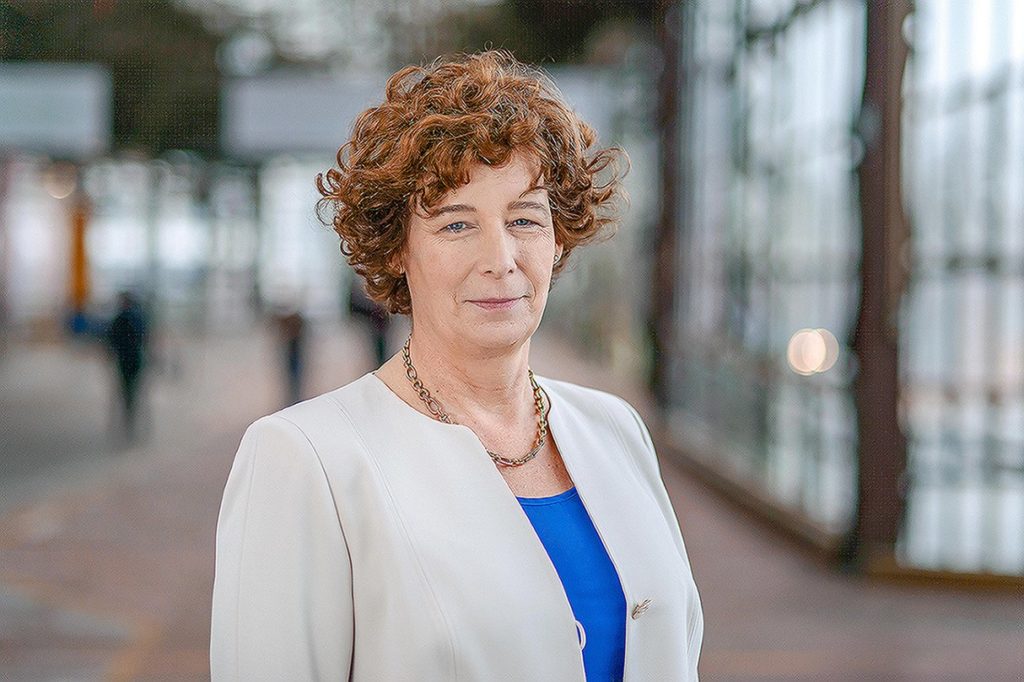
Belgium’s new deputy prime minister, Petra De Sutter, is now the most senior transgender politician in Europe
USA: Arizona appeals court orders option for same-sex parents on birth certificates
The Arizona Court of Appeals has ruled that Arizona must add an option for listing same-sex parents on birth certificates.
This case began with the divorce of the petitioner Kimberly McLaughlin and her ex-wife Suzan Swanson. While they were married McLaughlin gave birth to a child. During divorce proceedings, they argued over whether Swanson was the child’s parent. The Arizona Supreme Court eventually ruled she was in accordance with “the presumption of legal parentage established at A.R.S. § 25-814(A)(1)” which applies to same-sex parents.
All other issues were solved except how the parties would be designated on the birth certificate. According to the Arizona Department of Health Services, the parties must be designated as either “Mother/Father” or “Parent/Parent.” McLaughlin wished to be listed as “Biological Mother” and have her ex-wife listed as “Legal Mother,” while Swanson accepted “Parent/Parent.” The trial court denied McLaughlin’s request so she filed this suit claiming “that the court’s order had ‘stripped’ her of the ‘Mother’ designation on her biological child’s birth certificate solely because she was formerly married to a woman, in violation of her Fourteenth Amendment right to equal protection.”
The appeals court Monday found that the trial court had the authority to amend the birth certificate to list both women as the child’s mother. The court remanded back to the trial court for a ruling consistent with this opinion.
The post Arizona appeals court orders option for same-sex parents on birth certificates appeared first on JURIST – News – Legal News & Commentary.
Human Rights Watch (HRW) on Wednesday criticized the treatment of lesbian, gay, bisexual and transgender (LGBT) individuals in El Salvador, Guatemala and Honduras, as well as the US for the obstacles it places before asylum seekers
The report, Every Day I Live in Fear: Violence and Discrimination Against LGBT People in El Salvador, Guatemala, and Honduras, and Obstacles to Asylum in the United States, found that hate crimes against LGBT people are all too common in these Latin American countries known as the Northern Triangle. The study included interviews with 116 LGBT individuals from the Northern Triangle, in addition to 93 government officials, journalists and non-government officials. It found that they face high levels of violence and persecution on the basis of their sexual orientation and gender identity. This has led to a mass exodus in the form of caravans of asylum seekers coming to the US-Mexico border.
The study highlights that the Northern Triangle is one of the most dangerous places in the world because of gang violence that permeates the lower classes. HRW asked the countries to provide statistics about both hate crimes and poverty levels of LGBT individuals, but none of the countries could provide accurate numbers. However, based on interviews, HRW believes many LGBT individuals, especially transwomen, are living in poverty because of familial rejection and discrimination that led them to weak academic and financial success.
The report is highly critical of the US and its decision to close its border to asylum seekers in March. It says that COVID-19 was a pretext for the full closure the Trump administration had been wanting to do for years.
The report lists specific recommendations for each country. It recommends that the US “[m]ake clear that [it] will comply with US and international refugee law by recognizing that persecution on the grounds of sexual orientation and gender identity is a legitimate basis for the grant of asylum” and that it reopen the border to allow asylum seekers the protections they need.
It recommends the Northern Triangle countries terminate their Asylum Cooperative Agreement signed with the US. Finally, it recommends all three countries take steps to hold accountable public officials who participate or are complicit in violence against LGBT individuals. In addition, the Northern Triangle countries should establish services to help LGBT people get an education and ensure their protection if they are thrown out by their families.
The post HRW criticizes Honduras, El Salvador, Guatemala for anti-LGBT persecution appeared first on JURIST – News – Legal News & Commentary.
 International and Comparative SOGIESC Law - Professor Andreas R Ziegler