This is a blog is related to my academic work in the International Academic Forum on SOGIESC Law but meant to serve anyone who wants to contribute to improve the protection of human rights worldwide. It is intended to keep interested readers informed about legal developments relating to sexual orientation, gender expression and identity and sex characteristics (SOGIESC). Hopefully, it will make it easier to find correct legal information about the developments in all regions of the world and, in particular, with regard to international law.
First OCDE Report Ever on LGBTI Inclusion : “Over the Rainbow? The Road to LGBTI Inclusion”
Over the Rainbow? The Road to LGBTI Inclusion
Ensuring that LGBTI people – i.e. lesbians, gay men, bisexuals, transgender and intersex individuals – can live as who they are without being discriminated against or attacked is a concern worldwide. Discrimination against LGBTI people remains pervasive, while its cost is massive. It lowers investment in human capital due to bullying at school. It also reduces economic output by excluding LGBTI talents from the labour market and impairing their mental health, hence their productivity. This report provides a comprehensive overview of the extent to which laws in OECD countries ensure equal treatment of LGBTI people, and of the complementary policies that could help foster LGBTI inclusion. The report first identifies the legislative and regulatory frameworks in the areas of civil rights, protection against discrimination and violence, as well as health that are critical for the inclusion of sexual and gender minorities. The report then explores whether these laws are in force in OECD countries and examines the margin for further improvement. Finally, the report investigates the broader policy measures that should accompany LGBTI-inclusive laws in order to strengthen the inclusion of LGBTI people.More
The Court’s 2017 Advisory Opinion on same-sex marriage is now available in English.
I/A Court H.R., Gender identity, and equality and non-discrimination with regard to same-sex couples. State obligations in relation to change of name, gender identity, and rights deriving from a relationship between same-sex couples (interpretation and scope of Articles 1(1), 3, 7, 11(2), 13, 17, 18 and 24, in relation to Article 1, of the American Convention on Human Rights). Advisory Opinion OC-24/17 of November 24, 2017. Series A No. 24.
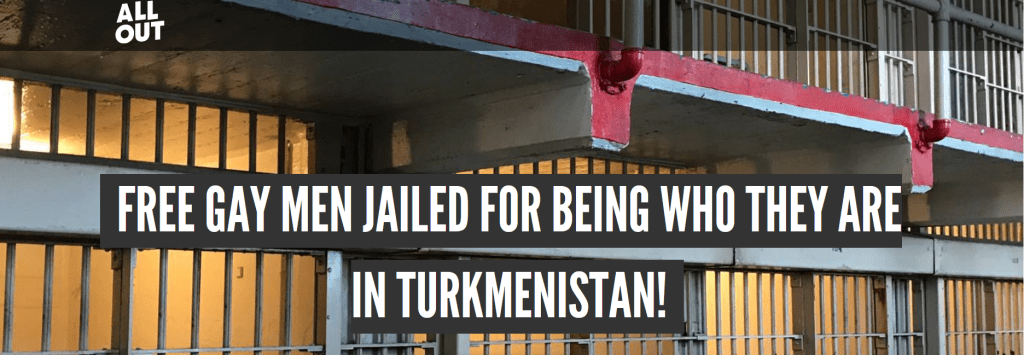
Free gay men jailed for being who they are in Turkmenistan! Sign now
On May 7, 2020, a famous entertainer and several other men were sentenced to two years’ imprisonment for being gay in Turkmenistan.
In mid-April, a famous entertainer and several other men were arrested on sodomy charges. Some were able to bribe themselves out of prison. On May 7, a Turkmen court sentenced them to two years’ imprisonment.
Article 135 of the Turkmen Criminal Code criminalizes consensual homosexual conduct. The punishment for being gay in Turkmenistan is two years’ imprisonment and up to 10 years if convicted repeatedly.
This barbaric law increases stigma against LGBT+ people in the country and allows authorities to harass gay and bisexual men and treat them in a cruel and degrading manner.
Men accused of homosexual conduct have been subjected to forced anal examination. It has been proven that police use dating apps to bait men and then blackmail them and extort money. Men who have sex with other men have also been reported missing.
Sign this petition to urge Turkmen authorities to drop all charges against the men convicted under Article 135 and free them.
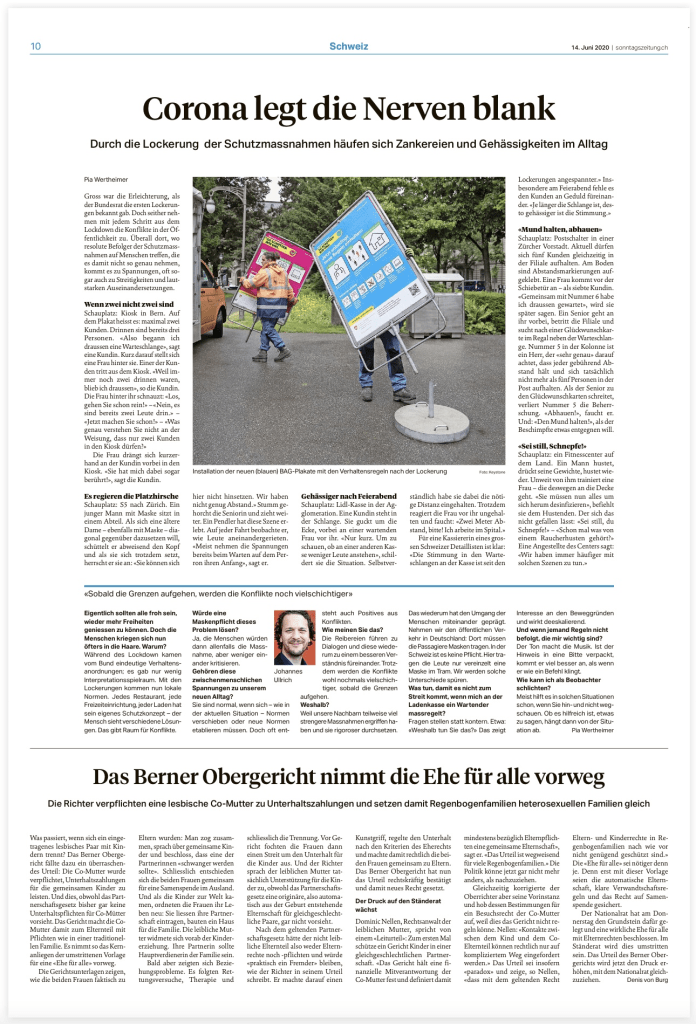
Switzerland: Second Instance Court confirms that social mother in same-sex partnership must pay child support after separation
The Bernese High Court has upheld on 26 February 2020 the respective parts of an earlier decision by the local court in Bern of 31 May 2019 – as reported here:
This decision is particularly interesting as Parliament currently discusses the status of the second woman (spouse) in a same-sex marriage when children were conceived through sperm donation by the biological mother.
My name is Melusi and I’m from eSwatini, formerly known as Swaziland, a landlocked country in Southern Africa that still has an outdated colonial anti-gay law in place.
To fight against this law that makes my love illegal, I founded eSwatini Sexual and Gender Minorities (ESGM). But when we tried to register the organization, eSwatini’s Registrar turned us down, arguing that our purpose is unlawful because same-sex relationships are illegal in the country. But we are fighting back. We took the Registrar to court and the hearing is slated for June 24.
While we wait for the court’s decision, there’s something you can do to apply pressure on the court and to support our fight for decriminalization:
JURIST: France Constitutional Court strikes down most of online hate speech law
The French Constitutional Court on Thursday reversed most of an online hate speech law, known as the ‘Avia Law,’ which was passed by the French National Assembly on May 13. “The requesting senators argue that these provisions […] would have been in violation of Article 45 of the Constitution,” says the ruling. “These provisions would impose on all publishers and hosts subjugations impossible to satisfy and would, in doing so, disregard the principle of equality before public charges.”
The Avia Law was passed with the intent to fine social media platforms that allow content such as child pornography, terrorism, or genocide denial if they do not remove the content within 24 hours. It was inspired by similar anti-hate speech laws throughout Europe and Africa.
The Constitutional Court found issues with the Avia Law’s application as it conflicts with many of France’s founding ideals and constitutional provisions. Thursday’s decision also cited The Rights of Man and Citizen (1789), which states that “The free communication of ideas and opinions is one of the most precious of the rights of man. Every citizen may, accordingly, speak, write, and print with freedom, but shall be responsible for such abuses of this freedom as shall be defined by law.” The Constitutional Court also argued that free discourse on social media is vital for the maintenance of a democratic society.
Civil liberties advocates celebrated the Constitutional Court’s decision. Christoph Schmon, international policy director at The Electronic Frontier Foundation (EFF), one of the largest online liberties watchdogs, noted that “We applaud the court for recognizing that citizens’ rights of free speech and expression are paramount in a democratic society […] Any government effort to censor objectionable content must be balanced with people’s rights to air their views on politics, the government, and the news. This bill failed to strike that balance.” The EFF filed an amicus brief with the Constitutional Court after the Avia Law’s original passage in May.
Although it rejected most of the Avia Law, the Constitutional Court also noted in its ruling that it did decide to uphold Article 2 of the law, which modifies procedures for reporting illegal content to websites. Additionally, it partially upheld Article 6, which establishes a platform’s authority to police content. Furthermore, the court stressed that it supports the law’s mission to counter child pornography and terrorism on the Internet, but disagreed with its methods.
Despite the court’s support of the Avia Law’s goals, most of the law was still declared unconstitutional. The court stressed that “Freedom of expression and communication is all the more precious since its exercise is a condition of democracy,” because that privilege “guarantees respect [for] other rights and freedoms.”
More than 30 guests from around the world are coming together for our series of free, virtual events to discuss and debate everything Pride and everything LGBT+. Whether you fancy a lively, interactive panel discussion, a book reading, a film screening, a dance party or all of these, there is something here for you. We’ll help you get “UnDistanced” and find community from the comfort of your home!
Visit the festival website and explore our newly confirmed events and exciting guests.
I’m looking forward to seeing you at the #UnDistanced Festival!
Matt
You are invited.
Pride in 2020 will look very different from what we expected. In over 500 cities around the world, Pride events have been canceled due to the coronavirus. This is a huge deal for our community, especially when so many of us are battling on the frontlines against systemic racism and police violence.
For millions of LGBT+ people, Pride events represent a precious moment of visibility, community, and solidarity. Without Pride, our sense of belonging, our visibility, our advocacy, and our ability to support each other are all weakened.
But here at All Out we don’t want to give up on Pride 2020. The power of digital gives us the chance to come together for Pride in spirit.
That’s why we’re happy to announce the #UnDistanced Festival – a series of free, virtual events during Pride month that will allow all of us to celebrate who we are and who we love across borders and cultures.
Krankenkassen müssen trans Frauen keine “gesichtsfeminisierende Operation” zahlen, entschied das oberste Sozialgericht. Der Anspruch beschränke sich auf eine “deutliche Annäherung” an weibliches Aussehen.
Masuma Shahid is a PhD Candidate in the field of LGBTQ+ Rights at the Erasmus School of Law of the Erasmus University Rotterdam.
The United States Supreme Court issued a landmark decision in Bostock v. Clayton County on 15 June 2020 with major implications for 8,1 million LGBTQ+ workers (1 million of which transgender individuals), that now enjoy protection against discrimination on grounds of sexual orientation and/or gender identity. This contribution delves into the Court’s decision and its consequences, and also discusses its past key LGBTQ+ related rulings that have brought much-needed equality for the LGBTQ+ community in the last 20 years.
Workplace discrimination against LGBTQ+ employees allowed?
In October of 2019, the Supreme Court held a hearing in which the three court cases of Altitude Express Inc. v. Zarda, Bostock v. Clayton County, and R.G. & G.R. Harris Funeral Homes v. Equal Employment Opportunity Commission were argued around the same question: does Title VII of the Civil Rights Act of 1964 also protect gay, lesbian and transgender employees against discrimination? The hearing concerned David Zarda (a skydiving instructor) and Gerald Bostock (a child welfare advocate), who were both fired from their jobs for being gay, and Aimee Stephens, who was fired from her position in a funeral home after she told her employer of her plans to transition from male to female. All three employment contracts were thus terminated either based on sexual orientation and/or gender identity and the question was whether federal legislation allowed for this. In its groundbreaking ruling in Bostock, it took the Supreme Court only a few sentences to provide a sharp response: ‘The answer is clear. An employer who fires an individual for being homosexual or transgender fires that person for traits or actions it would not have questioned in members of a different sex. Sex plays a necessary and undisguisable role in the decision, exactly what Title VII forbids.’
This decision is unexpected for several reasons. Title VII of the Civil Rights Act prohibits discrimination in employment on the basis of race, color, religion, national origin, and sex. The decision in Bostock came down to the question whether the right to not be discriminated against on grounds of sex includes sexual orientation and/or gender identity. Opponents of LGBTQ+ rights have maintained that Congress did not take into account the protection of LGBTQ+ workers when adopting the sex ground in Title VII of the Civil Rights Act in 1964; in fact, same-sex conduct was forbidden by law in many states.
The Court’s ruling indeed (unexpectedly) confirms that what is considered to be sex discrimination, should be interpreted broadly. The Court explains that Title VII is violated when an employer intentionally fires an individual employee based in part on sex or when changing the employee’s sex would have yielded a different choice by the employer. To elucidate this, the Court provides an example of an employer with two employees, both of whom are attracted to men. The two individuals are, to the employer’s mind, materially identical in all respects, except that one is a man and the other a woman. If the employer fires the male employee for no reason other than the fact he is attracted to men, the employer discriminates against him for traits or actions it tolerates in his female colleague. Another example is an employer who fires a transgender person who was identified as a male at birth but who now identifies as a female. If the employer retains an otherwise identical employee who was identified as female at birth, the employer intentionally penalizes a person identified as male at birth for traits or actions that it tolerates in an employee identified as female at birth. In both cases, the person’s sex plays an unmistakable and impermissible role in the decision to discharge them. Basically, employers don’t get to decide who workers are attracted to or how they should identify themselves.
Moreover, the case is an unexpected victory for the LGBTQ+ community as it was delivered after a 6-3 majority vote by (what most consider) a conservative Supreme Court since the 2018 retirement of Justice Anthony Kennedy who was considered the key swing vote in previous noteworthy pro LGBTQ-rulings of the Court. Bostock is a double blow for the Trump administration: it not only goes directly against the brief filed by the government in two of the three cases, but Justice Neil Gorsuch, a Trump appointee, joined the more ‘progressive’ majority and wrote the opinion himself. Chief Justice John Roberts, a Bush Jr. appointee, also joined the majority, while Justices Kavanaugh and Alito filed a dissenting opinion, in which Justice Thomas joined.
The evolution of the Supreme Court in its LGBTQ+ case law
The Court’s ruling in Bostock is one in a string of LGBTQ+ related cases delivered by the Court; each ruling providing an extra building block to stand on in the continuous struggle of the LGBTQ+ community for LGBTQ+ equality justice. Coincidentally (or is it?), all of these Supreme Court decisions were delivered during ‘Pride Month’; a month that already celebrates the freedom to be oneself, but also commemorates the June 1969 Stonewall riots; commonly considered as the catalyst of the organized LGBTQ+ movement we globally see today.
The first historic LGBTQ+ related ruling of the Supreme Court was in 2003, when it was requested to look into a Texan law criminalizing homosexual activity. The case concerned John Geddes Lawrence who was arrested after he was caught having sex with a male acquaintance at his own home which was raided by the local police after a jealous lover filed a fake police report. The Court was asked to assess whether intimate consensual homosexual conduct was part of the liberty protected by substantive due process under the Due Process Clause of the Fourteenth Amendment to the U.S. Constitution. In its 26 June 2003 decision in Lawrence v. Texas, it struck down the Texan sodomy law criminalizing consensual adult homosexual intimacy, ruling it unconstitutional. A tremendous triumph for LGBTQ+ equality, laying the groundwork for more positive rulings to follow.
Ten years later in 2013, more landmark decisions on LGBTQ+ rights were delivered in June. In United States v. Windsor, which was on inheritance law, the Defense of Marriage Act (DOMA) was challenged. New Yorkers Edith Windsor and her partner Thea Spyer had travelled to Canada in 2007 to marry each other and upon return, their marriage recognized by New York. When Spyer later passed away, she left her entire estate to Windsor. Windsor sought to claim a federal estate tax exemption for surviving spouses, but was barred by DOMA which amended the Dictionary Act. This legislation provided specific details for over 1,000 federal laws and regulations and defined ‘marriage’ and ‘spouse’ as excluding same-sex partners. Windsor filed a suit challenging DOMA. With a majority of the votes on 26 June 2013, the Supreme Court ruled DOMA unconstitutional and overturned it with immediate effect.
On the same day, the Supreme Court issued another significant LGBTQ+ decision, namely in Hollingsworth v. Perry. In May of 2008, the California Supreme Court had held that limiting marriage to opposite-sex couples violated the California Constitution. This resulted in thousands of overjoyed Californian same-sex couples marrying in the next months. Opponents of same-sex marriage were not amused and passed a ballot initiative known as Proposition 8, amending the State Constitution to define marriage in California as a union between a man and a woman. Same-sex couples wanting to marry filed a suit in federal court challenging Proposition 8, which the District Court declared unconstitutional. The petitioners, the official proponents of the Proposition 8 initiative, appealed this decision and brought it before the Supreme Court. With a 5-4 majority in Hollingsworth v. Perry, the Supreme Court overturned Proposition 8 by deciding that the petitioners did not have standing to appeal the District Court’s order. This resulted in Californian same-sex couples being able to marry again.
The most groundbreaking LGBTQ+ ruling of the Supreme Court on a June 26th had yet to be delivered; this decision fell on 26 June 2015 with the Court’s ruling in Obergefell v. Hodges, which effectively legalized same-sex marriage in all of its 50 States. The Obergefell case evolved from six different cases representing sixteen different same-sex couples who either challenged their state’s ban on same-sex marriage or the refusal of recognition of a same-sex marriage legally concluded in another state or jurisdiction. The Supreme Court consolidated some of the cases and decided to review the issue. The case had 148 amici curiae briefs submitted; the most a case before the Supreme Court ever, including one on behalf of 379 businesses in favor of same-sex marriage. The proceedings culminated in a 5-4 ruling declaring same-sex marriage bans a violation of the Fourteenth Amendment’s Due Process and Equal Protection Clauses. The decision resulted in an obligation for states to open up marriage for same-sex couples and to recognize same-sex marriages concluded in other jurisdictions.
The last LGBTQ+ related June-ruling of the Court before Bostock was on June 26th 2017 in Pavan v. Smith, where it was asked to rule on whether Arkansas could stop same-sex partners from being listed on the birth certificates of the babies of their same-sex spouses. Arkansas had legislation which allowed the male spouses of women who had used anonymous sperm donation to be registered as the father of the child. According to the Supreme Court, this provided a form of legal recognition which was not offered to unmarried couples. Hence, after Obergefell, same-sex couples could not be denied similar legal recognition as the Constitution entitles same-sex couples to civil marriage ‘on the same terms and conditions as opposite-sex couples.’
Bostock’s place in the Supreme Court’s LGBTQ+ case law?
The consequences of the Court’s most recent LGBTQ+ ruling in Bostock are profound; it confirms that around 8 million LGBTQ+ workers deserve the same level of respect, dignity and equality as their co-workers, regardless of their sexual orientation and/or gender identity. Half of these workers are living in states without LGBTQ+ protection clauses in state legislation. The ruling is delivered in what seems a critical time in the history of LGBTQ+ equality; it was only last year that Congress introduced the Equality Act, a bipartisan piece of federal legislation that would expressly prohibit discrimination based on sexual orientation or gender identity in employment, education, public accommodations, housing, credit, and other settings. If enacted, this legislation would protect millions of LGBTQ+ individuals across the US, living largely in states without laws protecting against sexual orientation and gender identity discrimination. Bostock might have a positive influence in the discussion of the Equality Act in the Senate. For now, we can establish that the ruling fits in nicely with the Court’s previous ‘rainbow’ rulings in June; it affords the LGBTQ+ community imperative rights protection (in this case, in the workplace) and provides an extra reason to be happy and gay this month.






 International and Comparative SOGIESC Law - Professor Andreas R Ziegler