This is a blog is related to my academic work in the International Academic Forum on SOGIESC Law but meant to serve anyone who wants to contribute to improve the protection of human rights worldwide. It is intended to keep interested readers informed about legal developments relating to sexual orientation, gender expression and identity and sex characteristics (SOGIESC). Hopefully, it will make it easier to find correct legal information about the developments in all regions of the world and, in particular, with regard to international law.
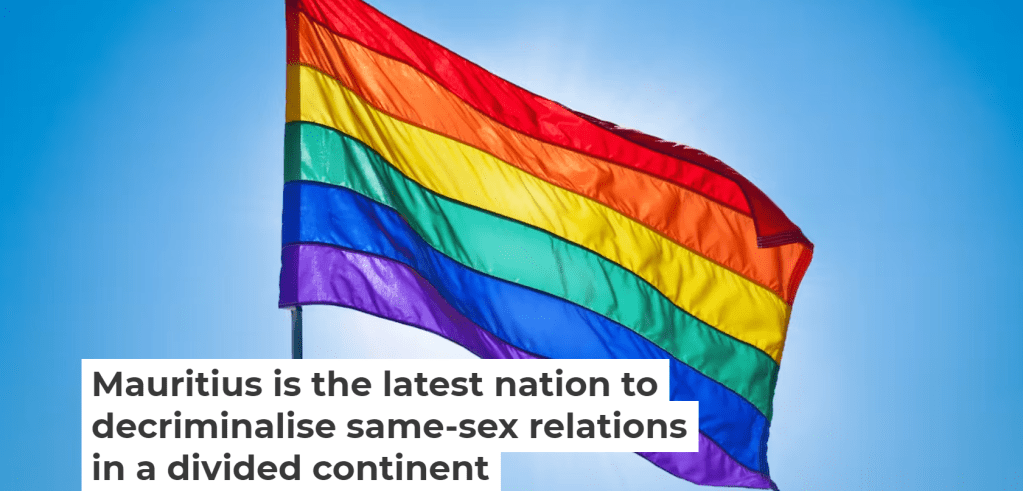
Mauritius is the latest nation to decriminalise same-sex relations in a divided continent
The Mauritius Supreme Court has declared unconstitutional a law that criminalises consensual same-sex acts between adult men. The decision boosts the trend in the Southern African Development Community (SADC) region towards decriminalisation. Now, a slight majority – nine out of 16 member states – do not prohibit gay and lesbian sexual relations.
Frans ViljoenDirector and Professor of International Human Rights Law, Centre for Human Rights, University of Pretoria
Hungary: Constitutional Court Reaffirms Right to Criticize LGBTQ Ideology
Lesbian association Labrisz had sued the Hungarian conservative daily newspaper MagyarNemzet in connection with the children’s book A Fairytail for Everyone (MeseországMindenkié), for an article alleging that the homosexual stories meant for children throughout the book amount to glorifying pedophilia, and the publishers themselves are propagating child abuse. On September 26, the Constitutional Court ruled that the journalist’s right to free speech outweighs the Publisher’s right for protecting its good name.
USA: Wisconsin State Assembly passes ban on gender-affirming care for minors and limit on transgender sports participation
The Wisconsin State Assembly passed three bills on Thursday that ban gender-affirming care for minors and limit transgender participation in sports. In order for the new bills to become state law, they must pass through the other chamber of Wisconsin’s legislature, the State Senate, and be signed by Wisconsin Governor Tony Evers. However, Evers stated on Thursday that he will not sign these bills into law.
The first of the three bills, Assembly Bill 465, prohibits health care providers from “medical intervention practices” on minors if done “for the purpose of changing the minor’s body to correspond to a sex that is discordant with the minor’s biological sex.” The bill defines “biological sex” as the “biological state of being female or male based on sex organs, chromosomes, and endogenous hormone profiles.”
The second bill, Assembly Bill 378, requires the University of Wisconsin only to allow intercollegiate, intramural or club sports teams that are all male, all female or coed. The bill defines sex as “determined by a physician at birth and reflected on the birth certificate.”
And the third bill, Assembly Bill 377, requires each school board, independent charter school and private school that operate or sponsor sports teams to designate the teams as all male, all female or coed. Bill 377’s definition of sex is identical to bill 378.
We continue to see harmful anti-LGBTQ rhetoric in Wisconsin—rhetoric that emboldens hate and violence and that we know only hurts our kids who are already facing significant mental health challenges. We’re going to stop these attacks, and we’re going to do it together.
Additionally, in response to the bills, executive director of the ACLU of Wisconsin Dr. Melinda Brennan stated, “All young people deserve to feel supported, valued and cared for, but the assembly representatives who voted in favor of these bills today sent a message to trans youth that they are the exception. But that couldn’t be further from the truth.”
The bills will now go to the Wisconsin State Senate. Last week, a Wisconsin state judge struck down a public school district policy that allowed students to request to transition to a different gender identity at school without parental consent and over parental objection.
Graeme Reid appointed as UN Independent Expert on sexual orientation and gender identity
Civil society welcomes the appointment of Graeme Reid as the third UN Independent Expert on sexual orientation and gender identity and celebrates the achievements of Victor Madrigal-Borloz in the role.
The President of the UN Human Rights Council has appointed Graeme Reid as the incoming holder of the mandate of the Independent Expert on violence and discrimination on the basis of sexual orientation and gender identity (SOGI). The appointment was made today at the United Nations Human Rights Council, after his nomination was proposed last month by the President of the 47 government member body charged with overseeing human rights around the globe. Graeme Reid will take on the role on 1 November 2023.
An anthropologist and researcher from South Africa, Reid – who currently serves as the Director of the LGBT Rights Programme at Human Rights Watch – is the third person to ever be appointed to hold the United Nations mandate dedicated to addressing specific human rights violations against LGBT and gender-diverse persons, following Vitit Muntarbhorn from Thailand (2016-2017) and Victor Madrigal-Borloz from Costa Rica (2017-2023).
Civil society organisations worldwide welcomed the decision: ‘Billions of people continue to live in societies with laws and societal attitudes that put LGBTI persons in danger,’ said the organisations*. ‘With his extensive experience in advocacy and academic spaces alike, and his keen dedication to listening to the voices of grassroots human rights defenders, we trust Reid will be able to further build bridges and remind States of their obligations towards people of diverse sexual orientations and gender identities across the globe. As civil society, we look forward to constructive engagement with the new mandate holder.’
The appointment comes at the end of a months-long application process. Twenty-three candidates went through shortlisting, with interviews and final appointment then overseen by Member States of the United Nations Human Rights Council. Earlier this month organisations worldwide had expressed their regret about the lack of women and non-binary persons in the short-list of candidates recommended by the Consultative Group, as highlighted during the recent session of the Human Rights Council. ‘Ensuring participation and representation of women is crucial to reflect the diverse realities of women’s lives,’ organisations pointed out.
Victor Madrigal-Borloz, the outgoing mandate holder, continues in the role until the end of the month. ‘Today we also want to celebrate everything that has been achieved over the last six years,’ civil society organisations concluded. ‘Thanks to Víctor Madrigal-Borloz and his work, the world has heard more about the impact of criminalisation of same-sex relations between consenting adults, the need to legally recognise a person’s gender, the barriers to social inclusion and the importance of collecting data related to LGBT lives, the harm caused by so-called “conversion therapy”, and more. Madrigal-Borloz has also cast a light on good practices to prevent discrimination, and conducted visits to Georgia, Mozambique, Tunisia, Ukraine, the United States and United Kingdom, building bridges between civil society, political and religious authorities. At a time in which anti-rights forces are more vocal by the minute, and are increasingly targeting our communities as a part of a larger attack against gender equality, it is critical that the mandate’s work continues and is supported by States and civil society alike.’
T Jaroszyński, J Łacny – European Constitutional Law Review, 2023
In Case C-356/21, JK v TP SA. 1 the Court of Justice assessed the Employment Equality Directive. 2 This Directive protects against discrimination on the grounds of religion or belief, disability, age or sexual orientation in the field of employment and …
The Dukeminier AwardsStudent Writing Competition accepting submissions by US law students
The Dukeminier Awards Student Writing Competition annually recognizes the best law review note written by a student in the field of sexual orientation and gender identity law. The first-place winner will receive the Jeffrey S. Haber Prize for Student Scholarship and an award of $1,000 and will be published within Volume 23 of the Dukeminier Awards Journal of Sexual Orientation and Gender Identity Law. The competition is open to all students, regardless of degree track or progress, enrolled in a law school in the United States or its territories during the 2023–2024 academic year.
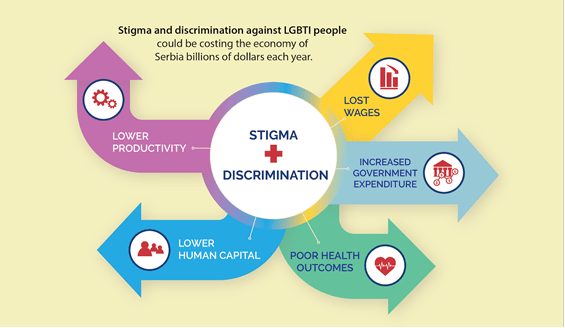
World Bank: The economic cost of LGBTI exclusion in Serbia and North Macedonia
Two new reports by the Williams Institute in collaboration with the World Bank find that the exclusion of LGBTI people costs the economies of Serbia and North Macedonia millions of dollars each year. While both countries have introduced important reforms to protect the rights of LGBTI people, sexual and gender minorities continue to face discrimination and exclusion.
The annual economic loss due to LGBTI exclusion totaled $293 million in Serbia and $64 million in North Macedonia in 2021.
Attacks on LGBTI rights strongly associated with democratic backsliding globally
New research finds countries that are highly accepting of LGBTI people tend to have high levels of liberal democracy, such as free and fair elections and the protection of civil liberties. More accepting countries also tend to have higher GDP per capita and a greater share of their population residing in urban environments.
Attacks on LGBTI people and their rights are strongly associated with democratic backslide. A decline in LGBTI acceptance may, under some conditions, be a bellwether of democratic decline.





 International and Comparative SOGIESC Law - Professor Andreas R Ziegler