This is a blog is related to my academic work in the International Academic Forum on SOGIESC Law but meant to serve anyone who wants to contribute to improve the protection of human rights worldwide. It is intended to keep interested readers informed about legal developments relating to sexual orientation, gender expression and identity and sex characteristics (SOGIESC). Hopefully, it will make it easier to find correct legal information about the developments in all regions of the world and, in particular, with regard to international law.
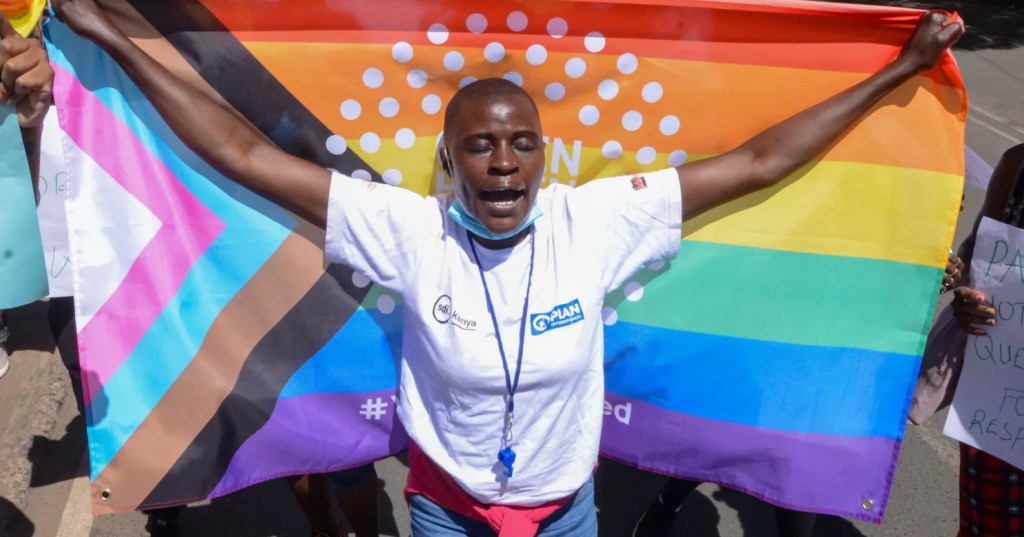
Ghana Parliament unanimously passes extreme anti-gay bill
The Parliament of Ghana passed an extreme anti-gay bill on Wednesday, which is set to tighten laws against members of the LGBTQ+ community. Ghana’s 275 members of Parliament unanimously passed the bill, known as the 2021 Promotion of Appropriate Sexual Rights and Family Values Bill.
The bill is set to criminalize the promotion, advocacy, funding and acts of homosexuality. It stiffens prison terms up to ten years in prison for LGBTQ+ advocates and three years for anyone identifying as such. Moreover, the bill seeks to withdraw health services from this community, including HIV medication.
The bill’s main sponsor, legislator Sam Nartey George, said, “[H]omosexuality is not a human right in Ghana, but a lifestyle choice. A sexual preference.” With this reasoning, legislators viewed preferences as not absolute, meaning they did not hesitate to pass a bill against it. Furthermore, George warned the US not to interfere with plans to pass the bill into law, threatening to halt Ghana’s business interests in the country. He said this in reference to the travel restrictions imposed upon Uganda following the signing of their own anti-LGBTQ+ law.
Speaker of Parliament Alban Bagbin, stated LGBTQ+ practices are strongly abhorred and will not be allowed to take root in the country. He said:
I am very clear in my mind that the Parliament of Ghana will pass this Bill (to criminalize LGBTQ). I have gone through it and I will confirm that the Bill will be a reference point for many countries. It has gone through all the provisions of the constitution, laws and international obligations.
Rightify Ghana, a human rights organization in Ghana, believes that the passing of this bill erodes progress towards fighting HIV and AIDS. Additionally, they quoted a 2021 statement from the UN anti-AIDS program, UNAIDS, that viewed this bill as undermining the basic rights of the LGBTQ+ community. The statement warned of the potential for international law violations if the bill passed, and stated, “Given that LGBTI people are present in every family and every community it is not very difficult to imagine how, if it were to be adopted, this legislation could create a recipe for conflict and violence.”
The Supreme Court of Nepal issued an interim order to the Nepali government on Friday to recognize same-sex marriage by allowing same-sex couples and other non-heterosexual couples to register for marriage in the country. The order issued by Justice Til Prasad Shrestha calls for necessary amendments to the provisions related to marriage and marriage registration within the current National Civil (Code) Act, 2017 (2074), where marriage is deemed as “a man and a woman accept[ing] each other as the husband and wife” under the Family Law.
The Supreme Court order is a direct result of a petition filed by Nepali national Adhip Pokharel and German national Tobias Volz, who married in Germany in 2018. Volz applied for a non-tourist visa to stay in Nepal as the spouse of Adhip Pokharel in 2022. The application was denied by Nepali authorities on the grounds that there is no provision in Nepal’s law to register same-sex marriages. The couple subsequently brought the case to the Supreme Court, which finally issued an order granting a non-tourist visa for the German citizen.
This decision continues the liberal and progressive trend in Nepal. In 2008, Nepal became the first nation in South Asia to recognize the rights of LGBTI+ people by categorizing them under the “third gender” in the case Sunil Banu Pant v. Nepal Government, and in 2012 the Nepali Supreme Court allowed a lesbian couple to cohabitate. The rights of sexual and gender minorities have been enshrined in the Constitution of Nepal since 2015.
Nepal is now one of the only two jurisdictions in largely conservative Asia to allow same-sex marriage. Previously in 2019, Taiwan became the first in Asia to legalize gay marriage.
Hong Kong top court begins hearing appeal in same-sex marriage case
The Hong Kong Court of Final Appeal finished hearing submissions from parties on Thursday in a case involving the constitutionality of Hong Kong’s preclusion of same-sex marriage. This is the first time the top Hong Kong court dealing directly with the homosexual couples’ right to marry. The applicant, Jimmy Sham, also happens to be a defendant in the “Hong Kong 47” case.
The lower Court of Appeal previously dismissed the constitutional review, citing four primary reasons for its decision.
First, the interpretation of the term “marriage” in Article 37 of the Basic Law cannot include same-sex marriage. The court believed that same-sex marriage was first legally recognised in the Netherlands in 2001. For that reason, in the court’s view, the drafters of the Basic Law were not likely to have included same-sex marriage in the Basic Law, which was adopted in the 1990’s.
Second, the Court of Appeal disagreed with the applicant’s argument that same-sex couples’ right to marry can arise from the right to equality and the right to privacy. Under constitutional law, the principle of lex specialis provides that if there is a specific provision on a particular subject matter, it will prevail over some other general provisions. Lex specialis, therefore, dictates that the right to equality and the right to privacy cannot be the grounds for same-sex couples to access the right to marry.
Third, the court did not accept the argument that the Hong Kong government had a positive duty to protect the same-sex couples’ right to marry. The Court of Appeal contended that the law only prevents the government from interfering with citizens’ right to form a family, not ensuring that such a right is recognized.
Fourth, the Court of Appeal held that discrimination is not sound legal ground because other grounds of law cannot circumvent the special status of marriage in Article 37, which prefers heterosexual marriages.
Sham applied to the Court of Final Appeal seeking to challenge the rightfulness of the lower court’s reasonings. In doing so, Sham introduced the concept of core rights. He suggested that the government has a positive duty to protect the core rights of married couples, regardless of their sexual orientation, including the right to inheritance. The government challenged that the concept of core rights is too vague and will only attract more legal challenges.
Previously, the Hong Kong Court of Final Appeal demonstrated its judicial open-mindedness occasionally on the issue of sexual equality. In February, the court recognized pre-operative transexual citizens’ right to have their gender marker on HKID recorded according to their acquired gender. A few other cases on the marital rights of same-sex couples are also pending judgments at the Court of Appeal, including the right of inheritance and the right to apply for public housing unit as a married couple.
The applicant, Sham, is also facing trial in the case of conspiracy to commit subversion. Sham was one of the pro-democracy activists who participated in the 2020 pro-democracy Hong Kong primaries. The prosecution alleges that the primary election was an effort to take control of the Legislative Council and to paralyze the government’s operation. Thursday marks day 79 of the trial, and Sham has been remanded for more than 700 days since the trial began.
US Supreme Court finds in favor of web designer who refused to create websites for LGBTQ+ couples
The US Supreme Court ruled Friday in 303 Creative LLC v. Elenis that a Colorado-based web designer cannot be compelled to create wedding websites for LGBTQ+ couples, despite the Colorado Anti-Discrimination Act (CADA) which protects LGBTQ+ people from discrimination in public accommodations. The Court determined that forcing the designer to comply with CADA would violate her First Amendment right to free speech under the US Constitution.
Justice Neil Gorsuch, writing for the majority, emphasized that while anti-discrimination laws are constitutional, it is not constitutional to compel someone to make art, as art is akin to speech. The opinion rests on the precedential case of Hurley v. Irish-American Gay, Lesbian and Bisexual Group of Boston, Inc, in which an LGBTQ+ group was banned from a St. Patrick’s Day Parade and sued under a Massachusetts public accommodation anti-discrimination law. The court found that parade organizers could not be compelled to allow the LGBTQ+ group in the parade because it would violate the parade organizer’s right to free speech. Gorsuch writes, “In Hurley, the Court commented favorably on Massachusetts’ public accommodations law, but made plain it could not be ‘applied to expressive activity’ to compel speech.”
Gorsuch also cited the case Boy Scouts of America v. Dale, where the Court found in favor of a Boy Scout policy banning LGBTQ+ people from participating in scouting, despite a New Jersey public accommodations anti-discrimination law. Gorsuch writes, “In Dale, the Court observed that New Jersey’s public accommodations law had many lawful applications but held that it could ‘not justify such a severe intrusion on the Boy Scouts’ rights to freedom of expressive association.’”
Gorsuch concluded, saying:
Of course, abiding the Constitution’s commitment to the freedom of speech means all of us will encounter ideas we consider “unattractive,” “misguided, or even hurtful.” But tolerance, not coercion, is our Nation’s answer. The First Amendment envisions the United States as a rich and complex place where all persons are free to think and speak as they wish, not as the government demands.
Justices Elena Kagan, Sonia Sotomayor and Ketanji Brown Jackson dissented. Justice Sotomayor, writing for the dissent, said:
This case cannot be understood outside of the context in which it arises. In that context, the outcome is even more distressing. The LGBT rights movement has made historic strides, and I am proud of the role this Court recently played in that history. Today, however, we are taking steps backward.
Gorsuch lambasted the dissent, saying, “Today…the dissent abandons what this Court’s cases have recognized time and time again: A commitment to speech for only some messages and some persons is no commitment at all.”
The Alliance for Defending Freedom, a conservative legal organization that assisted the petitioner in the case, celebrated the ruling, saying, “The Court reiterated that it’s unconstitutional for the state to eliminate from the public square ideas it dislikes, including the belief that marriage is the union of husband and wife.” Colorado Attorney General Phil Weiser, however, condemned the ruling, saying, “Today’s sweeping decision threatens to destabilize our public marketplace and encourage all kinds of businesses—not just those serving weddings—to claim a First Amendment free speech right to refuse service to certain customers.”
303 Creative LLC revolves around Lorie Smith, a web designer in Colorado who intended on expanding her business to include wedding websites. Smith alleged that if she were to expand her business and refuse to create wedding websites for LGBTQ+ couples, she would be penalized and compelled to create them under CADA. Smith also alleged she received a request for a wedding website from a gay couple. The US District Court District of Colorado sided with the state of Colorado and the Tenth Circuit Court of Appeals upheld the district court ruling. Smith requested a writ of certiorari to the US Supreme Court in September 2021.
Shortly before the release of the court’s opinion, the New Republic, an online news organization, claimed that there was no gay couple that requested a wedding website from Smith. Melissa Gira Grant, a journalist for the site, called the man who allegedly submitted the request and he claimed it was “the very first time I’ve heard of it.” The submission allegedly included the man’s contact information, however, he is already married. The man said, “I’m married, I have a child—I’m not really sure where that came from? But somebody’s using false information in a Supreme Court filing document.”
US members of Congress introduce bill to ban ‘gay panic’ defense
Senator Edward Markey (D-MA) and Congressman Chris Pappas (D-NH) introduced a bill on Monday that would ban the use of sexual orientation and gender identity-based panic defenses in criminal trials.
Known as the LGBTQ+ Panic Defense Prohibition Act of 2023, the bill would prohibit criminal defendants from using a victim’s sexual orientation or gender identity as an “excuse” or “justification” for their violent behavior. The bill goes on to state findings, including that “panic defenses based on sexual orientation and gender identity or expression… are surprisingly long-lived historical artifacts, remnants of a time when wide-spread public antipathy was the norm for LGBTQ individuals.”
According to The LGBTQ+ Bar, only 16 states and the District of Columbia ban the use of this defense strategy. One report showed 16.7 percent of hate crime victims in 2019 were targeted because of their sexual orientation, and 2.7 percent were targeted for their gender identity.
Markey said of the bill’s introduction, “Members of the LGBTQ+ community, particularly trans people of color, are facing ongoing, escalating, and intensifying violence emboldened by hateful actions and speech by elected officials at every level of government.” This bill was also previously introduced by Markey in 2021.
As Pride Month comes to an end, legislative attacks on LGBTQ+ members—particularly transgender individuals—continue amid efforts to protect those most vulnerable. Recently, a court struck down Arkansas’ ban on gender-affirming care for transgender youth and a judge blocked Indiana’s ban on gender-affirming care.
Far right in Italy and Spain target rainbow families and flags
Italy is debating a crackdown on surrogate parents, seen as an attack on LGBTI families, while Spain’s far-right party goes after the rainbow flag.
Italian MPs are debating a law that would make it illegal for Italian citizens to engage a surrogate mother in another country, with prison terms of up to three years and fines of up to €1m.
A 2004 law already banned surrogacy in Italy.
The new surrogacy regime is backed by prime minister Georgia Meloni and adds to fears in Italy’s LGBTI community that her far-right government will erode their civil rights.
The proposed ban would also apply to opposite-sex couples, but critics see that as camouflage for its real intention — to stop homosexual couples raising children.
The surrogacy bill comes in a wider context of curbs on non-biological parents, which have already hurt many ‘rainbow families’.
A top court in Italy ruled last year that non-biological parents cannot automatically be listed on children’s birth records, and need to go through the long legal process of adoption in order to be formally recognised.
Some mayors did add non-biological parents when processing birth certificates from abroad, in defiance of the ruling.
And Italian opposition MP Chiara Appendino, who did so when serving as mayor of Turin, warned that the harsh consequences of the new surrogacy law “will be paid by the children”, AP reported.
The prosecutors’ office in the Italian city of Padua this week also demanded that non-biological parents be removed from the birth certificates of 33 children registered to lesbian couples since 2017.
The children can no longer even use their non-biological parent’s surname.
“The Italian decision is monstrous, because it simply amounts to the administrative removal of a child from one of its parents on the grounds of homosexuality,” French liberal MEP Pierre Karleskind said earlier this week.
“We cannot let children be the victims of this despicable far-right crusade against rainbow families,” he said.
‘Deserves the best’
Meloni was raised by a single mother and is herself an unmarried parent.
But she wants to be seen as a defender of Christian values against what she calls “gender ideology” and the “LGBTI lobby”.
“A child deserves only the best: a mother and a father,” she said in March.
But if her anti-LGBTI rhetoric is meant to be populist, that kind of discourse appears to be less and less popular with Italian public opinion.
An Ipsos poll last June showed that 63 percent of Italians backed marriage rights for gay people — up 15 points from 2013.
It also said 59 percent were in favour of gay adoptions — an increase of 17 points from nine years ago, Reuters reported.
The EU has not passed any laws specifically on the rights of rainbow families, as it has no competence in family law in general.
But EU jurisprudence and the political mood in the EU capital also go against Meloni-type anti-rainbow attacks.
“Family law is a national competence,” said EU Commission spokesman Christian Wiegand.
But he also said: “Our position on parental rights in cross-border cases is that if one is a parent in one member state and is recognised as such in one member state, other member states must recognise that parenthood”.
In a landmark ruling, the European Court of Justice (ECJ) said in December 2021 that same-sex parents and their children should be recognised as a family in all EU member states.
British Cycling is to ban transgender women from the female category of its competitions following a nine-month review and consultation.
Under a new participation policy that the governing body said was “predicated on fairness”, such athletes will compete in an ‘open category’ with men.
Female races will be “for those whose sex was assigned female at birth”.
The changes will prevent riders such as Emily Bridges potentially being part of the British women’s team.
Last year Bridges – the country’s highest-profile transgender cyclist – was stopped from competing in her first elite women’s race by the UCI, cycling’s world federation, despite meeting the rules at the time.
Bridges reacted to the announcement with a statement on social media, calling the change a “violent act” by a “failed organisation” that was “controlling” the conversation on transgender inclusion.
She added that the racing scene was “dying under its watch” and that British Cycling was engaged in “culture wars”.
British Cycling’s policy had allowed transgender women to take part in elite female events if they met testosterone-based regulations.
But with the governing body at the heart of the debate over balancing inclusion with fairness, its regulations were suspended amid mounting controversy about Bridges and a review was launched.
ADVERTISEMENT
“Research studies indicate that even with the suppression of testosterone, transgender women who transition post-puberty retain a performance advantage,” said British Cycling.
“Our aim in creating our policies has always been to advance and promote equality, diversity and inclusion, while at the same time prioritising fairness of competition.
“We recognise the impact the suspension of our policy has had on trans and non-binary people, and we are sorry for the uncertainty and upset that many have felt during this period.”
Transgender women will be able to participate in non-competitive recreational and community cycling without restriction.
The new policies will be implemented by the end of the year.
‘You have no right to tell me when I am done’ – Bridges response
In her statement, Bridges was critical of the state of British Cycling and its treatment of transgender riders.
“Cycling is still one of the whitest, straightest sports out there and you couldn’t care less,” she said. “I agree there needs to be a nuanced policy discussion and continue to conduct research. This hasn’t happened.
“Research isn’t being viewed critically, or any discussion about the relevance of the data to specific sports.
“I’ve given my body up to science for the last two years, and this data will be out soon.
“There is actual, relevant data coming soon and discussions need to be had.”
Bridges claimed discussion of the debate is “inherently political” and “framed by the media who are driven through engagement by hate”, saying she was “terrified to exist”.
She claimed British Cycling was “furthering a genocide against us. Bans from sport is how it starts”.
She added: “I know a lot of people will think I’m being dramatic, or overplaying how scary things are at the moment. I don’t even know if I want to race my bike any more… but you have no right on telling me when I am done.”
British Cycling is not commenting on Bridges’ statement.
What’s the background?
Having been a highly promising competitor in junior men’s events, Bridges came out as transgender in 2020, starting hormone therapy as part of her gender dysphoria treatment.
She then became eligible to compete in elite women’s events under British Cycling’s transgender regulations, which required riders to have had testosterone levels below five nanomoles per litre for a 12-month period prior to competition.
But days before the 2022 National Omnium Championships, the UCI said Bridges’ participation could only be allowed once her eligibility to race in international competitions was confirmed, dashing her hopes of competing for Wales in the Commonwealth Games.
A group of elite female cyclists called on the UCI to “rescind” its rules around transgender participation, claiming female athletes in the UK were “willing to boycott” events over their “concerns about fairness in their sport”.
Bridges said she felt “harassed and demonised” and had “little clarity” on her eligibility. She added that she “does not have any advantage” over her competitors, and could prove it with data.
While British Cycling suspended its rules, the UCI then toughened its regulations, doubling the qualification period to two years and lowering the required testosterone threshold for transgender women riders to 2.5nmol/L.
But this month, after Austin Killips became the first transgender woman to win a UCI women’s stage race at the Tour of the Gila, the world governing body re-opened consultation on the issue, saying it “hears the voices of female athletes and their concerns about an equal playing field for competitors”.
“We acknowledge the paucity of research at this time, but can only look at what’s available to use,” said British Cycling chief executive Jon Dutton.
“I am confident that we have developed policies that both safeguard the fairness of cycle-sport competition, whilst ensuring all riders have opportunities to participate.
“We have always been very clear that this is a challenge far greater than one sport. We remain committed to listening to our communities, to monitor changes in the scientific and policy landscape, to ensure that sport is inclusive for all.”
Fiona McAnena from Fair Play For Women told BBC Radio 4’s World at One she was “concerned about all the women and girls who need to know that sport will be fair so I think an open category is a great solution because it doesn’t negate anyone’s identity…[and] the female category can be protected.”
“We’re finally reverting to fairness. We are going to see it across all sports.”
However Joanna Harper – a sports scientist who studies the effects of transition on transgender athletes, and who is transgender herself – said she was “disappointed but not surprised”.
“I don’t think it’s necessary” she told BBC Radio 5Live. “Trans women have been competing in cycling for many years…and although they have achieved some success in the sport, they are under-represented and are not anywhere near taking over the sport.”
A number of studies have suggested transgender women retain cardiovascular and strength advantages compared to female athletes, even after taking testosterone-suppressing hormones.
Critics of transgender athletes’ participation in some women’s sports argue that gives them a disproportionate advantage over their peers and limits opportunities for their rivals.
However, others argue there is not enough detailed research in the area, that the science is not clear, and that with very few elite transgender athletes, sport should be more inclusive, with open categories criticised for being discriminatory.
British Cycling said its women-only community programme “will continue to remain open and inclusive for transgender women and non-binary people” who can “continue to participate in a broad range of British Cycling activities in line with their gender identities”.
Interesting Article. The Dynamics of the Debate About Gay Rights: Evidence from US Newspapers
Alan Manning , Paolo Masella, The Dynamics of the Debate About Gay Rights: Evidence from US Newspapers, The Journal of Law, Economics, and Organization, Volume 39, Issue 2, July 2023, Pages 456–492, https://doi.org/10.1093/jleo/ewab043
Abstract
Changing attitudes are the result of a battle for hearts and minds in which agents for and against change try to persuade others. We know very little about this process. We develop a methodology for measuring the intensity and the contents of media coverage for and against an idea which we apply to attitudes to gay rights. We uncover several stylized facts: First, the diffusion process of both pro- and anti-gay rights language in the US newspapers follow an S-shaped pattern, characteristic of diffusion processes. Anti-gay rights coverage starts its diffusion process later but then catches up. Second, in the year gay marriages are introduced, we observe a dramatic increase in coverage of both pro- and anti-gay rights language; the increase in the latter is larger. The rise in coverage is still present in the 3 years after the institutional change. Third, there is substantial spatial autocorrelation in media coverage (JEL J15, Z1).
Argentina, Brazil, Britain, Canada, Germany, Mexico, Spain and the United States were among the signatories. (Photo: AFP/Henry Nicholls)
21 Jun 2023 04:40AM
GENEVA: Nearly 40 countries at the United Nations backed LGBTQ families on Tuesday (Jun 20), at a time when some Muslim and African nations are contesting sexual orientation and gender identity language in UN forums.
“Families play a fundamental role in society. Supporting families is an important element in promoting and protecting human rights,” 37 countries said in a statement at the UN Human Rights Council.
“This support must be inclusive of all family compositions, including multigenerational and extended families, single parent households, LGBTIQ+ families and Indigenous kinship groups,” Australia’s representative said on behalf of several countries. They were mainly from Europe and the Americas, plus Israel, New Zealand and East Timor.
They called on countries and UN bodies “to continue to apply an inclusive lens to families, and to ensure that equality, non-discrimination, and the universality of human rights remain at the centre of engagement in supporting families”.
Argentina, Brazil, Britain, Canada, Germany, Mexico, Spain and the United States were among the signatories.
The statement comes as several other countries, notably from the Middle East, are mounting a defence of the traditional family in UN forums.
Sexual orientation and gender identity issues will be at the heart of the 53rd Human Rights Council session, which started on Monday and runs until mid-July.
Such issues have become a contentious in several branches of the UN.
Countries in the Organisation of Islamic Cooperation and many African nations, plus Russia and China, are trying to roll back concepts and language which have been embedded in UN documents for at least a decade.
Earlier this month, OIC and African countries were blocking the adoption of the UN labour agency’s budget, before agreeing to a last-minute compromise over references to discrimination based on gender identity and sexual orientation.
“Promoting a framework around discrimination that does not have international consensus and reflects priorities of the few risks undermining the spirit of cooperation,” said Pakistan’s Khalil Hashmi, on behalf of the OIC group, before the vote was finally passed.
The World Health Organization has since last year seen attempts to remove such references from its strategy on infection prevention, while the Human Rights Council faces growing opposition to long-standing efforts to monitor for discrimination based on sexual orientation and gender identity.