World Athletics bans trans women from female events
World Athletics bans trans women from female events
Leave a reply

World Athletics bans trans women from female events
Interesting Article: Claerwen O’Hara (La Trobe Univ. – Law), In Search of a Queerer Law: Two People’s Tribunals in 1976 (Australian Feminist Law Journal, forthcoming)
Here’s the abstract:
In 1976, two people’s tribunals took place which considered issues relating to non-normative sexuality. ‘People’s tribunals’ are civil society initiatives that assert a popular jurisdiction which operates outside of both the state and international institutions. In Brussels, there was the International Tribunal on Crimes against Women, which treated ‘compulsory heterosexuality’ as a crime. On the other side of the world, in Sydney, there was the Tribunal on Homosexuals and Discrimination. These people’s tribunals are sometimes treated as forerunners to later developments relating to lesbian, gay, bisexual, transgender and intersex (LGBTI) rights in international law. In this paper, by contrast, I engage in a queer reading of the Brussels and Sydney Tribunals, whereby I consider how the legal framings and procedures adopted by the two tribunals diverged from the LGBTI rights framework that would later develop. In doing so, my aim is to shine a light on alternative, queerer legal possibilities, as well as to open up a conversation about using people’s tribunals as a mode of queer activism into the future.
Uganda Parliament passes bill that would punish gay sex with life imprisonment
Uganda’s Parliament Tuesday unanimously passed the Anti-Homosexuality Bill 2023, a bill that would make the “promotion” of homosexuality punishable by 20 years’ imprisonment and homosexual sex acts punishable by life imprisonment. It also allows the death penalty for engaging in “aggravated acts of homosexuality,” which is when one of the persons has HIV or a disability. The bill must receive assent from Uganda’s President before it can become law.
Several provisions in the bill, according to Human Rights Watch (HRW), violate the freedom of expression, association, and liberty guaranteed by international law and the Ugandan Constitution. These include provisions declaring all homosexual intercourse as nonconsensual, prohibiting people from identifying as a gender other than male or female, criminalising same-sex marriage, and punishing any person that abets any acts of homosexuality. HRW also claimed that out of the 30 African countries that have banned same-sex relations, Uganda is the first to outlaw merely even identifying as part of the LGBTQ community.
The bill was preceded by called by the Anti-Homosexuality Act 2014, which was struck down by Uganda’s Constitutional Court. While introducing the new bill, Ugandan MP Asuman Basalirwa said “This House had an opportunity to correct the anomaly [in 2014], but it was lost. We now have another opportunity to follow all the procedures to have a law in place.”
The Attorney General of Uganda, Kiryowa Kiwanuka, has described this bill as redundant, claiming that most of these proposed offences are already criminalized in various existing acts. Amnesty International has also called the legislation “ambiguous, vaguely worded” and “deeply regressive”.
The legislation currently awaits the signature of President Yoweri Museveni. UN High Commissioner for Human Rights Volker Türk has urged President Museveni not to give assent to the bill.
The post Uganda Parliament passes bill that would punish gay sex with life imprisonment appeared first on JURIST – News.
Estonia – Registered partnership could be viewed as a marital status
Registered partnership must be registered in the population register on the same basis as marriage
More: https://www.equalitylaw.eu/downloads/5832-registered-partnership-could-be-viewed-as-a-marital-status
Uganda dispatch: Parliament passes controversial Anti-Homosexuality Bill, setting the stage for court challenge
awrence Alado is a JURIST Staff Correspondent in Uganda. He reports from Kampala.
With over 389 MPs sitting in person, Parliament this afternoon passed the Anti-Homosexuality Bill. The votes for the passing of the Bill were more than the required 2/3rds, and though challenged by several human rights activists, the august house has proceeded to exercise its duty enshrined in the Constitution.
Just three days ago, the Attorney General, Mr. Kiryowa Kiwanuka, criticized the Bill for being redundant. The legal adviser of the Government declared that Clause 2 of the Bill has already been provided for, as unnatural offences are specified under the Penal Code Act, Cap 120 and so are several other clauses of the Bill relating to attempts, aiding and abetting the acts penalized under the Bill.
There have also been criticisms that the law infringes on the rights of people, but the Speaker responded to this criticism both during the parliamentary session and also on her Twitter page, saying that the law does not derogate non-derogable rights. She asserted: “We recognize that the Constitution contains non derogable rights and in this process the House has striven to recognize those non derogable rights. However, the norms and aspirations of the people of Uganda will always remain supreme.”
The Right Honorable Speaker also stated that the passing of the Bill was in the interest of the people of Uganda and therefore noted that such will is what entitled the Parliament to “derogate” the rights of sexual minorities. Commenting on the same, she said that, “This House will not be shy to restrict any derogable rights to the extent that the House recognizes, protects and safeguards the reigning will, norms and aspirations of the people of Uganda.”
It is significant to note that the Bill holds the record of being one of the fastest Bills to have been passed by the Parliament of Uganda. The President himself, while addressing the Parliament on 16th March, had called upon scientists to assist to determine whether or not the acts prohibited under the Bill are “…by nature or nurture.”
Also of greater importance is the fact that just a few kilometers away from Kampala, where the Parliament of Uganda sits, strikes have intensified in Kenya over a ruling of the Supreme Court upholding the rights of sexual minorities.
The Ugandan Bill is not yet law and is subject to the scrutiny and signature of the President. However, it can be said without doubt that the Act, once passed, will be subject to interpretation by the country’s Constitutional Court. This is because human rights activists have criticized the Bill for limiting the rights already protected and guaranteed by the Constitution, which is the supreme law of the State.
The post Uganda dispatch: Parliament passes controversial Anti-Homosexuality Bill, setting the stage for court challenge appeared first on JURIST – News.
Ukraine dispatch: draft law would increase legal protections for registered same-sex partners
Ukrainian law students and young lawyers are reporting for JURIST on developments in and affecting Ukraine. This dispatch is from Yulii Kozub, a law student from Taras Shevchenko National University in Kyiv. He files this from Vienna.
Last week, on March 13th, a draft law regarding “registered same-sex partnerships” that had been submitted for approval by Ukrainian MP and well-known activist Inna Sovsun was officially published on the website of the Verkhovna Rada (Ukrainian parliament). This initiative is already supported by a large number of deputies from the liberal presidential party “Servant of the People” and the opposition right-liberal party “Voice”.
Under the proposed legislation, after state registration, same-sex partners would acquire the status of close relatives, namely, a member of the first degree of kinship in relation to each other, regardless of whether they actually live together and run a household together. Partnership registration takes place after 10 days from the date of submission of the corresponding application, and dissolution is possible both upon a joint application and at the will of one of the parties (by the court in separate proceedings, and no measures for conciliation or establishment of reasons for dissolution are taken).
“In case of support by the Verkhovna Rada, the draft law will finally help couples define mutual rights and obligations, property ownership, inheritance, social protection, and rights in case of death or disappearance of a partner. Nothing extraordinary. Everything that is always the default…”, Sovsun wrote on her social media.
Today, the protection of such rights is more necessary than ever. Many members of the LGBT community participate in military operations together, but are effectively deprived of their rights if something happens to their partner.
In 2022, more than 25,000 people signed a petition to legalize same-sex marriage. It was reviewed by President Volodymyr Zelenskyy. He explained that he is committed to human rights and freedoms and that this issue is really important However, during wartime, he said that such initiatives cannot be considered because the Constitution must be changed. However, he assured that it was only a matter of time and that the legalization of same-sex marriage would be considered after the war was over.
Meanwhile, public opinion in Ukraine has been changing. In a December 2007 Angus Reid Global Monitor survey, 81.3 per cent of Ukrainians said homosexuality would “never be acceptable to them”, 13 percent said it was “sometimes acceptable to them” and 5.7 percent said it was “acceptable”. In May 2013 a poll by GfK Ukraine found that 4.6% of respondents were in favour of same-sex marriage and 16% supported other forms of recognition, while 79.4% were opposed to any form of recognition. According to a June 2022 poll 57.8 people support same-sex marriage in Ukraine.
As a country seeking integration into the European Union, Ukraine is committed to upholding European values, including respect for human rights, equality before the law and non-discrimination. People’s consciousness has been changing dramatically since 2014, the year of the Euromaidan. Ukrainians are showing that they are part of the civilised world, that they share the principles of freedom and equality and are ready to fight for their rights
The post Ukraine dispatch: draft law would increase legal protections for registered same-sex partners appeared first on JURIST – News.
USA: Missouri attorney general declares state law largely prohibits gender-affirming care for minors
Missouri Attorney General Andrew Bailey issued an emergency regulation Monday asserting that current state law prohibits gender transition “interventions” for minors without meeting specific procedural requirements.
Missouri law prohibits “experimental healthcare procedures,” so the AG stated that current law does not allow gender transition care for minors without certain requirements because it is an experimental procedure. This comes just one month after the AG’s office undertook an investigation into a transgender care facility in St. Louis because of a whistleblower’s allegations that the facility harmed children. The whistleblower claimed that doctors continued to prescribe puberty blockers and other transitioning procedures when the patient did not want to continue the transition.
Specifically, the AG explained that, for a minor to undergo gender-transition care, a provider must follow informed-consent procedures. This includes letting patients know about the side effects of treatments such as puberty blockers. It also requires providers to tell patients about two studies which respectively claim that “an individual whose friend identifies as transgender is ‘more than 70 times’ as likely to similarly identify as transgender” and that “the large majority (about 85%) of prepubertal children with a childhood diagnosis did not remain GD/gender incongruent in adolescence.”
Current law also requires healthcare providers to ensure minors undergo additional steps, including an evaluation for autism and treatment for other mental health conditions, before they are eligible for gender-affirming care.
Missouri lawmakers are currently debating Senate Bill 49 which would ban healthcare professionals from providing gender-transition procedures for minors, excluding those born with sexual development disorders.
Other states, including Florida, are advancing bills that would criminalize sex reassignment care to minors as well.
The post Missouri attorney general declares state law largely prohibits gender-affirming care for minors appeared first on JURIST – News.
India dispatch: Supreme Court referral of same-sex marriage pleas to Constitution bench puts it on collision course with Union government
Indian law students are reporting for JURIST on law-related developments in and affecting India. This dispatch is from Nakul Rai Khurana, a law student at Jindal Global Law School.
Last Monday India’s Supreme Court announced that a five-judge bench will preside over a batch of matters concerning the constitutionality of same-sex marriages in the country, with the first hearing scheduled for April 13. The Chief Justice of India (CJI) Justice D.Y. Chandrachud has noted the seminal importance of the issue and highlighted the conflict between constitutional rights and existing statutory enactments. The exercise of Article 145 (3) of the Indian Constitution was made, which calls for a minimum of five judges to preside over a substantial matter which involves the interpretation of the Constitution.
This development comes after the Supreme Court of India invoked its constitutional powers by transferring to itself a batch of pleas regarding the legal recognition of same-sex marriage on January 6, 2023. It reflects the strengthening of judicial activism in India, which has fuelled progress in promoting social change. It is worth noting that CJI D.Y. Chandrachud was one of the presiding judges in the five-judge bench that unanimously invalidated a part of Section 377 of the Indian Penal Code, 1860 (‘IPC’) which had criminalised homosexuality in India, in the landmark case of Navtej Singh Johar & Others v. Union of India in 2018.
In the batch of cases on same-sex marriages before the Supreme Court, the Union government responded to the pleas on March 12, 2023, by submitting an affidavit to the Court emphasizing that such an issue was within the purview of the Indian Parliament’s legislative authority. The government expressed concerns that judicial intervention could disrupt the harmonious nature of Indian cultural values and upset the delicate balance between the judiciary and the executive. The definition of marriage, which is both legally and socially sanctioned, according to the Union government, is a bond between only a biological man and a biological woman, especially under the Hindu Marriage Act, 1955.
In India, under Hindu personal laws, marriage is considered a sacrament, whereas Muslim personal laws regard it as a contractual union. The private realm continues to be a controversial affair, for traditional thought believes marriage to be a private affair. The Union government in its submissions has vehemently opposed same-sex marriage and opined that the concept of marriage under Hindu law presupposes a union between individuals of the opposite sex, which is deeply embedded in the Indian social, legal, and cultural values. The government argued that judicial interpretation and intervention could jeopardize this cherished cultural value.
The Solicitor General of India, Tushar Mehta, representing the Union government, made it clear that matters involving the legal recognition of any relationship are primarily a function of the legislature and must be subject to parliamentary debate. The affidavit maintained that it is “impermissible” for the apex court to dismantle the entire legislative policy that governs marriages in India, and such a development would “wreak havoc” on the fabric of society constituting the family unit.
Former Additional Solicitor General of India, Indira Jaising, supporting same-sex marriages, opined on how the understanding of marriage should be independent of one’s sexuality or gender and “irrelevant for all legal purposes”. The centre’s affidavit attracted strong opposition especially from the members of the LGBTQIA+ community as it tries to disregard the hard-won battle against Section 377 IPC. While consensual sex and live-in relationships between two adults are decriminalised for non-heterosexuals, the centre maintains that the same is not comparable to the family unit that is envisaged in core traditional values.
The Supreme Court has received 15 pleas so far, most of them by non-heterosexual couples seeking constitutional and legal recognition of same-sex marriage. Although recent legal developments have favoured constitutional freedoms and fundamental rights, it will be a daunting task for the Supreme Court to balance the delicate relationship between the judiciary and the executive while interpreting the matter considering its controversial threshold while also keeping in mind the stakeholders involved.
What will also be interesting to note is how the apex court interprets the rights of a section of the society while dealing with personal laws that have long existed in India and are deeply embedded in societal norms. So far, Taiwan remains the only Asian jurisdiction that has legalized same-sex marriage, and the question remains whether India will follow in its footsteps. Optimism aside, the Supreme Court’s decision will ultimately depend on the legal and constitutional arguments presented before it and will shape the definitive future of Indian society.
The post India dispatch: Supreme Court referral of same-sex marriage pleas to Constitution bench puts it on collision course with Union government appeared first on JURIST – News.
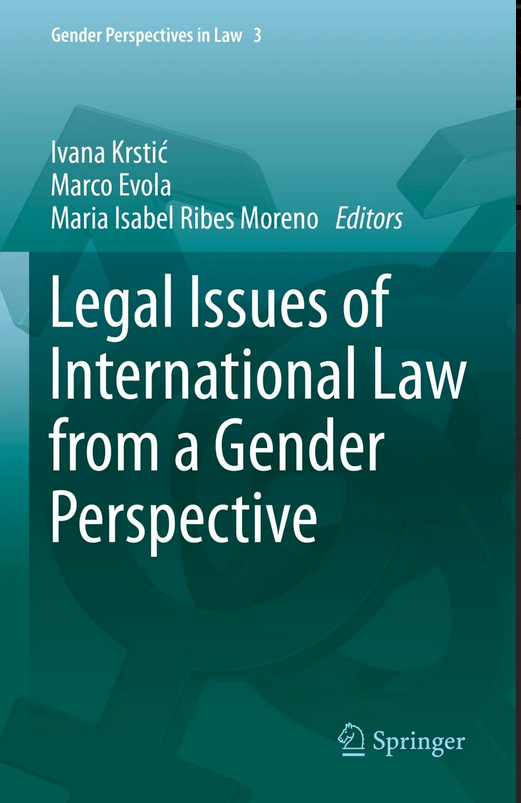
Evola, M. (2023). The Fight Against Discrimination on the Grounds of Sex, Sexual Orientation and Gender Identity in the External Relations of the European Union. In: Krstić, I., Evola, M., Ribes Moreno, M.I. (eds) Legal Issues of International Law from a Gender Perspective . Gender Perspectives in Law, vol 3. Springer, Cham. https://doi.org/10.1007/978-3-031-13459-3_1
Part of the Gender Perspectives in Law book series (GPL,volume 3)
The paper assesses how non-discrimination on the grounds of sex, sexual orientation and gender identity is conceived within European Union (EU) external relations and the legal issues it encompasses. An analysis of the multifarious instruments the EU avails itself in shaping its external action makes it clear that the EU approach towards equality is neither holistic nor homogeneous.
The EU promotes gender equality in all fields of its external relations, but action to outlaw discrimination on grounds of sexual orientation and gender identity is limited to accession to the EU and the European Neighbourhood Policy. EU external action to advance equality of women and LGBTIQ persons is suspended in a limbo between the protection of human rights and the economic rationale, which has rooted internal action in non-discrimination. The paper argues that the tension between the two approaches and the inconsistencies in promoting human rights in its external relations have prevented EU external action from eradicating the prejudices and stereotypes regarding discrimination on the grounds of sex, sexual orientation, and gender identity.
India Supreme Court orders special constitutional panel to consider same-sex marriage laws
The Supreme Court of India on Monday ordered a special constitutional panel of five judges to consider a series of petitions related to same-sex marriage. The 15 petitions at issue were filed by same-sex couples and LGBTQ+ activists between 2020 and 2022. Collectively, they aim to change provisions in the secular Special Marriage Act (SMA) and Foreign Marriage Act (FMA) to be interpreted in a gender-neutral manner or, alternatively, to be held unconstitutional for violating the right to equality. The Constitution Bench will comprise five judges. Panels such as these can be established by India’s top court to rule on matters of law requiring constitutional interpretation or involving significant legal questions.
The SMA and FMA were introduced to provide civil marriages for inter-faith couples or those who choose not to marry in accordance with the religious standards applicable to their situations. Although the Acts do not explicitly prohibit same-sex marriages, Sections 2(b) and 4(c) of both Acts, which cover degrees of prohibited relationships and the minimum age for marriage, have been interpreted as stipulating heterosexual marriages since they refer to a “man” and “woman”.
The petitioners argued that this interpretation discriminates against same-sex couples by denying them matrimonial benefits such as adoption, surrogacy, inheritance, maintenance, pension, health insurance, compassionate appointments, being able to take medical or end-of-life decisions on behalf of the other, and tax benefits. “More importantly,” one of the petitions stated, “marriage is one of the key ways in which society accepts, respects, and validates a couple”.
The petitioners argued that excluding LGBTQ+ individuals from marriage violates the fundamental rights to equality, privacy, dignity, and liberty under Articles 14, 15, 19, and 21 of the Constitution of India. They placed reliance on progressive judgments such as Navtej Singh Johar v. Union of India (excluding consensual same-sex relationships from criminalization), NALSA v. Union of India, (recognizing non-binary gender identities), and S. Sushama v. Commissioner of Police (banning conversion therapy).
Some of these petitions also prayed for the striking down of Sections 5 through 10 of both Acts, which require a couple to have their information displayed publicly for a month in advance of the wedding. These provisions have been judicially recognized as providing options for families to thwart inter-caste or inter-community marriages, and are likely to have a similar impact on LGBTQ+ couples.
The counter-affidavit filed by the Indian government on Sunday asserted its opposition to recognizing same-sex marriages, stating the recognition of same-sex relationships in Navtej Singh Johar should not translate into a recognition of same-sex marriage since the latter did not align with the heterosexual and cis-gendered “Indian family unit concept of a husband, wife, and children”. It also argued the issue falls within the powers of the Parliament and not the judiciary. The counter-affidavit drew criticism from LGBTQ+ individuals and organizations.
The Constitution Bench will begin hearing the case on April 18.
The post India Supreme Court orders special constitutional panel to consider same-sex marriage laws appeared first on JURIST – News.
 International and Comparative SOGIESC Law - Professor Andreas R Ziegler