Category Archives: Allgemein

Equal Rights Coalition met in Buenos Aires on 8 to 9 September to discuss challenges facing LGBT people

Equal Rights Coalition met in Buenos Aires on 8 to 9 September to discuss challenges facing LGBT people
  • UK and Argentina will co-chair the 2022 Equal Rights Coalition conference from Buenos Aires today
  • 42 member states and more than 140 civil society organisations will discuss the need to uphold human rights for LGBT persons
  • pre-conference report highlights the growing global “backlash” against LGBT rights and freedoms

The Equal Rights Coalition (ERC) will meet in Buenos Aires today (Thursday 8 September) to discuss joint action on urgent issues that LGBT people face globally.

The gathering comes at a pivotal moment as ERC member states have identified a growing global threat to the freedoms and human rights of LGBT persons. It will also provide the opportunity for governments and NGOs to share best practice.

The current ERC co-chairs, Argentina and the UK, will also present a report tracking progress of the ERC’s Strategy and Five-Year Implementation Plan, published in July 2021.

Germany and Mexico will take up their roles as new ERC co-chairs during the closing ceremony of the conference on Friday 9 September. The ERC will commit to strengthening engagement from ERC members and empowering greater representation from the Global South. Germany and Mexico will also be joined by civil society co-chairs and supported by a new Administrative Unit, funded by member states.

UK Prime Minister’s Special Envoy for LGBT Rights, Nick Herbert (Lord Herbert of South Downs) said:

The UK stands for freedom – and that means freedom for all. We’re proud of the Equal Rights Coalition’s work to defend these freedoms but more needs to be done, in every part of the world, to achieve our aims.

We look forward to supporting Germany and Mexico in their role as the next ERC co-chairs. Together we can send the clear message that LGBT rights are human rights.

Argentina’s Special Representative Sexual Orientation and Gender Identity, Alba Rueda said:

Argentina is a strong country in human rights and diversity. This is the result of the social and political movement of lesbians, gays, travestis, transgender people, non-binaries, and all activisms that break away from the patriarchal and binary system.

We value the ERC in this same way: as a space in which social organisations can express themselves so that states can listen to them and commit to turning their demands into public policies.

This year’s ERC Conference follows previous convenings in Montevideo in 2016, Vancouver in 2018, and a virtual event in 2021. Due to the COVID-19 Pandemic, the UK and Argentina have held an extended tenure as co-chairs since 2019.

The conference will focus on 4 key areas, including:

  • developing inclusive national laws and policies
  • advancing the Sustainable Development Goals
  • supporting civil society responses to the global anti-gender movement
  • mapping the progress towards decriminalisation around the world

Civil society organisations play a vital role in the Equal Rights Coalition. The current civil society co-chairs – Asociación Familias Diversas Argentina, Kaleidoscope Trust, and Stonewall – support more than 140 groups from across the world. The UK, Argentina, Mexico, the USA, Canada, The Netherlands and Belgium have funded some of the in-person participation at this year’s conference for civil society organisations and human rights defenders from the Global South.

In July 2021, the ERC agreed a Strategic Plan and Five-Year Implementation Plan to help guide and energise the group’s work and ensure the organisation can live up to its huge potential. The pre-conference report highlighted this prioritisation process as a “major achievement” of Argentina and the UK’s tenure as co-chairs.

Background

USA: Religious university blocks every single student club just to get rid of LGBTQ+ group

USA: Religious university blocks every single student club just to get rid of LGBTQ+ group


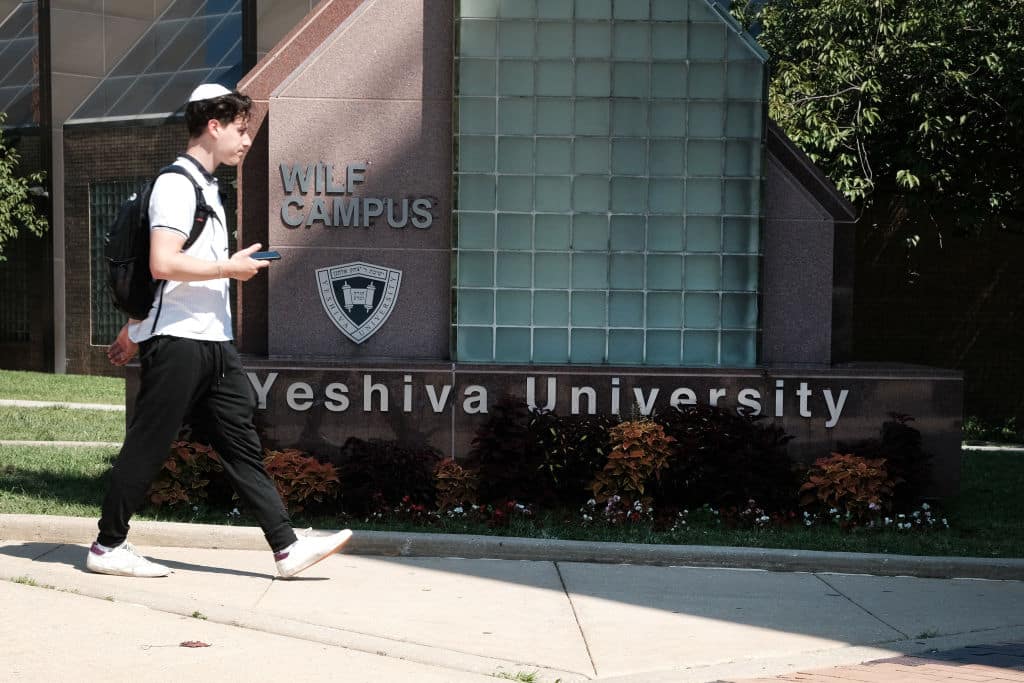
(Photo by Spencer Platt/Getty Images)

The private Orthodox Jewish Yeshiva University has blocked every single student organisation, just to get rid of an LGBTQ+ club.

In June, the New York County Supreme Court found that Yeshiva University was in violation of the city’s human rights laws by refusing to recognise the YU Pride Alliance, with the court ordering the university to grant the club “advantages, facilities, and privileges afforded to all other student groups”.

More: https://www.pinknews.co.uk/2022/09/18/yeshiva-university-orthodox-judaism-yu-pride-alliance-supreme-court/

How LGBTQ+ rights in UK changed during the Queen’s time on the throne

How LGBTQ+ rights in UK changed during the Queen’s time on the throne

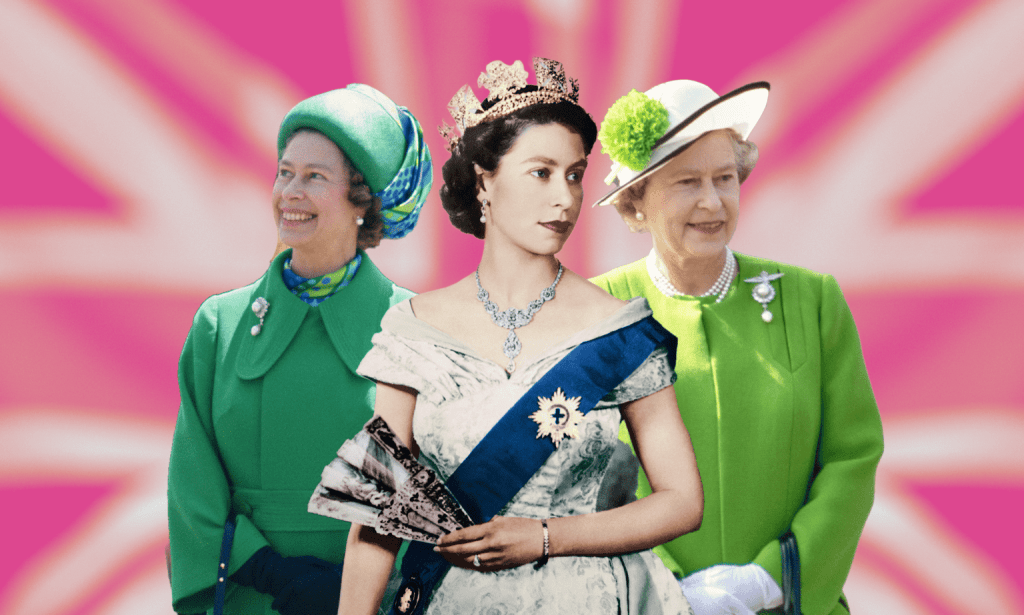
Throughout her reign, life has been radically transformed for LGBTQ+ people in the UK. When she ascended to the throne in 1952 following the death of her father King George VI, homosexuality was still illegal.

While Queen Elizabeth generally avoided commenting publicly on LGBTQ+ rights, she has – as is required by her position – given royal assent (which is a formality where the reigning monarch approves changes to the law) to many pieces of legislation that have changed the trajectory of queer life in Britain.

More: https://www.pinknews.co.uk/2022/09/08/queen-elizabeth-ii-dead-lgbtq-rights/

The complicated legacy of the Wolfenden Report, which changed the trajectory of UK LGBTQ+ rights

The complicated legacy of the Wolfenden Report, which changed the trajectory of UK LGBTQ+ rights

Sir John Wolfenden (right) meets members of the press at the Waldorf Hotel for discussions and questions on the Wolfenden Committee Report on Sport, 28th September 1960. (Photo by Terry Fincher/Mirrorpix/Getty Images)

More: https://www.pinknews.co.uk/2022/09/04/wolfenden-report-homosexuality-lgbtq-peter-tatchell/

HRW: A World Cup of Shame: FIFA Fails LGBT Rights Test in Qatar

HRW: A World Cup of Shame: FIFA Fails LGBT Rights Test in Qatar

In November the 2022 FIFA Men’s World Cup opens in Qatar, a country that represses the rights of lesbian, gay, bisexual, and transgender people and punishes same-sex relations with up to seven years in prison.

The soccer governing body, FIFA, knew this in 2010, when it awarded Qatar the football tournament, one of the world’s most widely viewed sporting events. FIFA’s own governing statutes, in force at the time, ban LGBT discrimination of the kind Qatar enshrines in its national laws, and FIFA’s due diligence to enforce its own policies around the world has been ineffective. 

In 2016, FIFA adopted the United Nations Guiding Principles on Business and Human Rights, which require it to “avoid infringing on the human rights of others and address adverse human rights impacts.” It requires FIFA to take adequate measures for the “prevention, mitigation, and remediation” of human rights impacts.

To meet this responsibility for the Qatar World Cup, FIFA should have introduced concrete policies and a human rights due diligence process with regular reporting. But less than five months ahead of the football tournament, and despite FIFA’s recent celebration of Pride month, it is clear that it is failing to live up to its promises.

In March, an international coalition of groups noted FIFA’s and Qatar’s lack of progress in implementing civil society recommendations on LGBT rights made to the country’s Supreme Committee, including legal reform and free expression guarantees.

But despite Qatar’s dismal human rights record, including around the rights of migrant workers, severe restrictions on free expression and peaceful assembly, state policies that discriminate and facilitate violence against women, and a repressive environment against LGBT residents and visitors, Qatar remains the tournament host and has not changed its ways.

In 2020, Qatar assured prospective visitors that the kingdom will welcome LGBT visitors and that fans will be free to fly the rainbow flag at the games. But it begged the question: what about the rights of LGBT residents of Qatar?

Suggestions that Qatar should make an exception for outsiders are implicit reminders that Qatari authorities do not believe that its LGBT residents deserve basic rights. It risks erasing the lived repressive reality of LGBT residents of Qatar.

On May 20, at a news conference in Berlin, the Emir of Qatar, Sheikh Tamim bin Hamad al-Thani, responded to a question about the rights of LGBT visitors by repeating that, “We [Qatar] welcome everybody, but we also expect and want people to respect our culture.”

Qatar’s steady reference to “culture” to deny LGBT people’s rights deflects responsibility away from abusive state systems. “Culture” should not be used as a cover for discourse, practices, and legislation that have effectively excluded content related to sexual orientation and gender identity from the public sphere.

Qatari authorities censor mainstream media related to sexual orientation and gender identity. And people who have experienced government repression have told us that the  government surveils and arrests LGBT people based on their online activity.

In April, Major General Abdulaziz Abdullah Al Ansari, a senior Interior Ministry  official overseeing security for the football tournament, said that rainbow flags may be confiscated from prospective visitors “for their protection.” Al Ansari added: “Reserve the room together, sleep together — this is something that’s not in our concern.”

It certainly should be a concern. A recent survey by a Scandinavian media group showed that 3 of the 69 hotels on FIFA’s official list of recommended accommodations would deny entry to same-sex couples. It found that only 33 did not object to booking same-sex couples, while 20 others said that “they would accommodate same-sex couples as long as they did not publicly show that they were gay.” FIFA responded, warning that it will terminate any contracts with hotels that discriminated against same-sex couples.

Qatar’s hardening position may be connected to its improving geopolitical standing in light of Russia’s invasion of Ukraine, especially in Europe where Qatar’s liquefied natural gas is viewed as an alternative to Russian energy.

Journalists, human rights organizations, and football associations have widely criticized allowing Qatar to host the World Cup in the first place. FIFA has a responsibility to hold host authorities accountable to an international rights-respecting standard, including on LGBT rights.

Long-term legal reform should prioritize the realities of LGBT residents of Qatar, including by introducing legislation that protects against discrimination on the basis of sexual orientation and gender identity, online and offline. The Qatari government should repeal all laws that criminalize consensual sexual relations outside of marriage—before the World Cup begins this fall.

More: https://www.hrw.org/news/2022/07/07/world-cup-shame-fifa-fails-lgbt-rights-test-qatar

Germany: Federal government wants to better protect queer asylum seekers in the future

Germany: Federal government wants to better protect queer asylum seekers in the future

Die Bundesregierung will Menschen besser schützen, die wegen ihrer sexuellen oder geschlechtlichen Identität nach Deutschland gekommen sind. Ab kommendem Monat solle das Flüchtlingsbundesamt (Bamf) bei der Bearbeitung von Asylanträgen queerer Menschen nicht mehr die so genannte “Verhaltensprognose” berücksichtigen, deren Ergebnis sich bislang negativ auf die Asylentscheidung auswirken konnte – dies berichteten die Zeitungen der Funke Mediengruppe (Mittwochsausgaben). Eine entsprechende Dienstanweisung werde derzeit im Bamf umgesetzt.

Mehr: https://www.queer.de/detail.php?article_id=43274&pk_campaign=Nwsl

The European Union on Tuesday condemned the death sentences imposed by Iran on two women who advocates and human rights groups say are LGBT activists and innocent of any crime

The European Union on Tuesday condemned the death sentences imposed by Iran on two women, Elham Chubdar and Zahra Sedighi Hamedani, who advocates and human rights groups say are LGBT activists and innocent of any crimeThe European Union on Tuesday condemned the death sentences imposed by Iran on two women, Elham Chubdar and Zahra Sedighi Hamedani, who advocates and human rights groups say are LGBT activists and innocent of any crime

More: https://www.reuters.com/world/middle-east/eu-condemns-death-sentences-two-women-iran-2022-09-13/

St Kitts and Nevis becomes the latest country to declare that laws that have criminalized LGBT people are unconstitutional

St Kitts and Nevis becomes the latest country to declare that laws that have criminalized LGBT people are unconstitutional

GENEVA, 30 August 2022—UNAIDS welcomes a St. Kitts and Nevis High Court ruling that laws criminalizing gay sex are unconstitutional, meaning that they are immediately struck from the legal code. The Court upheld the plaintiffs’ claim that Sections 56 and 57 of the Offences Against the Person Act violated the right to privacy and freedom of expression.

“This landmark ruling is an important step forward in ensuring equality and dignity for the lesbian, gay, bisexual and transgender community in St. Kitts and Nevis and the whole Caribbean,” said Luisa Cabal, UNAIDS Regional Director for Latin America and the Caribbean. “Today, St. Kitts and Nevis joins a growing list of Caribbean nations that have overturned these colonial-era laws that deny people’s human rights and hold back the response to the HIV pandemic. Everyone benefits from decriminalisation.”

Laws that punish consensual same sex relations, in addition to contravening the human rights of LGBT people, are a significant obstacle to improving health outcomes, including in the HIV response. Such laws help to sustain stigma and discrimination against LGBT people and are barriers to LGBT people seeking and receiving healthcare for fear of being punished or detained. Decriminalisation saves and changes lives.

The claim against the government of St. Kitts and Nevis was brought by a citizen, Jamal Jeffers, and the St. Kitts and Nevis Alliance for Equality, with the support of the Eastern Caribbean Alliance for Diversity and Equality. The ruling by the High Court follows a similar High Court decision for Antigua and Barbuda in July. Courts in Belize and Trinidad and Tobago have also repealed sections of their legal codes that criminalized same-sex sexual relations.

There remain seven countries in the Caribbean that criminalize gay sex between consenting adults, all of them former British colonies. They are Barbados, Dominica, Grenada, Guyana, Jamaica, St. Lucia, and St. Vincent and the Grenadines.

“Caribbean civil society is determined, and Caribbean courts are clear. The clock is ticking on these damaging colonial laws,” said Luisa Cabal. “Countries that have still not taken these laws off the books need to do so as a matter of urgency, for the health and human rights of all their people.”

The Court ruling reduces to 68 the number of countries worldwide criminalizing same-sex sexual relations. Earlier this month, Singapore announced that it is repealing legislation that punished gay sex by a prison sentence of up to two years.

Source: https://www.unaids.org/en/resources/presscentre/pressreleaseandstatementarchive/2022/august/20220830_decriminalize-gay-st-kitts-and-nevis