The European Broadcasting Union (EBU) bans Russia from 2022 European Song Contest
The European Broadcasting Union (EBU) bans Russia from 2022 European Song Contest
Leave a reply

The European Broadcasting Union (EBU) bans Russia from 2022 European Song Contest
U.S. claims Russia has list of Ukrainians ‘to be killed or sent to camps’ following a military occupation, including “vulnerable populations such as religious and ethnic minorities and LGBTQI+ persons”
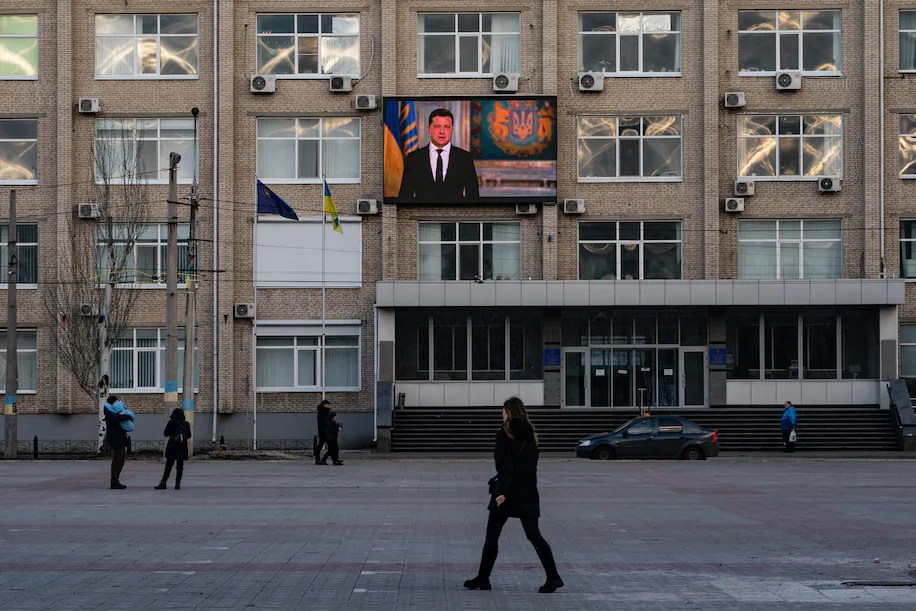
Read: https://www.washingtonpost.com/national-security/2022/02/20/ukraine-russia-human-rights/
Kuwait Overturns Law Used to Prosecute Transgender People
Lily Wakefield February 10, 2022
Two women relaxing on a rock in the 1920s. (Getty)
Lesbianism was almost made illegal in 1920s Britain, but the reason lawmakers decided against a ban may surprise you.
In August 1921, the First World War had recently ended with rationing still being phased out, and Irish War of Independence ceasefire talks were ongoing. Unemployment was skyrocketing, women were demanding equal voting rights, and the year even saw a 100-day drought.
But what were MPs concentrating on? Trying to criminalise lesbianism, obviously.
In 1885, section 11 of the Criminal Law Amendment Act had made “gross indecency” between men illegal, punishable with at least two years in prison, with or without hard labour.
The Offences against the Person Act 1861 had also already criminalised “buggery” with no less than 10 years in prison, but the Criminal Law Amendment Act was vague, as “gross indecency” could be interpreted in a myriad of ways and applied to any act of intimacy. The law was used to convict both Oscar Wilde and Alan Turing, among many other men.
But by 1921, the government had realised there were quite a number of queer people they weren’t able to put in prison, and MPs introduced a bill which would have punished “gross indecency” between women.
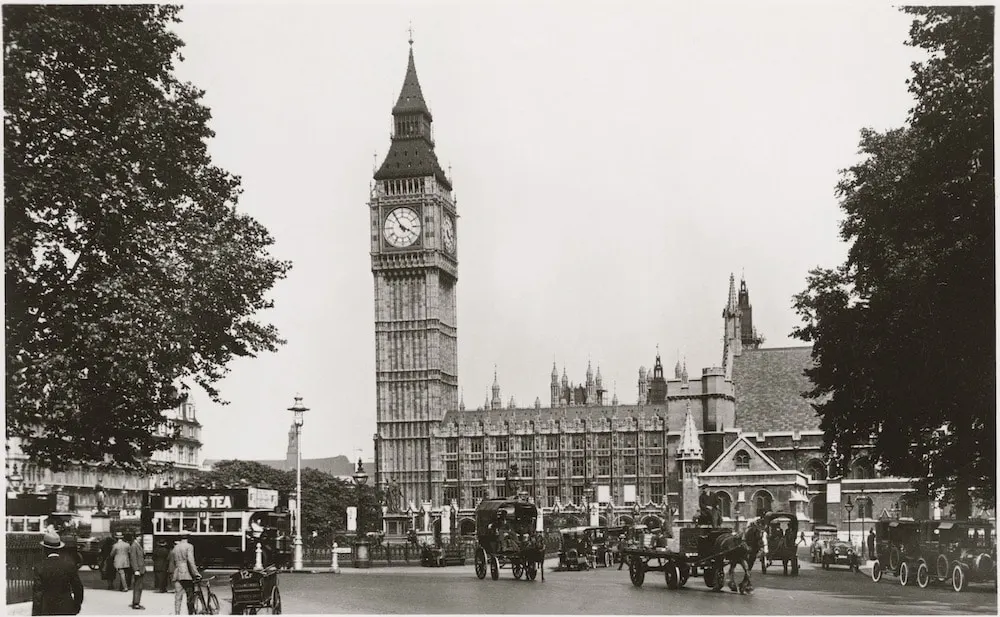
They suggested adding another clause to the Criminal Law Amendment Act, titled “acts of indecency by females”.
It read: “Any act of gross indecency between female persons shall be a misdemeanour, and punishable in the same manner as any such act committed by male persons under section 11 of the Criminal Law Amendment Act, 1885.”
The bill made it to the House of Lords, where it was promptly stuck down, but not for the reason you might think.
The Lords believed that if they made lesbianism illegal, they would simply create more lesbians, as feeble-minded women caught on to what, understandably, seemed like a great idea.
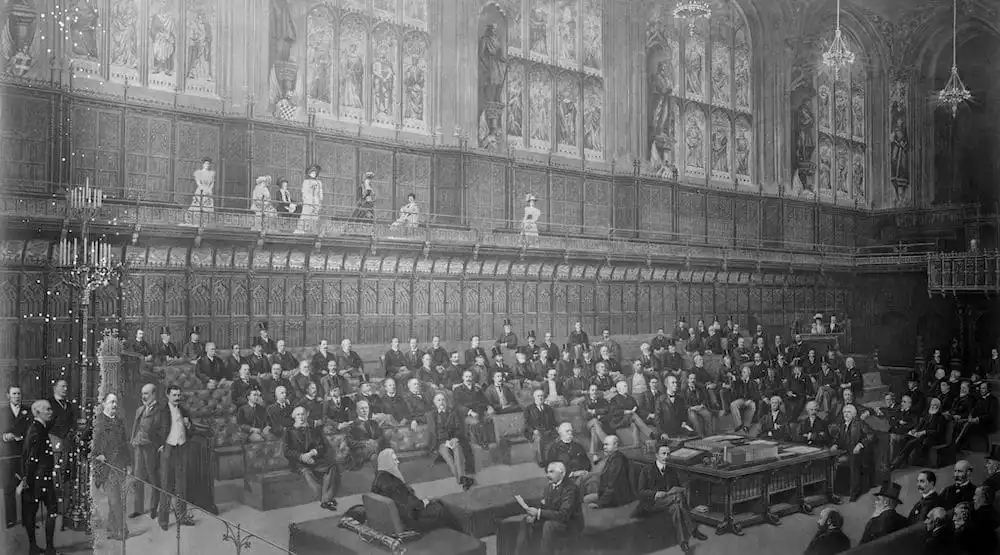
James Harris, the fifth Earl of Malmesbury, began the debate by apologising for a “discussion upon what must be, to all of us, a most disgusting and polluting subject”.
But, he insisted that however “disgusting” the subject matter was, “in passing a clause of this sort you are going to do a great deal more harm than good”.
He explained that criminalising lesbians would increase instances of blackmail against women, who he said liked to share beds as friends “for reasons of fear or nervousness, and the desire for mutual protection”.
At the same time, he added, it would also increase the number of lesbians.
“We all know that vice has been increasing partly owing to the nervous conditions following on the war, but I believe that these cases are best left to their own determination,” he told the House of Lords.
“I believe that all these unfortunate specimens of humanity exterminate themselves by the usual process, which we know has taken place in every nation through all the ages. The more you advertise vice by prohibiting it the more you will increase it.”

Hamilton John Agmondesham Cuffe, the Earl of Desart, agreed.
He said: “I am strongly of opinion that the mere discussion of subjects of this sort tends, in the minds of unbalanced people, of whom there are many, to create the idea of an offence of which the enormous majority of them have never even heard.
Cuffe admitted that lesbians really did exist – I was going to say… I suppose I must not… that I know this does happen” – but continued that if a lesbian were to be prosecuted, “it would be made public to thousands of people that there was this offence; that there was such a horror”.
Alerting “hysterical” women, he said, to the existence of lesbianism would be a “great public danger” and “a very great mischief”.
Frederick Edwin Smith, Lord Chancellor and first Earl of Birkenhead, echoed Cuffe’s sentiment.
“The overwhelming majority of the women of this country have never heard of this thing at all, he said.
“I would be bold enough to say that of every 1,000 women, taken as a whole, 999 have never even heard a whisper of these practices.”
The Lords threw out the bill, and by avoiding the “great public danger” of more lesbians, accidentally ensured that generations of queer women could get on with the “disgusting and polluting” business of loving each other in relative peace.
Reminder: Application online is now possible for the fifth edition of Leiden University’s
Summer School on Sexual Orientation & Gender Identity in International Law
(The Hague & Amsterdam, 27 July to 5 August 2022)
The draft programme for the 2022 edition is already online. It includes expert speakers (from many countries, universities and organisations) who will discuss global and regional human rights, international criminal law, international economic law, international refugee law, and more. Some sessions will focus on intersex issues, on gender identity, on sexual orientation, or on intersectionality.
Leiden University’s Grotius Centre has been offering this unique summer school since 2016. Each year participants have included lawyers, researchers, activists, officials and students from all over the world. Academic coordinator is Kees Waaldijk, professor of comparative sexual orientation law at Leiden Law School.
More information and online application form at https://www.universiteitleiden.nl/en/education/study-programmes/summer-schools/sexual-orientation-and-gender-identity-in-international-law-human-rights-and-beyond.
#sogilawsummerschool
US human rights law scholar says Hong Kong gov’t denied him visa to teach at HKU
Interesting Article: Nathan H. Madson has published Finding the “Humanity” in Human Rights: LGBT Activists and the Vernacularization of Human Rights in Hong Kong (Law & Social Inquiry, Vol. 47, no. 1, February 2022)
Nathan H. Madson has published Finding the “Humanity” in Human Rights: LGBT Activists and the Vernacularization of Human Rights in Hong Kong (Law & Social Inquiry, Vol. 47, no. 1, February 2022). Here’s the abstract:
Through an ethnographic analysis of Hong Kong LGBT activists’ fight for a gender recognition ordinance (GRO) that would simplify the process for transgender Hongkongers to change their legal gender, a paradox emerged: Why was a human rights framing of LGBT issues problematic when human rights were central to locals’ understanding of what it meant to be Hongkongers? Local LGBT activists’ vernacularization of human rights—or the process of localization of international human rights law into culturally relevant frameworks—hinged on reframing the need for a GRO as a matter of humanity, not human rights law. Relying on citations of human rights law among “ordinary citizens” violated the existing ways in which Hongkongers talked about human rights as a method of distinguishing Hong Kong from the rest of the People’s Republic of China. Furthermore, this need to differentiate emerged from the 2014 Umbrella Movement in which prodemocracy activists occupied various urban centers in Hong Kong for seventy-nine days. The Umbrella Movement caused a shift in which ordinary citizens became responsible for each other and defending what made Hong Kong unique. Ultimately, the vernacularization process requires closer attention to the ways in which human rights are being talked about on the ground.
Iran executed two gay men on sodomy charges on Sunday, local human rights groups and media organizations have reported

The theocratic state has previously used its sodomy charge to execute LGBTQ+ people, according to The Jerusalem Post. The outlet cited research from a 2008 British dispatch that Iran has executed 4,000 to 6,000 LGBTQ+ people since its 1979 Islamic revolution. Since the revolution, Iran’s laws are dictated by an ultraconservative interpretation of Islam.
On 20 December 2021, Lena Holzer defended a thesis at the Graduate Institute, Geneva on: “The Binary Gendering of Individuals in International Law: A Plurality of Assembled Norms and Productive Powers of the Legal Registration of Gender”. The jury members were Professor Janne Nijman (chair and internal examiner), Professors Paola Gaeta and Elisabeth Prügl (co-supervisors) and Professor Dianne Otto (external examiner).

Using a transdisciplinary approach, this thesis analyses how international law has been involved in making gender a personal legal identity characteristic that is assigned to individuals at birth. It analyses norms from various fields of public international law, including norms on development, humanitarian law, human rights law and passport regulations, as well as rules of private international law. By drawing on queer and feminist theories and assemblage thinking as methodological tools, it contributes to queer-feminist approaches to international law and legal pluralism. It concludes that ‘queering’ legal gender categories in international law could be achieved through efforts to ‘de-propertise’ the categories by decreasing their value for the accumulation of people’s economic, symbolic and political capital. Moreover, it develops assemblage thinking as a queer-feminist method that allows taking into account a plurality of subjectivities, feminist positions and norms in the study of international law.
Currently, Lena is a consultant for the International Lesbian, Gay, Bisexual, Transgender, Queer & Intersex Youth and Student Organisation (IGLYO). In the future she plans to continue with research and teaching in international law.
Afghanistan LGBTQ+ after Taliban takeover face extreme violence
Human Rights Watch Tuesday released a report showing that LGBTQ+ people in Afghanistan have experienced increasing violence and threats to their safety since the Taliban took complete control of the country on August 15, 2021.
From October to December 2021, Human Rights Watch interviewed 60 LGBTQ+ Afghans about their lives under Taliban rule. Most of those who were interviewed reported being “attacked, sexually assaulted, or directly threatened by members of the Taliban because of their sexual orientation or gender identity.” Some have even relocated to nearby countries with greater protections for the rights of LGBTQ+ people.
Although the ousted President of Afghanistan, Ashraf Ghani, in 2018 criminalized same-sex sexual relations, the Human Rights Watch report said that the Taliban vowed to take a hard line against the rights of LGBTQ+ people and even cited sharia law. “For homosexuals, there can only be two punishments: either stoning, or he must stand behind a wall that will fall down on him,” according to a Taliban judge.
Organizations assisting LGBTQ+ Afghans say they have been contacted by hundreds of individuals seeking to flee Afghanistan. However, even if barriers to resettlement did not exist, LGBTQ+ people in Afghanistan face unique issues when attempting to relocate. This includes gender-nonconforming individuals being potentially spotted by Taliban officials when passing through routine checkpoints on public roads or going to the country’s passport office, as well as lesbian or bisexual women not being able to escape on their own, as Taliban law prohibits women from traveling without male relatives.
Human Rights Watch ended its report by urging the United Nations bodies and concerned governments to use whatever diplomatic leverage they have with the Taliban to stop the targeting of LGBTQ+ people.
The post Afghanistan LGBTQ+ after Taliban takeover face extreme violence appeared first on JURIST – News.
 International and Comparative SOGIESC Law - Professor Andreas R Ziegler