Prix Maurice Chalumeau

Prix Maurice Chalumeau

Le Prix junior Maurice Chalumeau est destiné aux mémoires de master ayant été évalué dans l’une des trois universités du «Triangle Azur» (UNIGE, UNIL, UNINE).

Le Prix senior Maurice Chalumeau est destiné aux thèses ayant été soutenues auprès d’une université ou haute école suisse.

Le délai de dépôt de candidature est fixé au 1er septembre 2021.

Le délai de dépôt de candidature est fixé au 1er septembre 2021.

LINKS

Voir: http://www.unige.ch/cmcss

Venice Commission condemns Hungary’s legal gender recognition ban

Venice Commission condemns Hungary’s LGR ban

At its 127th Plenary Session on 2 and 3 of July 2021, the Venice Commission adopted a report that finds the constitutional amendments legislated by the Hungarian parliament in December 2020 to not be in line with international human rights standards.

The Commission referred to various international human rights bodies and experts who have asserted that all individuals have a “right to a self identity” based not only on their “sex at birth” (as the Hungarian amendment suggests), but also on the basis of their “gender.”

The Venice Commission recognises that both the sex and gender of a person should lead to the right to self-determination. 

The Commission calls on Hungary to repeal the amendment and protect the rights of children to self-identify. It also recommends that the system of birth registration and subsequent legal recognition of gender identity comply with non-discrimination requirements of both international human rights law and applicable Hungarian non-discrimination norms, which are to be applied in a strict manner.

Read the report

Source: https://tgeu.org/venice-commission-condemns-hungarys-lgr-ban/

HRW: Timeline of Sex Testing in Sport

HRW: Timeline of Sex Testing in Sport

The 120-page report, “‘They’re Chasing Us Away from Sport’: Human Rights Violations in Sex Testing of Elite Women Athletes,” documents the experiences of more than a dozen women athletes from the Global South who have been affected by sex testing regulations. Human Rights watch found that global regulations that encourage discrimination, surveillance, and coerced medical intervention on women athletes result in physical and psychological injury and economic hardship. The International Olympic Committee – the supreme body in global sports – is developing guidelines to address human rights violations caused by sex testing policies.

See: https://www.hrw.org/video-photos/interactive/2020/11/30/timeline-sex-testing-sport

Interesting Blog Post: Why the Treatment of LGBTQI+ Persons in Chechnya Amounts to Crimes Against Humanity by Dilara Karmen Yaman

Interesting Blog Post: Purge – Until There Is No One Left – Why the Treatment of LGBTQI+ Persons in Chechnya Amounts to Crimes Against Humanity (by Dilara Karmen Yaman)

30.07.2021, https://voelkerrechtsblog.org/purge-until-there-is-no-one-left/

Dilara Karmen Yaman (student at Ruhr University Bochum’s Faculty of Law and a student assistant at the chair of criminology)

In February 2021, the European Center for Constitutional and Human Rights (ECCHR) filed a complaint in Germany for crimes committed in Chechnya, allegedly by five perpetrators including the Chechen Deputy Prime Minister and other government and security forces against approximately 150 LGBTQI+ persons between 2017 and 2020. The allegations include persecution, arbitrary and unlawful arrests and detentions, torture, forced disappearance, and sexual abuse. This piece examines whether the treatment of Chechnya’s LGBTQI+ community amounts to crimes against humanity under international law.

Background

Chechen society is characterized by its conservative and patriarchal values. Strong heteronormative duties and roles attributed to the female and male gender lead to the suppression of any behavior seen to transgress these roles generally and to the repression of LGBTQI+ specifically. The government actively encourages this repression through regional and federal laws and ongoing anti-LGBTQI+ propaganda. For example, the Head of State, Ramzan Kadyrow, described LGBTQI+ people as “non-human” and “devils”, and denied their existence in Chechnya. Human rights activists have criticized this situation for years, but in legal terms, Maxim Lapunov, himself a victim of the “gay purge”, was the first to act, filing a criminal complaint against his perpetrators with the Russian authorities. After exhausting local remedies, Lapunov brought his case (Maksim Grigoryevich LAPUNOV against Russia) before the European Court of Human Rights (ECtHR) and claimed violations of Art. 3 (prohibition of torture), Art. 5(1) (right to liberty and security), and Art. 14 (prohibition of discrimination) of the European Convention on Human Rights (ECHR).

Russia’s Obligations under International Law

The pending ECtHR case is a chance to remind Russia of its obligation to ensure and protect human rights all over its territory. However, the dimension of the acts committed in Chechnya and Russia’s failure to fulfill its international obligations go beyond the scope of the ECHR and human rights law. Due to the systematical and targeted character of the attacks against LGBTQI+ people, they may qualify as crimes against humanity, whose prohibition is a peremptory norm of international law as the ILC has stated in its Draft Articles on this crime. The International Criminal Court’s Rome Statute (RS) reflects the most recent consensus on its definition. Article 7(1) RS sets forward acts, which amount to a crime against humanity when the elements of the crime were fulfilled. This means that the act has to be performed “as part of a widespread or systematic attack directed against any civilian population, with knowledge of the attack”.

Attack, as per the Statute’s definition means “the course of conduct involving the multiple commission of acts against any civilian population, pursuant to or in furtherance of a State or organizational policy to commit such attack”. The characterization of an attack as widespread refers to the large-scale nature of the attack (ICC, Bemba, para. 163) and systematic refers to the organized nature of acts of violence in a conscious repetition of the acts (ICC, Ntaganda, para. 692; ICC, Katanga, para. 1123). One individual act can be part of an overarching widespread or systematic attack (ICTY, Blaškić, para 101).

Numerous sources have documented attacks against LGBTQI+ persons in Chechnya, including enforced disappearances, torture, imprisonment, and killings, which meet the definitions laid down in Art. 7(2) RS. These various acts also amount to persecution in the sense of Art. 7(1)(h) RS. Persecution “means the intentional and severe deprivation of fundamental rights contrary to international law by reason of the identity of the group or collectivity”. The RS criminalizes persecution against any identifiable group or collectivity on political, racial, national, ethnic, cultural, religious, gender, or other grounds. Gender “refers to the two sexes, male and female, within the context of society”. The jurisprudence of international criminal courts and tribunals (see Commentary of the ILC Draft Articles on Prevention and Punishment of Crimes Against Humanity, p. 46) and the ICC’s “Policy Paper on Sexual and Gender-Based Crimes” recognize the social construction of gender with its attribution of roles, behaviors and characteristics to women and men.

The acts committed in Chechnya constitute persecution of LGBTQI+ people, who are targeted based on their sexual orientation, as men and women not in conformity with the duties and roles Chechnyan society assigns to them. They were performed in a widespread and systematic manner, since Chechen security forces executed them using similar methods and tactics based on the government’s overarching anti-LGBTQI+ Agenda, affecting large numbers of LGBTQI+ people. Thus, the actus reus of Article 7 RS is fulfilled.

The mens rea of Art. 7 RS requires knowledge of the attack. Here, the government promoted honor killings of LGBTQ+ persons and facilitated a homophobic climate through its anti-LGBTQI+ propaganda. As the persons alleged to have committed the acts are part of Ramzan Kadyrow’s inner circle and are heavily involved in anti-gay propaganda and in the crimes committed against LGBTQI+ people, they acted in knowledge of the broader attack. The enumerated accusations thus meet the criteria of crimes against humanity.

States, including Russia, have a responsibility to protect their citizens from such severe crimes. However, Russia does not fulfill these obligations, as it demonstrated in 2018 when OSCE member states invoked the Vienna Human Dimension Mechanism and asked Russia to investigate crimes against LGBTQI+ people. On the grounds of insufficient responses, the Moscow mechanism was initiated a few months after, also to no avail. Although both mechanisms only establish political obligations, allowing for questions and expert missions sent to the state under scrutiny, Russia’s reactions suffice to demonstrate that it appears to ensure impunity for perpetrators. In the OSCE Rapporteur’s Report, Professor Wolfgang Benedek analyzed whether this is due to a lack of political will or a lack of control over the Chechnyan government and concludes that “most observers believe that there is a lack of political will for the sake of stability in the region”.

On Personal Criminal Accountability as a Means to Close Protection Gaps

Personal accountability of perpetrators can be achieved in two ways. First, perpetrators can be tried before an international criminal tribunal or secondly, held accountable by national courts under the principle of universal jurisdiction.

According to Article 12(1) RS the ICC has jurisdiction over state parties. Russia only signed the RS in 2000 but never ratified the agreement and, moreover, withdrew its signature in 2016 after the court classified Russia’s annexation of Crimea as occupation. Thus, there is no realistic chance to bring this case before the ICC.

“In an imperfect system of international criminal justice, with an ICC with limited jurisdiction, Germany attempts to guarantee that Europe is no safe haven for war criminals”, said Wolfgang Kaleck, the founder of the ECCHR, which filed a criminal complaint against five alleged perpetrators of crimes against LGBTQI+ in Chechnya in February 2021. Based on the principle of universal jurisdiction, it follows on the heels of its predecessor, the “Al Khatib Trial”, pending in front of the Higher Regional Court in Koblenz.

The principle of universal jurisdiction, according to which serious crimes under international law, including crimes against humanity, affect the international community as a whole, provides for state jurisdiction over persons (including non-nationals), who committed such crimes anywhere in the world, thus enabling courts to hold perpetrators accountable across state borders and prevent impunity. With the implementation of the principle of universal jurisdiction in its domestic legal system, enshrined in the Völkerstrafgesetzbuch, Germany has taken an important step to ensure global justice.

Conclusion

The human rights situation in Chechnya highlights the need for a codification of crimes against humanity in a dedicated convention to ensure the effectiveness of preventing, investigating, and prosecuting such crimes and harmonizing international and national law. Currently, in a world where the ICC is losing its standing in the international community, and the enforcement of the responsibility to protect due to the Security Council depends on the will of a few states, the punishment of such severe crimes is partly dependent on the principle of universal jurisdiction. In such a desperate situation, the principle of universal jurisdiction guarantees that such severe violations of human rights are not brushed aside. In this sense, it is now up to the German federal public persecutor to open investigations regarding the situation in Chechnya and signal to the international community that injustice and impunity are intolerable.

ECtHR says “In circumstances where a message on issues of public interest [including knowledge about same-sex relationships] was at least partly involved, the margin of appreciation afforded to the domestic courts was necessarily narrower compared to situations concerning solely commercial speech.” (Gachechiladze v. Georgia, no. 2591/19 – Judgment of 22 July 2021)

ECtHR says “In circumstances where a message on issues of public interest [including knowledge about same-sex relationships] was at least partly involved, the margin of appreciation afforded to the domestic courts was necessarily narrower compared to situations concerning solely commercial speech.” (Gachechiladze v. Georgia, no. 2591/19 – Judgment of 22 July 2021)

Source: https://jam-news.net/georgian-court-fines-condom-manufacturing-company-for-insulting-believers-feelings/

ECtHR says “In circumstances where a message on issues of public interest [including knowledge about same-sex relationships] was at least partly involved, the margin of appreciation afforded to the domestic courts was necessarily narrower compared to situations concerning solely commercial speech.”

CASE OF GACHECHILADZE v. GEORGIA

(Application no. 2591/19)

JUDGMENT

Art 10 • Freedom of expression • Lack of relevant and sufficient reasons to justify administrative-offence fine, forced product recall and ban on future use of condom packaging designs • Designs regarded as unethical advertising contrary to the religious and national values of Georgian society • Expression not merely commercial but also contributing to public debate concerning various issues of general interest, thereby warranting a narrower margin of appreciation • No demonstration of the existence of a pressing social need • Unacceptable prioritisation of views on ethics of the members of the Georgian Orthodox Church in the balancing of various values protected under the Convention and the Constitution of Georgia precedence

Art 35 § 3 (b) • Significant disadvantage in light of sweeping measures, despite lack of detailed financial account submitted by applicant, and raising important questions as to application of domestic legislation

22 July 2021

55.  However, the Court notes that unlike the circumstances which obtained in the case referred to by the domestic courts and the Government (see the previous paragraph), the applicant’s brand also appears to have been aimed at initiating and/or contributing to a public debate concerning various issues of general interest. In particular, the declared objective of the brand, expressed at the time of its launch, was to shatter stereotypes, and “to aid a proper understanding of sex and sexuality” (see paragraph 5 above). Some images used by the applicant concerned same-sex relationships (see paragraph 5 above; see also, in so far as negative attitudes towards the LGBT community in Georgian society are concerned, Identoba and Others v. Georgia, no. 73235/12, § 68, 12 May 2015). Furthermore, several designs used by the brand also appear to have been a social as well as political commentary on various events or issues (see paragraph 5 above). It is also relevant to note that the organisation which lodged a complaint in respect of the applicant’s brand was apparently active in civil and political matters (see paragraph 11 above). Therefore, the Government’s argument that the applicant’s “expression” had to be treated as having been made solely in a commercial context, giving the authorities a broad margin of appreciation at domestic level, should be treated with some caution. In circumstances where a message on issues of public interest was at least partly involved, the margin of appreciation afforded to the domestic courts was necessarily narrower compared to situations concerning solely commercial speech.

Gachechiladze v. Georgia (no. 2591/19) – Judgment of 22 July 2021


Summary: The applicant, Ani Gachechiladze, is a Georgian national who was born in 1995 and lives in Tbilisi.
The case concerns administrative-offence proceedings against the applicant, an entrepreneur, for her advertising of condoms.
The domestic courts found that four of the designs she had used in the social media and on the packaging for the condoms she produced under the name Aiisa, meaning “that thing”, were unethical. They were banned from future use.
Relying on Article 10 (freedom of expression), the applicant submits that her brand promoted the use of condoms and safe intercourse in a society in which sex and sex education are, according to her, considered taboo, and complains about the proceedings against her and the ban on using the four designs.
Violation of Article 10

See: https://hudoc.echr.coe.int/eng#{%22appno%22:[%222591/19%22],%22itemid%22:[%22001-211123%22]}

Interesting Blog Entry: Eva Maria Bredler Article 14 ECHR in the Closet: What the European Court of Human Rights Missed in Fedotova and Others v. Russia

Interesting Blog Entry: Eva Maria Bredler Article 14 ECHR in the Closet: What the European Court of Human Rights Missed in Fedotova and Others v. Russia

Eva Maria Bredler Article 14 ECHR in the Closet: What the European Court of Human Rights Missed in Fedotova and Others v. Russia, Völkerrechtsblog, 21.08.2021, doi: 10.17176/20210821-112550-0.

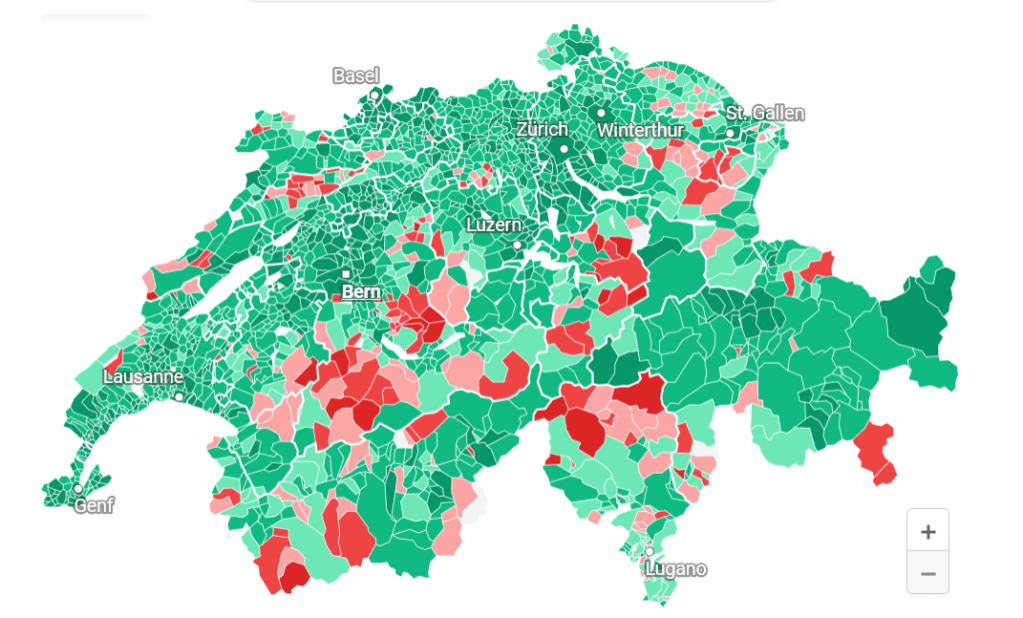
Switzerland: Same-sex marriage has broad support, Swiss poll reveals (referendum on 26 September 2021) — LGBTI Recht in der Schweiz – Droit LGBTI en Suisse – by Professor Andreas R Ziegler

Switzerland: Same-sex marriage has broad support, Swiss poll reveals (referendum on 26 September 2021) A legal reform to allow same-sex marriage in Switzerland appears to be welcome, while a proposal to introduce a capital gains tax has split public opinion. Read: https://www.swissinfo.ch/eng/politics/same-sex-marriage-has-broad-support–swiss-poll-reveals/46871400

Switzerland: Same-sex marriage has broad support, Swiss poll reveals (referendum on 26 September 2021) — LGBTI Recht in der Schweiz – Droit LGBTI en Suisse – by Professor Andreas R Ziegler