This is a blog is related to my academic work in the International Academic Forum on SOGIESC Law but meant to serve anyone who wants to contribute to improve the protection of human rights worldwide. It is intended to keep interested readers informed about legal developments relating to sexual orientation, gender expression and identity and sex characteristics (SOGIESC). Hopefully, it will make it easier to find correct legal information about the developments in all regions of the world and, in particular, with regard to international law.
USA: Idaho House approves bill imposing opt-in requirement for sex education
The Idaho House of Representatives approved House Bill 249 on Friday, requiring parents to opt in for sex education of their children, as opposed to the blanket opt-out requirement that was in place earlier. The bill, which was introduced by Representative Barbara Ehardt, passed with a vote of 56-12 and amends certain provisions of Chapter 16, Title 33 of the Idaho Code relating to the instruction of sex education.
Section 1 of the bill amends Section 33-1609 of the code, which defined “sex education” only as “the study of the anatomy and the physiology of human reproduction.” The bill, however, inserts another category of sex education, which it refers to as “instruction regarding human sexuality,” and defines as “any presentation, story time, discussion, or reading assignment, other than sex education as specifically and narrowly defined [otherwise], that is focused primarily or substantially on human sexuality, encompassing the topics of sex, gender identity, sexual orientation, eroticism, sexual pleasure, or sexual intimacy,” while expressly limiting the scope of sex education as it originally existed.
For this newly-inserted definition, the bill places an opt-in requirement, where parents who want their children to be given human sexuality instruction shall provide written permission to the school district board of trustees, while the opt-out requirement for the instruction on the anatomy and physiology of human reproduction remains in place. Therefore, the bill effectively divides sex education into two areas and indicates that schools would be disallowed from offering instruction in areas relating to human sexuality, gender identity, sexual orientation, and sexual pleasure unless parents or legal guardians specifically and explicitly file written forms allowing for such instructions to take place for their child.
USA: Tennessee Senate passes bill banning transgender student athletes from female sports
The Tennessee Senate passed SB0228 Bill on Monday, a move which bans participation of transgender athletes from female designated sports. The Bill, introduced earlier this year, passed with a vote of 27-6 and amends Title 49 of the Tennessee Code.
In its push for biological determinism over one’s self-identified gender, the Bill requires a student athlete’s gender for purposes of participation in a public middle school or high school interscholastic athletic activity or event to be determined based on the student’s sex as assigned at the time of the student’s birth. The Bill furthermore requires for reliance to be placed on a student athlete’s gender as indicated on the student’s original birth certificate, or any other evidentiary document determinant of one’s sex assigned at birth.
The Bill additionally requires the state board of education, each local board of education, and each governing body of a public charter school to adopt and enforce policies in order to ensure compliance with participation of students in athletic activities based on their sex determined at birth.
Hedy Weinberg, the Executive Director of the American Civil Liberties Union of Tennessee responded to this bill by stating:
Protecting women’s sports is important, but transgender girls do not threaten them. The vast majority of transgender students are not elite athletes. They just want to play sports for fun, with friends and classmates, to feel a sense of community and camaraderie, and to learn to respect and work together with coaches and teammates. We should not deny these life-changing opportunities to youth just because they are transgender.
The bill is now pending approval from the House of Representatives.
USA: Alabama Senate passes bill prohibiting gender affirming treatment for minors
The Alabama Senate passed the controversial anti-trans SB10 Bill on Tuesday, effectively prohibiting the performance of gender affirming medical treatment on minors. The Bill, which shall be called the Alabama Vulnerable Child Compassion and Protection Act, was introduced by Senator Shay Shelnutt and passed with a vote of 23-4.
Section 3 of the Bill prohibits any person from engaging in, counseling or making a referral for performance of various treatments such as through hormone therapy, puberty blockers, or surgical intervention, when performed with the intent of affirming the minor’s perception of his or her gender or sex. It also makes any performance of gender affirming medical procedure on a minor a Class C Felony as per Alabama’s Criminal Code.
In a bid to protect minors, the Bill additionally requires schools, public or private, to disclose to a minor’s parent or legal guardian, all information relating to the perception of such student that their gender or sex is inconsistent with their biological sex. The move has been opposed by transgender and human rights activists, with the American Civil Liberties Union of Alabama stating that the bill “runs counter to medical science, prevailing standards of treatment for transgender youth, and basic human dignity.”
The bill is now pending approval from the House of Representatives.
Semenya takes her case to European Court of Human Rights
The double Olympic 800m champion Caster Semenya has filed an application to the European Court of Human Rights in a final bid to save her career and overturn the ban on her defending her title at Tokyo.
Semenya, 30, has twice failed to overturn controversial World Athletics regulations requiring women with high testosterone to take medication to compete internationally between 400m and a mile.
Instrumentalisation of LGBTI rights in autocracies: The case of Hungary, 4 March 2021, 11:00-12:30, online
Please be informed of the event the Intergroup is organising for 4 March 2021, 11:00-12:30, titled “Instrumentalisation ofLGBTI rights in autocracies: The case of Hungary”, counting on the presence of Hungarian NGOs (Amnesty International Hungary, Budapest Pride and Háttér Society), Cabinet Expert Silvan Agius (from Commissioner Dalli’s office) and MEPs involved in the file on the rule of law in Hungary. The event is co-hosted by the Presidency of the Intergroup in cooperation with Gwendoline Delbos-Corfield as Rapporteur on the file and Intergroup Member.
Should you want to submit questions to be asked during the event, kindly use this form.
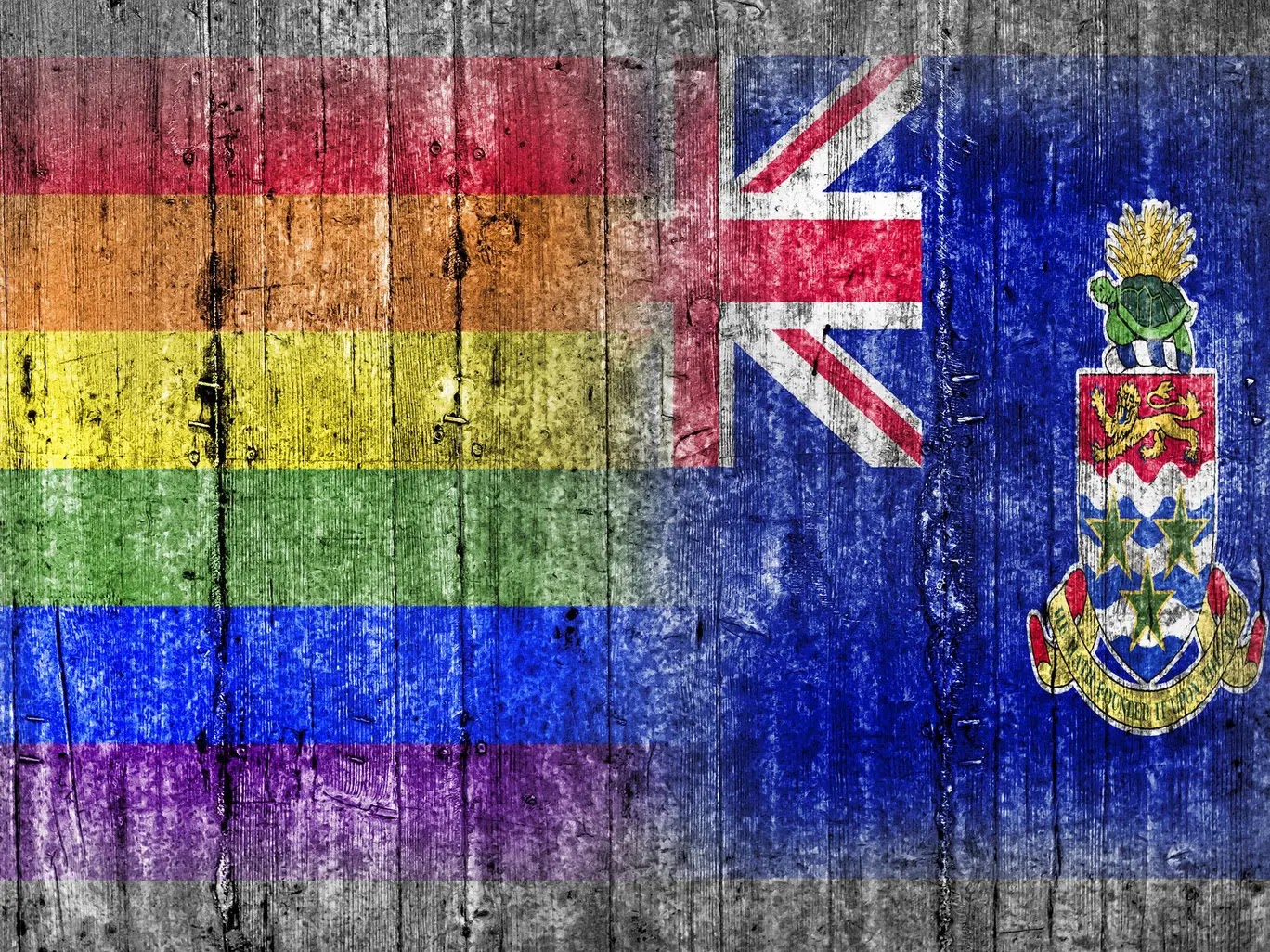
The European Convention on Human Rights extends to the Cayman Islands, a self-governing British Overseas Territory. As such, the right to marry contained in Article 12 of the Convention is in operation in the Cayman Islands and, inevitably, the hearing in Day turned on the extent to which same-sex couples can rely on the protection of Article 12 when their government prohibits them from marrying.
Article 12 of the Convention provides: “Men and women of marriageable age have the right to marry and to found a family, according to the national laws governing the exercise of this right.”
Article 12, same-sex couples and the European Court of Human Rights
Listening to the arguments presented in Day reminded me of something I have written about many times before: the inconsistent and flawed approach of the European Court of Human Rights in interpretating Article 12 of the Convention in respect of same-sex marriage.
That inconsistent and flawed approach began in 2010, in the case of Schalk and Kopf v Austria, when the Court considered a complaint by a same-sex couple about their inability to marry and reached the conclusion that “it cannot be said that Article 12 is inapplicable to the applicants’ complaint” (§ 61).
This conclusion, on the “applicability” of Article 12 to a complaint about the exclusion of same-sex couples from marriage, was based on the Court having regard to Article 9 of the Charter of Fundamental Rights of the European Union which, in providing a right to marry, does not contain the words “men and women” and leaves the decision whether or not to allow same-sex marriage to EU states.
It was in light of Article 9 of the EU Charter that the Court concluded that it “would no longer consider that the right to marry enshrined in Article 12 must in all circumstances be limited to marriage between two persons of the opposite sex […] However, as matters stand, the question whether or not to allow same-sex marriage is left to regulation by the national law of the Contracting State” (§ 61).
This conclusion on the applicability of Article 12 was made in the context of the Court’s interpretation of Article 12 in respect of two other claims made by the applicants in Schalk.
The first of these claims was that the “wording of Article 12 did not necessarily have to be read in the sense that men and women only had the right to marry a person of the opposite sex” (§ 44). The Court rejected this textual argument, stating that in contrast to all of the other substantive Articles of the Convention, which grant rights and freedoms to “everyone” or state that “no one” is to be subjected to certain types of prohibited treatment, the inclusion of the words “men and women” in Article 12 must be regarded as deliberate and, moreover, understood to reflect the “traditional sense” of marriage as the “union between partners of different sex” (§ 55). As I argued in an article published in European Law Review, which was discussed in the Privy Council hearing this week, this historical understanding of Article 12 is patently untrue.
The other claim advanced by the applicants in Schalk was that “the institution of marriage had undergone considerable changes” and, consequently, “there was no longer any reason to refuse same-sex couples access to marriage” (§ 44). The Court dismissed the applicants’ argument that Article 12 should be interpreted “in the light of present-day conditions” on the grounds that “there is no European consensus regarding same-sex marriage” (§ 57-8). At the time of Schalk, 6 out of 47 Convention states allowed same-sex marriage, and this has now grown to 16 – a growth which the Court has not regarded as a basis on which to change its approach to interpreting Article 12.
For all of the reasons outlined above, the Court’s overall conclusion in Schalk was that Article 12 “does not impose an obligation […] to grant a same-sex couple […] access to marriage” (§ 63).
The mess of “applicability”
The remark made by the Court in Schalk on the “applicability” of Article 12 to same-sex couples has, in my view, created enormous confusion about the relevance of Article 12 to same-sex couples seeking access to marriage.
Such confusion can be seen, for example, in the responses by the domestic courts to complaints about the then-prohibition of same-sex marriage in Northern Ireland. When applying Article 12, the High Court rejected the complaints and concluded that “the Strasbourg Court does not recognise a ‘right’ to same sex marriage. That being the case, the current statutory provisions in Northern Ireland [prohibiting same-sex marriage] do not violate any rights. Those rights do not exist in any legal sense” (Close and Others, Re Judicial Review § 16). By contrast, the Court of Appeal reached the conclusion that the prohibition on marriage was in violation of the Convention, holding that “the absence of same-sex marriage in [Northern Ireland] discriminated against same-sex couples, that a fair balance between tradition and personal rights had not been struck and that therefore the discrimination [against same-sex couples] was not justified” (Close and Others, Re Judicial Review § 58).
In my view, such different conclusions arise from the confusion created by the Court in Schalk in simultaneously holding that Article 12 “applies” to same-sex couples but does not require a state to grant same-sex couples access to marriage. The Court has, since Schalk, maintained that Article 12 is “applicable to a same sex couple wishing to marry” and that Article 12 is not violated by a state operating a total ban on same-sex marriage (Orlandi and Others v Italy, § 145).
Given that the Court’s approach has led to significant uncertainty and confusion, and to radically different conclusions about the extent to which Article 12 protects same-sex couples seeking access to marriage (such as those in Northern Ireland), it would, in my opinion, be more appropriate for the Court to say that Article 12 remains “inapplicable” to same-sex couples. It would be more appropriate because, in my view, the way the Court interprets Article 12 means that it is practically and effectively inapplicable to same-sex couples seeking access to marriage. I think this for three key reasons.
The first reason that Article 12 is practically and effectively inapplicable to same-sex couples seeking access to marriage is that, in Schalk, the Court stated that its applicability arose solely because of the existence of Article 9 of the EU Charter. In this respect the Court concluded, as I outlined above, that because Article 9 of the EU Charter had omitted the words “men and women” from the right to marry that it would no longer consider that this right in Article 12 must in all circumstances be limited to marriage between two persons of the opposite-sex. The former President of the Court, Nicolas Bratza, has stated that Schalk established that “in the light of Article 9 of the [EU] Charter, it could not be ruled out […] that Article 12 of the Convention could apply to same-sex marriage if the latter was recognised in domestic law”.[1] Therefore, the Court’s interpretation of the relevance of Article 9 of the EU Charter cannot be regarded as establishing that, in general terms, complaints relating to same-sex marriage will fall within the scope of Article 12. This is not least because for those individuals in states contracted to the Convention that are not members of the EU, Article 9 of the EU Charter has no relevance.
The second reason that Article 12 remains practically and effectively inapplicable to same-sex couples seeking access to marriage is based on the existence of eleven years of case law since Schalk. During this time the Court has failed to evolve its approach to applying Article 12 to complaints by same-sex couples seeking access to marriage. On the contrary, in Hämäläinen v Finland, the Grand Chamber took the opportunity to state that Article 12 “enshrines the traditional concept of marriage as being between a man and a woman” (§ 96). Moreover, in Oliari and Others v Italy, the Court declared complaints about the inability of same-sex couples to marry inadmissible as “manifestly ill-founded” (§ 194) – something which counsel for the Cayman Islands government made much of in this week’s hearing. Since the Convention is “intended to guarantee not rights that are theoretical or illusory but rights that are practical and effective” (Cudak v Lithuania [GC] § 58) any applicability of Article 12 to same-sex couples seeking access to marriage is, I would argue, “illusory”.
The third reason Article 12 is practically and effectively inapplicable to same-sex couples is borne from contradictions between the Court’s general jurisprudence on the right to marry and its specific jurisprudence on same-sex marriage. For instance, in its general Article 12 jurisprudence the Court has established the standard that a state “may not […] deprive a person or a category of persons of full legal capacity of the right to marry with the partners of their choice” (O’Donoghue and Others v the United Kingdom § 83). If Article 12 is applicable to same-sex couples then a total prohibition of same-sex marriage by a state, which results in a category of persons being deprived of the right to marry the partners of their choice, cannot meet the Court’s own standard and must, therefore, amount to a violation of Article 12. Since the Court has consistently found no such violation, it is unsurprising that some judges in the Court have sought to justify the Court’s approach, arguing that Article 12 does not apply to “a same-sex couple seeking to marry” but only to a “specific grievance” raised by a same-sex couple “for the purpose of assessing that grievance from the viewpoint of that provision” (Orlandi and Others, dissenting opinion of Judges Pejchal and Wojtyczeck, § 8). This kind of nonsensical rationalization arises from the mess created by the Court, in which Article 12 is said to apply to same-sex couples at the same time that states are free to operate a total prohibition of same-sex marriage.
Conclusion: the Court should be clear and honest about its denial of the right to marry to same-sex couples
In my view, the Court’s position that Article 12 “applies” to same-sex couples seeking to challenge the prohibition of marriage is dishonest.
It is dishonest because, in the context of the Court’s general jurisprudence on Article 12 – which prohibits states from restricting or reducing any person’s ability to marry in such a way that impairs the very essence of the right (Rees v the United Kingdom § 50) or deprives a person or group of persons of the right to marry with the partners of their choice (O’Donoghue and Others § 83) – if Article 12 does apply to same-sex couples then the Court should find that the prohibition of same-sex marriage is in violation of it.
Because the Court has never found that the prohibition of same-sex marriage violates Article 12 but, instead, has rejected every complaint on this matter that has come before it, it is difficult to reach any conclusion other than that the “applicability” of Article 12 to same-sex couples seeking access to marriage is theoretical and illusory, and of no practical or effective benefit.
The theory that Article 12 applies to same-sex couples creates the illusion that it is worth same-sex couples pursuing litigation against the prohibition of same-sex marriage on this ground. In other words, the Court has created a situation in which Article 12 appears to offer same-sex couples some hope of challenging the prohibition of marriage whilst, at the same time, continuing to reject all such complaints that come before it.
Why the Court maintains this position on the applicability of Article 12 is unknown. It might be generously understood as part of a staged process whereby the Court is carefully opening the door to, one day in the future, recognizing that, in light of present-day conditions in Europe, Article 12 requires states to provide same-sex couples with access to marriage. It is more likely that the Court’s position has arisen, haphazardly, from tensions between its judges, some of whom would like to expand Article 12 to same-sex couples whilst others would not. This may have led to the problematic position in which Article 12 is said to apply to same-sex couples but be of no utility whatsoever to them when excluded from marriage.
The mess made by the Court in interpreting Article 12 is, at the very least, distracting. It leads to domestic courts becoming “bogged down” in confusion about what the Court really means about Article 12 and same-sex marriage – a confusion which was apparent in the Privy Council this week – whilst the Court continues to reject complaints from same-sex couples seeking access to marriage.
In my view, given that complaints about the prohibition of same-sex marriage have not succeeded in the Court under Article 12, litigation in the domestic courts on this issue should seek to escape the limitations imposed by the Court in respect of Article 12 and use the Convention more creatively. Litigation in the domestic courts – like that in the Privy Council – should not focus exclusively on whether a right to same-sex marriage can be derived from Article 12 but whether, for example, the prohibition of marriage violates Article 3 of the Convention. As I have argued elsewhere, there is nothing to prevent domestic courts creatively using the substantive Articles of the Convention, such as Article 3, in order to address the ‘degrading treatment’ that results from refusing to allow same-sex couples to marry.[2]
A more creative use of other Articles of the Convention would allow the domestic courts to avoid the mess created by the Court in respect of Article 12 and, at the same time, address the obvious ill-treatment of same-sex couples who are told, in jurisdictions such as the Cayman Islands, that their relationships do not have the same value as different-sex couples.
Some parts of this post are adapted from Paul Johnson and Silvia Falcetta, “Same-Sex Marriage and Article 12 of the European Convention on Human Rights” in Chris Ashford and Alexander Maine (eds), Research Handbook on Gender, Sexuality and the Law (Edward Elgar Publishing) available at SSRN: https://ssrn.com/abstract=3136642
[1] Nicolas Bratza, ‘The European Convention on Human Rights and the Charter of Fundamental Rights of the European Union: A Process of Mutual Enrichment’ in Yves Bot, Allan Rosas, Egils Levits (eds), The Court of Justice and the Construction of Europe: Analyses and Perspectives on Sixty Years of Case-law (T.M.C. Asser Press 2013), 171 (emphasis added).
[2] I have proposed that excluding same-sex couples from marriage should be regarded as amounting to a form of degrading treatment in violation of Article 3 (prohibition of torture) of the Convention. See Paul Johnson and Silvia Falcetta, ‘Sexual Orientation Discrimination and Article 3 of the European Convention on Human Rights: Developing the Protection of Sexual Minorities’ (2018) European Law Review, 43(2) 167-185.
The factsIn March 2008, the Istanbul Prefecture and the Police Department received an email from an individual accusing the Association of “lending its premises for the prostitution of persons presented as transvestites”. On this basis, the police set up surveillance of the premises. The surveillance reported that people, presented as transvestites, often entered and left these premises.
As a result, authorisation was sought for police officers to carry out a search of the Association premises.
The search was conducted in the presence of the president of the Association, who was called to the scene, and an employee of the Association, and no element of infringement of the law was discovered.
When the search ended the president of the Association was asked if any damage had been caused and replied in the negative. Several Association books, including a book for registering documents, a book of decisions, an inventory book, an expenses book, an income book, a membership book, as well as a document folder and an account book, were seized and retained.
Subsequently, the Association wrote to the authorities requesting the return of the documents which had been seized, and these were returned following an investigation of them.
The Association took action in the domestic courts, claiming that the search carried out on its premises was illegal. The Association claimed that “it was normal for transvestites and transsexuals to enter and leave her premises, given its purpose”. This action was unsuccessful.
The Association submitted a request to the public prosecutor to obtain the investigation file. The Association said it wanted to take legal action against the officials who took part in the seizure of the documents, believing it to be contrary to law. According to a letter from the Interior Ministry on 4 January 2019, no complaint was filed.
Complaints to the Court
Relying on Article 8 of the Convention, the Association complained that it was searched without legal reason and its documents seized. The result of this, claimed the Association, was that “LGBT people were afraid to come to the premises”.
Relying on Article 11 of the Convention, the Association alleged that the search it was subjected to and the seizure of its documents disrupted its activities. It alleged that the concerns of its members increased and that its activities were hampered.
Relying on Article 14 of the Convention, the Association further alleged that the reason for the search was discriminatory in that it was based on the fact that “transvestites and transsexuals entered and left its premises”.
Decision of the Court
The Court emphasised that, in the context of the fight against crime, States may consider it necessary to have recourse to certain measures to establish physical evidence of offences and to prosecute them where appropriate.
In the present case, the Court noted that the search in issue, undertaken following a report of an offence, was provided for by domestic law and pursued a legitimate aim within the meaning of Article 8 § 2 of the Convention, namely the prevention of crime. It was ordered by a judge and was intended to collect evidence in relation to the allegations made against the leaders of the Association as to their involvement in illegal activities.
The search had taken place in the presence of the president of the Association and an employee, and no damage was caused. The Court concluded that there was nothing to suggest that the search was not a means reasonably proportionate to the pursuit of the legitimate aim pursued.
The Court noted that the Association was able to lodge a judicial appeal against the disputed search and put forward its arguments. No criminal proceedings were instituted following this search and all the documents seized by officials were returned to the Association.
The Court reject privacy concerns regarding the content of the seized documents. It stated that only individuals whose details were mentioned in those documents could be affected, and not the Association itself which had brought the case before the Court in its own name.
The Court observed that the Association had not shown that its activities were actually affected or hampered by the search. Apart from its statements, formulated in general terms, it had not submitted any document or any specific information capable of supporting or illustrating that LGBT people have ceased to visit its premises, that the number of its members had decreased, or that it had to postpone some activities.
The Court concluded that the general wording and unsubstantiated nature of the complaint made it manifestly ill-founded. It reached the same conclusion in respect of the Association’s complaint regarding discrimination, rejecting this as manifestly ill-founded.
The Court unanimously declared the complaint inadmissible.
Comment
This is a worrying decision by the Court that raises a number of questions.
First, given that the search of the Association’s premises was based on a complaint to the police about the use of the premises by transvestites, and the subsequent police surveillance that determined that transvestites often entered and left the premises, the Court could have spent more time investigating the issue of discrimination. Discrimination is relevant here in two ways: first, the possible discriminatory motives of the original complaint to the police, and second, the possible discriminatory motives of the police and other authorities that acted upon the complaint and the police surveillance. In this respect, the Association had submitted that “homophobia and transphobia exist in Turkey including among civil servants”, that “LGBT people in Turkey are […] victims of discrimination and violence”, and that “national bodies participate in this violence”. Why, then, did the Court not pay more attention to the obvious fact that the basis for the police activity was that, as the Association put it, “transvestites and transsexuals entered and left its premises”? The government argued that the domestic authorities acted “without discrimination” but, if that was the case, why was the fact that the people under suspicion were trans relevant to both the original complaint to the police and the surveillance intelligence on which the police based their decision to conduct the search? The Court should have required the government to more robustly explain why the focus on trans people was not a decisive factor in the decision-making of the domestic authorities and, therefore, did not amount to discrimination. Second, the Court’s rejection of the privacy concerns raised about the seized documents is problematic. The documents could have contained sensitive information relating to individuals connected to the Association. In a society, which the Association has told the Court is homophobic and transphobic, these privacy issues become heightened. The Court paid no attention to the future potential harm to individuals whose personal details could now be known to the (reportedly homophobic and transphobic) domestic authorities.
Third, the Court appears to have placed an onerous burden on the Association in its demand for data to support its claim that the search caused disruption to its activities. However, is it really possible for an organisation of this kind to quantify and capture the “fear” that may have been caused in its members by the police activities? Is it really possible for the effects of homophobia and transphobia to be rendered into documented evidence in the way the Court demands? Whilst the Court might be right to seek additional evidence of the claimed disruption, it is problematic to place an unreasonable burden on applicants, at the admissibility stage, to prove the chilling effects that police investigations of this kind have.
Finally, it is concerning that decisions like this are being taken by a Committee. Committee formations comprise only three judges, and their admissibility decisions are final. Is this really all this case deserved?
Posted: 17 Feb 2021 02:10 PM PST (c) Paul Johnson:
The European Court of Human Rights has communicated the following two cases concerning discrimination on the grounds of sexual orientation in respect of blood donation, and hate speech against LGBT persons.
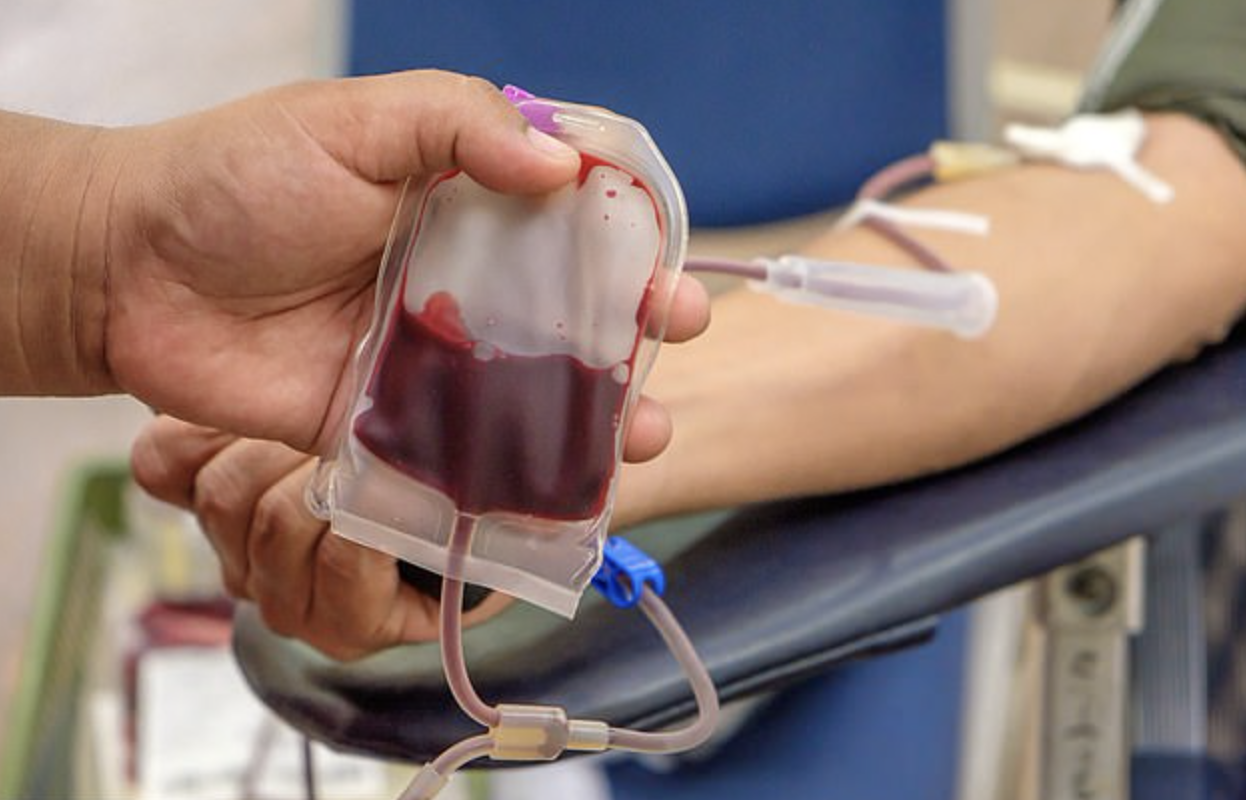
Drelon v FranceMr Drelon has made two applications to the Court. The first application, which relies on Articles 8 and 14 of the Convention, concerns the registration of Mr Drelon as a homosexual by the French Blood Establishment (“EFS”), which he regards as, among other things, a disproportionate measure. The second application, which also relies on Articles 8 and 14 of the Convention, concerns the restriction on a male who has had sex with another male giving blood (previously a man who had sex with another man could not give blood for twelve months and, since 2019, this period is now four months). Mr Drelon also reiterates his complaint relating to his sexual orientation being listed in the EFS files. The Court has asked the Parties the following questions:
1. Was there an infringement of Mr Drelon’s right to respect for his private life, within the meaning of Article 8 § 1 of the Convention, by reason of the collection and storage by the EFS of personal data relating to sexual orientation? If so, was the interference with the exercise of this right prescribed by law and necessary within the meaning of Article 8 § 2? 2. Was there an infringement of Mr Drelon’s right to respect for his private life, within the meaning of Article 8 § 1 of the Convention, by reason of the temporary restrictions to donating blood provided for by domestic law for a man who has had sex with another man? If so, was the interference with the exercise of this right prescribed by law and necessary within the meaning of Article 8 § 2? 3. Has Mr Drelon been the victim of discrimination in the exercise of his rights guaranteed by the Convention on the basis of his sexual orientation, which would be contrary to Article 14 taken in conjunction with Article 8 of the Convention? [See also Tosto v Italy, which the Court decided to strike out.] Public Association Information Centre “GENDERDOC-M” v Moldova The application concerns the authorities’ positive obligations in the context of hate speech by third parties. A news portal published various news items and invited users to comment in specially reserved comments sections. One such news item about the LGBT community’s plans for a parade was followed by several statements made under pseudonyms and calling for violence and discrimination against LGBT persons in Moldova. GENDERDOC-M, representing a number of LGBT persons, complained in the domestic courts against the news portal, but the courts rejected the complaint since the law did not provide for responsibility for statements made by third parties. The case raises issues under Articles 8, 13 and 14 of the Convention.
The Court has asked the Parties the following questions:
1. Do the facts of the case disclose a violation of Article 8 taken alone or in conjunction with Articles 13 and/or 14 of the Convention?
2. In particular, did the authorities comply with their positive obligations of preventing dissemination of statements calling for violence and discrimination against LGBT persons? [See the previous judgment of the Court in respect of a complaint brought by GENDERDOC-M.]




 International and Comparative SOGIESC Law - Professor Andreas R Ziegler