Lawmakers in the Central African country of Gabon just voted to decriminalise homosexuality

Lawmakers in the Central African country of Gabon just voted to decriminalise homosexuality
First OCDE Report Ever on LGBTI Inclusion : “Over the Rainbow? The Road to LGBTI Inclusion”
Over the Rainbow? The Road to LGBTI Inclusion

Ensuring that LGBTI people – i.e. lesbians, gay men, bisexuals, transgender and intersex individuals – can live as who they are without being discriminated against or attacked is a concern worldwide. Discrimination against LGBTI people remains pervasive, while its cost is massive. It lowers investment in human capital due to bullying at school. It also reduces economic output by excluding LGBTI talents from the labour market and impairing their mental health, hence their productivity. This report provides a comprehensive overview of the extent to which laws in OECD countries ensure equal treatment of LGBTI people, and of the complementary policies that could help foster LGBTI inclusion. The report first identifies the legislative and regulatory frameworks in the areas of civil rights, protection against discrimination and violence, as well as health that are critical for the inclusion of sexual and gender minorities. The report then explores whether these laws are in force in OECD countries and examines the margin for further improvement. Finally, the report investigates the broader policy measures that should accompany LGBTI-inclusive laws in order to strengthen the inclusion of LGBTI people.More
Available from June 24, 2020
Download: http://oe.cd/lgbti-2020
Un webinaire de lancement est organisé aujourd’hui de 16:30 à 17:30 auquel vous êtes cordialement invités. Voici le programme et le lien pour l’inscription: http://www.oecd.org/els/soc/OECD-LGBTI-Webinar-Wed24June2020.pdf
La version française de ce rapport sera disponible fin juillet.
The latest issue of the International Journal of Human Rights (Vol. 24, no. 6, 2020) is out. Contents include:
The Court’s 2017 Advisory Opinion on same-sex marriage is now available in English.
I/A Court H.R., Gender identity, and equality and non-discrimination with regard to same-sex couples. State obligations in relation to change of name, gender identity, and rights deriving from a relationship between same-sex couples (interpretation and scope of Articles 1(1), 3, 7, 11(2), 13, 17, 18 and 24, in relation to Article 1, of the American Convention on Human Rights). Advisory Opinion OC-24/17 of November 24, 2017. Series A No. 24.
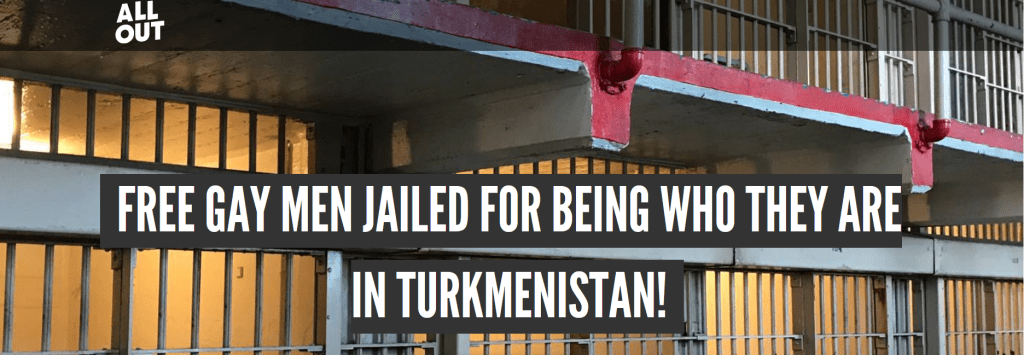
Free gay men jailed for being who they are in Turkmenistan! Sign now
In mid-April, a famous entertainer and several other men were arrested on sodomy charges. Some were able to bribe themselves out of prison. On May 7, a Turkmen court sentenced them to two years’ imprisonment.
Article 135 of the Turkmen Criminal Code criminalizes consensual homosexual conduct. The punishment for being gay in Turkmenistan is two years’ imprisonment and up to 10 years if convicted repeatedly.
This barbaric law increases stigma against LGBT+ people in the country and allows authorities to harass gay and bisexual men and treat them in a cruel and degrading manner.
Men accused of homosexual conduct have been subjected to forced anal examination. It has been proven that police use dating apps to bait men and then blackmail them and extort money. Men who have sex with other men have also been reported missing.
Sign this petition to urge Turkmen authorities to drop all charges against the men convicted under Article 135 and free them.
Switzerland: Second Instance Court confirms that social mother in same-sex partnership must pay child support after separation
The Bernese High Court has upheld on 26 February 2020 the respective parts of an earlier decision by the local court in Bern of 31 May 2019 – as reported here:
This decision is particularly interesting as Parliament currently discusses the status of the second woman (spouse) in a same-sex marriage when children were conceived through sperm donation by the biological mother.
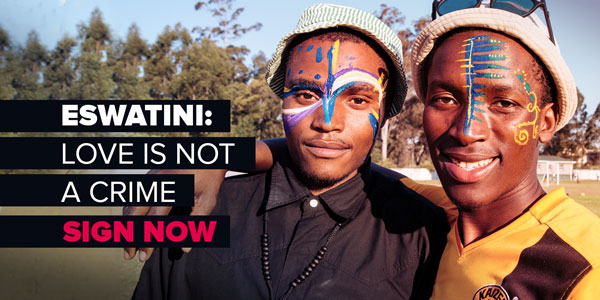
My name is Melusi and I’m from eSwatini, formerly known as Swaziland, a landlocked country in Southern Africa that still has an outdated colonial anti-gay law in place.
To fight against this law that makes my love illegal, I founded eSwatini Sexual and Gender Minorities (ESGM). But when we tried to register the organization, eSwatini’s Registrar turned us down, arguing that our purpose is unlawful because same-sex relationships are illegal in the country. But we are fighting back. We took the Registrar to court and the hearing is slated for June 24.
While we wait for the court’s decision, there’s something you can do to apply pressure on the court and to support our fight for decriminalization:
Tell eSwatini that love is not a crime by signing my petition.
JURIST: France Constitutional Court strikes down most of online hate speech law
The French Constitutional Court on Thursday reversed most of an online hate speech law, known as the ‘Avia Law,’ which was passed by the French National Assembly on May 13. “The requesting senators argue that these provisions […] would have been in violation of Article 45 of the Constitution,” says the ruling. “These provisions would impose on all publishers and hosts subjugations impossible to satisfy and would, in doing so, disregard the principle of equality before public charges.”
The Avia Law was passed with the intent to fine social media platforms that allow content such as child pornography, terrorism, or genocide denial if they do not remove the content within 24 hours. It was inspired by similar anti-hate speech laws throughout Europe and Africa.
The Constitutional Court found issues with the Avia Law’s application as it conflicts with many of France’s founding ideals and constitutional provisions. Thursday’s decision also cited The Rights of Man and Citizen (1789), which states that “The free communication of ideas and opinions is one of the most precious of the rights of man. Every citizen may, accordingly, speak, write, and print with freedom, but shall be responsible for such abuses of this freedom as shall be defined by law.” The Constitutional Court also argued that free discourse on social media is vital for the maintenance of a democratic society.
Civil liberties advocates celebrated the Constitutional Court’s decision. Christoph Schmon, international policy director at The Electronic Frontier Foundation (EFF), one of the largest online liberties watchdogs, noted that “We applaud the court for recognizing that citizens’ rights of free speech and expression are paramount in a democratic society […] Any government effort to censor objectionable content must be balanced with people’s rights to air their views on politics, the government, and the news. This bill failed to strike that balance.” The EFF filed an amicus brief with the Constitutional Court after the Avia Law’s original passage in May.
Although it rejected most of the Avia Law, the Constitutional Court also noted in its ruling that it did decide to uphold Article 2 of the law, which modifies procedures for reporting illegal content to websites. Additionally, it partially upheld Article 6, which establishes a platform’s authority to police content. Furthermore, the court stressed that it supports the law’s mission to counter child pornography and terrorism on the Internet, but disagreed with its methods.
Despite the court’s support of the Avia Law’s goals, most of the law was still declared unconstitutional. The court stressed that “Freedom of expression and communication is all the more precious since its exercise is a condition of democracy,” because that privilege “guarantees respect [for] other rights and freedoms.”
The post France Constitutional Court strikes down most of online hate speech law appeared first on JURIST – News – Legal News & Commentary.
All Out’s #UnDistanced Festival (18 june to 10 July) – online
All Out’s #UnDistanced Festival – have you signed up yet?
More than 30 guests from around the world are coming together for our series of free, virtual events to discuss and debate everything Pride and everything LGBT+. Whether you fancy a lively, interactive panel discussion, a book reading, a film screening, a dance party or all of these, there is something here for you. We’ll help you get “UnDistanced” and find community from the comfort of your home!
Visit the festival website and explore our newly confirmed events and exciting guests.
Explore the line-up and RSVP today.
I’m looking forward to seeing you at the #UnDistanced Festival!
Matt
You are invited.
Pride in 2020 will look very different from what we expected. In over 500 cities around the world, Pride events have been canceled due to the coronavirus. This is a huge deal for our community, especially when so many of us are battling on the frontlines against systemic racism and police violence.
For millions of LGBT+ people, Pride events represent a precious moment of visibility, community, and solidarity. Without Pride, our sense of belonging, our visibility, our advocacy, and our ability to support each other are all weakened.
But here at All Out we don’t want to give up on Pride 2020. The power of digital gives us the chance to come together for Pride in spirit.
That’s why we’re happy to announce the #UnDistanced Festival – a series of free, virtual events during Pride month that will allow all of us to celebrate who we are and who we love across borders and cultures.
Explore the festival line-up and RSVP now.
We’re adding exciting new events every day, but here are just a few of the highlights we’ve prepared so far for you:
Matt Beard,
Executive Director
Germany: Federal Social Court weakens rights of trans people

Krankenkassen müssen trans Frauen keine “gesichtsfeminisierende Operation” zahlen, entschied das oberste Sozialgericht. Der Anspruch beschränke sich auf eine “deutliche Annäherung” an weibliches Aussehen.
 International and Comparative SOGIESC Law - Professor Andreas R Ziegler