Japan court rejects same-sex relationships as de facto marriages, denying man victims’ compensation

Japan court rejects same-sex relationships as de facto marriages, denying man victims’ compensation

The Nagoya District Court on Thursday rejected a man’s request to overturn a decision deeming him ineligible for victims’ compensation following the death of his same-sex partner.

The man, Yasuhide Uchiyama, had lived with his partner for around 20 years. After his partner was murdered in 2014, Uchiyama filed for victims’ compensation in December 2016. However, the Aichi Prefectural Public Safety Commission rejected the application on the basis that Uchiyama’s relationship was a same-sex relationship.

On Thursday, Presiding Judge Masatake Kakutani did not recognize same-sex relationships as de facto marriages. This continues to prevent Uchiyama from being eligible for victims’ compensation as a surviving family member.

Uchiyama’s lawyers plan to appeal the decision.

The post Japan court rejects same-sex relationships as de facto marriages, denying man victims’ compensation appeared first on JURIST – News – Legal News & Commentary.

The European Commission intervenes on “LGBT-free” zones in Poland

The European Commission intervenes on “LGBT-free” zones in Poland

The letter from the European Commission is a confirmation that the homophobic resolutions passed by local governments in Poland have legal consequences, violate the rights of their residents, and should conform to EU values. It also opens the way to EU funds being blocked – right now

https://ruleoflaw.pl/the-european-commission-intervenes-on-lgbt-free-zones-in-poland/


by Anton Ambroziak

The addressees of the European Commission’s letter are the marshals (wojewodowie) of five provinces (voivodships, województwa) that have adopted anti-LGBT resolutions or their equivalent, i.e. the homophobic ‘Local Government Charter on the Rights of the Family’ drawn up by an NGO Ordo Iuris. These are the Lublin, Łódź, Malopolskie, Podkarpackie and Świętokrzyskie provinces.

What does the Commission want? In short: for the provincial governors (wojewodowie) to check whether the money from the EU’s cohesion policy is actually being spent in violation of European regulations.

This mainly concerns Art. 2 of the European Union Treaty, which speaks of the values ​​on which the Community is founded:

  • respect for human dignity;
  • freedom, democracy, equality, the rule of law,
  • and respect for human rights, including the rights of persons belonging to minorities.

“These values ​​are common to the Member States in a society based on pluralism, non-discrimination, tolerance, justice, solidarity and equality between women and men.”

The obligation to combat discrimination based on sex, race or ethnic origin, religion or belief, disability, age or sexual orientation is also included in art. 7 of the Regulation on EU funds dating from 2013. Moreover, the preventive actions to which the beneficiaries of EU funds are obliged are explicitly included in the partnership agreement, and include both investments and programmes run by local authorities, as well as soft activities accompanying them, such as ‘communication’.

In the opinion of the European Commission, the adoption by some Polish local governments of homophobic documents, which reduces the LGBT community to an ‘ideology’, calls into question the regional institutions’ ability to implement the principle of non-discrimination.

“In addition, there is a risk that the beneficiaries of the funds (…) will discriminate against the LGBT community in their activities,” writes the European Commission, instructing the provincial governors to investigate the matter.

“We cannot be full members of the EU if we exclude some of our citizens.”

Why is this letter so important? 

First of all, this is not just another commentary expressing moral indignation; rather it is a specific intervention. 

Anna Błaszczak-Banasiak, a lawyer of the Commissioner for Human Rights’ Office says the EC’s position confirms that the anti-LGBT resolutions, regardless of their form, directly affect the lives of citizens.

“In the Commissioner’s opinion, the EC’s letter embodies the principle of non-discrimination as a fundamental principle of the European Union. In other words, we cannot be full members of the community if we fail to apply the principle of equal treatment and exclude some of our citizens from social life.”

The local governments that adopted the homophobic documents have defended themselves by claiming that they did not exclude LGBT people, but were only protesting against a harmful ‘ideology’, or promoting the values ​​of the traditional family.

“I’m glad that the Commission has confirmed the arguments of the Commissioner, who emphasised from the beginning that this was not about ideology or beliefs, but about living people,” commented Błaszczyk-Banasiak.

Local governments may lose EU funds straight away

The EC’s position thus clearly demonstrates that the anti-LGBT resolutions have legal consequences, are in conflict with EU regulations, and that the Polish institutions which should defend them have been neglecting their duties. But the most revolutionary matter is the threat that the joint funding might be lost.

Until now, the example of the homophobic self-governments gave impetus to the parties which wanted to link the next EU budget to compliance with the basic principles enshrined in the EU Treaty. 

Now, the European Commission has shown that the consequences of compromising EU values ​​can even be borne today. 

“And that would be the worst possible news if it seems that any self-government has lost EU funding due to the ill-considered actions they carried out during the course of the election campaign,” says Anna Błaszczak-Banasiak. 

This is a clear signal to those local governments that have adopted homophobic resolutions that their actions are not neutral, and the European community is not only a collection of rights and benefits, but also of obligations which must be fulfilled. And if they aren’t, then the money to renovate historic parts of the city, a new sewage system or a road may run out.

Pressure on local authorities is not just defensive in nature. It is not just about whether the provincial governors will check to see whether the funds are spent in accordance with the law, but whether they also take active measures aimed at preventing discrimination.

The Commissioner has appealed against 9 resolutions to administrative courts

The Commission’s letter coincides with the position adopted by the European Parliament, which in December 2019 called on the Polish authorities to repeal homophobic resolutions by administrative means, i.e. via the provincial governor (wojewoda) or the administrative courts. The Parliament also urged the EC to verify whether the local governments that adopted anti-LGBT resolutions and still collect money from the EU are using it for purposes that violate human rights and the principle of equal treatment.

“Since the expected action has not been taken after the resolution by the European Parliament in December, which indicated that member states are obliged to uphold the fundamental rights enshrined in the EU Treaties, the Commission has naturally taken further steps. We hope that the local governments will come to their senses, and that this statement will contribute to the immediate revocation of the resolutions,” says Justyna Nakielska from the Campaign Against Homophobia.

Also in December 2019, the Polish Commissioner for Human Rights appealed against the nine most flagrant resolutions to the administrative courts. However, as Anna Błaszczak-Banasiak explained, the legal status in Poland is more complex.

The local communes (gminy) are trying to show that the resolutions do not affect the residents’ subjective rights. On the other hand, the Commissioner accuses the local governments of failing to comply with the legalist principle expressed in Art. 7 of the Constitution. “Our basic complaint is therefore a formal one. We want to demonstrate that the local governments have exceeded the scope of their competence when adopting these documents. We must remember that these are precedential proceedings; we are waiting patiently for the first decisions to be handed down.”

Pressure from the partner regions

The withdrawal of EU funds would be the most severe loss for the local governments that have passed the homophobic laws. So far, some municipalities or provinces have – temporarily – lost their partnership agreements with foreign regions. Some of this happened after the intervention of OKO.press, which in February 2020 sent information on the local authorities’ activities to 52 partner regions around Europe. 

So far, none of the local governments have withdrawn the resolutions. Kraśnik came the closest; after losing its partnership with Nogent-sur-Oise in France, it is still debating the future of the document.

The first of the so-called ‘LGBT-free’ zones was established on 26 March 2019 in Świdnik (in the Lublin voivodeship). Since then, similar documents in various forms have been adopted by over 80 local government units.

ECHR Sexual Orientation Blog: Same-sex couples in Romania use ECHR to challenge lack of legal recognition of their relationships

ECHR Sexual Orientation Blog: Same-sex couples in Romania use ECHR to challenge lack of legal recognition of their relationships
Same-sex couples use ECHR to challenge lack of legal recognition of their relationships Posted: 03 Jun 2020 04:00 PM PDT

The Fourth Section of the European Court of Human Rights has communicated the case of S.K.K. and A.C.G. and Others v Romania. The case is brought by eight same-sex couples and concerns the lack of legal recognition of their relationships. 

Romania does not permit same-sex couples to marry or enter into a civil union/registered partnership (see ILGA-Europe’s country report for a history of recent attempts to challenge this).

Complaints to the Court
The applicants complain that Romanian domestic legislation does not allow them to get married or to enter into any other type of civil union and, therefore, that they are being discriminated against on the grounds of their sexual orientation and being disadvantaged by the lack of legal recognition of their relationships.

The applicants rely on Article 8 (right to respect for private and family life) taken alone and in conjunction with Article 14 (prohibition of discrimination) of the Convention.

Questions to the Parties 
The Court has asked the parties the following questions:

1. Has there been a violation of the applicants’ right to respect for their private and family life contrary to Article 8 of the Convention? In particular, should they be afforded a possibility to have their relationship recognised by law (see Oliari and Others v Italy, 21 July 2015)?

2. Have the applicants suffered discrimination in the enjoyment of their Convention rights on the ground of their sexual orientation, contrary to Article 14 read in conjunction with Article 8 of the Convention, in respect of their inability to get married or enter into any other type of legally recognised union?
Some initial observations
It is striking that the applicants do not appear to invoke Article 12 of the Convention (right to marry) even though they explicitly complain that Romanian law does not permit them to marry.

The Court has similarly not asked the parties to reflect on Article 12 even though it has asked a question explicitly related to the applicants’ “inability to get married”. Asking a question about the inability to marry in relation to Article 14 taken in conjunction with Article 8 of the Convention is odd given that the Court has already established that these Articles do not impose an obligation on a state to grant same-sex couples access to marriage (Schalk and Kopf, 24 June 2010, § 101). 
The fact that neither the applicants nor the Court is directly addressing the inability of the couples to marry under Article 12 of the Convention is disappointing but unsurprising. The Court has made no progress towards realising the right of same-sex couples to marry and its jurisprudence has established that, in practical and effective terms, Article 12 is inapplicable to same-sex couples. Although, sadly, Article 12 appears useless to same-sex couples excluded from marriage it is important to continue to press the Court to change its position on this aspect of the Convention rights of gay people. 

It would appear that the focus of the case will be on whether Romania is under an obligation to provide same-sex couples with access to a form of relationship recognition other than marriage – such as registered partnership.

In considering whether Romania is under a positive obligation to provide same-sex couples with access to legal relationship recognition the key jurisprudence of the Court is found in its judgment in Oliari and Others v Italy (21 July 2015 – for a discussion, see here) in which it held that the Italian government had “failed to fulfil their positive obligation to ensure that [individuals] have available a specific legal framework providing for the recognition and protection of their same-sex unions” (§ 185) and, therefore, had violated Article 8 of the Convention.

Taken at face value, the judgment in Oliari supports the view that Romania is under a positive obligation to provide same-sex couples with legal recognition of their relationships and, therefore, supports the applicants’ complaint that they are suffering a violation of, at least, Article 8 of the Convention. However, in Oliari the Court was very careful, as Judges Mahoney, Tsotsoria, and Vehabović put it, to limit its finding of the existence of a positive obligation to Italy. Therefore, it remains to be seen whether the Court will extend this positive obligation to other Contracting States. Obviously, if the Court did so this would be a monumental step towards equality for same-sex couples in Romania, and this would have major implications for other Central and Eastern European countries.

A final point is that this case is very similar to the case of Fedotova and Shipitko v Russia, which concerns complaints by three same-sex couples about their inability to marry in the Russian Federation. That case was communicated by the Court in 2016 and I wrote about it here.
Further relevant reading
Johnson, P. and Falcetta, S. (2020) “Same-sex Marriage and Article 12 of the European Convention on Human Rights”. In Ashford, C. and Maine, A (eds.) Research Handbook on Gender, Sexuality and the Law (Edward Elgar Publishing, draft available here).

Johnson, P. and Falcetta, S. (2019) “Sexual Orientation Equality In Central And Eastern Europe: The Role Of The European Convention On Human Rights’. European Human Rights Law

Le Temps: Coming out au travail: la prudence, encore

Le Temps : Coming out au travail: la prudence, encore

Entreprise

Parler de son homosexualité dans le monde professionnel n’est pas anodin, même si les entreprises se montrent toujours plus ouvertes à la question. Pour venir à bout des discriminations, un label a été créé pour certifier les employeurs inclusifs

Switzerland: Same-sex marriage moves forward in parliament despite opposition

Same-sex marriage moves forward in parliament despite opposition

Parliament has launched discussions a proposal to allow same-sex marriage bringing Switzerland in line with many other western European countries. The House of Representatives on Wednesday agreed in principle to full marriage equality for homosexual couples against opposition by conservative parliamentarians. Supporters of the proposal argued it was time for Switzerland as a liberal country to give gay marriage full legal status. However, opponents, notably from the right-wing Swiss People’s Party, argued civil partnerships for gays and lesbians, introduced in 2007, was enough. The debate, including the right for lesbian couples to sperm donations, is set to continue over the next few days. Observers expect the bill to pass in the House, but approval by the Senate at a later stage is less certain. Right-wing opponents have threatened to challenge a more liberal legislation to a nationwide vote. The Swiss government in January came out in favour of same-sex marriage, as did …

More. https://www.swissinfo.ch/eng/marital-status_same-sex-marriage-moves-forward-in-parliament-despite-opposition/45803642?linkType=guid&utm_source=multiple&utm_campaign=swi-rss&utm_medium=rss&utm_content=o

Invitation to the SOGICA conference – 7-9 July 2020 (online)

Invitation to the SOGICA conference – 7-9 July 2020 (online)

Sexual Orientation and Gender Identity Claims of Asylum – A European Human Rights Challenge

The SOGICA conference is now taking place online on Zoom from 7-9 July. Here is the draft programme and you can book on-line on our website before 30 June if you have not yet done so (and if you have already registered there is no need to do so again).  As well as a fantastic range of panels, workshops and contributors, we are delighted to have as our three keynote speakers: Katrin Hugendubel, Advocacy Director at ILGA-Europe; Professor Emeritus Vitit Muntarbhorn KBE – former UN Independent Expert; and Victor Madrigal-Borloz, UN Independent Expert on Protection against violence and discrimination based on sexual orientation and gender identity. We will email everyone who registers the week before the conference with joining instructions and a final programme. Before then, please let us know if you have any problems with technical or other access issues and we will try to assist.  And please do forward this invitation to any of your colleagues and contacts – one big advantage of having to hold the conference online is that it can be a more globally inclusive and diverse event than it would otherwise have been! We look forward to meeting you all virtually next month
 
Best wishes from NunoCarmeloMoira and Nina at SOGICA 

Zambian president told ‘no option’ but to apologise to ‘humiliated’ US ambassador kicked out for defending gay rights

Zambian president told ‘no option’ but to apologise to ‘humiliated’ US ambassador kicked out for defending gay rights

Emma Powys Maurice May 27, 2020

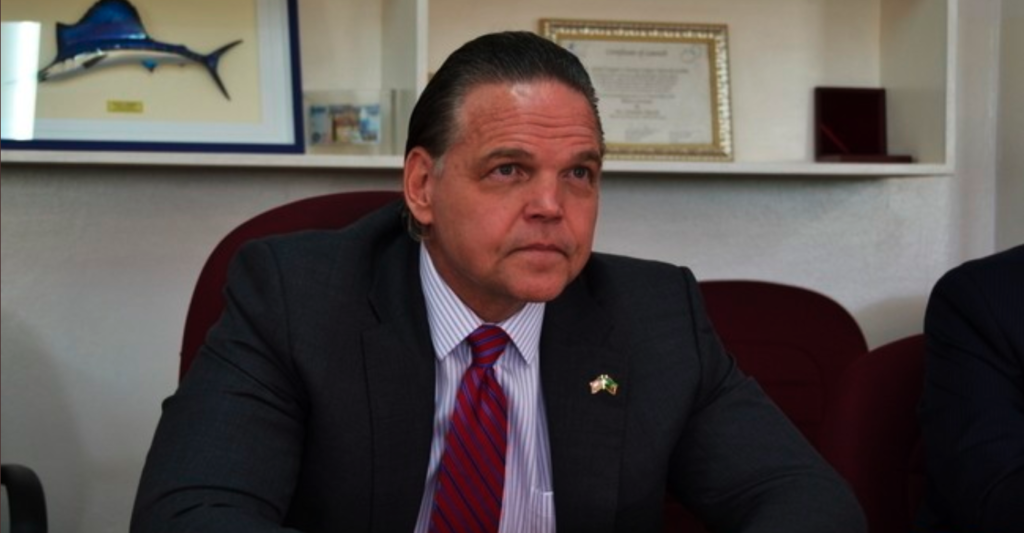
Daniel Foote, Zambia

US Ambassador Daniel Foote spoke out against Zambia’s criminalisation of homosexuality (Twitter/@swahilitimes)

President of Zambia Edgar Lungu is facing calls to apologise to the US ambassador who was expelled from the country for defending an imprisoned gay couple.

Ambassador Daniel Foote was recalled in December last year for saying he was “personally horrified” by the 15-year prison sentence handed to two gay men, Japhet Chataba and Steven Samba, for a consensual relationship “which hurt absolutely no one”.

He also accused authorities of having double standards when it came to pursuing other crimes, noting: “Government officials can steal millions of public dollars without prosecution.”

This enraged the Zambian government, which accused the ambassador of trying to dictate policy and announced his position was “no longer tenable”.

Lungu later told state-owned television channel ZNBC that he “wants him gone”, effectively declaring Foote to be a persona non grata in the country and forcing him to leave.

However, the Zambian government now appears to have changed its position as it pardoned Chataba and Samba for “crimes against nature”.

Zambia granted 3,000 prisoners amnesty, including gay couple.

The couple were among nearly 3,000 other prisoners granted presidential amnesty to commemorate Africa Freedom Day on May 25.

In light of this, Sean Tembo, leader of the opposition party Patriots for Economic Progress, has challenged president Lungu to apologise to Foote.

Speaking on the Zambian radio station Hot FM, Tembo said that Lungu has “no option” but to apologise for the “victimisation and humiliation” Foote suffered for condemning the crime Lungu has now pardoned.

He also said the pardoning of the gay couple has also vindicated various stakeholders in Zambia who condemned the imprisonment as severe.

Unfortunately, the release of Chataba and Samba is probably an isolated incident and unlikely to signal a change in attitudes towards LGBT+ people in Zambia.

Evangelical Christianity is imbued into almost all aspects of day-to-day life in Zambia, from the social to the political arenas, and much of society remains strongly opposed to LGBT+ rights.

In 2018 the Zambian government noted recommendations to decriminalise same-sex relations, but no further actions were taken.

More: Africa, criminalisation of homosexuality, Daniel Foote, President Lungu, Zambia

USA: After the tragic death of trans pioneer Aimee Stephens, her widow is taking over historic court battle

USA: After the tragic death of trans pioneer Aimee Stephens, her widow is taking over historic court battle

Transgender activist Aimee Stephens,with her wife behind, sits in her wheelchair outside the US Supreme Court in Washington, DC, October 8, 2019

Transgender activist Aimee Stephens, with her wife Donna Stephens behind, sits in her wheelchair outside the US Supreme Court in Washington, DC, October 8, 2019 (Photo by SAUL LOEB/AFP via Getty Images)

Aimee Stephens’ historic Supreme Court battle for trans rights will continue after her tragic death, with her widow taking over the case ahead of an expected ruling.

Stephens, who died on May 12 from kidney disease, was the lead plaintiff in a landmark case currently before the US Supreme Court, which will establish whether transgender people are entitled to protection from discrimination in the workplace based on existing sex-based civil rights laws.

After the death of the trans rights pioneer, her widow Donna Stephens has taken over in the case against her spouse’s former employer, RG & GR Harris Funeral Homes Inc. The court granted a motion for her to substitute in the case on Tuesday (May 26).

The Michigan funeral home, where Stephens had worked for six years, sacked her just weeks after she came out as transgender — and maintains that it acted legally in doing so.

The Supreme Court heard arguments in the case last year and is due to announce its ruling soon, making her death all the more tragic.

Aimee Stephens’ widow thanks supporters.

In a previous statement, Donna Stephens said: “Thank you from the bottom of our hearts for your kindness, generosity, and keeping my best friend and soulmate in your thoughts and prayers.

“Aimee is an inspiration. She has given so many hope for the future of equality for LGBTQ people in our country, and she has rewritten history. The outpouring of love and support is our strength and inspiration now.”

More: https://www.pinknews.co.uk/2020/05/27/aimee-stephens-supreme-court-widow-takes-over-ruling/?utm_source=newsletter&utm_medium=email&utm_campaign=PNnewsletter

Malaysia’s cruel religious ban on gay sex is to be challenged in an historic court case

Malaysia’s cruel religious ban on gay sex is to be challenged in an historic court case

A man in Malaysia has won the right to challenge a religious state law banning gay sex in the mostly Muslim country.

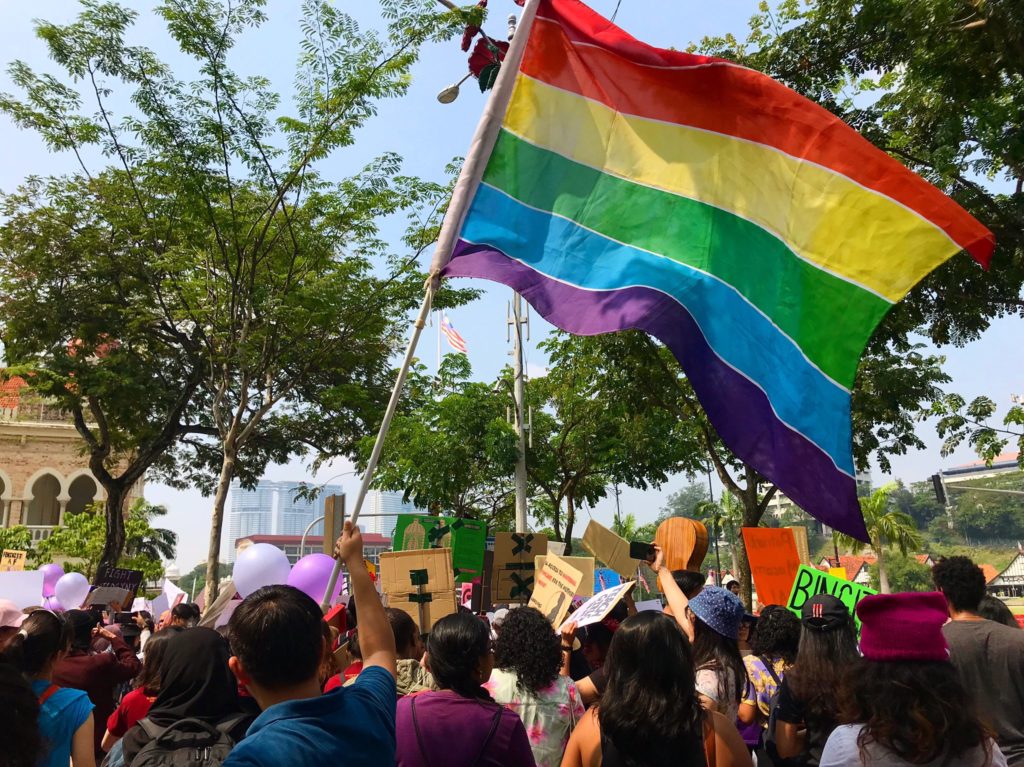
Malaysia A LGBT pride flag flies at the women's march in Malaysia on March 9.

According to Reuters, a lawyer for the man said on Wednesday (May 27) that Malaysia’s top court had him the go-ahead for the landmark LGBT+ rights test case.

The Muslim man in his 30s will remain anonymous for his protection and privacy.

He initially filed the lawsuit in 2018 after he was arrested for attempting gay sex, a charge that he denies.

He was arrested as part of a raid by by Islamic enforcement officers in the state of Selangor, after which five men pleaded guilty and were fined, jailed and caned on gay sex charges. 

More: https://www.pinknews.co.uk/2020/05/27/malaysia-gay-sex-ban-sodomy-raid-lgbt-rights-muslim-shariah-selangor-surendra-ananth/?utm_source=newsletter&utm_medium=email&utm_campaign=PNnewsletter

Quer.de: Mit Stimmen von Union, SPD und AfD: Bundesregierung “vertieft Diskriminierung von Regenbogenfamilien”

Queer.de: Mit Stimmen von Union, SPD und AfD: Bundesregierung “vertieft Diskriminierung von Regenbogenfamilien”

Eine neue Hürde macht es künftig homosexuellen Ehepaaren mit Kind in bestimmten Fällen noch schwerer, eine rechtlich stabile Familie zu werden. CDU/CSU, SPD und AfD befürworten die zusätzliche Ungleichbehandlung.