US judge blocks Trump’s ban on trans people serving in the military
US judge blocks Trump’s ban on trans people serving in the military
Leave a reply

US judge blocks Trump’s ban on trans people serving in the military
USA: DHS Scraps Ban on Surveillance Based on Sexual Orientation
A Department of Homeland Security unit eliminated policies prohibiting personnel from conducting intelligence activities based solely on a person’s gender identity or sexual orientation.
USA: Tennessee drag ban will stay as SCOTUS refuses to hear case, but artists ‘refuse to be silenced’
Indonesia: Flogging of gay men a horrifying act of discrimination
Tunisie: la répression s’accroît contre les personnes LGBTQ+ et les associations qui les soutiennent
nterview de Hazem Chikhaoui, boursier de la Confédération au CEG, pour un article dans RFI
OHCHR urges Hungary to repeal anti-LGBTQ+ legislation
The UN Office of the Higher Commissioner for Human Rights (OHCHR) on Friday urged Hungary to repeal the anti-LGBTQ+ legislation passed on Tuesday. OHCHR describes the legislation as a severe violation of basic rights for LGBTQ+ individuals.
According to OHCHR, the legislation undermines the rights to freedom of expression and non-discrimination. It specifically targets educational materials related to LGBTQ+ issues, limiting access to information for young people. The bill, which Hungarian Prime Minister Viktor Orban describes as a measure for child protection, also controversially bans pride marches and public gatherings involving LGBTQ+ individuals. The statement emphasized that such measures perpetuate stigma and discrimination against LGBTQ+ individuals, further marginalizing an already vulnerable community.
The bill was passed on Tuesday by an exceptional procedure under section 61 of the National Assembly’s Rules of Procedure, which bypasses parliamentary debates and amendments.
Hungary has faced scrutiny over its encroachment on LGBTQ+ rights and erosion of democratic norms. In 2020, the Parliament passed Article 33, which required citizens to report their “sex assigned at birth” and prevented transgender and intersex people from legally changing their gender. In 2021, the administration passed another piece of legislation prohibiting education and media portraying homosexuality or gender reassignment from being displayed to children. Last year, over 30,000 people marched to support LGBTQ+ protections in Budapest, including ambassadors from various countries. Hungary’s laws have raised alarm amongst international organizations, including the EU and Amnesty International.
The OHCHR has called upon Hungary to uphold its international commitments, protect human rights, and foster an inclusive environment for all citizens, regardless of sexual orientation or gender identity.
The post OHCHR urges Hungary to repeal anti-LGBTQ+ legislation appeared first on JURIST – News.
Ghana introduces tougher anti-gay laws, again
More: Ghana passes bill making identifying as LGBTQ+ illegal
EU slams Hungary’s ban on Budapest Pride march
The EU’s commissioner for equality took aim Tuesday, March 18, at a Hungarian bill aimed at banning Budapest’s annual Pride march, asserting the “fundamental right” to peaceful assembly in the 27-nation bloc.
Trump administration pauses $175M in funding to UPenn over trans athlete policy

The Trump administration has paused $175M in funding to UPenn over its trans athlete policy, such as Lia Thomas’ inclusion in sports (Photo by Rich von Biberstein/Icon Sportswire via Getty Images)
More: https://www.thepinknews.com/2025/03/20/trump-funding-upenn-transgender-swimmer/
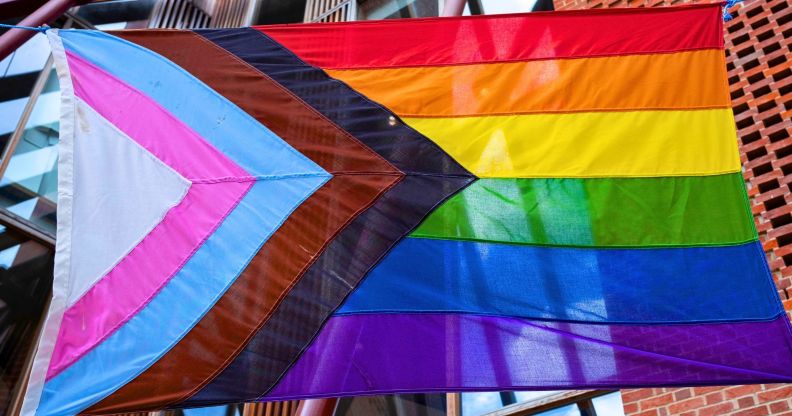
A Progress Pride flag waving in a street.(Getty)
A Christian teacher who told students being LGBTQ+ is a sin and trans people are “just confused” has reportedly lost a High Court challenge over a finding of unprofessional conduct.
Glawdys Leger, a teacher at Bishop Justus Church of England School in Bromley, south London, is said to have made the comments to a group of year seven students during a class in February 2022.
She was suspended in March 2022, and dismissed from her role two months later. A professional conduct panel (PCP) in December 2023 found her comments amounted to “unprofessional conduct”, with the findings published on the Teaching Regulation Agency’s website.
The PCP revealed that during a discussion on “allyship”, the teacher had said being LGBTQ+ is “not fine”, and that students should put God before the LGBTQ+ community. The PCP also found Leger had said being LGBTQ+ is a sin, and trans people are “just confused”.
After Leger’s comments were found to amount to unprofessional conduct, she brought legal action at the High Court against the Department for Education over the PCP’s findings.

She reportedly argued that the panel had not put her comments into context, and that the school’s duty to “provide a broad and balanced curriculum” didn’t apply to her as an individual teacher. She added that the decision to publish the finding online infringed on her privacy, making it unlawful.
On Thursday (20 March), her case was dismissed by Justice Lang, who said Leger’s criticisms against the PCP finding “do not disclose any error of law, as opposed to mere disagreement”, PA Media reported.
Leger argued that while she was not banned from teaching due to the incident, the fact that the PCP’s decision had been published online would make it “difficult, if not impossible, to obtain new employment”.
Justice Lang stated, however, that the decision to publish the finding was “justifiable and proportionate”.
“While ‘Ms Leger’s comments lacked respect for the right of others’ this did not derive ‘from a lack of a tolerance’ nor had she any ‘intention of causing distress to pupils’,” Justice Lang said of the PCP finding.
“That said, her ‘actions were at risk of upsetting pupils in the lesson’ and her ‘choice not to present a balanced view undermined the school community’s aspiration to provide a supportive environment for children who may be exploring sexual identity’.”
In October 2023, Leger commented: “I have great compassion for LGBT people, especially for those suffering from gender dysphoria.
“I cannot, however, in good conscience teach or say things I believe are contrary to my faith, for example saying that same-sex sexual relationships are good and/or affirming people with gender dysphoria in their gender confusion.”
The teacher added: “I am certain that I have not shown, and never would show, any hatred or lack of love towards LGBT people.”
 International and Comparative SOGIESC Law - Professor Andreas R Ziegler