Japan high court declares denial of same-sex marriage unconstitutional

Japan high court declares denial of same-sex marriage unconstitutional

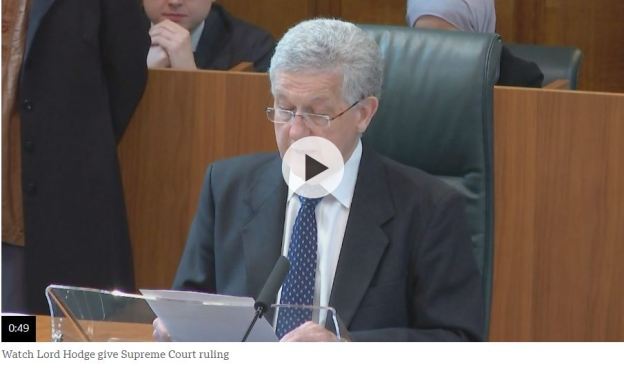
Japan’s Nagoya High Court ruled on Friday that the country’s lack of legal recognition for same-sex marriage is unconstitutional. This ruling marks the fourth consecutive high court decision to declare the current government policy unconstitutional following similar verdicts in Tokyo, Fukuoka, and Sapporo.

The appellants argued that the current provisions of Japan’s Civil Code and Family Registration Act, which do not recognize same-sex marriage, violate Article 14, Paragraph 1, and Article 24, Paragraph 2 of the Japanese Constitution. The appellants also sought damages of 1 million yen in accordance with Article 1, Paragraph 1 of the State Redress Act, as they were unable to marry due to the government’s failure to take necessary legislative action.

In its ruling in favor of the appellants, the court stated that same-sex relationships have existed naturally even before legal marriage, and that the societal acknowledgment of such personal relationships as legitimate is a vital legal interest tied to personal dignity, extending beyond specific legal frameworks for marriage and family.

Additionally, the court held that same-sex couples face disadvantages in various aspects of social life that cannot be resolved through civil partnership systems. These include housing-related disadvantages, such as restrictions on renting properties; financial institutions refusing to recognize same-sex partners as family members for mortgage applications; and disadvantages in accessing products and services designed for family relationships. However, the court said that although the relevant provisions are unconstitutional, the government’s failure to make legislative changes is not illegal under the State Redress Act.

This large-scale class action lawsuit, dubbed “Freedom of Marriage for All,” involves more than 30 plaintiffs and around 80 lawyers, with six lawsuits filed in five courts nationwide. This is the first class action lawsuit for same-sex marriage, as Japan remains the only Group of Seven (G7) country that has yet to legalize same-sex marriage, despite persistent lobbying from the LGBT community and its supporters.

The post Japan high court declares denial of same-sex marriage unconstitutional appeared first on JURIST – News.

Ghana lawmakers reintroduce anti-LGBTQ+ bill imposing harsh restrictions

Ghana lawmakers reintroduce anti-LGBTQ+ bill imposing harsh restrictions

Lawmakers in Ghana reintroduced the Human Sexual Rights and Family Values Bill, a controversial and incredibly restrictive piece of anti-LGBTQ+ legislation, to Parliament on Tuesday.

Presently, in Ghana, gay sex is punishable by up to three years in prison. The bill is seeking to impose harsher penalties for engaging in consensual same-sex conduct by increasing the maximum penalty up to five years. Additionally, criminalizing the “funding or sponsorship for prohibited activities” and “advocacy, support” and promotion for LGBTQ+ rights or organizations, the bill imposes a term of imprisonment between five to ten years.

Introduced in 2021 as the Promotion of Proper Human Sexual Rights and Ghanian Family Values Bill, Ghana’s parliament passed the bill on February 28, 2024. However, former President Nana Akufo-Addo declined to sign the bill into law prior to the end of his term. The former president cited legal challenges as having prompted this delay, noting his intention to wait for the Supreme Court’s decision. Cases challenging the bill were eventually dismissed in December as the presidential assent was required to review them. Nana Akufo-Addo’s term ended in January 2025, resulting in the bill expiring without enactment.

President John Mahama expressed support for the bill during the Fellowship with the Clergy event on February 28, 2025, declaring, “I, as a Christian, uphold the principle and the values that only two genders exist, man and woman, that a marriage is between a man and a woman.” Referring to a conversation with the speaker of Parliament, Mahama asserted, “The renewal of the expired Proper Family Values Bill should be a bill that is introduced by government rather than as a private members motion, and it’s my hope that that consultation would see a renewed Proper Family Values Bill.”

In an interview with Citi News on February 27, 2025, Reverend John Ntim Fordjour, opposition party MP, confirmed the bill had been resubmitted, calling upon President John Mahama to provide presidential assent for its passing. Ten lawmakers sponsored its reintroduction, including MPs Samuel Nartey George and Emmanuel Kwasi Bedzrah from the National Democratic Congress, Ghana’s ruling party.

NGOs and advocacy groups such as LGBT+ Rights Ghana have expressed their concern for the impact on the LGBTQ+ community, admonishing the bill’s reintroduction as being “pushed by homophobic politicians and religious groups as means to promote oppression against Queer people in Ghana.” After its passing last year, Human Rights Watch researcher Larissa Kojoué stated, “The anti-LGBT rights bill is inconsistent with Ghana’s longstanding tradition of peace, tolerance, and hospitality and flies in the face of the country’s international human rights obligations.” She further noted, “Such a law would not only further erode the rule of law in Ghana, but could also lead to further gratuitous violence against LGBT people and their allies.”

The post Ghana lawmakers reintroduce anti-LGBTQ+ bill imposing harsh restrictions appeared first on JURIST – News.

Polish Supreme Court issues landmark ruling simplifying process for changing legal gender

Polish Supreme Court issues landmark ruling simplifying process for changing legal gender

In a landmark ruling for trans people in Poland, the Supreme Court has issued a resolution declaring that someone wishing to change their officially recognised gender no longer needs to involve their parents in the case.

Up until now, people who wanted to change their gender have had to sue their parents to do so, even if they are adults. That practice made the process more difficult for those involved.

The new ruling has been welcomed as “groundbreaking” by the government’s equality minister. However, the very idea that someone can legally change their gender was condemned as an “ideological absurdity” by the far-right Confederation (Konfederacja) party.

More: https://notesfrompoland.com/2025/03/05/polish-supreme-court-issues-landmark-ruling-simplifying-process-for-changing-legal-gender/

USA: Iowa governor signs bill striking gender identity from state civil rights law

USA: Iowa governor signs bill striking gender identity from state civil rights law

Iowa Governor Kim Reynolds on Friday signed into law a bill that removes gender identity as a protected class under Iowa civil rights law.

Reynolds emphasized that the state’s “Civil Rights Code blurred the biological lines between the sexes” in an unacceptable manner and that the new law will strengthen the state’s efforts to protect women and girls.

The governor stated:

[A]cknowledg[ing] the obvious biological differences between men and women … is necessary to secure genuine equal protection for women and girls. It is why we have men and women’s bathrooms, but not men and women’s conference rooms; girls’ and boys’ sports, but not girls’ math and boys’ math; separate men and women’s prisons, but not different laws for men and women. It is about the biological differences, and that is all.

The classes commonly protected under Iowa civil rights law are “race, creed, color, sex, sexual orientation, national origin, religion, or disability.” Iowa law prohibits discrimination against protected classes in schooling, housing, real estate, loaning, and employment practices. 

The new law, however, changes the statutory construction of terms relating to sex and gender, stating that an individual’s sex is to be construed as being “either [biologically] male or female as observed or clinically verified at birth.” Gender is to be construed as synonymous to sex and not as a shorthand for “gender identity, experienced gender, gender expression, or gender role.” Additionally, “woman” and “girl” are to be construed as referring to a female, and “man” and “boy” are to be construed as referring to a male.

The law further provides that exceptions to sex discrimination are allowed “in prisons or other detention facilities, domestic violence shelters, rape crisis centers, locker rooms, restrooms, and in other contexts where health, safety, or privacy are implicated resulting in separate accommodations” because they “are substantially related to … important government objectives.”

The law also prohibits teaching “gender theory” in public and charter schools. It defines gender theory to include:

The concept that an individual who experiences distress or discomfort with the individual’s sex should identify as and live consistent with the individual’s internal sense of gender, and that an individual can delay natural puberty and develop sex characteristics of the opposite sex through the use of puberty blockers, cross-sex hormones, and surgical procedures.

Prior to its passage, ACLU of Iowa Executive Director Mark Stringer called the bill “barbaric.” He elaborated that gender identity has been protected under Iowa civil rights law for almost two decades. He stated:

If Gov. Kim Reynolds signs this bill, Iowa will become the first state in the country to repeal protections for LGBTQ people from its state civil rights law. Iowa has been a trailblazer in advancing civil and basic human rights—from banning slavery all the way to ensuring marriage equality. In many instances, our laws have helped advance the causes of freedom and equality in our nation. It is shocking to think that Iowa may now become another first—the first to specifically single out transgender people for removal of their legal rights as enshrined in state antidiscrimination law.

The post Iowa governor signs bill striking gender identity from state civil rights law appeared first on JURIST – News.

USA: Iowa legislature passes bill restricting transgender rights

USA: Iowa legislature passes bill restricting transgender rights

The Iowa Senate and House of Representatives (House) passed a bill on Thursday that will remove protection from discrimination on “gender identity” grounds from the Iowa Code, effectively restricting transgender rights.

The Senate cleared Senate File (SF) 418 with a 33-15 vote and transferred the bill to the House, which voted 60-36 in favor of the bill. SF 418, which was first introduced by Senator Jason Schultz earlier this week, specifically narrows the definition of “gender” to include only the female or male sex rather than “gender identity, experienced gender, gender expression, or gender role.” The bill also defines “female” and “male” according to the reproductive system that an individual has “through the course of normal development.” Similarly, the bill states that “equal” does not mean “same” or “identical” since, according to the bill, “separate accommodations are not inherently unequal.”

SF 418 then provides that any state law prohibiting discrimination is limited to only prohibiting discrimination “against females or males in relation to similarly situated members of the opposite sex.” In other words, under this section of the bill, state laws prohibiting discrimination would not include the prohibition of discrimination against transgender people.

The bill principally aims to amend areas of the Iowa Code that set out protections against discrimination by removing “gender identity” from those sections. For example, in Section Two of the bill, one provision of the code is amended to remove “gender identity” as a ground protected from discrimination during the hiring process for the Department of Education.

While lawmakers considered the legislation, protestors gathered outside of the Iowa Capitol in opposition to the bill. After the General Assembly passed the bill, Congressman Eric Sorensen stated:

The State of Iowa stripped away the civil rights for some of its citizens today. I am ashamed this is happening in our country today, but I am proud to see the hundreds of people who peacefully protested the vote today. To those who feel the pain of this hate, just know that as one of only 13 out Members of Congress, I will look out for you and fight for you here at home and in Washington, DC.

At a public hearing, Iowa resident David Bush expressed support for the bill, claiming that it contains “common sense protections, especially for women.”

The bill will now be sent to Governor Kim Reynolds, who will choose whether to sign the bill into law or veto it. If Reynolds signs the bill, it will become law in July 2025.

In Montana, the state senate similarly proposed to alter the Montana Code by defining “sex” using binary terms. However, a district court judge struck down the bill as violating equal protection and privacy rights found in the Montana Constitution.

The post Iowa legislature passes bill restricting transgender rights appeared first on JURIST – News.

US Department of Health and Human Services (HHS) releases a groundbreaking report on intersex health, linking the ongoing practice of non-consensual surgery on intersex infants to harmful outcomes and health disparities

US Department of Health and Human Services (HHS) releases a groundbreaking report on intersex health, linking the ongoing practice of non-consensual surgery on intersex infants to harmful outcomes and health disparities

More: https://interactadvocates.org/hhs-supports-bodily-autonomy/

USA: Hundreds of LGBTQI+ Resources Censored by the Trump Administration

USA: Hundreds of LGBTQI+ Resources Censored by the Trump Administration

According to new analysis by the Center for American Progress, more than 350 LGBTQI+ pages, policies, and guides have been removed from the websites of the White House and federal agencies, including the U.S. Agency for International Development (USAID) and Department of Veterans Affairs.

More: https://www.americanprogress.org/article/hundreds-of-lgbtqi-resources-censored-by-the-trump-administration/

Argentina’s right-wing government bans gender-affirming care for under-18s

Argentina’s right-wing government bans gender-affirming care for under-18s

Protestors during a pro-LGBTQ+ rally in Buenos Aires. (Getty)

Protestors during a pro-LGBTQ+ rally in Buenos Aires. (Getty)

Argentina president Javier Milei has announced a ban on trans healthcare for anyone under the age of 18.

The right-wing populist president reportedly implemented a decree on Thursday (6 February), following similar moves in the UK, Sweden and Finland.

“Gender ideology taken to extremes and applied to children by force or psychological coercion clearly constitutes child abuse,” a spokesperson for the president’s office said.

There is no evidence that children are being forced to begin gender-affirming care in Argentina.

The decree also forces transgender prison inmates to be held in jails according to their gender at birth.

More: https://www.thepinknews.com/2025/02/11/javier-milei-trans-healthcare-under-18s/