USA: Transgender US veterans sue VA for access to gender-affirming surgery in medical benefits

USA: Transgender US veterans sue VA for access to gender-affirming surgery in medical benefits

The Transgender American Veterans Association (TAVA) filed a federal lawsuit on Thursday against the US Department of Veterans Affairs (VA), in which they are asking the VA to provide gender-affirming medical care to transgender veterans. Filed in the US Court of Appeals for the Federal Circuit, the lawsuit comes months after a demand letter was sent to the VA on Transgender Day of Remembrance in November 2023. In the letter, TAVA demanded that the VA grant or deny the order within 30 days to avoid suit.

“Three years ago today, President Biden repealed the military’s ban on transgender service members. Yes, when we return from service, we do not receive the same level of healthcare from the VA that other veterans do,” said President of TAVA Rebekka Eshler in a press release. “The natural step toward transgender people’s true inclusion in the military is for the VA to remedy this gap. Transgender veterans have waited far too long for the VA to provide the gender-affirming surgery so many of us need to survive.”

In TAVA’s lawsuit, they note that gender-affirming surgery is a necessary step in living a desired gender role. TAVA cites to several sources that allege that the association of gender-affirming surgery on reducing depression, psychological distress and suicidal ideation.

“[The] VA’s failure to provide gender-affirming surgey has been dangerous for me more than my time in the service. Without VA coverage for this surgery, I was finanicially out of options. I tried to perform my own gender-affirming surgery at home, without any medical training,” said Natalie Kastner, a TAVA member. “Were it not for the emergency room care, I would have lost my life. I was told that the VA would take care of me because I was willing to risk my life for this country. Instead, I was safer in the service than I am now.”

TAVA’s lawsuit argues that the nearly eight-year delay in responding to their rulemaking petition is a violation of the Administrative Procedure Act, which requires that agencies respond in a reasonable time to any matters presented to them. In filing the petition, TAVA asks the court to compel a formal repsonse from the VA on its 2016 petition and to require the VA to provide an answer on this matter within a reasonable time.

The post Transgender US veterans sue VA for access to gender-affirming surgery in medical benefits appeared first on JURIST – News.

Ohio legislature overrides governor’s veto of transgender care and sports ban

Ohio legislature overrides governor’s veto of transgender care and sports ban

he Ohio Senate voted on Wednesday to override Governor Mike DeWine’s veto of HB 68, which bans gender-affirming care for transgender youth and restricts transgender participation in sports. The Ohio House previously voted to override the governor’s veto on January 10. The two votes to override means the governor’s veto is void and the law will go into effect.

HB 68 says that physicians may not “prescribe a cross-sex hormone or puberty-blocking drug for a minor individual for the purpose of assisting the minor individual with gender transition” or “engage in conduct that aids or abets” such care, with an exception for constitutionally protected speech. This effectively outlaws physicians from providing gender-affirming care to transgender youth. The law includes restrictions on medical professional’s ability to diagnose gender dysphoria, saying they can only do so with the consent of a parent. It also prohibits physicians from performing gender-reassignment surgeries on minors.

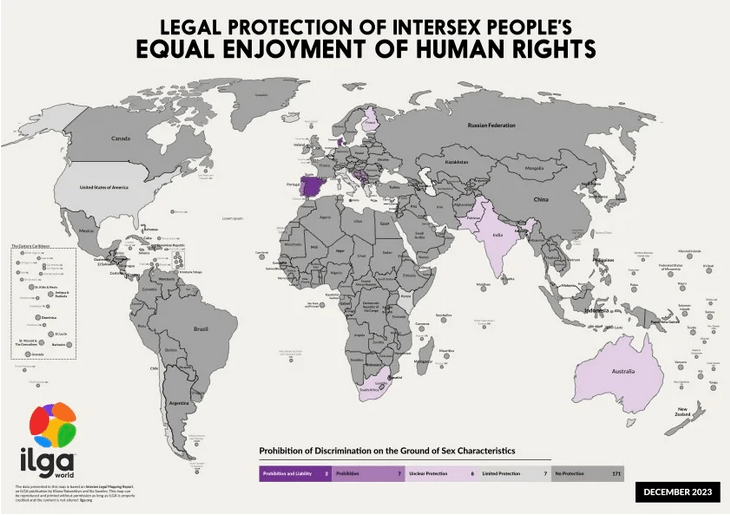
There are some exceptions to the ban on gender-related surgeries and hormonal care, including youth that are already receiving gender-affirming care. One of the main exceptions is people who were born with “a medically verifiable disorder of sex development,” including people “with external biological sex characteristics that are irresolvably ambiguous.” This is likely a reference to Intersex people, who do not fit typical definitions of male and female. Doctors will often perform surgeries on Intersex people when they are born, or give them hormonal care to more closely align an Intersex person with male or female characteristics.

Many Intersex people and their parents say these surgeries can be non-consensual or coerced, violating bodily autonomy. They have criticized gender-affirming care bans and their exceptions for Intersex people, with one parent telling ABC News:

Trans people are being told, ‘You can’t possibly know anything about your body because you’re way too young’…And then for intersex people, it’s the opposite. The choice of your gender is so important that you can’t possibly wait until you’re old enough to understand,

The American Medical Association has defended gender-affirming care, and strengthened its stance in 2023. The Ohio Children’s Hospital Association previously condemned HB 68 and said the law “will be devastating to kids and their families who are already at their most vulnerable and will place an insurmountable barrier between patients and their medical professionals for often lifesaving care.”

In addition to restrictions on gender-affirming care, HB 68 mandates sex-separated sports in schools and specifically says that transgender girls cannot participate in girl’s sports. The law prohibits organizations or local governments from processing complaints, starting investigations, or taking any other action against schools that enforce this policy.

The vote comes amid a torrent of anti-transgender and anti-LGBTQ+ legislation in conservative states. Last year, a prominent LGBTQ+ rights group declared a state of emergency in the US, echoing concerns from a UN expert that LGBTQ+ rights in the US were being “deliberately undermined” by state governments. LGBTQ+ rights in the US are falling more and more along state and partisan lines, with Human Rights Campaign calling Republican-controlled states “increasingly hostile to LGBTQ+ people.”

State legislators introduced more than 500 anti-LGBTQ+ bills in 2023, a historic high. Tennessee and Florida attracted particular attention for strict laws targeting drag performances and school discussions. Laws are not limited to those states, however, with TexasNorth DakotaSouth DakotaNebraska and others passing bills banning gender-affirming care. More recently, a West Virginia’s legislator introduced a bill to criminalize transgender people as “obscene matter.”

Activists and families have challenged many of these laws, to varying success. A federal court struck down Arkansas’s gender-affirming care ban, but a different court upheld similar bans in Tennessee and Kentucky.

The post Ohio legislature overrides governor’s veto of transgender care and sports ban appeared first on JURIST – News.

HRW calls on Meta to improve LGBTQ+ protections

HRW calls on Meta to improve LGBTQ+ protections

Human Rights Watch (HRW) called for Meta to improve their protection of LGBTQ+ people on Facebook and Instagram on Tuesday. This new campaign follows an HRW report from 2023, which found that security forces in the Middle East and North Africa use social media platforms to gather evidence to prosecute them.

A new campaign, titled “Secure Socials,” launched today to promote the protection of the LGBTQ+ community on social media. Human rights organisations Social Media Exchange (SMEX), INSM Foundation for Digital Rights, Helem and Damj Association teamed up with HRW to call on Meta to change their policies. They urged Meta to be fully transparent and publish data demonstrating their investment in user safety, as well as their justifications and explanations of how these investments proportionately address the risk of harm in these countries.

The campaign builds on a 2023 HRW report titled “‘All This Terror Because of a Photo’: Digital Targeting and Its Offline Consequences for LGBT People in the Middle East and North Africa.” The report analysed how security forces used digital targeting on social media platforms owned by Meta to harass, entrap and prosecute LGBTQ+ people in Egypt, Iraq, Jordan, Lebanon and Tunisia. They interviewed 120 individuals, including lawyers, digital rights professionals, and LGBTQ+ people impacted by digital targeting. In many cases, security forces used photos, WhatsApp chats and LGBTQ+ dating applications to prosecute them. Many of the LGBTQ+ people who were detained stated that they were denied access to a lawyer and were forced to sign confession statements regarding their illegal behaviour. 

Rasha Jones, acting LGBTQ+ rights deputy director at HRW, commented on the campaign and Meta’s inaction, stating:

As the largest social media company in the world, Meta should be a global leader in making social media safe for everyone … When LGBT people, who already face insecurity offline, use Facebook and Instagram for connection and organizing, they deserve certainty that Meta is doing everything in its power to ensure their security.

HRW further stated that it has been discussing these concerns with Meta for months and has issued two letters with specific questions regarding these issues since the report. Meta has declined to produce a written response.

The post HRW calls on Meta to improve LGBTQ+ protections appeared first on JURIST – News.

Greece to legalise same-sex marriage, adoption

Greece to legalise same-sex marriage, adoption

Greece will legalise marriage and adoption by same-sex couples, the prime minister said on Wednesday (10 January), but gave no timeframe on the sensitive issue in the staunchly Christian Orthodox state.

More: https://www.euractiv.com/section/non-discrimination/news/greece-to-legalise-same-sex-marriage-adoption/

________________________________________________________________________________________

Greece’s Prime Minister Kyriakos Mitsotakis said in an interview with a state-run television channel on Wednesday that the government would shortly submit legislation allowing same-sex civil marriages, despite reservations from the Orthodox Church and some lawmakers. 

Mitsotakis vowed to eliminate any discrimination based on sexual orientation in marriages. He added that “marriage equality has already been legislated” in twenty European countries and Greece is “moving forward” in that direction. He emphasized that the motivation behind proposing this legislation is to ensure equal protection of child rights. Currently, in the event of the death of a person in a same-sex relationship, their child’s guardianship would be given to an institution rather than their surviving partner, which impacts the well-being of the child. Additionally, the proposal would allow child adoption but would not interfere with the “assisted reproduction regime.”

In 1982, Greece witnessed “a great revolution in family law” as adultery was decriminalized, domestic violence was criminalized and women were provided the choice to keep their surname which, as Mitsotakis noted, took place despite the opposition from the Orthodox Church. Therefore, while the views of the Church would be taken into consideration, they would not be allowed to dictate the legislative process. Further, Mitsotakis’ New Democracy party would not impose their views on dissident ministers but would open a forum for discussion on the issue.

Over the past decade, Greece has implemented a series of reforms to improve LGBTQI+ rights. The country legalized same-sex civil partnerships in 2015 and allowed legal recognition of gender identity in 2017. In 2021, the premier appointed a committee to draft a national strategy for 2021-2025 to improve LGBTQI+ rights. In 2022, Greece banned conversion therapy for minors.

Despite these strides, same-sex couples face troubles as they are still not allowed to have or adopt children. In addition, gender identity recognition is a complex judicial procedure and conversion therapy is still allowed for adults. A report by the Council of Europe informed of the continuous discrimination and intolerance faced by the community which are frequent targets of hate speech.

Mitsotakis won his second term in 2023 and allowing same-sex civil marriage was a key component of his campaign. 

The post Greece to submit bill to legalize same-sex marriage appeared first on JURIST – News.

Uganda activists challenge anti-homosexuality law in Constitutional Court

Uganda activists challenge anti-homosexuality law in Constitutional Court

Ugandan LGBTQIA+ activists filed a lawsuit Monday in the country’s Constitutional Court to examine the constitutionality of the Anti-Homosecuality Act, signed by the country’s president earlier this year, that restricts the rights of LGBTIA+ individuals and imposes harsh penalties, including execution, for certain same-sex acts. 

A panel of five judges, led by Judge Richard Buteera, has commenced hearings on the matter, soliciting written submissions from both parties. Nicholas Opiyo, the lawyer representing the applicants, expressed hope the court would rule fairly. He also stated, “The court has an opportunity to decide whether the constitution of Uganda affords all Ugandans, including LGBTQI+ individuals, equal protection under the law.”

The law has been met with condemnation globally, with LGBTQIA+ organizations criticizing the EU for its continued financial support of Uganda after the ratification of the Act and the UK and US heavily criticizing the it.

Uganda’s legislature has defended the law, with The Speaker of the Ugandan Parliament Anita Annet Among stating, “As Parliament of Uganda, we have heeded the concerns [of] our people and legislated to protect the sanctity of family.”

According to the International Lesbian, Gay, Bisexual, Trans and Intersex Association (ILGA), across the African continent, only 22 of 54 countries have legalized homosexuality. Mauritania and Somalia allow the death penalty for same-sex sexual acts.

The post Uganda activists challenge anti-homosexuality law in Constitutional Court appeared first on JURIST – News.

India Supreme Court issues notice in petition by transwoman teacher over dismissal

India Supreme Court issues notice in petition by transwoman teacher over dismissal

The Indian Supreme Court issued on Tuesday an order informing authorities of a petition by a transgender woman who alleged that she was dismissed from her post as a teacher because of her gender identity.

The bench, comprising Chief Justice Chandrachud, Justice Pardiwala and Justice Misra of the Supreme Court in the case of Jane Kaushik v Union of India, issued an order granting permission for service of notice to India’s Central Agency Section, which handles government litigation before the Supreme Court, as well as to the standing counsel for the states of Uttar Pradesh and Gujarat. The JP Modi School from Gujarat and Uma Devi Children’s Academy from Uttar Pradesh were also instructed to respond to the notice by February 2, 2024, which coincides with the next scheduled date of the hearing in this case.

The court accepted the petitioner’s request to hear the case under Article 32 of the Indian Constitution because the schools in question are located in two different states, and it would pose a challenge for the petitioner to seek remedies if she is required to approach each of the respective state High Courts.

Article 32 of the Indian Constitution grants individuals the right to move the Supreme Court of India for the enforcement of fundamental rights. It is a constitutional remedy for the protection of fundamental rights, and individuals can directly approach the Supreme Court if they believe their fundamental rights have been violated.

The National Legal Services Authority v. Union of India judgement acknowledged and legally recognized the rights of transgender individuals in India as third gender. In this landmark decision, the court emphasized the use of a “psychological test” rather than a “biological test” for determining gender. The Supreme Court affirmed the right of transgender individuals to self-identify and mandated that both the Indian and state governments grant legal recognition to their gender identity. The judgment also declared any form of discrimination against transgender people as a violation of their fundamental rights.

Although the Supreme Court has introduced reforms to protect the rights of transgender individuals in India, their situation continues to be grim due to persistent social stigma surrounding their identity. Despite these challenges, concerted efforts by activists have resulted in positive developments, such as the recent initiation of a housing program by the Transgender Welfare Board.

The post India Supreme Court issues notice in petition by transwoman teacher over dismissal appeared first on JURIST – News.

Uganda LGBTQ+ rights activist stabbed

Uganda LGBTQ+ rights activist stabbed

A dedicated advocate for LGBTQ+ rights in Uganda was [WARNING: GRAPHIC VIDEO] stabbed Wednesday and is in critical condition in hospital. The brutal assault comes as attacks on LGBTQ+ people in the country have surged following the implementation of a harsh anti-homosexuality law.

Steven Kabuye, a champion for LGBTQ+ rights in Uganda, posted the video to his X (formerly Twitter) account on Wednesday morning, which showed his injury. Hans Senfuma, an ally of Kabuye and an LGBTQ+ activist, posted that the activist had been stabbed with a knife in the early morning by two unknown individuals on a motorcycle. He said that Kabuye believed the men were trying to kill him and that they had been following him for several days. Senfuma later posted that Kabuye was out of surgery.

In May 2023, Uganda passed the Anti-Homosexuality Act, igniting widespread condemnation from the international community. The law criminalized same sex conduct and introduced a possible death penalty for the offense of “aggravated homosexuality.” Numerous governments and human rights organizations expressed their opposition to the law, with Human Rights Watch stating that the law violated “multiple fundamental rights guaranteed under Uganda’s constitution and breaks commitments made by the government as a signatory to a number of international human rights agreements.”

Since the passing of the act, Uganda has seen a huge rise in human rights violations of LGBTQ+ individuals, as well as assaults. A report issued by the Strategic Response Team Uganda showed that between January and August 2023, “real and perceived LGBTIQ+ persons were exposed, tortured, beaten, arrested, outed and suffered physical, sexual and psychological violence, including evictions and banishments, blackmail, loss of employment and health service disruptions.” There are currently legal challenges to the law underway and a trial is expected soon, with petitioners arguing that the law not only breaks rights under the Ugandan Constitution but also reneges on their international human rights obligations.

Kabuye has been an outspoken critic of the law and a fierce proponent for LGBTQ+ rights in Uganda. At the time of the act’s passing, he tweeted:

I am deeply concerned about the consequences of Uganda’s Anti-Homosexuality Act 2023. This law violates basic human rights and sets a dangerous precedent for discrimination and persecution against the LGBTQ+ community. Let us stand together in solidarity and fight against bigotry and hate.

According to Reuters, the Coloured Voices Media Foundation – Truth to LGBTQ Uganda, made a statement on X regarding the assault on Kabuye. However, the statement is no longer available as the X account is no longer active. The organization’s website is also inaccessible. Dr Frank Mugisha, a prominent human rights activist and civil rights defender, stated on X that “hate crimes have no place in Uganda. We urge the police to conduct a thorough investigation.”

The post Uganda LGBTQ+ rights activist stabbed appeared first on JURIST – News.