This is a blog is related to my academic work in the International Academic Forum on SOGIESC Law but meant to serve anyone who wants to contribute to improve the protection of human rights worldwide. It is intended to keep interested readers informed about legal developments relating to sexual orientation, gender expression and identity and sex characteristics (SOGIESC). Hopefully, it will make it easier to find correct legal information about the developments in all regions of the world and, in particular, with regard to international law.
Bulgaria denies citizenship to Spanish-born child with two mothers
The Bulgarian Supreme Administrative Court (SAC) has finally decided that Sara, born in Spain and raised by two mothers, does not have the right to receive a Bulgarian birth certificate and citizenship.
The case involves three European countries – Bulgaria, Spain and the UK, and soon it may be brought before EU institutions.
The child was born in 2019 in Spain to a family of two mothers – Kalina and Jane. Same-sex marriages are allowed in Spain but not in Bulgaria.
Sara has a document that she was born in Barcelona, in which it is written that the child has two mothers. The two women claimed to the Bulgarian authorities that Spain cannot issue the child citizenship because the women were not Spanish.
Jane is a British citizen, but the passport office in Belfast has already refused to issue documents to Sarah because her British mother acquired her citizenship via descent. Under UK law, if a child is not born in the UK to two British parents, citizenship can only be passed down by one generation. In Sara’s case, that right stopped with her mother.
The Bulgarian court also refuses to issue documents for Bulgarian citizenship because the biological mother is British, not Bulgarian. Bulgaria does not recognise the Bulgarian woman as a “mother” because she is not the child’s biological mother.
The result is that the child has been living in Bulgaria for three years now but is stateless, and his civil rights are severely limited. Sara cannot travel abroad because she has no documents, and she may not be able to attend school, access healthcare, or vote in the future.
According to Bulgarian legislation, the child’s origin from the mother is determined from birth. The registration of two female parents is inadmissible, as same-sex marriages are not recognised.
At the same time, the Bulgarian supreme judges decided that refusing to issue a Bulgarian birth certificate does not result in depriving the child of any citizenship. The judges disputed claims by both of Sarah’s mothers that the child was not entitled to Spanish citizenship.
The Supreme Court says that the Spanish Civil Code allows the granting of Spanish citizenship to children who are born in Spain and cannot acquire the citizenship of either of their parents.
“Given the facts established in the case that the national legislation of none of the parents named in the child’s birth certificate drawn up in Spain, where he was born, does not grant citizenship, he should, by virtue of the Spanish Civil Code, be a citizen of Spain, a member of the EU,” the supreme court said in its ruling.
The Bulgarian court claims that Spain has no right to refuse to grant citizenship to Sarah, and it depends only on the will of her relatives to request it. Before the decision of the Supreme Court, the Bulgarian non-governmental organisation “Deistvie” (Action), which defends the rights of LGBTI people, announced that it would appeal to the European Commission.
Panama’s Supreme Court rules against same-sex marriages
In its ruling, the court said that ‘no matter how many changes happen in reality,’ gay marriages lack ‘conventional and constitutional recognition.’
Panama’s Supreme Court has ruled that same-sex marriage is not a human right and the country therefore does not have to recognize such unions, according to a judgment published Wednesday, March 1.
The court had been considering the issue since 2016, following several appeals from same-sex couples claiming the Central American country’s family code was unconstitutional as it only recognizes marriages between a man and a woman.
The Bulgarian Supreme Court of Cassation (SCC)1) has recently rejected the possibility for legal gender reassignment of transgender people. In an Interpretative Decision No. 2/2000 from the 20.02.2023, the General Assembly of the Civil Chamber decided that the “objective substantive law […] does not provide for the possibility for the court to admit […] a change of the data concerning the sex, name and unique civil number in the civil status records of an applicant who claims to be transgender.” The interpretative case targeted the contradictory practice of the SCC on the issue and provides binding instructions to the courts concerning all applications, pending or future, for legal gender reassignment. The decision’s reasoning is heavily based on the binding interpretative decision of the Constitutional Court stating that the concept of “sex” is determined at birth and can only have a binary biological meaning.
The SCC followed the approach of the Constitutional Court in framing its reasoning alongside the lines of the traditional social values. In doing so, the interpretative decision arguably undermined its own goal of unifying the future case-law by avoiding the discussion on the right to equal treatment of transgender persons and their protection from discrimination on the ground of their sexuality. Moreover, the legal reasoning fell short of addressing the main violations stemming from related ECtHR case-law against Bulgaria pertaining to the right to private life of transgender people and the balance between public and individual interests.
Balancing General and Individual Interests Against Traditional Values
In the decision, 28 magistrates considered that the Constitution and all Bulgarian legislation are built on the understanding of the binary existence of the human species. Accordingly, gender is determined by birth and is lost with death, and “the concept of ’sex‘ has a meaningful application and determines the constitutional status of natural persons in relation to social relations and specifically to the institutions of marriage, family and maternity.” The legal recognition of gender reassignment can thus potentially lead to the civil registration of same-sex marriages or same-sex parentage which is not permitted under Bulgarian law.
By citing related ECHR case law (including Y.T. v. Bulgaria and P.H. v. Bulgaria), the reasoning of SCC points out that the ECtHR has repeatedly held in its judgments that in determining the existence of a state’s positive or negative obligation under Article 8 of the Convention in terms of legal gender reassignment, the correct balance between the common good and the interests of the individual must be taken into account. However, the SCC pointed out that while the ECHR has precedence over national laws that may violate it, it still occupies a lower rank than the Constitution in the national hierarchy of norms. Hence, the constitutional understanding of the term “sex” has supremacy when it came to the national law. While the meaning of “sex”, including in its relation to family relations, can evolve, such development requires a need of predictability and clarity of is application for the sake of legal certainty. Correspondingly, the SCC reasoned that the “society’s value understandings, shaped by religion and morality, are characterized by stability and resilience as a regulator of behavior, whereby the state’s imposition of legal permissions in conflict with established moral and/or religious norms and principles would be characterized by questionable legitimacy and would compromise their regulatory potential.”
Against this background and the outlined above potential legal consequences pertaining to same-sex marriage and parentage, the SCC considered that the overriding public interest outweighed the interest of transgender applicants in terms of amending civil registers. In addition, given “the manner in which this would be perceived in society, in the absence of public consensus and legislation”, the SCC concluded that legal gender reassignment would be contrary to the public interest. Such a change should be considered admissible only in the case of detailed legislative regulation, which is currently lacking.
The Decision in Light of the Relevant ECHR Case-law and the Principle of Equality
Based on the adopted interpretative decision, it can be inferred that the SCC instructs the courts to refuse to consider the merits of applications of transgender persons for legal gender reassignment without taking into account the specific features of each individual case. Furthermore, courts can do so without considering whether the balance between the common good and the individual interest has been respected. Such an approach omits to consider whether the right to human dignity and respect for privacy would be disproportionately affected and thereby undermines related ECHR case-law as well as the principles of equality and non-discrimination.
21 magistrates provided a dissenting opinion, noting that the cited constitutional decision did not make binding prescriptions to the judiciary on the regulation of the legal status of transgender persons.2) Transgender persons, intersex persons and other persons for whom gender reassignment is medically necessary are “living human beings and their sex is biological according to the Constitution”. The opinion further states that the legal reassignment of sex is also “not in conflict with the binary existence of the human species” because one does not end up with a “third sex” but instead passes from one sex to the other due to a biological set of characteristics. The biological understanding of the concept of ’sex‘ does not in any way exclude the legal change of the sex of living human beings but only prohibits the possibility of such change for said persons after their death at the request of their heirs. Neither the Constitution nor the ordinary laws prohibit the changing the recorded sex of transgender, intersex and other persons on civil status certificates for medical reasons. Additionally, the cited constitutional decision specifically noted that in the case of intersex persons gender identification may be a ground for changing the sex recorded in civil status records.
The dissenting magistrates further reasoned that in order for the interpretive decision of the SCC to unify the future case-law it had to guarantee the right to equal treatment of transgender persons and their protection from discrimination on the ground of their sexuality. By failing to address this issue, the SCC leaves room for undermining the principle of prohibition of discrimination. Specifically, the decision’s reasoning does not touch upon the legal status of transgender persons who have already changed their sex with or without surgical intervention or hormonal treatment and the compliance of their status with the current law in the country. A related conundrum pertains to such persons’ equal treatment with other transgender people who in the future will not be able to legally reassign their sex and the equal treatment with intersex persons and other persons who need to change their sex for medical reasons.
Concerning the reasoning of the interpretative decision on the role of the ECHR, it needs to be pointed out that based on Article 149(1)1 of the Bulgarian Constitution, the Constitutional Court can rule on the constitutional compatibility of international treaties prior to their ratification. Accordingly, once the ECHR has been ratified, promulgated and entered into force, thereby becoming part of the domestic law of the country, the Constitutional Court, pursuant to Article (1)4 of the Constitution, can only rule on the laws’ conformity with it. As the Constitutional Court itself has pointed in Order No 2/29.04.21 in Const. Case No 6/2021, the Court could interpret the provisions of the Constitution in the light of international law, in particular the ECHR, but it could not rule on the compatibility of an international treaty in force with the Constitution. Likewise, the dissenting opinion in the SCC interpretative decision clearly states that there can be no question of a conflict between Article 8 of the ECHR and the Constitution, and consequently “neither of the two legal instruments ‚overrides‘ the other, including with respect to the biological explanation of the term ’sex‘ given by the Constitution”. The SCC decision is unable to limit the scope of Article 8 of the ECHR by excluding its application to transgender persons in Bulgaria due to the biological explanation of the term “sex” given by the Constitution. Moreover, as pointed above, transgender persons, intersex persons and other persons for whom sex reassignment is medically necessary are living persons and their sex is thus biological according to the Constitution.
The dissenting opinion recalls that in the two cases of Y.T. v. Bulgaria and P.H. v. Bulgaria, Bulgaria was convicted not for the lack of substantive prerequisites in the national law for the right of a transgender person to request the national court to change the sex in the civil status records. Instead, the violation was grounded in the fact that, under the available legal framework, the Bulgarian court had not taken into account the balance between the general public interest and the interests of the individual. The ECtHR further concluded that the national court refused to apply the existing Bulgarian legislation in the light of Article 8 of the ECHR. The Strasbourg Court has also found that the refusal in principle, based on traditional values and Christian traditions, as well as the lack of detailed national legislation, without examining whether the balance between the interests of society and the interests of the individual has been respected, violates Article 8 of the Convention.
Exercise of Subjective Rights Dependent on Civil Status Records
Finally, in order to reach its conclusion, the interpretative decision also uses as an argument the lack of developed procedural pathways for legal gender reassignment in the national system. A relevant question in this regard is whether courts can deny the exercise of rights’ due to the lack of procedures for their realization. In a blog post, Dr. Vassil Petrov, a Judge in the Sofia District Court, reflects on this question in light of the SCC decision. Jurisdiction in administrative law, understood as the power to issue acts binding on citizens and organizations of citizens, is derived from the law. However, competence does not always stem from an explicit statutory provision. As Judge Petrov points out, sometimes jurisdiction arises from an implied (sub-legislative) statutory empowerment. Civil status regulation embodies principles of both private and public legal nature that not should only provide for the possibility of comprehensive protection of the rights and legitimate interests of natural persons through ensuring personal identification but should also ensure the exercise of all rights dependent on such identification. Indeed, Article 46(3) of the Law on Statutory Acts prohibits to interpretatively justify the competence of a public authority to impose criminal, administrative or disciplinary liability in hypotheses where there is no explicit statutory provision. Nevertheless, outside these cases, Judge Petrov concludes, the courts may interpretatively infer the competence of an administrative authority, provided that there is a statutory basis for doing so and no statutory prohibition or legal principle is violated.
Accordingly, courts cannot simply refuse to protect rights because the procedural law does not provide a way for this. The ultimate question then again boils down to the rights and freedoms of transgender people and how these rights are balanced against the public interest. Last but not least, according to the case-law of the Constitutional Court, Article 8 of the ECHR is a directly applicable provision in the domestic law hence implying that citizens can invoke the provision before national courts even without the presence of elaborate national legislation. Following a similar logic, in a number of its older decisions (for instance Decision 205/05.01.2017and Decision 142/28.06.2019) the SCC has remanded cases back to lower courts on the grounds that the national law recognizes the possibility of making a change in the civil status record based on a court decision allowing a change of the original sex. Such reasoning was deemed to be in accordance with the nature of the personal rights recognized and protected by Article 8 ECHR.
Final Remarks
According to Article 4 of the Constitution, Bulgaria is a state governed by the rule of law and guarantees human dignity. The rule of law and the irrevocability of human dignity constitute a foundation of and guarantee for fundamental rights and principles, including the right to respect for private life and equal treatment. This constitutional basis entails the universal equality of dignity for all human beings, including transgender people. The recent interpretative decision of the SCC on the legal gender reassignment infers that related cases will continue to be examined, but simultaneously courts are instructed to refuse to consider the merits of transgender applications regardless of the various specifics of each case. Such approach not only undermines fundamental rights and principles but is also ultimately incapable of living up to the earlier reasonings of the SCC stipulating that every national court of all States Parties to the ECHR is also a national human rights court within the meaning of Article 13 of the Convention.
Supreme Court of Cassation (“Върховен касационен съд”) is the court exercising supreme judicial supervision in Bulgaria over civil and criminal law cases. See Article 108, Law on the Judicial Power, SG 64/07.08.2007 (with later amendments).
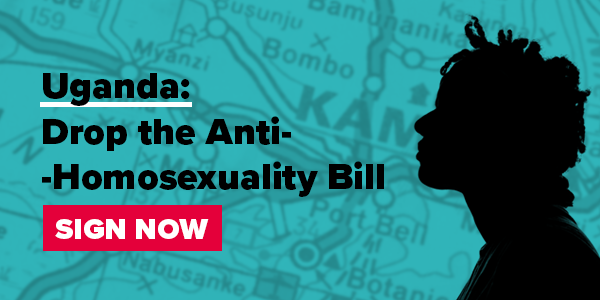
Uganda dispatch: new anti-homosexuality bill to be presented to Parliament years after previous legislation was overturned in court
Lawrence Alado is a JURIST Staff Correspondent in Uganda. He reports from Kampala.
Speaking at a dedication service convened under the theme, “Let your light shine; rebuilding our Godly image”, the Speaker of Uganda’s Parliament announced Tuesday that an anti-gay bill will be presented before the Parliament of the country tomorrow, the 1st of March.
We gathered earlier today to dedicate @Parliament_Ug to the Lord, and I pledged to the Country that a Bill will be introduced as soon as possible to deal with Homosexuality and lesbianism. We shall Jealously protect our cherished values and culture. pic.twitter.com/yAABBIs3dK
In her remarks, Anita Annet Among stressed that Uganda has moral values that the legislature and the public seek to protect. She said: “We don’t appreciate the values of Ugandans that they are destroying. We do not appreciate their money that they are using to destroy our culture. We do not need their money, we need our culture. And on that note therefore, as an institution of Parliament that passes the laws, tomorrow we are going to bring a Bill on anti-homosexuality.”
The Right Honorable speaker vehemently stated that Uganda will show the world that it does not condone darkness. She declared, “We are going out to the World as the light. I want to promise you that as the legislature, we are going to be the light of the world.”
It remains to be seen what the contents of the proposed Bill are, but the speech of the Speaker follows several statements by religious leaders around the country stressing that schools should not receive “gay funds” and that the public should desist and condemn all acts of homosexuality.
New UK policy regarding incarcerated transgender women enters force
A new policy regarding transgender prisoners Monday came into force in the UK. Transgender women who have “male genitalia,” as determined by the government, or have committed sex crimes or violent crimes, will not be held in female prisons regardless of their Gender Recognition Certificate. The policy comes after the UK government blocked Scotland’s Gender Recognition Reform Bill in January.
Secretary of State for Justice Dominic Raab commented that “safety has to come first in our prisons.” The UK government hope that these new measures will increase the safety of women and “prisoners across England and Wales.” However, according to data from the Ministry of Justice, there were only 230 transgender people incarcerated in England and Wales out of a total 78,058 incarcerated persons in 2022, and only six transgender women were held in “female establishments.”
Discussions to create a new framework for transgender prisoners have continued since previous changes to policy in 2019. In October 2022, former Secretary of State for Justice Brandon Lewis said, “transgender prisoners with male genitalia should no longer be held in the general women’s estate” however, he mentioned that the policy should not be a “blanket rule.” Exemptions to the measures will only be made in exceptional cases, and require express approval of ministers in order to be passed. Furthermore, transgender women who cannot be held safely in male prisons will now be imprisoned in specialist units.
USA: Missouri librarians sue over state law that bans ‘sexually explicit materials’ from schools
The ACLU of Missouri and two state librarian associations Thursday sued state prosecutors over a state law that bans “sexually explicit materials” from public schools and libraries, arguing that the law violates the state constitution. The case is in the Circuit Court of Jackson County.
The plaintiffs filed a petition for injunctive and declaratory relief over Missouri Revised Statute § 573.550, which became law in June 2022. The petition asserts that the law violates Article I Sections Eight and Ten of the Missouri Constitution for being vague and overbroad. Accordingly, the petition requests the court to enter a declaratory judgment that the law is facially unconstitutional and unenforceable. In the alternative, the petition requests that the court enter a declaratory judgment that defines the law and clarifies how and when it applies.
In response to the petition, Missouri Library Association Intellectual Freedom Committee Chair for 2022 Joe Kohlburn stated:
The law presents specific peril for school librarians, but also endangers the work and livelihoods of public and academic librarians who work with K-12 schools in various capacities. Librarians of all types are thoughtful, careful, and principled professionals who are tasked with the responsibility of ensuring access to information and collections, and providing collections that reflect a broad range of perspectives and life experiences. Librarians have been undermined politically in this state for long enough, and the fear of prosecution is an ongoing issue for keeping qualified professionals in Missouri, as well as bringing new people into the profession.
The law imposes criminal penalties on librarians and school officials for violations. According to the petition, the law has caused the removal of “hundreds of titles from library and classroom shelves.” Some removed titles include Holocaust history books, human anatomy books, and books authored by minorities. Additionally, some titles have been removed despite passing a “school-board approved selection criteria.”
South Korean gay couple sees court win as breakthrough for equality
February 27, 2023 – 07:07
By Hyunsu Yim
SEOUL (Reuters) – For So Sung-uk and Kim Yong-min, who last week won a landmark Seoul court ruling on national health coverage for gay couples, the tide may finally be turning in their years-long struggle for equal recognition in South Korea for LGBT partnerships.
The 32-year-old activists, together since they first met during their national service a decade ago, have regularly posted about their relationship on social media and in public forums, including a wedding ceremony in 2019 that drew some 300 attendees.
“The more visible we are and the more we talk about our story, I think the more we can change people’s opinions and help other LGBTQ people like us gather up courage,” Kim said in an interview in the three-room Seoul apartment he shares with So.
“I believe if more LGBTQ people show who they are, change will come faster.”
The two also managed to secure national health insurance coverage for So, who works with a youth HIV support group, as a dependent based on his partnership with Kim, an employee for an organisation that advocates for lesbian, gay, bisexual, transgender and queer rights.
But when local media drew attention to the pair’s story and the National Health Insurance Service’s official acknowledgement that they were a couple, the authorities backtracked and revoked So’s coverage, saying the approval had been an administrative error.
Thus began a two-year legal struggle as So sued the health service, initially losing in a local administrative court but prevailing when the Seoul High Court last week reversed course and affirmed his right to coverage.
“I see this ruling not just as a one-off win but a sign that we are starting to win – that love has won and it will again,” So said.
“Because we are not recognised as family by law in South Korea, things like guardianship or issuing real estate registration certificates on each other’s behalf are out of our reach.”
Kim added that the reversal was a relief for the country’s LGBTQ community.
“People have been feeling tired of not seeing much progress for a long time,” he said.
In South Korea, where LGBT anti-discrimination laws face strong resistance from conservative religious groups and others, the decision was hailed by human rights group Amnesty International as a “step towards marriage equality”.
Taiwan is alone among Asian governments in recognising same-sex marriages, which it legalised in 2019, although Thailand’s legislature is moving forward with bills that could lead to approval while court cases have pressed for LGBT couples’ rights in India and Japan.
South Korea’s health service said in a statement it would conduct a legal review to decide whether to challenge the latest court decision before the Supreme Court.
Kim and So blamed inaction by politicians for South Korea’s slow progress on LGBTQ rights, while acceptance is rising among the general public.
“Despite the hatred you see online and the discrimination, many LGBTQ people are still living well and happily in this country and there are many people who support us,” So said.
A survey by South Korean pollster Realmeter last year found that nearly seven in 10 respondents said an anti-discrimination law was necessary.
Anti-discrimination bills have been proposed but lawmakers have failed to move forward with them.
“Politicians like to hide behind social consensus,” So said.
“But it is their job to make society a more equal and better place to live, not just sit back and wait for society to change.”
(Reporting by Hyunsu Yim; Editing by Edmund Klamann)
LGBTI Victories in the Caribbean and a Turning Point for LGBTI Rights in the Americas
By Ari Shaw in Global Americans – January 25, 2023
At the end of 2022, LGBTI activists in Barbados achieved a stunning victory: the High Court of Barbados ruled that the criminalization of consensual same-sex intimacy is unconstitutional. Like many former British colonies, Barbados inherited penal codes with proscriptions against “buggery” and other vaguely defined acts that had been used to directly target LGBTI people. The Barbados Sexual Offences Act of 1992 imposed sentences of up to life in prison if convicted. While many of these laws on the books are selectively enforced, they are nevertheless dangerous and stigmatizing signals of disapproval that can lead to violence and discrimination against LGBTI people.