UN expert warns LGBT rights being eroded in US, urges stronger protections

UN expert warns LGBT rights being eroded in US, urges stronger protections

A UN Independent Expert [Victor Madrigal-Borloz, the UN Independent Expert on sexual orientation and gender identity], Tuesday said that the human rights of lesbian, gay, bisexual, trans, and gender diverse (LGBT) people are being “deliberately undermined” by some state governments in the United States and urged the Biden administration to strengthen and protect LGBT rights.

Victor Madrigal-Borloz, the UN Independent Expert on sexual orientation and gender identity, presented his findings after a 10-day visit to cities in the United States.

The expert penned that the Biden administration has taken an “impressive array of executive measures” aimed at the protection of LGBT rights, such as Executive Order 13988.

Despite progressive federal measures, the expert observed “a trend to weaponize state agencies” and described state actions as “regressive”. In 2021, 268 anti-equality bills were introduced in state legislatures. One year later, 22 States sued the Biden administration over a rule in Executive Order 13988 which would cut federal meal funding for schools which do not include LGBT-friendly policies. State action was of great concern to the expert, who stated “without exception, these actions rely on prejudiced and stigmatizing views of LGBT persons, in particular transgender children and youth, and seek to leverage their lives as props for political profit.”

In light of their concerns about state action, the expert optimistically noted that the United States “played a central role in the design and adoption of the Universal Declaration of Human Rights” and praised the Biden-Harris administration for its efforts “to support the human rights of all LGBT persons living under its jurisdiction and helping them to safe waters.”

The post UN expert warns LGBT rights being eroded in US, urges stronger protections appeared first on JURIST – News.

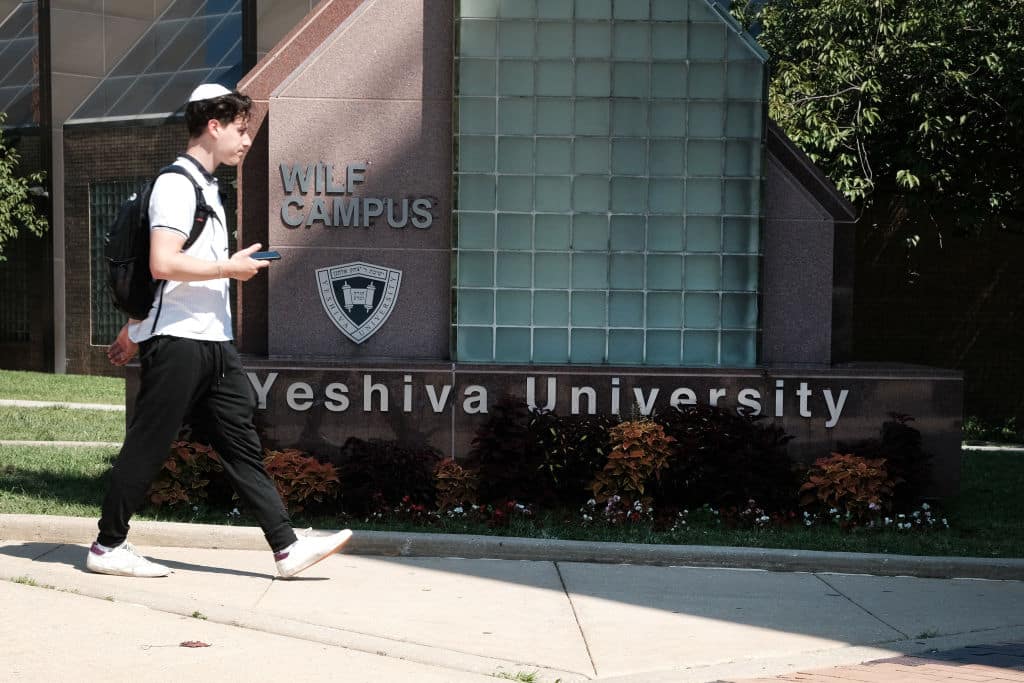
USA: Yeshiva University asks US Supreme Court to block order compelling recognition of LGBTQ+ student group

USA: Yeshiva University asks US Supreme Court to block order compelling recognition of LGBTQ+ student group

The flagship university of Modern Jewish Orthodoxy turned to the US Supreme Court on Monday in hopes of blocking a lower-court order that would require it to formally recognize an LGBTQ+ student organization.

The case originated in 2021, after multiple unsuccessful attempts by the student club, the Pride Alliance, to seek recognition from Yeshiva University’s administration. According to the group’s initial complaint, three attempts to seek recognition between 2019 and 2020 were denied because of the university’s prohibition on student clubs with names that included the terms “LGBT” or “gay.” The group went on to argue that as a university in New York City, Yeshiva qualifies as a place of public accommodation, and is thus barred under the municipal Human Rights Law from discriminating against students on various protected grounds, including sexual orientation and gender identity.

The university has stated that its refusal to formally recognize the group is rooted in religious reasons and that nonetheless it offers support services to LGBTQ+ students, and prohibits bullying on grounds of sexual orientation. It initially responded to the organization’s complaint with a motion to dismiss, which was ultimately converted to a motion for summary judgment. The university argued that owing to its religious affiliation and its incorporation under New York’s education law, the university is exempt from the human rights law’s public accommodations provision. The university further argued that the alliance’s reading of the human rights law would violate its religious autonomy, and infringe upon its rights to free exercise, speech, and assembly, in violation of the US Constitution.

In June of this year, New York State’s Supreme Court held that although “a religious corporation incorporated under the education law” is expressly excluded from New York City’s human rights law, a 1967 amendment to Yeshiva University’s charter describes the school as an “educational corporation under the Education Law of the State of New York,” and that it is organized and operated “exclusively for educational purposes.” These descriptions, the court notes, represented a departure from the university’s original charter, which had stated the school existed for exclusively religious purposes “to promote the study of the Talmud.” The court thus held the university was not exempt from New York’s prohibition on discrimination as a place of public accommodation.

The New York court also rejected the university’s constitutional arguments. With respect to free exercise, it found the anti-discrimination requirement for places of public accommodation did not violate the school’s rights as the human rights law is generally applicable, and thus its ban on discrimination does not target religious practice. With respect to free speech, the court was also unconvinced, holding that Yeshiva is being asked only to provide the Pride Alliance with the same benefits afforded to other student groups, and not to make a statement endorsing any particular viewpoints with respect to LGBTQ+ issues. The court was also unpersuaded by the university’s free association argument, citing the Supreme Court’s decision in Rumsfeld v. Forum for Academic and Institutional Rights, Inc., which stated: “just as saying conduct is undertaken for expressive purposes cannot make it symbolic speech … so too a speaker cannot erect a shield against laws requiring access simply by asserting that mere association ‘would impair its message.’”

The New York court held the university and its leadership were permanently restrained from continuing their refusal to formally recognize the Pride Alliance, and ordered the school to immediately grant the organization “full and equal accommodations, facilities and privileges afforded to all other student groups.”

The Becket Fund for Religious Liberty, an advocacy group that promotes the free exercise of all faiths, filed Monday’s emergency application with the US Supreme Court on behalf of Yeshiva University. In it, the university sought a stay of the lower court’s orders pending appellate review, or a writ of certiorari and stay pending resolution of the dispute. The school argued that the lower court’s order essentially compels the university and its leadership to either violate their religious beliefs or face contempt, referring to the court order as an unprecedented intrusion into the “religious formation of its students in the Jewish faith. The complaint goes on to accuse New York secular authorities of seeking to overrule Yeshiva’s religious authorities in violation not only of the first amendment, but also of the wishes of America’s first president:

In 1790, President George Washington wrote to the Jewish community in Newport, Rhode Island, of his wish that the “Children of the Stock of Abraham” would continue to enjoy the goodwill of their fellow citizens, such that each could “sit in safety under his own vine and figtree, and there shall be none to make him afraid.” … Yet when the secular authorities of New York purport to overrule the religious authorities at Yeshiva—and when the civil courts insist the First Amendment has nothing to say about the matter—something has gone terribly wrong.

It is not immediately clear if and when the Supreme Court will respond to the application. The justices are presently on recess, with arguments set to commence in early October.

The post Yeshiva University asks US Supreme Court to block order compelling recognition of LGBTQ+ student group appeared first on JURIST – News.

Eastern Caribbean Supreme Court strikes sodomy law, protects LGBTQ+ rights

Eastern Caribbean Supreme Court strikes sodomy law, protects LGBTQ+ rights

The Eastern Caribbean Supreme Court in the Federation of Saint Christopher and Nevis (St. Kitts and Nevis) Monday struck down the country’s anti-sodomy law, thus protecting the constitutional rights of LGBTQ+ citizens.

Sections 56 and 57 of the Offences Against the Person Act, Cap. 4.21 deal with sodomy and indecent assault against males respectively. These provisions punished adults of the same gender for having consensual sexual intercourse in private. The court determined that the concerned law contravenes the constitutional rights enshrined in sections 3, 7, 12 and 15 of the Constitution of the Federation of Saint Christopher and Nevis and Section 15 of the constitution specifically prohibits discrimination, inter alia, on the grounds of sex. The court also discussed that the state has ratified the Convention on the Rights of the Child and the Convention on the Elimination of Discrimination Against Women (CEDAW) which prohibit the same.

The court concluded that the laws criminalizing sodomy and indecent assault do not discriminate between males and females or even between homosexual males and heterosexual males and was interpreted to be gender and sexual orientation neutral. However, the court accepted that the above laws contravene the right to personal privacy and the right to freedom of expression. The law is not reasonably justifiable to proscribe sexual acts between consenting adults in private, which involve no element of public conduct or harm to, or sexual acts with, minors.

Therefore, the court determined the law to be excessive and arbitrary. The court did not strike the law in totality, but it did strike the sections which are inconsistent with the constitution. The court determined that Section 56 of the Act contravenes Sections 3 and 12 of the Constitution and declared it null and void. Section 56 is not applicable to the extent that it criminalises any acts constituting consensual sexual conduct in private between adults. The court also modified parts of sections 56 and 57 of the Act to make them consistent with the ambit of the Constitution.

The post Eastern Caribbean Supreme Court strikes sodomy law, protects LGBTQ+ rights appeared first on JURIST – News.

India Supreme Court expands family rights to LGBTQ+ and unmarried partners

India Supreme Court expands family rights to LGBTQ+ and unmarried partners

The Indian Supreme Court Monday released a decision expanding the conventional legal meaning of “family” and granted equal protection of the law to an atypical family unit. The court observed that “familial relationships may take the form of domestic, unmarried partnerships or queer relationships.”

The case concerned a married woman who was denied maternity leave under the Central Services (Leave Rules) 1972 because her spouse has two children from his earlier marriage. Justices Chandrachud and Bopanna observed that the prima facie intention of the maternity leave extended to women is to ensure that women are not compelled to leave their employment for childbirth. Justice Chandrachud stated:

Unless a purposive interpretation were to be adopted in the present case, the object and intent of the grant of maternity leave would simply be defeated. The grant of maternity leave is to encourage women to join and continue employment in the workplace. It is a matter of harsh reality that without these provisions the women would have been compelled to leave the workplace on the birth of a child, if they were not granted leave or other facilitative measures. Child birth cannot be regarded as something that detracts from the purpose of employment..

Further, the court refered to the Organisation for Economic Co-operation and Development (OECD) survey, and observed that “women in India spend up to 352 minutes/day on unpaid work, 577% more than the time spent by men.”

The court’s ruling in this case paves the way for the protection of parents who have children through surrogacy, adoption or assisted reproductive technologies and extends family rights to the LGBTQ+ Community.

The post India Supreme Court expands family rights to LGBTQ+ and unmarried partners appeared first on JURIST – News.

Iceland: Revision of the Act on Equal Treatment irrespective of Race or Ethnic Origin No. 85/2018 to include additional discrimination grounds, including sexual orientation, gender identity, gender expression and sex characteristics

Iceland: Revision of the Act on Equal Treatment irrespective of Race or Ethnic Origin
No. 85/2018 to include additional discrimination grounds, including sexual orientation, gender identity, gender expression and sex characteristics

See: https://www.equalitylaw.eu/downloads/5672-iceland-revision-of-the-act-on-equal-treatment-irrespective-of-race-or-ethnic-origin-no-85-2018-to-include-additional-discrimination-grounds-102-kb

USA: Federal appeals court rules Arkansas cannot ban gender-affirming care for youth

USA: Federal appeals court rules Arkansas cannot ban gender-affirming care for youth

The US Court of Appeals for the Eighth Circuit ruled Thursday that Arkansas may not prohibit doctors from providing gender-affirming care to transgender youth in the state.

In April 2021, the Arkansas legislature overrode the governor’s veto to pass Act 626, making Arkansas the first state in the nation to ban minors from receiving gender-confirming treatment. The American Civil Liberties Union (ACLU) sued in May of last year on behalf of transgender youth, their parents, and two healthcare providers, alleging that the law violates the equal protection clause of the Fourteenth Amendment “because it discriminates on the basis of sex and transgender status by prohibiting certain medical treatments only for transgender patients and only when the care is ‘related to gender transition.’” A federal judge granted plaintiff’s motion for preliminary injunction last year, and Arkansas appealed.

In affirming the lower court’s decision Thursday, the US appeals court found that plaintiffs were likely to succeed on the merits and that the district court had not abused its discretion in blocking the law’s enforcement:

The district court found that the Act prohibits medical treatment that conforms with “the recognized standard of care for adolescent gender dysphoria,” that such treatment “is supported by medical evidence that has been subject to rigorous study,” and that the purpose of the Act is “not to ban a treatment [but] to ban an outcome that the State deems undesirable.” The record at this stage provides substantial evidence to support these factual findings.

A spokesperson for the Arkansas Attorney General expressed disappointment with the ruling and indicated that the state will seek review by the full Eighth Circuit.

The post Federal appeals court rules Arkansas cannot ban gender-affirming care for youth appeared first on JURIST – News.

End of Singapore’s gay sex ban a ‘small step’ for some LGBT couples

End of Singapore’s gay sex ban a ‘small step’ for some LGBT couples

August 22, 2022 – 16:13

By Chen Lin

SINGAPORE (Reuters) – Singapore’s decision to lift a colonial-era ban on sex between men is long overdue and will not end discrimination of LGBT groups in the conservative city-state, rights activists and members of the gay community said on Monday.

The announcement by Singapore’s prime minister to repeal the so-called 377A law on Sunday came as he also said the government would take steps to prevent legal challenges that would allow same-sex marriages to be recognised.

More: https://www.swissinfo.ch/eng/end-of-singapore-s-gay-sex-ban-a–small-step–for-some-lgbt-couples/47844392

____________________________________________________

Singapore Prime Minister Lee Hsien Loong Sunday announced the government’s plans to decriminalize sex between men, saying this was “the right thing to do and something that most Singaporeans will now accept.”

Specifically, he announced the repeal of Section 337A, which provides that:

Any male person who, in public or private, commits, or abets the commission of, or procures or attempts to procure the commission by any male person of, any act of gross indecency with another male person, shall be punished with imprisonment for a term which may extend to 2 years.

While some activists praised the decision, others argued that LGBTQ+ rights in the country still have a. long way to go. In. particular, Singapore’s Constitution still only recognizes marriage between a man and a woman. Lee stated since “many national policies rely upon this definition of marriage,” such as housing, education, and adoption, Singapore “has no intention of changing the definition of marriage nor these policies.”

Lee announced that this definition of marriage will be protected from any constitutional challenge in the courts, stating on Twitter: “We will protect the definition of marriage, as contained in the Interpre­tation Act and the Women’s Charter, from being challenged constitutionally in the courts. We have to amend the Constitution to protect it, & we will do so.”

The post Singapore to decriminalize gay sex appeared first on JURIST – News.

Switzerland: High Court of Zurich considers non-availability of registered partnership for opposite-sex couple as compatible with Articles 8 and 14 ECHR

Switzerland: High Court of Zurich considers non-availability of registered partnership for opposite-sex couple as compatible with Articles 8 and 14 ECHR (Judgment in German only)

Verwaltungsgericht des Kantons Zürich: Ablehnung der Eintragung einer verschiedengeschlechtlichen Partnerschaft (Urteil publiziert am 08.08.2022) – Judgment in German only

VB.2021.00612 (URT.2022.23612)  Gewichtung: 24. Abteilung/4. Kammer  Begründung einer eingetragenen Partnerschaft[Ablehnung der Eintragung einer verschiedengeschlechtlichen Partnerschaft.] Nichteintreten auf das Begehren um Feststellung einer Verletzung des Diskriminierungsverbots nach Art. 14 EMRK oder allenfalls Art. 8 Abs. 2 BV mangels eines (aktuellen) Feststellungsinteresses (E. 1.3). […]

Verwaltungsgericht des Kantons Zürich: Ablehnung der Eintragung einer verschiedengeschlechtlichen Partnerschaft — LGBTI Recht in der Schweiz – Droit LGBTI en Suisse – by Professor Andreas R Ziegler