Author Archives: Andreas R. Ziegler

Japan court urges government to recognize legality of same-sex marriage

Japan court urges government to recognize legality of same-sex marriage

The Fukuoka High Court ruled that Japan’s current policy against same-sex marriage is discriminatory and unconstitutional on Friday. This marks the third time a High Court in the country has declared the ban on same-sex marriage unconstitutional, and this ruling specifically calls on the government to undertake necessary legal reforms.

In this case, three couples living in Fukuoka and Kumamoto whose same-sex marriage registrations were rejected, sought compensation from the government. The six appellants claimed that the Civil Code of Japan and the Family Registration Act, which ban same-sex marriage, violates the Japanese constitution. This appeal followed the Fukuoka District Court’s ruling that the government was not required to take immediate legislative action, despite being in a “state of unconstitutionality.”

Presiding Judge Okada Takeshi highlighted the importance of legal recognition for same-sex couples, in light of the constitutional principles of individual dignity and gender equality. The court referenced Article 13 of the Constitution for the first time, stating that the absence of a legal framework for same-sex marriage denies individuals in same-sex relationships a means to pursue happiness.

He emphasized that sexual orientation is determined before birth or early in life and is not a choice that can be changed by will or psychiatric methods. Thus, the desire to pursue happiness through the establishment of a family is the same for both heterosexual and same-sex couples.

The government argued on definition of marriage under Article 24 of the Constitution, citing the terms “both sexes” and “husband and wife.” In response, the court clarified that the legislative intention of Article 24 was not to prohibit same-sex marriage but to eliminate the historical subordination of wives in the family system. “There is no longer any reason to not legally recognize marriage between same-sex couples,” Judge Okeshi concluded.

After the ruling, four plaintiffs hailed the decision outside the court. They held a sign , questioning why Japan’s parliament has not yet legalized same-sex marriage.

This ruling aligns with two prior High Court decision in Sapporo and Tokyo, which similarly deemed the government’s stance on same-sex marriage unconstitutional.

The post Japan court urges government to recognize legality of same-sex marriage appeared first on JURIST – News.

LGBTI rights are human rights (10.12.2024 – Human Rights Day) – Statement by ILGA

LGBTI rights are human rights (10.12.2024 – Human Rights Day) – Statement by ILGA

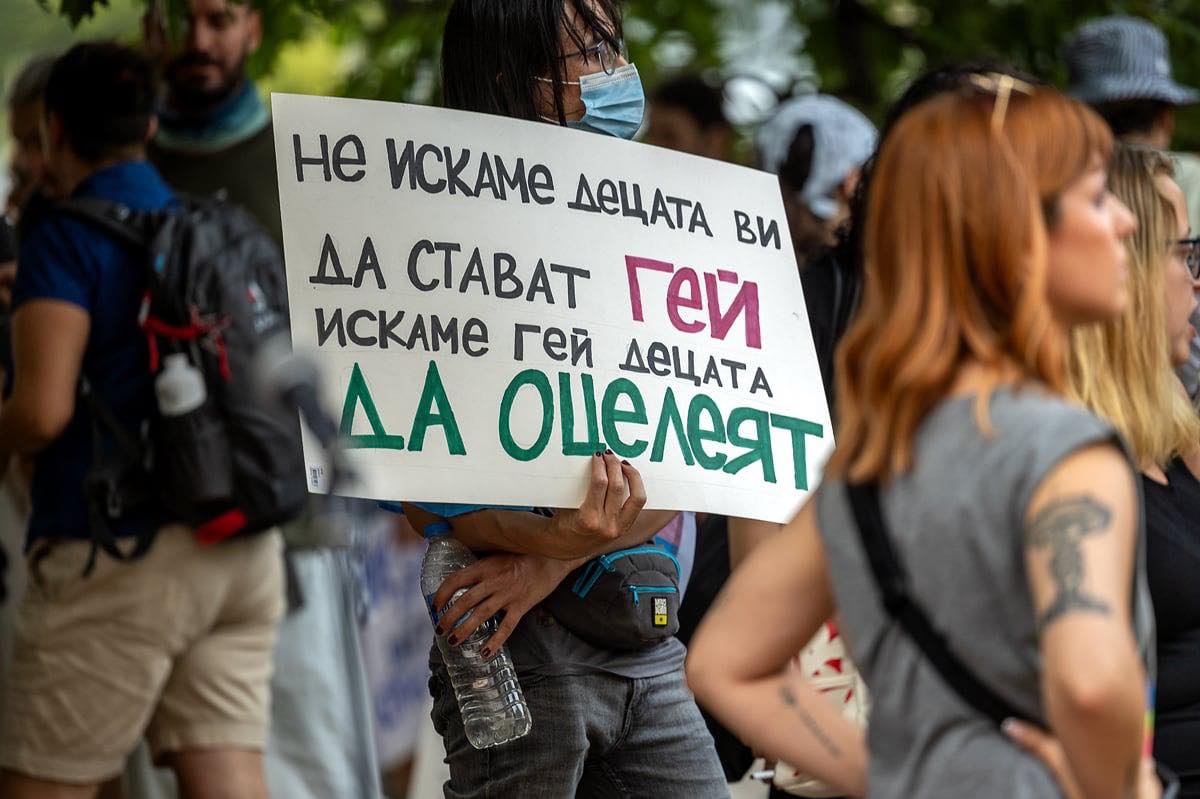
A person holding a sign at a protest with text in Bulgarian that reads: "We don't want your children to become gay. We want gay children to survive."

scroll

On Human Rights Day we reflect on struggles and milestones for the European and Central Asian LGBTI movement in 2024.

Human Rights Day reminds us of the universality of human rights: freedoms that belong to all people, no matter their identity. This principle is at the heart of the LGBTI movement, as LGBTI rights are human rights. In 2024, these rights were both challenged and celebrated, often reflecting broader societal shifts.

Across Europe and beyond, anti-LGBTI measures highlighted the fragility of hard-won freedoms. Georgia adopted both a “foreign agent” law and an “anti-LGBTI propaganda” law, echoing a troubling global trend of restricting civil society and stifling dissent. On December 2nd, the restrictive law came into force, banning legal gender recognition and equating same-sex relationships with incest, further institutionalising discrimination against LGBTI communities. The law also declared May 17 a holiday opposing the International Day against Homophobia, Transphobia, and Biphobia, amplifying the state’s anti-LGBTI stance. Bulgaria introduced laws targeting the discussion of LGBTI issues in schools, marking another attack on both education and freedom of expression. In Russia, the international LGBTI movement was branded as “extremist” in late 2023, but 2024 saw the first convictions under this extremist label, intensifying the risks for activists and organisations. Kyrgyzstan followed suit by enacting a Russian-style “foreign agents” law in April, subjecting non-profits to extensive state oversight and jeopardising the work of press freedom groups and civil society, including LGBTI organisations.

These developments show how attacks on LGBTI rights often signal deeper human rights violations. In Turkey, trans rights faced severe setbacks with new regulations restricting access to essential hormones, disproportionately affecting trans masculine people and those in poverty. Police repression of LGBTI demonstrations further highlighted the shrinking space for activism and public dissent. The suppression of freedom of speech, association, and democratic principles often accompanies discrimination against LGBTI communities. As such, defending LGBTI rights is part of defending the foundations of democracy and equality for all.

Progress, despite setbacks

Despite these setbacks, 2024 was also a year of hope and progress. Germany’s adoption of a self-determination law marked a major step forward for trans and non-binary people, simplifying legal gender recognition. Greece joined the growing list of European countries recognising equal marriage, while Malta’s introduction of non-binary markers on official documents underscored its commitment to inclusivity.

Beyond Europe, global human rights institutions also made strides for LGBTI people. The UN Human Rights Council adopted a resolution affirming the rights of intersex people, a relevant step in recognising and addressing the unique challenges they face. The European Court of Human Rights ruled that Poland must provide legal recognition for same-sex couples, and the Court of Justice of the European Union declared that Romania must respect gender recognition granted in other countries.

Ensuring no one is left behind

These moments of progress illustrate that advancing LGBTI rights benefits societies as a whole. Laws that affirm equality and dignity strengthen the social fabric, ensuring that no one is left behind. This year’s developments—both the setbacks and the victories—show that progress is possible, but it requires vigilance, solidarity, and collective action.

In February 2025, ILGA-Europe will publish its Annual Review, documenting these and other critical moments from the past year. Stay tuned!

Petition by several NGOs : Türkiye – End Forced Deportation of Syrian LGBTQIA+ Refugees

Türkiye – End Forced Deportation of Syrian LGBTQIA+ Refugees

n defiance of international law,Türkiye is forcibly deporting Syrian LGBT+ refugees back to Syria, where they face severe persecution and potential death. Article 33 of the Geneva Refugee Convention, to which Türkiye is a signatory, explicitly prohibits the expulsion of refugees to territories where their lives or freedoms could be threatened. Despite this, the Turkish authorities have been coercing deportees to sign “voluntary return” papers, a clear violation of the Convention against Torture.


The impact of these deportations on the LGBT+ community is devastating. Individuals who have sought refuge from the dangers of their war-torn homeland are now being thrust back into environments where they are openly targeted for their sexual orientation and gender identity. The risk of torture, imprisonment, and execution is alarmingly high, especially in areas controlled by extremist factions.


Guardian of Equality Movement (GEM) has released a report that includes testimonies of Syrian LGBT+ refugees who were forcibly deported from  Türkiye100% of the victims were subjected to torture in the deportation process Their stories of abuse, coercion, and life-threatening danger in Syria are heart-wrenching and demand immediate attention. This is not just a statistic; these are real people whose lives are in our hands.


The situation is critical. Deportations are happening now, and each day more lives are put at risk. The Turkish government is ignoring the severe persecution and violence that these refugees will face upon their return to Syria. Immediate action is needed to stop this injustice.


Everyone deserves to live without fear for their lives. This petition is a call for solidarity with Syrian LGBT+ refugees who have fled violence only to face it again in Türkiye. By standing together, we can make a powerful statement against discrimination and uphold the principles of human dignity and safety.

By: Guardians of Equality Movement (GEM)

Partners organization:

HuMENA for Human Rights and Civic Engagement

LGBTinArabic 

All Out 

Sign here: https://action.allout.org/en/m/435b800b/

Slovenia: Restrictions on assisted reproduction for single and gay women declared unconstitutional

Slovenia: Restrictions on assisted reproduction for single and gay women declared unconstitutional

Ljubljana, 26 November – The Constitutional Court has ruled that legislation barring single women and women in same-sex relationships from accessing assisted reproduction procedures is unconstitutional. The National Assembly must amend the law accordingly within a year. Until then, the provisions remain in force.

More: https://english.sta.si/3367253/restrictions-on-assisted-reproduction-for-single-and-gay-women-declared-unconstitutional

The decision (in Slovenian) is accessible here: https://www.us-rs.si/odlocba-ustavnega-sodisca-st-u-i-418-20-u-i-847-21-z-dne-16-10-2024/.

Ugandan court awards $40K to men tortured after arrest for alleged homosexuality

Ugandan court awards $40K to men tortured after arrest for alleged homosexuality

A Ugandan court on Nov. 22 awarded more than $40,000 (Shs 150 million) to 20 men who police tortured after their 2020 arrest for alleged homosexuality.

The High Court of Uganda’s Civil Division ruling notes “police and other state authorities” arrested the men in Nkokonjeru, a town in central Uganda, on March 29, 2020, and “allegedly tortured.”

“They assert that on the morning of the said date their residence was invaded by a mob, among which were the respondents, that subjected them to all manner of torture because they were practicing homosexuality,” reads the ruling. “The alleged actions of torture include beating, hitting, burning using a hot piece of firewood, undressing, tying, biding, conducting an anal examination, and inflicting other forms of physical, mental, and psychological violence based on the suspicion that they are homosexuals, an allegation they deny.”

More: https://www.washingtonblade.com/2024/11/26/ugandan-court-awards-40k-to-men-tortured-after-arrest-for-alleged-homosexuality/

UNAIDS: Laws, policies and practices that punish, discriminate against or stigmatize people – because they are women or girls, or from key populations, or from other marginalized communities – obstruct access to HIV prevention, testing, treatment and care

UNAIDS: Laws, policies and practices that punish, discriminate against or stigmatize people – because they are women or girls, or from key populations, or from other marginalized communities – obstruct access to HIV prevention, testing, treatment and care

The theme for the 2024 World AIDS Day–“Take the Rights Path”, points to the need to eliminate norms, laws, policies and practices that punish, stigmatize, discriminate, affect rights and limit access to essential HIV services to sections of the population.

More: https://www.unaids.org/en/2024-world-aids-day

UN expert urges Poland to address discrimination and violence against LGBT community

UN expert urges Poland to address discrimination and violence against LGBT community

A group of UN experts urged Poland to address entrenched discrimination and violence against the LGBT community through swift legislative and social reforms on Friday. The expert’s statement follows a comprehensive country visit, between November 18 and 29, that revealed both promising progress and persistent challenges.

The UN expert’s report highlights the enduring effects of discriminatory practices, such as the symbolic but impactful “LGBT-ideology free zones” established by over 100 local councils between 2015 and 2023. Although these resolutions lacked legal status, their existence underscored systemic prejudice and exacerbated the mental health challenges faced by the LGBT community. Activism and international pressure eventually led to the abandonment of these zones, but residual effects linger.

Significant gaps remain in areas such as education, employment, and healthcare. Schools lack adequate anti-discrimination training, leaving teachers ill-equipped to combat homophobia and transphobia. In workplaces, fear of discrimination prompts many LGBT individuals to hide their identities, while transgender people face additional barriers in accessing housing and healthcare. Recent legislative proposals aim to address these issues, but implementation remains uneven.

The report also draws attention to the challenges faced by same-sex couples, whose unions are neither recognised nor protected in Poland. Two recent European Court of Human Rights rulings, Przybyszewska and others v. Poland and Formela and others v. Poland, have found a breach of the right to private and family life under Article 8 of the European Convention on Human Rights, underscoring the need for legal recognition of same-sex unions, further pressuring the Polish government to act.

The UN Human Rights Council has mandated the UN Independent Expert on protection against violence and discrimination based on sexual orientation and gender identity to offer advice to States on how to remedy violence and discrimination since 2016. The visit was prompted by Poland’s recent steps to address human rights abuses, including a groundbreaking apology from the Ministry of Justice in December 2023 for the past harm caused to LGBT individuals by state actors and media. The apology marked a turning point, fostering improved access to government officials for civil society groups and signaling the possibility of legislative reform.

Encouragingly, a draft civil union bill and expanded hate crime protections are under consideration, signaling a shift toward a more inclusive legal framework. Municipal initiatives, such as Krakow’s growing Equality March, reflect changing societal attitudes, though officials acknowledge that political action has lagged behind public sentiment.

Despite these positive developments, Poland continues to rank last among European Union countries in LGBT legal protections, as highlighted in ILGA-Europe’s annual report. While amendments to the Polish Criminal Code now include sexual orientation in hate crime and speech provisions, gender identity remains excluded. Various cases of hate crime and speech, discrimination and isolation remain pertinent in Poland against the LGBT community.

As Poland grapples with its evolving role within the European Union, the UN expert emphasised the need for sustained commitment to human rights. “This moment represents an opportunity shaped by political circumstance,” the expert remarked, urging Poland to align its policies with EU standards and secure a more equitable future for all citizens.

The post UN expert urges Poland to address discrimination and violence against LGBT community appeared first on JURIST – News.