European Commission: Montenegro 2022 Report: Most vulnerable groups in society (including Roma and Egyptians, persons with disabilities, LGBTIQ persons) were increasingly subjected to discrimination, hate speech and hate crime
Brussels, 12.10.2022, SWD(2022) 335 final
P.4>> As regards the political criteria, political tensions, polarisation, the absence of constructive engagement between political parties and the failure to build consensus on key matters of national interest continued and caused two fractious governments to fall on votes of no-confidence. The proper functioning of Montenegrin institutions has been affected by political volatility, government instability and tensions within the ruling majorities, stalling decision- making processes and reform implementation. The main judicial bodies, including the Constitutional Court, have been operating in an incomplete composition due to the Parliament’s inability to elect new members, thus undermining their proper functioning. As of mid-September the Constitutional Court was unable to fulfil its role due to the absence of a quorum, amplifying political uncertainty. — (Emphasis added).
P.5>> Montenegro is moderately prepared as regards public administration reform. Overall, limited progress was made, including the adoption of the new 2022-2026 strategy for public administration reform. Conversely, the effects of the reorganisation of the public administration and the amendments to the Law on civil servants and state employees adopted in 2021 continued to be felt, with staff changes, a loss of know-how on EU accession process-related matters and an overall slowing of the pace of reforms. — (Emphasis added).
P.5>> Montenegro remains moderately prepared when it comes to its judicial system. Limited progress was achieved overall during the reporting period. The implementation of key judicial reforms remains stalled. Certain long-pending high-level judicial appointments took place, while several others, including at the Constitutional Court (for which a qualified majority in Parliament is required) are still pending. Concerns remain over the institutional performance and consolidation of independent Judicial and Prosecutorial Councils. The track record on judicial accountability remains limited. The judiciary’s effective independence, integrity, accountability and professionalism need to be further strengthened, including by implementing the relevant constitutional and legal framework and by adopting legislative changes in line with European standards. — (Emphasis added).
P.6>> Montenegro is moderately prepared in the area of fundamental rights. The legislative and institutional framework is largely in place and Montenegro continues to meet its international obligations on human rights. However, additional efforts remain needed to implement it fully. — (Emphasis added).
RULE OF LAW AND FUNDAMENTAL RIGHTS
P.19>> Chapter 23: Judiciary and fundamental rights: Montenegro remains moderately prepared to apply the EU acquis and the European standards in this area and has made limited progress overall. Limited progress was made in the area of the judiciary, with no progress on the implementation of key judicial reforms and a limited track record on judicial accountability. Corruption and high-level corruption remain issues of concern and are prevalent in many areas. Some progress has been made in the prevention of corruption, but progress was limited in the repression of corruption. On fundamental rights, Montenegro continued meeting obligations from international human rights instruments and legislation; however, challenges remain in ensuring the effective implementation of national legislation, in particular for the most vulnerable groups. — (Emphasis added).
P.19>> Functioning of the judiciary: Montenegro’s judicial system is moderately prepared, with limited progress overall. The implementation of key judicial reforms remains stalled. Certain long-pending high-level judicial appointments took place, bringing more stability to the justice system, but several others are still pending, including at the Constitutional Court, which require a qualified majority in Parliament; this process must ensure the merit-based appointment of individuals able to act independently, impartially and with integrity. […] Effective independence, integrity, accountability and professionalism of the judiciary need to be further strengthened, including by implementing the relevant constitutional and legal framework and by adopting legislative changes in line with European standards. The efficiency of the judiciary also needs to be strengthened. The human, financial, ICT and infrastructure management systems must be substantially improved. — (Emphasis added).
P.22>> The Constitutional Court continues to operate in an incomplete composition. Following the resignation of one of its members in January 2022, the Court operated with four instead of seven judges, which in practice meant that unanimity was required for the Court to take decisions, undermining its ability to function, its performance and efficiency. In July 2022, the procedure for appointing new judges failed in Parliament, due to a lack of political agreement on the seventeen candidates. The Parliament then published a new call to fill the four positions and the procedure is ongoing. Furthermore, one judge retired in September 2022, so the Court currently counts with only three members. Therefore, the Constitutional Court lacks the required quorum to take decisions and is unable to operate. — (Emphasis added).
P.32>> Fundamental rights: Montenegro is moderately prepared in the area of fundamental rights. The legislative and institutional framework is largely in place and Montenegro continues to meet its international obligations on human rights. However, additional efforts remain needed to implement it fully. The reporting period was marked by increased societal polarisation and division. Most vulnerable groups in society (including Roma and Egyptians, persons with disabilities, LGBTIQ persons) were increasingly subjected to discrimination, hate speech and hate crime. An increased number of femicides with insufficient follow up by the authorities, publicly expressed misogyny, gender-based violence and violence against children are issues of serious concern. More efforts need to be undertaken to ensure access to justice and the enforcement of rights in administrative and judicial proceedings in particular for vulnerable groups. — (Emphasis added).
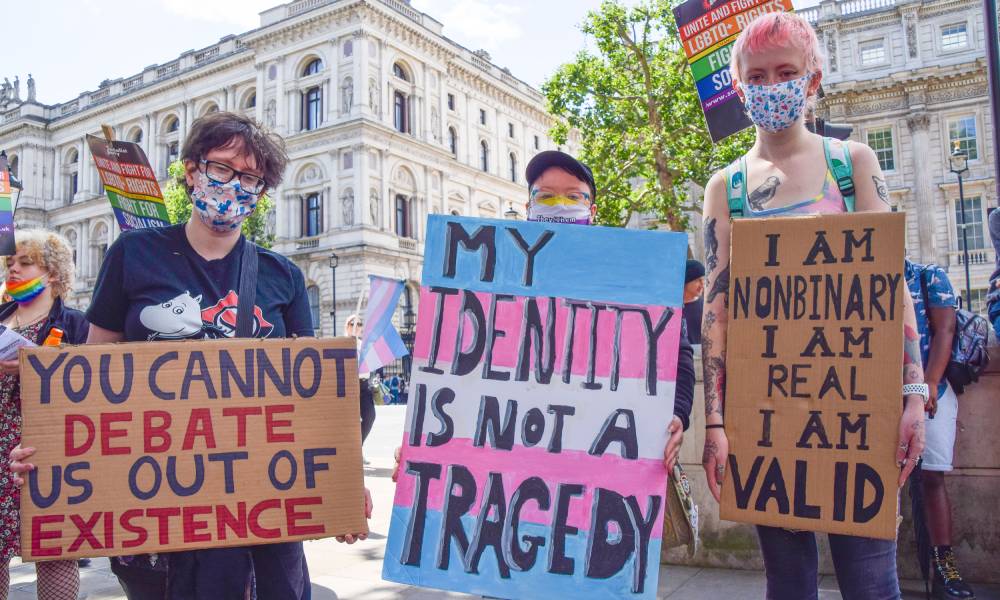
P. 39>> The reporting period was marked by high societal polarisation and division. The most vulnerable groups in society (including Roma and Egyptians, persons with disabilities, LGBTIQ persons) were increasingly subjected to discrimination, hate speech and hate crimes. — (Emphasis added).
P. 42>> The protection of the rights of lesbian, gay, bisexual, transgender, intersex and queer (LGBTIQ) persons continues to increase. […] A reference recognising same-sex partnerships was added to harmonise them with the Law on Same-sex Partnerships. The report on the implementation of the 2021 action plan accompanying the 2019-2023 strategy, which was expected for Q1 2022, is delayed due to the formation of the new government. More efforts need to be invested in the national focal point network, tasked with promoting LGBTIQ rights at the local level and monitoring implementation of the national strategy. Most activities of the action plan are implemented by NGOs, some in cooperation with the Ministry of Justice and Human and Minority Rights. […] Limited progress is noted regarding the application of the 2020 law on life partnership of same sex partners (same-sex partnership law). […] Hate speech and homophobic incidents against LGTBIQ persons, including by members of Parliament, remain a matter of grave concern. In 2021, 55 reports were filed with the police against 57 people regarding discrimination against LGBTIQ persons. Demand for social services, psychological support and legal aid continued to increase due to the COVID-19 pandemic, as did the economic and social vulnerability of LGBTIQ persons. — (Emphasis added).
More: European Commission: Montenegro 2022 Report




 International and Comparative SOGIESC Law - Professor Andreas R Ziegler