Tag Archives: lgbtq

Article by Sarthak Gupta: Back to Binary Basics [UK]

Article by Sarthak Gupta: Back to Binary Basics [UK]

On April 16 2025, the Supreme Court of the United Kingdom (Supreme Court) delivered its decision on a fundamental question regarding the interpretation of the terms “sex” and “woman” under the Equality Act 2010 (EA) i.e., whether the EA includes trans women with a Gender Recognition Certificate (GRC) issued under the Gender Recognition Act 2004 (GRA). The Court unanimously held that, under the EA, the meaning of the word “woman” must be restricted to “biological” women, and does not include trans women, even those who have legally changed their gender under the GRA. The decision risks undermining the UK’s equality law framework and marks a troubling regression in gender rights.

Women’s rights v. transgender rights

For Women Scotland (FWS), an organisation purporting to act for women’s rights, initiated this case as their second judicial review, challenging statutory guidance issued under Section 7 of the Gender Representation on Public Boards (Scotland) Act 2018. The 2018 Act set a gender representation objective of 50% women in non-executive posts on Scottish public authority boards. Section 2 defines “woman” to include persons with the protected characteristic of gender reassignment who were “living as a woman” and undergoing transition processes. In their first judicial review, FWS successfully challenged this definition, with the Inner House ruling on February 18, 2022, that “transgender women” is not a protected characteristic under the EA and that the definition “impinges on the nature of protected characteristics, which is a reserved matter.” The Court declared the definition outside the Scottish Parliament’s legislative competence (paras. 15-18).

In response, the Scottish Ministers issued revised guidance on April 19, 2022, which operated on the premise that the Court had nullified the statutory definition of “woman”. The new guidance stated that under Sections 11 and 212(1) of the EA, and per Section 9(1) of the GRA, women with full GRC would count as women toward the Act’s 50% representation objective. The Scottish Government based this position on the notion that a trans woman with a full GRC has changed her sex in law from male to female (paras. 19-23). FWS then petitioned for judicial review in July 2022, arguing this revised guidance was unlawful and beyond devolved competence under Section 54 of the Scotland Act 1998 (paras. 21-22).

This raised the central legal question whether references to “sex”, “woman”, and “female” in the EA should be interpreted in light of Section 9 of the GRA 2004 to include women with a GRC. The case specifically addressed only the status of the small minority of trans individuals with full GRC(s) (approximately 8,464 people out of 96,000 trans people in England and Wales and 19,990 trans people in Scotland), whose sex remains in law their biological sex. In the later decision by the Outer House of the Court of Session, on December 13, 2022,  Lady Haldane had dismissed FWS’s petition, holding that Section 9 of the GRA 2004 could scarcely be clearer in changing a person’s sex for all purposes, and that the EA was “drafted in full awareness of the 2004 Act” (para. 27). The Second Division of the Inner House subsequently refused FWS’s appeal, confirming that a person with a GRC “acquires the opposite gender for all purposes” unless specific exceptions apply, and that persons with GRCs possess the protected characteristic of sex according to their GRC as well as gender reassignment (paras. 28-29).

Decoding the UK Supreme Court’s decision

The Supreme Court allowed the second judicial review and held that “sex” (and related terms) in the EA meant a binary idea of “biological sex”. The Court reiterated that under Section 9(1) of the GRA 2004, the acquired gender of a person with a GRC is recognised “for all purposes”, unless an exception under Section 9(3) applies. Section 9(3) provides that this rule does not apply where another enactment (like the EA) has made a specific “provision” that displaces this effect. The Court emphasised that such displacement does not need to be explicit or by necessary implication – contextual and purposive analysis may also suffice (para. 156).

The Court held that the terms “sex” and “woman” in the EA are to be interpreted as referring only to “biological” sex and “biological” women. To determine the intended meaning of “sex” and “woman” in the EA, the Court undertook a comprehensive analysis of its structure and purpose. It stressed the importance of predictability, clarity, and workability in equality law, which is grounded in group-based rights tied to shared experiences and biological realities (paras. 153-154, 171-172). The Court reasoned that many provisions in the EA 2010 – such as those dealing with pregnancy, maternity, breast-feeding, and health and safety exemptions – could only be coherently interpreted by reference to biological sex, since only biological women can become pregnant or give birth (paras. 177-188). It is crucial to note that the Court’s analysis was not confined to sections of the EA closely tied to reproduction, but explicitly recognised that single-sex spaces and women’s sports – such as toilets, changing rooms, hospital wards, and sports clubs – will function properly only if “sex” is interpreted as biological sex, with the judgment expected to have far-reaching consequences in these areas (para. 235).

The Court firmly rejected the Scottish Ministers’ argument for a context-dependent or variable definition of “woman” that could accommodate trans as well as cis women within some provisions of the EA (para. 190). It held that allowing different meanings of “woman” in different parts of the EA would violate the “principle of legal certainty” and undermine the statute’s consistency (paras. 191-192, 195). It also dismissed the claim that excluding trans women from the sex-based definition would deprive them of legal protection since trans people are already protected under the separate characteristic of gender reassignment in Section 7 of the EA (para. 198-201).

The Court also considered the practical and legal implications of accepting a certified sex definition. It pointed out that most individuals with the protected characteristic of gender reassignment do not have a GRC, and there is no outward means for duty-bearers (like employers or service providers) to know who does based on appearance. This would make the law extremely difficult to apply and could result in de facto self-identification, thereby undermining women-only spaces and protections (para. 203). For example, services like rape crisis centres, women’s shelters, or single-sex schools would no longer be able to operate meaningfully as women-only services if legal “sex” included trans women (paras. 211-218, 226-228).

Parliament said “all purposes”, Supreme Court said “well, actually…”

The Supreme Court’s decision marks a critical shift in the legal framework governing gender and sex-based rights in the UK. First, it challenges Parliament’s intention in the GRA by limiting the scope of legal recognition for transgender individuals with GRCs, contradicting the “for all purposes” provision and creating legal incoherence. Second, the ruling significantly diminishes the practical value of GRCs by establishing that they do not extend to the definition of “woman” or “man” under the EA, where “biological sex” is considered the statutory meaning, leading to a fragmented legal landscape and policy revisions by public bodies. Third, the Court’s narrow interpretation of “sex” as strictly biological fails to account for the complex lived realities of transgender people, ignoring both the social and physiological aspects of gender identity and creating a binary-centric framework that does not reflect real-world experiences.

The Great British Bake-Off of legal logic

One of the fundamental canons of statutory interpretation is to give effect to Parliament’s intention. The GRA was enacted as a direct response to the European Court of Human Rights’ (ECtHR) ruling in Goodwin v UK (2002), which found that the UK’s failure to recognise in law the acquired gender of “transsexual” people violated their rights under the European Convention on Human Rights. Parliament’s clear legislative intent was to enable trans people with a GRC to be legally recognised in their acquired gender “for all purposes”, thereby granting them access to the same rights and protections as cisgender individuals of that gender. A transgender person – including someone who has obtained a GRC – may retain biological and physical characteristics of what the Court seems to describe as “biological sex”. The true intention behind section 9(1) of the GRA 2004 was to provide legal recognition and an appropriate framework for such people for all purposes, without exception, unless expressly stated in the law. As the EA contains no express or necessarily implied exception to section 9(1), this should mean that the legal sex of a person with a GRC should be recognised as their acquired gender throughout the Act. However, the Supreme Court’s interpretation, in effect, reads the EA as cutting across the GRA in contexts concerning “sex” discrimination and “sex-related” services.

This judicial construction contradicts the clear legislative purpose of both Acts and undermines the comprehensive legal framework Parliament sought to establish to protect transgender individuals. By doing so, the Court creates legal incoherence where trans people are recognised in some legal contexts but starkly excluded in others. This approach is inconsistent with anti-discrimination protections, undermining the very purpose of the EA to ensure fairness and equality for all protected groups, and thus the principle of parliamentary sovereignty.

Too trans for some rights, not trans enough for others

In terms of gender recognition reform, the Court’s interpretation impacts the legal weight of GRC(s). While the GRC process remains in place – allowing individuals to change the “sex” on their birth certificate and be legally recognised in their acquired gender for many administrative and legal purposes – the Court has now drawn a clear boundary: This recognition does not extend to the definition of “woman” or “man” under the EA where “biological sex” is the statutory meaning. This shift has profound practical implications. Previously, obtaining a GRC was seen as the definitive legal step for trans people to be recognised in their acquired gender across all areas of life, including anti-discrimination law. Now, the Supreme Court’s decision means that, for the purposes of the EA, a trans woman with a GRC is not considered a “woman” in contexts where the EA’s sex-based provisions are triggered – such as access to women-only spaces, participation in women’s public boards, or eligibility for women’s quotas.

Moreover, the Supreme Court’s concern about practical implementation (see paras. 203, 211-18) that service providers cannot visually distinguish GRC holders creates a false dilemma that was previously addressed by the Scottish Court of Session, which recognised that many protected characteristics (including pregnancy, sexual orientation, and religion) are not visually apparent yet remain workable in practice. The Court’s rationale that recognising trans women’s legal sex would undermine women-only spaces relies on unsupported assumptions about safety risks rather than evidence. By prioritising hypothetical implementation concerns over Parliament’s clear intent in both the GRA and EA, the Court effectively creates a hierarchy of rights where practical convenience trumps the legal recognition explicitly granted by statute, an approach that fundamentally misunderstands how anti-discrimination frameworks routinely manage invisible protected characteristics through self-declaration.

The UK Court decision is likely to have a chilling effect. It has already prompted public bodies, such as the British Transport Police, to revise policies so that searches and other “sex-based” procedures are conducted according to the idea of “birth sex”. NHS officials and other service providers are also reviewing guidance on same-sex wards and facilities, with the expectation that trans women, even with a GRC, may be excluded from spaces now reserved for cis women. This creates a fragmented legal landscape where trans people are recognised in some contexts but excluded in others, diminishing the practical utility of the GRC.

Not beyond the binary

The Court’s interpretation of “sex” as strictly “biological”, excluding trans women – even those with GRC(s) – from the legal definition of “woman”, is narrow and binary-centric. This interpretation ignores the lived realities of transgender people, for whom gender “identity” is a deeply felt and integral part of their personhood, not merely a biological fact. It also seems to ignore the biological aspects for some people who are trans: hormonal and physiological changes, which are often visible. Instead, the Court’s reasoning prioritises an essentialist view of “sex” that fails to appreciate the bodily, social and legal complexities surrounding gender (see also Stein and Richardson).

As such, the Court fails to account for how transgender women may experience (intersectional) discrimination precisely because they are perceived as transgressing “sex” categories. The Supreme Court held that a transgender person who faces discrimination has multiple legal pathways for protection: They can claim discrimination based on the protected characteristic of gender reassignment if treated less favourably because they are trans, or they can claim direct sex discrimination if treated less favourably because they are perceived as being a woman (para. 253).

This approach, however, ignores the complex lived realities of transgender individuals whose experiences often involve both gender identity and sex-based discrimination simultaneously. The decision thereby entrenches exclusion and discrimination against trans people, rather than advancing equality in the way that the EA intended to do. Ultimately, the Court’s approach introduces profound ambiguities into equality law by suggesting that legal recognition of transgender people is conditional and partial. This threatens to legitimise discriminatory practices in healthcare, employment, and public services where transgender people already face substantial barriers. Extensive legislative intervention will be required to restore meaningful protections. More concerningly, the judgment may embolden efforts to restrict transgender rights further.

The post Back to Binary Basics appeared first on Verfassungsblog.

Greece moves to ban surrogacy for gay male couples and single men

Greece moves to ban surrogacy for gay male couples and single men

The Minister of Justice of Greece, Giorgos Floridis.

The Minister of Justice of Greece, Giorgos Floridis. (NurPhoto/NurPhoto via Getty Images)

Greece has moved to ban surrogacy for gay male couples and single men, despite legalising same-sex marriage and adoption last year.

In February last year, Greece’s parliament approved a bill that saw it become the first country with a Christian Orthodox majority to legalise same-sex marriage and adoption.

The significant victory was, however, overshadowed by the fact same-sex couples would still be prohibited from seeking medically assisted reproduction through a surrogate, meaning they can only adopt or arrange surrogacy outside their homeland.   

On Tuesday (1 April), Minister of Justice of Greece, Giorgos Floridis, announced the plan to ban gay couples and single men from having children via surrogacy. 

He noted that proposed changes are part of the broader civil code reforms in Greece, aiming to clarify the legal definition of “inability to carry a pregnancy”. 

Floridis told reporters: “We are now clarifying unequivocally that the concept of inability to carry a pregnancy does not refer to an inability arising from one’s gender. 

“In other words, a woman may be unable to carry a pregnancy whether she is in a male-female couple, a female same-sex couple or on her own.”

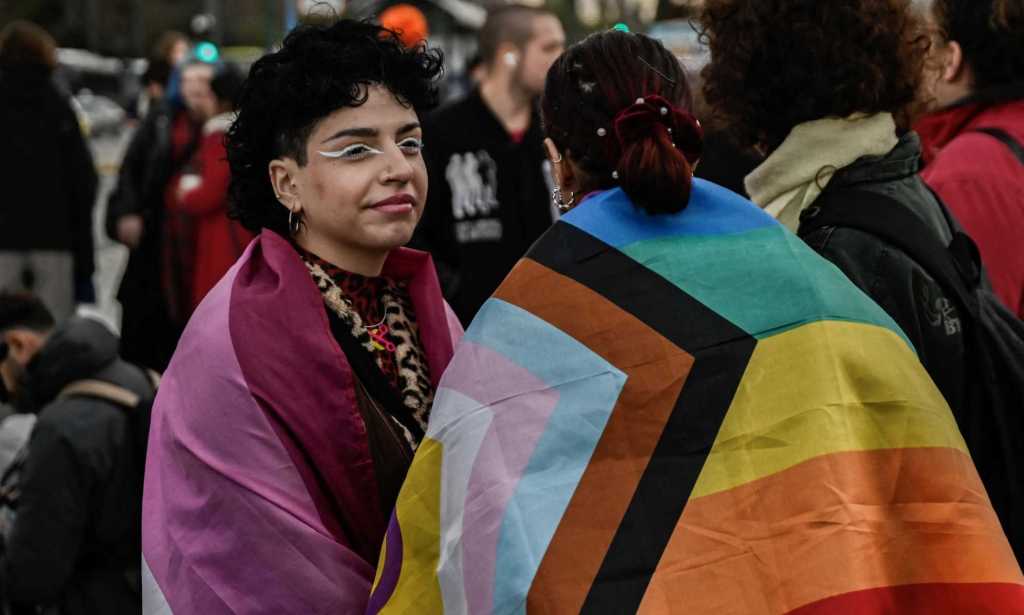
Supporters of the LGBTQ community wrapped in LGBTQ+ pride flags gather outside the Greek Parliament.
Greece’s Parliament legalised same-sex marriage and adoption on Thursday, 15 February, 2024. (ARIS MESSINIS/AFP/Getty Images)

The passing of same-sex marriage and adoption in Greece last year wasn’t without opposition. 

Its main opposition was The highly influential Orthodox Church and its followers claimed that children were being treated as “accessories” and “companion pets” for gay couples.

The Church – which views homosexuality as a sin – also argued that the law will “confuse parental roles” and “weaken the traditional family”. But prime minister Kyriakos Mitsotakis said the move would “boldly abolish a serious inequality”.

The landmark change follows Greece allowing civil partnership for same-sex couples in 2015, and two years later giving legal recognition to gender identity.

Source : https://www.thepinknews.com/2025/04/02/greece-moves-to-ban-surrogacy-for-gay-male-couples-and-single-men

Australia: Queensland to continue pause on paediatric gender hormone therapy pending review

Australia: Queensland to continue pause on paediatric gender hormone therapy pending review

The government of Queensland, Australia initiated Thursday an independent review into the use of paediatric gender hormone therapy. While the final report is due by 30 November 2025, the pause on new patients under 18 accessing hormone therapies within the public healthcare system will remain in place until the review is completed.

Professor Ruth Vine, Australia’s first Deputy Chief Medical Officer for Mental Health and Victoria’s Chief Psychiatrist, will lead the review. The review will consider, amongst other things, the quality of outcomes for the use of Stage 1 and Stage 2 hormones for children and adolescents with gender dysphoria and the strength of the evidence base for using Stage 1 and Stage 2 hormones to treat gender dysphoria. The review will also take into account legal and ethical considerations, such as social impacts on clinical practice and informed consent.

Previously, an independent evaluation of Queensland paediatric gender services finalized under the former labour government in July 2024 concluded that the service provides safe, evidence-based care consistent with national and international guidelines.

Queensland Health Minister Tim Nicholls initially announced the pausing of prescriptions of stage 1 (puberty suppression) and stage 2 (gender-affirming) hormone therapies on 28 January 2025. According to the minister, the immediate pause was due to concerns over the apparently unauthorized provision of gender services by the Cairns Sexual Health Service, which may have resulted in approximately 17 children receiving hormone therapy inconsistent with the nationally accepted clinical guidelines. The minister also pointed to the ongoing debate around the evidence supporting the effectiveness of stage 1 and stage 2 treatments for people under the age of 18 with gender dysphoria.

Children currently receiving treatment from the Queensland Children’s Gender Service will be exempt from the pause. However, there are around 491 children in Queensland waiting to access these treatments. The Sex Discrimination Commissioner Dr Anna Cody criticised the pause, stating:

Trans and gender diverse children and young people should feel supported to affirm their gender by the adults in their lives and health care providers. This pause has the potential to harm the physical and mental wellbeing of children in Queensland who are currently awaiting care … Above all, we must ensure we are putting the wellbeing of trans and gender diverse children and young people first.

The decision to undertake the review was influenced by the tightening of regulations around prescribing hormone therapy to children and adolescents in several European countries and the UK. Notably, the UK undertook a similar review which found amongst other things, that there is weak evidence for early puberty suppression and its impact on gender dysphoria, and mental or psychosocial health. Following the review, the UK has placed an indefinite ban on the prescription of puberty blockers for people under age 18. Relatedly, US President Trump has also imposed restrictions on access to gender-affirming treatment for transgender youth.

The post Queensland to continue pause on paediatric gender hormone therapy pending review appeared first on JURIST – News.

EU: Court of Justice confirms “no need of gender reassignment surgery for rectification of personal data”

EU: Court of Justice confirms “no need of gender reassignment surgery for rectification of personal data”

“43 In the present case, it is apparent from the request for a preliminary ruling that the Member State concerned has adopted an administrative practice whereby the exercise, by a transgender person, of their right to rectification of data relating to their gender identity, contained in a public register, is conditional upon the production of evidence of gender reassignment surgery. Such an administrative practice gives rise to a restriction of the right to rectification, which must comply with the conditions referred to in Article 23 of the GDPR, as stated in the preceding two paragraphs of the present judgment.

44      First, it must be noted that that administrative practice does not satisfy the requirement that a Member State’s law may restrict the scope of the right provided for in Article 16 of the GDPR only by means of legislative measures. Subject to verification by the referring court, Hungarian law does not appear to contain any legislative measure relating to the evidential requirements applicable to the rectification of data relating to the gender identity of persons who are listed in the asylum register.

45      Second, such an administrative practice undermines the essence of the fundamental rights guaranteed by the Charter and, in particular, the essence of the right to the integrity of the person and the right to respect for private life, referred to in Articles 3 and 7 of the Charter respectively.

46      In that regard, it should be noted that, in accordance with Article 52(3) of the Charter, the rights guaranteed by the Charter have the same meaning and the same scope as the corresponding rights guaranteed by the ECHR, the latter constituting a minimum threshold of protection (see, to that effect, judgment of 4 October 2024, Mirin, C‑4/23, EU:C:2024:845, paragraph 63 and the case-law cited).

47      It is apparent from the settled case-law of the European Court of Human Rights that Article 8 ECHR, which corresponds to Article 7 of the Charter, protects a person’s gender identity, which is a constituent element and one of the most intimate aspects of their private life. Thus, that provision encompasses the right to establish details of their identity as individual human beings, which includes the right of transgender people to personal development and physical and moral integrity and to respect for and recognition of their gender identity. To that end, Article 8 imposes positive obligations on States, in addition to negative obligations to protect transgender persons against arbitrary interference by public authorities, which also entails the establishment of effective and accessible procedures guaranteeing effective respect for their right to gender identity. Furthermore, in view of the particular importance of that right, States have only limited discretion in this area (see, to that effect, judgment of 4 October 2024, Mirin, C‑4/23, EU:C:2024:845, paragraphs 64 and 65 and the case-law cited).

48      In that context, the European Court of Human Rights has held, inter alia, that the recognition of the gender identity of a transgender person cannot be made conditional on the completion of surgical treatment not desired by that person (see, to that effect, ECtHR, 19 January 2021, X and Y v. Romania, CE:ECHR:2021:0119JUD000214516, §§ 165 and 167 and the case-law cited).

49      Third and lastly, an administrative practice such as that at issue in the main proceedings is not, in any event, either necessary or proportionate in order to ensure the reliability and consistency of a public register, such as the asylum register, since a medical certificate, including a psychiatric diagnosis, may constitute relevant and sufficient evidence in that regard (see, to that effect, ECtHR, 6 April 2017, A.P., Garçon and Nicot v. France, CE:ECHR:2017:0406JUD007988512, §§ 139 and 142).

50      In the light of the foregoing considerations, the answer to the second and third questions is that Article 16 of the GDPR must be interpreted as meaning that, for the purposes of exercising the right to rectification of the personal data relating to the gender identity of a natural person that are contained in a public register, that person may be required to provide relevant and sufficient evidence that may reasonably be required of that person in order to establish that those data are inaccurate. However, a Member State may not, under any circumstances, by way of an administrative practice, make the exercise of that right conditional upon the production of evidence of gender reassignment surgery.”

Source: JUDGMENT OF THE COURT (First Chamber) – 13 March 2025 – (Reference for a preliminary ruling – Protection of natural persons with regard to the processing of personal data – Regulation (EU) 2016/679 – Article 5(1)(d) – Principle of accuracy – Article 16 – Right to rectification – Article 23 – Restrictions – Data relating to gender identity – Data incorrect from the time of inclusion in a public register – Means of proof – Administrative practice of requesting proof of gender reassignment surgery )

In Case C‑247/23 [Deldits], (1)

REQUEST for a preliminary ruling under Article 267 TFEU from the Fővárosi Törvényszék (Budapest High Court, Hungary), made by decision of 29 March 2023, received at the Court on 18 April 2023, in the proceedings

VP v Országos Idegenrendészeti Főigazgatóság

US Supreme Court agrees to decide on state bans on conversion therapy for LGBTQ+ children

US Supreme Court agrees to decide on state bans on conversion therapy for LGBTQ+ children

The Supreme Court agreed to decide on the constitutionality of state and local governments’ ban on conversion therapy in a case from Colorado on Monday. Conversion therapy refers to the effort used to convert someone’s gender identity and sexual orientation. The ban on conversion therapy has been argued by the Court of Appeals to be harmful, unsafe, and ineffective health treatment.

Kaley Chiles, a counselor, filed the case at issue. She argues that the law violates her First Amendment rights to free speech and freely exercise her religion. At The Court of Appeal, the justices reasoned that the law was enacted to regulate the health care profession and conduct of therapists rather than their speech. They state that the court’s precedent makes it clear that “the First Amendment does not relieve professional health care providers from their responsibility to provide treatment consistent with their fields’ standards of care.” Moreover, The Court of Appeal determined that  “the First Amendment permits states to regulate the professional practice of conversion therapy.”

The Colorado Attorney General Phil Weiser, in opposition to the case, stated that:

In Colorado, we are committed to protecting professional standards of care so that no one suffers unscientific and harmful so-called gay conversion therapy. Colorado’s judgment on this is the humane, smart, and appropriate policy and we’re committed to defending it,

Ultimately, by the Supreme Court approving the petition to hear this case, the court will have the opportunity to make a binding precedent that will impact the laws surrounding free speech in America and fundamentally impact the lives of LGBTQ+  American children.

Since his election, President Trump has repeatedly targeted the LGBTQ+ community. He issued an executive order directing federal agencies to restrict access to gender-affirming medical care for transgender youth under age 19 and block federal funding for such treatments. The Human Rights Campaign (HRC) and Lambda Legal filed a lawsuit against Trump after he signed an executive order to ban transgender people from serving in the US Armed Forces.

The post US Supreme Court agrees to decide on state bans on conversion therapy for LGBTQ+ children appeared first on JURIST – News.

Ghana lawmakers reintroduce anti-LGBTQ+ bill imposing harsh restrictions

Ghana lawmakers reintroduce anti-LGBTQ+ bill imposing harsh restrictions

Lawmakers in Ghana reintroduced the Human Sexual Rights and Family Values Bill, a controversial and incredibly restrictive piece of anti-LGBTQ+ legislation, to Parliament on Tuesday.

Presently, in Ghana, gay sex is punishable by up to three years in prison. The bill is seeking to impose harsher penalties for engaging in consensual same-sex conduct by increasing the maximum penalty up to five years. Additionally, criminalizing the “funding or sponsorship for prohibited activities” and “advocacy, support” and promotion for LGBTQ+ rights or organizations, the bill imposes a term of imprisonment between five to ten years.

Introduced in 2021 as the Promotion of Proper Human Sexual Rights and Ghanian Family Values Bill, Ghana’s parliament passed the bill on February 28, 2024. However, former President Nana Akufo-Addo declined to sign the bill into law prior to the end of his term. The former president cited legal challenges as having prompted this delay, noting his intention to wait for the Supreme Court’s decision. Cases challenging the bill were eventually dismissed in December as the presidential assent was required to review them. Nana Akufo-Addo’s term ended in January 2025, resulting in the bill expiring without enactment.

President John Mahama expressed support for the bill during the Fellowship with the Clergy event on February 28, 2025, declaring, “I, as a Christian, uphold the principle and the values that only two genders exist, man and woman, that a marriage is between a man and a woman.” Referring to a conversation with the speaker of Parliament, Mahama asserted, “The renewal of the expired Proper Family Values Bill should be a bill that is introduced by government rather than as a private members motion, and it’s my hope that that consultation would see a renewed Proper Family Values Bill.”

In an interview with Citi News on February 27, 2025, Reverend John Ntim Fordjour, opposition party MP, confirmed the bill had been resubmitted, calling upon President John Mahama to provide presidential assent for its passing. Ten lawmakers sponsored its reintroduction, including MPs Samuel Nartey George and Emmanuel Kwasi Bedzrah from the National Democratic Congress, Ghana’s ruling party.

NGOs and advocacy groups such as LGBT+ Rights Ghana have expressed their concern for the impact on the LGBTQ+ community, admonishing the bill’s reintroduction as being “pushed by homophobic politicians and religious groups as means to promote oppression against Queer people in Ghana.” After its passing last year, Human Rights Watch researcher Larissa Kojoué stated, “The anti-LGBT rights bill is inconsistent with Ghana’s longstanding tradition of peace, tolerance, and hospitality and flies in the face of the country’s international human rights obligations.” She further noted, “Such a law would not only further erode the rule of law in Ghana, but could also lead to further gratuitous violence against LGBT people and their allies.”

The post Ghana lawmakers reintroduce anti-LGBTQ+ bill imposing harsh restrictions appeared first on JURIST – News.

USA: Iowa governor signs bill striking gender identity from state civil rights law

USA: Iowa governor signs bill striking gender identity from state civil rights law

Iowa Governor Kim Reynolds on Friday signed into law a bill that removes gender identity as a protected class under Iowa civil rights law.

Reynolds emphasized that the state’s “Civil Rights Code blurred the biological lines between the sexes” in an unacceptable manner and that the new law will strengthen the state’s efforts to protect women and girls.

The governor stated:

[A]cknowledg[ing] the obvious biological differences between men and women … is necessary to secure genuine equal protection for women and girls. It is why we have men and women’s bathrooms, but not men and women’s conference rooms; girls’ and boys’ sports, but not girls’ math and boys’ math; separate men and women’s prisons, but not different laws for men and women. It is about the biological differences, and that is all.

The classes commonly protected under Iowa civil rights law are “race, creed, color, sex, sexual orientation, national origin, religion, or disability.” Iowa law prohibits discrimination against protected classes in schooling, housing, real estate, loaning, and employment practices. 

The new law, however, changes the statutory construction of terms relating to sex and gender, stating that an individual’s sex is to be construed as being “either [biologically] male or female as observed or clinically verified at birth.” Gender is to be construed as synonymous to sex and not as a shorthand for “gender identity, experienced gender, gender expression, or gender role.” Additionally, “woman” and “girl” are to be construed as referring to a female, and “man” and “boy” are to be construed as referring to a male.

The law further provides that exceptions to sex discrimination are allowed “in prisons or other detention facilities, domestic violence shelters, rape crisis centers, locker rooms, restrooms, and in other contexts where health, safety, or privacy are implicated resulting in separate accommodations” because they “are substantially related to … important government objectives.”

The law also prohibits teaching “gender theory” in public and charter schools. It defines gender theory to include:

The concept that an individual who experiences distress or discomfort with the individual’s sex should identify as and live consistent with the individual’s internal sense of gender, and that an individual can delay natural puberty and develop sex characteristics of the opposite sex through the use of puberty blockers, cross-sex hormones, and surgical procedures.

Prior to its passage, ACLU of Iowa Executive Director Mark Stringer called the bill “barbaric.” He elaborated that gender identity has been protected under Iowa civil rights law for almost two decades. He stated:

If Gov. Kim Reynolds signs this bill, Iowa will become the first state in the country to repeal protections for LGBTQ people from its state civil rights law. Iowa has been a trailblazer in advancing civil and basic human rights—from banning slavery all the way to ensuring marriage equality. In many instances, our laws have helped advance the causes of freedom and equality in our nation. It is shocking to think that Iowa may now become another first—the first to specifically single out transgender people for removal of their legal rights as enshrined in state antidiscrimination law.

The post Iowa governor signs bill striking gender identity from state civil rights law appeared first on JURIST – News.

USA: Trump signs executive order aimed at banning transgender athletes from women’s sports

USA: Trump signs executive order aimed at banning transgender athletes from women’s sports

President Trump signed an executive order Wednesday aimed at keeping transgender women out of women’s sports by rescinding all funds from educational programs that allow transgender women to compete in women’s categories or to use women’s changing rooms.

Trump stated that the goal of this executive order is to “protect opportunities for women and girls to compete in safe and fair sports,” citing Title IX of the Education Amendments Act of 1972 and several Federal court cases including, Kansas v. U.S. Dept. of Education and Tennessee v. Cardona. Title IX states that, “No person in the United States shall, on the basis of sex, be excluded from the participation in, be denied the benefits of, or be subjected to discrimination under any education program or activity receiving Federal financial assistance.” This provision has brought the definition of “sex” to the forefront, as debated in both federal court cases in Kansas and Tennessee. Trump used these cases to highlight his interpretation of “Congress’ goal of protecting biological women in education.”

Some athletes celebrated the executive order, including Riley Gaines, Kaitlynn Wheeler, and Danica Patrick. Kaitlynn Wheeler stated, “this is a victory for every girl who has fought for fairness, every woman who refused to be silenced and every future athlete who deserves a level playing field.”

Trans athletes claim that the order will have detrimental effect on the trans community, including Karleigh Webb, who said, “this is part of a whole program to essentially erase transgender Americans from American life.” There are concerns that the policy will have the effect of excluding transgender women from participating in sports, with opponents claiming the policy is discriminatory.

Charlie Baker, the National Collegiate Athletic Association (the “NCAA”) President, released a statement addressing the executive order:

The NCAA Board of Governors is reviewing the executive order and will take necessary steps to align NCAA policy in the coming days, subject to further guidance from the administration. The Association will continue to help foster welcoming environments on campuses for all student-athletes.

With the Olympics headed to Los Angeles in 2028, there is debate over whether trans athletes will be able to compete. The International Olympic Committee has allowed transgender athletes to participate at the Olympics since 2004, but the first trans athletes to compete were in 2021. Trump has made it clear he intends to challenge the Olympic Committee on this policy moving forward.

The post Trump signs executive order aimed at banning transgender athletes from women’s sports appeared first on JURIST – News.

USA: Trump restricts access to gender-affirming treatment for transgender youth

USA: Trump restricts access to gender-affirming treatment for transgender youth

US President Donald Trump issued an executive order on Tuesday directing federal agencies to restrict access to gender-affirming medical care for transgender youth under age 19 and block federal funding for such treatments.

The order requires federal health programs to exclude coverage for gender-affirming surgeries and hormone treatments for minors beginning in 2026. Key provisions include directing the Department of Health and Human Services to review and rescind its 2022 guidance on gender-affirming care; requiring medical institutions receiving federal research grants to halt providing these treatments to minors; instructing the Justice Department to prioritize investigations into potential consumer fraud related to long-term effects of these treatments; and calling for new protections for employees wishing to report on noncompliance by their colleagues.

The order also directs HHS to conduct a literature review on treatment options for transgender minors — which it refers to as “children who assert gender dysphoria, rapid-onset gender dysphoria, or other identity-based confusion” — within 90 days and tasks the Justice Department with working with Congress on legislation to create a private right of action for affected individuals.

Implementation timelines vary by agency, with initial progress reports due within 60 days.

The executive order comes amid an ongoing national debate over transgender rights and healthcare access. According to the Human Rights Campaign, transgender Americans face significant barriers to healthcare, with 22% lacking health insurance coverage and 29% reporting being denied care by medical providers due to their gender identity. Transgender youth in particular face heightened challenges – research indicates that many identify across a broad spectrum of gender identities, and have historically struggled to access appropriate medical care and support services. While public support for transgender rights grew from 25% to 62% between 2014 and 2019, transgender Americans continue to face disproportionate rates of poverty, discrimination in housing and employment, and difficulty obtaining accurate identity documents that match their gender identity.

The issues of gender-affirming care and treatment options for transgender youth featured prominently in the 2024 election season, with Trump-aligned Republicans largely disavowing the necessity of such care.

The post Trump restricts access to gender-affirming treatment for transgender youth appeared first on JURIST – News.

USA: Trump announces intent to restrict transgender rights

USA: Trump announces intent to restrict transgender rights

In his first major rally since his win at the 2024 election, Donald Trump declared his intention to restrict transgender rights when he returns to office, proclaiming that he would “stop men from participating in women’s sports”.

Trump launched numerous attacks on trans rights throughout his first term, including banning transgender individuals from serving in the military and eliminating Department of Education provisions that maintained teachers should treat students in accordance with their gender identity, among others. Trump’s staunch denial of trans rights signifies a deepening conservative backlash against trans rights prevalent in the United States.

An example of this growing backlash is the Ohio Senate’s recent approval of a bill restricting trans students access to bathrooms. There has been additional litigation in the US regarding trans participation in sports, with two transgender girls obtaining permission from US Ninth District Court of Appeals to participate in sports following the state of Arizona passing legislation that prohibits them from doing so.

With the US Supreme Court to rule on the legality of providing transgender youth with gender affirming care this upcoming year, trans rights in America, especially for youth, are particularly unstable. Many trans people have reported preparing for Trump’s second term in office under the expectation of sweeping and pointed attacks on their rights. According to a report published in 2022, only 1.6 million people in the US over the age of 13 identify as trans, which is well under 1% of the population.

This did not stop Donald Trump from spending millions on advertisements focusing on anti-trans propaganda throughout the US election. Trans rights appear to be in urgent danger of being restricted as Trump prepares to take office.

The post Trump announces intent to restrict transgender rights appeared first on JURIST – News.