Italian court restores LGBTQ+-inclusive parental terms on minors’ ID cards
Leave a reply

Article by Sarthak Gupta: Back to Binary Basics [UK]
On April 16 2025, the Supreme Court of the United Kingdom (Supreme Court) delivered its decision on a fundamental question regarding the interpretation of the terms “sex” and “woman” under the Equality Act 2010 (EA) i.e., whether the EA includes trans women with a Gender Recognition Certificate (GRC) issued under the Gender Recognition Act 2004 (GRA). The Court unanimously held that, under the EA, the meaning of the word “woman” must be restricted to “biological” women, and does not include trans women, even those who have legally changed their gender under the GRA. The decision risks undermining the UK’s equality law framework and marks a troubling regression in gender rights.
For Women Scotland (FWS), an organisation purporting to act for women’s rights, initiated this case as their second judicial review, challenging statutory guidance issued under Section 7 of the Gender Representation on Public Boards (Scotland) Act 2018. The 2018 Act set a gender representation objective of 50% women in non-executive posts on Scottish public authority boards. Section 2 defines “woman” to include persons with the protected characteristic of gender reassignment who were “living as a woman” and undergoing transition processes. In their first judicial review, FWS successfully challenged this definition, with the Inner House ruling on February 18, 2022, that “transgender women” is not a protected characteristic under the EA and that the definition “impinges on the nature of protected characteristics, which is a reserved matter.” The Court declared the definition outside the Scottish Parliament’s legislative competence (paras. 15-18).
In response, the Scottish Ministers issued revised guidance on April 19, 2022, which operated on the premise that the Court had nullified the statutory definition of “woman”. The new guidance stated that under Sections 11 and 212(1) of the EA, and per Section 9(1) of the GRA, women with full GRC would count as women toward the Act’s 50% representation objective. The Scottish Government based this position on the notion that a trans woman with a full GRC has changed her sex in law from male to female (paras. 19-23). FWS then petitioned for judicial review in July 2022, arguing this revised guidance was unlawful and beyond devolved competence under Section 54 of the Scotland Act 1998 (paras. 21-22).
This raised the central legal question whether references to “sex”, “woman”, and “female” in the EA should be interpreted in light of Section 9 of the GRA 2004 to include women with a GRC. The case specifically addressed only the status of the small minority of trans individuals with full GRC(s) (approximately 8,464 people out of 96,000 trans people in England and Wales and 19,990 trans people in Scotland), whose sex remains in law their biological sex. In the later decision by the Outer House of the Court of Session, on December 13, 2022, Lady Haldane had dismissed FWS’s petition, holding that Section 9 of the GRA 2004 could scarcely be clearer in changing a person’s sex for all purposes, and that the EA was “drafted in full awareness of the 2004 Act” (para. 27). The Second Division of the Inner House subsequently refused FWS’s appeal, confirming that a person with a GRC “acquires the opposite gender for all purposes” unless specific exceptions apply, and that persons with GRCs possess the protected characteristic of sex according to their GRC as well as gender reassignment (paras. 28-29).
The Supreme Court allowed the second judicial review and held that “sex” (and related terms) in the EA meant a binary idea of “biological sex”. The Court reiterated that under Section 9(1) of the GRA 2004, the acquired gender of a person with a GRC is recognised “for all purposes”, unless an exception under Section 9(3) applies. Section 9(3) provides that this rule does not apply where another enactment (like the EA) has made a specific “provision” that displaces this effect. The Court emphasised that such displacement does not need to be explicit or by necessary implication – contextual and purposive analysis may also suffice (para. 156).
The Court held that the terms “sex” and “woman” in the EA are to be interpreted as referring only to “biological” sex and “biological” women. To determine the intended meaning of “sex” and “woman” in the EA, the Court undertook a comprehensive analysis of its structure and purpose. It stressed the importance of predictability, clarity, and workability in equality law, which is grounded in group-based rights tied to shared experiences and biological realities (paras. 153-154, 171-172). The Court reasoned that many provisions in the EA 2010 – such as those dealing with pregnancy, maternity, breast-feeding, and health and safety exemptions – could only be coherently interpreted by reference to biological sex, since only biological women can become pregnant or give birth (paras. 177-188). It is crucial to note that the Court’s analysis was not confined to sections of the EA closely tied to reproduction, but explicitly recognised that single-sex spaces and women’s sports – such as toilets, changing rooms, hospital wards, and sports clubs – will function properly only if “sex” is interpreted as biological sex, with the judgment expected to have far-reaching consequences in these areas (para. 235).
The Court firmly rejected the Scottish Ministers’ argument for a context-dependent or variable definition of “woman” that could accommodate trans as well as cis women within some provisions of the EA (para. 190). It held that allowing different meanings of “woman” in different parts of the EA would violate the “principle of legal certainty” and undermine the statute’s consistency (paras. 191-192, 195). It also dismissed the claim that excluding trans women from the sex-based definition would deprive them of legal protection since trans people are already protected under the separate characteristic of gender reassignment in Section 7 of the EA (para. 198-201).
The Court also considered the practical and legal implications of accepting a certified sex definition. It pointed out that most individuals with the protected characteristic of gender reassignment do not have a GRC, and there is no outward means for duty-bearers (like employers or service providers) to know who does based on appearance. This would make the law extremely difficult to apply and could result in de facto self-identification, thereby undermining women-only spaces and protections (para. 203). For example, services like rape crisis centres, women’s shelters, or single-sex schools would no longer be able to operate meaningfully as women-only services if legal “sex” included trans women (paras. 211-218, 226-228).
The Supreme Court’s decision marks a critical shift in the legal framework governing gender and sex-based rights in the UK. First, it challenges Parliament’s intention in the GRA by limiting the scope of legal recognition for transgender individuals with GRCs, contradicting the “for all purposes” provision and creating legal incoherence. Second, the ruling significantly diminishes the practical value of GRCs by establishing that they do not extend to the definition of “woman” or “man” under the EA, where “biological sex” is considered the statutory meaning, leading to a fragmented legal landscape and policy revisions by public bodies. Third, the Court’s narrow interpretation of “sex” as strictly biological fails to account for the complex lived realities of transgender people, ignoring both the social and physiological aspects of gender identity and creating a binary-centric framework that does not reflect real-world experiences.
One of the fundamental canons of statutory interpretation is to give effect to Parliament’s intention. The GRA was enacted as a direct response to the European Court of Human Rights’ (ECtHR) ruling in Goodwin v UK (2002), which found that the UK’s failure to recognise in law the acquired gender of “transsexual” people violated their rights under the European Convention on Human Rights. Parliament’s clear legislative intent was to enable trans people with a GRC to be legally recognised in their acquired gender “for all purposes”, thereby granting them access to the same rights and protections as cisgender individuals of that gender. A transgender person – including someone who has obtained a GRC – may retain biological and physical characteristics of what the Court seems to describe as “biological sex”. The true intention behind section 9(1) of the GRA 2004 was to provide legal recognition and an appropriate framework for such people for all purposes, without exception, unless expressly stated in the law. As the EA contains no express or necessarily implied exception to section 9(1), this should mean that the legal sex of a person with a GRC should be recognised as their acquired gender throughout the Act. However, the Supreme Court’s interpretation, in effect, reads the EA as cutting across the GRA in contexts concerning “sex” discrimination and “sex-related” services.
This judicial construction contradicts the clear legislative purpose of both Acts and undermines the comprehensive legal framework Parliament sought to establish to protect transgender individuals. By doing so, the Court creates legal incoherence where trans people are recognised in some legal contexts but starkly excluded in others. This approach is inconsistent with anti-discrimination protections, undermining the very purpose of the EA to ensure fairness and equality for all protected groups, and thus the principle of parliamentary sovereignty.
In terms of gender recognition reform, the Court’s interpretation impacts the legal weight of GRC(s). While the GRC process remains in place – allowing individuals to change the “sex” on their birth certificate and be legally recognised in their acquired gender for many administrative and legal purposes – the Court has now drawn a clear boundary: This recognition does not extend to the definition of “woman” or “man” under the EA where “biological sex” is the statutory meaning. This shift has profound practical implications. Previously, obtaining a GRC was seen as the definitive legal step for trans people to be recognised in their acquired gender across all areas of life, including anti-discrimination law. Now, the Supreme Court’s decision means that, for the purposes of the EA, a trans woman with a GRC is not considered a “woman” in contexts where the EA’s sex-based provisions are triggered – such as access to women-only spaces, participation in women’s public boards, or eligibility for women’s quotas.
Moreover, the Supreme Court’s concern about practical implementation (see paras. 203, 211-18) that service providers cannot visually distinguish GRC holders creates a false dilemma that was previously addressed by the Scottish Court of Session, which recognised that many protected characteristics (including pregnancy, sexual orientation, and religion) are not visually apparent yet remain workable in practice. The Court’s rationale that recognising trans women’s legal sex would undermine women-only spaces relies on unsupported assumptions about safety risks rather than evidence. By prioritising hypothetical implementation concerns over Parliament’s clear intent in both the GRA and EA, the Court effectively creates a hierarchy of rights where practical convenience trumps the legal recognition explicitly granted by statute, an approach that fundamentally misunderstands how anti-discrimination frameworks routinely manage invisible protected characteristics through self-declaration.
The UK Court decision is likely to have a chilling effect. It has already prompted public bodies, such as the British Transport Police, to revise policies so that searches and other “sex-based” procedures are conducted according to the idea of “birth sex”. NHS officials and other service providers are also reviewing guidance on same-sex wards and facilities, with the expectation that trans women, even with a GRC, may be excluded from spaces now reserved for cis women. This creates a fragmented legal landscape where trans people are recognised in some contexts but excluded in others, diminishing the practical utility of the GRC.
The Court’s interpretation of “sex” as strictly “biological”, excluding trans women – even those with GRC(s) – from the legal definition of “woman”, is narrow and binary-centric. This interpretation ignores the lived realities of transgender people, for whom gender “identity” is a deeply felt and integral part of their personhood, not merely a biological fact. It also seems to ignore the biological aspects for some people who are trans: hormonal and physiological changes, which are often visible. Instead, the Court’s reasoning prioritises an essentialist view of “sex” that fails to appreciate the bodily, social and legal complexities surrounding gender (see also Stein and Richardson).
As such, the Court fails to account for how transgender women may experience (intersectional) discrimination precisely because they are perceived as transgressing “sex” categories. The Supreme Court held that a transgender person who faces discrimination has multiple legal pathways for protection: They can claim discrimination based on the protected characteristic of gender reassignment if treated less favourably because they are trans, or they can claim direct sex discrimination if treated less favourably because they are perceived as being a woman (para. 253).
This approach, however, ignores the complex lived realities of transgender individuals whose experiences often involve both gender identity and sex-based discrimination simultaneously. The decision thereby entrenches exclusion and discrimination against trans people, rather than advancing equality in the way that the EA intended to do. Ultimately, the Court’s approach introduces profound ambiguities into equality law by suggesting that legal recognition of transgender people is conditional and partial. This threatens to legitimise discriminatory practices in healthcare, employment, and public services where transgender people already face substantial barriers. Extensive legislative intervention will be required to restore meaningful protections. More concerningly, the judgment may embolden efforts to restrict transgender rights further.
The post Back to Binary Basics appeared first on Verfassungsblog.
Poland president asks constitutional tribunal to review criminal amendment on LGBTQ+ hate crime
Polish President Andrzej Duda sent a bill to the Constitutional Tribunal Thursday for review, seeking to expand on hate crimes provisions by adding sexual orientation, gender and other categories to the list of protected groups. The tribunal will consider whether the bill violates the constitutional right to free speech.
The current Polish Penal Code includes Article 119 which prohibits hatred based on “the victim’s national, ethnic, racial, political or religious affiliation.” Any violence, threats or insults motivated by such traits is punishable by imprisonment for 3 months to 5 years.
In November 2024, the government approved the bill that expanded the provision to criminalize hate crimes based on other characteristics–sexual orientation, gender, age and disability. The Ministry of Justice stated that provisions in existing legislation “do not provide sufficient protection for all minorities, especially those vulnerable to discrimination, prejudice and violence.” The UN Human Rights Council had also expressed concern over the fact that Poland’s hate crime legislation did not include such categories.
In early March 2025, the parliament approved the bill and sent it to the president, who had the right to sign it, veto it or send it to the Constitutional Tribunal. On Thursday, Andrzej Duda said he had sent the bill to the tribunal to verify its compliance with the Constitution.
Duda said he had sent the bill to the tribunal because of doubts that the new provision violated the freedom of expression guaranteed by the Constitution and could lead to its abuse and the creation of preventive censorship. He noted that the use of criminal law is justified only when other means of achieving the desired goal are insufficient, but “the drafters have failed to demonstrate that the existing safeguards are insufficient.”
LGBT+ rights advocates condemned the president’s action. Director of the Campaign Against Homophobia, Mirosława Makuchowska, told a local news agency that the decision removes legal protection against hate speech for several at-risk groups. She said, “Unfortunately, we expected this. The president has not shown himself to be tolerant or open.”
Among the populace, “traditional family values” zones are common, where representatives of the LGBTQ+ community are declared unwelcome. This creates an unfavorable atmosphere for representatives of sexual minorities, and contributes to the violation of their rights.
Duda himself has previously expressed his disagreement with what he and his party consider to be “LGBT ideology,” and promised to protect children from this ideology during the election campaign.
The European Court of Human Rights held in 2023 that Poland’s failure to recognize same-sex unions violates the European Convention on Human Rights. The government introduced a draft law in October 2024 to recognize same-sex civil partnerships, but whether the parliament and president will adopt the law remains to be seen.
The post Poland president asks constitutional tribunal to review criminal amendment on LGBTQ+ hate crime appeared first on JURIST – News.
Hungary – Legislative developments: proposed amendments to the Equal Treatment Act and the Fundamental law; fast-track amendment of the law on assemblies to ban the Pride
The anti-LGBTIQ campaign of the Hungarian Government continues with legislative measures
Greece – Highest Administrative Court Decision for the revised Blood Donation Form that disconnects blood donation from the sexual orientation of the candidate blood donor
Enforcement of the principle of equal treatment by removing the exclusion of homosexual men from blood donation
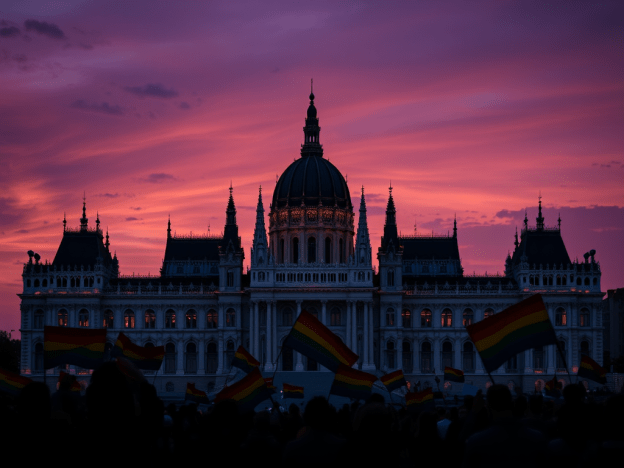
Hungary parliament passes constitutional amendment banning LGBTQ+ events
Hungary’s National Assembly on Monday passed an amendment to the Fundamental Law of Hungary that bans LGBTQ+ public events.
The change was adopted with 140 votes in favor of the amendment and 21 against. The amendment was initiated by Hungary’s governing far-right party, Fidesz -KDNP. Budapest Pride was banned last month after a fast-tracked bill was submitted to parliament, prompting protests. The amendment constitutionally codifies the 2021 Child Protection Law, which prohibits the “depiction or promotion” of the LGBTQ+ to children under 18.
The amendment also reinforces a constitutional basis to deny transgender people’s gender identity. It states that people can only be either male or female and mirrors US President Donald Trump’s executive order. The Constitution does not recognize gender reassignment, asserting that it is the state’s duty to uphold “natural order.” The measure also allows for the suspension of citizenship of Hungarians with dual or multiple citizenship in a non-European Economic Area country if they are deemed a public threat.
Government spokesperson Zoltan Kovacs released a statement on X arguing that “the amendment defines legal sex as immutable, stating that a person is either male or female and that this status cannot be legally altered” and that it is a “not an attack on individual self-expression, but a clarification that legal norms are based on biological reality.”
Hungary’s government has pushed against the LGBTQ+ community since 2021. Human Rights Watch had previously reported that LGBTQ+ individuals face discrimination and demonization, and the European Parliament in 2022 said that Hungary’s parliament can no longer be considered a “full democracy,” undoing freedom of expression and the rule of law, President Viktor Orbán has also been criticised. An April plenary session with the EU’s Parliament, Council and Commission in Strasbourg was set to discuss Hungary’s restrictions on the freedom of assembly and LGBTQ+ rights.
The post Hungary parliament passes constitutional amendment banning LGBTQ+ events appeared first on JURIST – News.

US Federal judge blocks key parts of Trump’s anti-DEI orders
A judge for the US District Court for the Northern District of Illinois on Tuesday issued a preliminary injunction preventing the US Department of Labor from requiring government contractors and federal grant recipients to certify that they do not operate any diversity, equity and inclusion (DEI) programs that violate any federal anti-discrimination laws.
Executive Order 14151, the termination provision, orders applicable federal agencies to terminate all “equity action plans,” “equity” actions, initiatives, or programs, “equity-related” grants or contracts, and all DEI performance requirements for employees, contractors or grantees. Executive Order 14173—the certification provision—mandates that recipients of federal grants validate that they are not conducting any DEI initiatives in violation of federal anti-discrimination laws.
The preliminary injunction comes after the non-profit organization Chicago Women in Trades (CWIT) filed a complaint challenging the executive orders. In 2024, CWIT received federal money from the Women in Apprenticeship and Nontraditional Occupations (WANTO) program, which works to increase women’s participation in apprenticeship programs and nontraditional occupations such as trades, construction, project management, and cybersecurity. After Trump’s executive orders, CWIT stood to lose thousands of dollars in federal funding, hindering its efforts to increase the representation of marginalized women in key fields. Approximately 70 percent of CWIT’s participants are Black and Latina women.
In the preliminary injunction, Judge Matthew Kennelly held that CWIT would likely prevail on its First Amendment challenge to the certification provision. CWIT argued that the anti-DEI executive orders impose restrictions that are “overbroad” and “impossibly vague” and that “condition CWIT’s receipt of federal funding upon the stifling of CWIT’s protected speech.” Additionally, Kennelly found that CWIT was likely to succeed on the merits of its claim that the termination provision violates the separation of powers. The US Constitution does not permit any executive branch official to unilaterally terminate federal grants and contracts without express statutory authority from Congress. The preliminary injunction is narrow in scope and applies only to the US Department of Labor, not to all federal agencies.
Just a few weeks ago, the US Court of Appeals for the Fourth Circuit upheld the government’s request to stay a nationwide preliminary injunction that blocked enforcement of the same contested elements of the two executive orders.
The post Federal judge blocks key parts of Trump’s anti-DEI orders appeared first on JURIST – News.
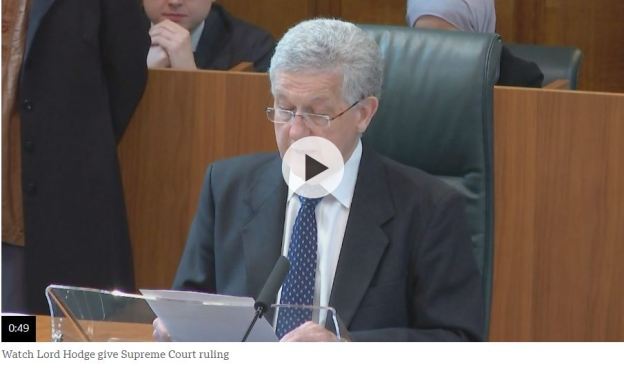
UK Supreme Court backs ‘biological’ definition of woman
Judges at the UK Supreme Court have unanimously ruled that a woman is defined by biological sex under equalities law.
It marks the culmination of a long-running legal battle which could have major implications for how sex-based rights apply across Scotland, England and Wales.
The court sided with campaign group For Women Scotland, which brought a case against the Scottish government arguing that sex-based protections should only apply to people that are born female.
Judge Lord Hodge said the ruling should not be seen as a triumph of one side over the other, and stressed that the law still gives protection against discrimination to transgender people.
More: https://www.bbc.com/news/articles/cvg7pqzk47zo
___________________________________________________________________________
The UK Supreme Court ruled Wednesday that trans women are not legally recognised as women under the Equality Act 2010. The case arose after the Scottish Parliament passed the Gender Representation on Public Boards (Scotland) Act 2018, which aimed to include transgender women in quotas to achieve gender balance on public sector boards.
The judges ruled that the definition of sex as set out under the Equality Act 2010 was “binary” and based on biology, thereby making individuals who were not born female unable to receive legal protections afforded to women by altering their gender with a GRC. In commenting on the decision, Lord Hodge asserted that the Equality Act 2010’s provisions revolved around biological sex at birth and were not concerned with an individual’s acquired gender, regardless of the possession of a GRC.
Although the word “biological” does not appear in defining a man or woman in the Equality Act, the court applied the literal rule of statutory interpretation, where the statute was read in its plain, ordinary meaning to be in reference to biological sex.
Initially, the appellants in the case, For Women Scotland Ltd, a feminist organisation campaigning to strengthen women and children’s rights in Scotland, challenged the definition of “woman” outlined in the 2018 Act. Section 2 of the Act defined “woman” as including:
[A] person who has the protected characteristic of gender reassignment (within the meaning of section 7 of the Equality Act 2010) if, and only if, the person is living as a woman and is proposing to undergo, is undergoing or has undergone a process (or part of a process) for the purpose of becoming female.
Upon appeal before the Second Division of the Inner House of the Court of Session in 2022, the appellants were successful, prompting the Scottish government to issue new statutory guidance. The guidance stated that an individual who had been issued a valid Gender Recognition Certificate (GRC) recognising their gender as female would be the sex of a woman and therefore their appointment would fulfil the gender balance quota on public sector boards.
After the issuance of the new statutory guidance, the appellants petitioned the UK Supreme Court for a judicial review of the Scottish government’s decision, citing it as an error of law. The main question before the Supreme Court judges in this landmark decision was concerning the correct interpretation of “sex” and “woman”.
In the aftermath of the Supreme Court’s decision reshaping the landscape of gender rights, it is expected that multiple public bodies will have to review their gender policies.
The post UK Supreme Court rules trans women not legally women under Equality Act appeared first on JURIST – News.
US education department to cut funding on Maine for gender-affirming school sports
The US Department of Education (DOE) announced Friday its plan to terminate the Maine Department of Education’s (MDOE) federal K-12 education funding for its noncompliance with US President Trump’s executive orders attacking “gender ideology” and gender-affirming educational practices.
The DOE concluded that MDOE has endorsed or allowed school policies allowing males to compete in female sports and occupy women-only intimate spaces. It additionally stated:
[O]ver at least the past two years and continuing in the current school year, at least three male student-athletes have competed in Maine high school girls’ athletic programs for at least five different high schools (so affecting many more times that number of high schools whose female athletes competed against the male athletes).
The DOE’s Office for Civil Rights launched its Title IX investigation of the MDOE on February 21, 2025, in response to Maine Governor Janet Mills challenging Trump to get the courts to make Maine comply with his executive orders. The DOE published its noncompliance finding on March 19 along with a proposed resolution agreement, notifying Maine that it will send a letter of impending enforcement action if Maine does not sign the resolution agreement within ten days from the finding.
In addition to ceasing the practice of its gender-affirming policy, the resolution agreement would have required the MDOE to make “each school district in Maine to submit to MDOE an annual certification of compliance [and] promptly notify OCR of any credible report that a school district is still allowing a boy to participate in girls’ sports.” It would have also required the MDOE to give recognitions to female athletes who did not receive them due to males participating in women’s sports.
On March 31, the DOE sent the MDOE a final warning letter instructing that it will take enforcement action if Maine does not accept the agreement by Friday.
The DOE’s Acting Assistant Secretary for Civil Rights Craig Trainor commented in a press release:
The Department has given Maine every opportunity to come into compliance with Title IX, but the state’s leaders have stubbornly refused to do so, choosing instead to prioritize an extremist ideological agenda over their students’ safety, privacy, and dignity … Governor Mills would have done well to adhere to the wisdom embedded in the old idiom—be careful what you wish for. Now she will see the Trump Administration in court.
Title IX of the Education Amendments of 1972 is a federal law prohibiting sex-based discrimination in any education program or activity receiving federal funds. President Trump issued Executive Orders 14168 and 14201 to enforce Title IX, notably by requiring girls’ or women’s school athletic opportunities and private spaces (e.g., locker rooms) to be reserved only for biological females. They further ordered federal funding to be cut from educational institutions that did not comply with the orders.
On the contrary, the MDOE supported its stance by stating that the Maine Human Rights Act adheres to Title IX by prohibiting discrimination in education on the basis of a protected class, including the class of “sexual orientation (which includes gender identity and expression)…”
The DOE also announced that it will be referring this investigation to the US Department of Justice for suit in federal court. These developments come after the Trump administration’s announcement to create a Title IX Special Investigations Team to combat “gender ideology” in schools.
The post US education department to cut funding on Maine for gender-affirming school sports appeared first on JURIST – News.
USA: Attorneys general file brief to US Supreme Court supporting Maryland county’s LGBTQ book curriculum
A coalition of 19 attorneys general filed a 31-page amicus brief with the US Supreme Court on Wednesday, claiming a Maryland county’s policy of incorporating LGBTQ-inclusive books into their curriculum with no opt-out option for parents does not violate the US Constitution.
The amicus brief asserted that the use of LGBTQ-inclusive books in the school district’s curriculum without an opt-out option, a policy adopted by the Montgomery County Board of Education in March 2023, falls within public schools’ authority and overriding interest to foster a safe learning environment. The attorneys general further claimed that the policy does not violate parents’ rights to freely exercise their or their child’s religious beliefs under the Free Exercise Clause of the First Amendment to the US Constitution.
The brief encouraged the US Supreme Court to uphold a decision by the US Court of Appeals for the Fourth Circuit denying the petitioners’ request for a preliminary injunction on the grounds that exposure of the petitioners’ children to LGBTQ-inclusive books through the district’s curriculum did not interfere with the petitioners’ free exercise rights.
Massachusetts Attorney General Andrea Joy Campbell, who co-led the coalition of attorneys general, stated: “Preparing our children to engage with and thrive in a diverse society is a central premise of education. Local school districts have the right to determine that the use of LGBTQ-inclusive books helps to foster inclusive learning environments for all our students.”
The US Supreme Court agreed in January to hear the case, filed by petitioners Tamer Mahmoud and Enas Barakat, Islamic practitioners joined by Catholic and Ukrainian Orthodox parents, who object to the contents of LGBTQ+ books included in the school’s reading list. The petitioners had filed a lawsuit alleging the policy violated their rights under the First Amendment, stating that it infringes on their right to practice religion as they please.
The amicus brief was signed by the attorneys general from California, Connecticut, Colorado, Delaware, the District of Columbia, Hawai’i, Illinois, Maine, Maryland, Michigan, Minnesota, Nevada, New Jersey, New York, Oregon, Rhode Island, Vermont and Washington.
The Supreme Court will hear arguments on the petitioners’ challenge on April 22.
The post Attorneys general file brief to US Supreme Court supporting Maryland county’s LGBTQ book curriculum appeared first on JURIST – News.
 International and Comparative SOGIESC Law - Professor Andreas R Ziegler