Tag Archives: lgbtq

Kazakhstan approves amendments restricting discussion of LGBTQ+ issues

Kazakhstan approves amendments restricting discussion of LGBTQ+ issues

The Parliament of Kazakhstan on Wednesday approved a proposal to ban propaganda of “non-traditional sexual orientation”, despite serious concerns raised by several human rights organizations over its implications for LGBTQ+ rights.

The draft law “On Amendments and Supplements to Certain Legislative Acts of the Republic of Kazakhstan on Archival Matters” proposes mandatory labeling of materials containing LGBTQ+ topics. Propaganda of non-traditional sexual orientation would constitute an administrative offence with sanctions including a fine and even 10 days of administrative arrest for repeated offences. According to a report of Human Rights Watch (HRW), the proposal will enable authorities to suspend access to digital means without a court order. The law has now been forwarded to the Senate and will require the president’s signature to take effect.

Several human rights organizations have voiced their disapproval of the bill. Seven international human rights organizations, including HRW and the Eurasian Coalition on Health, Rights, Gender and Sexual Diversity (ECOM), urged Parliament on Tuesday to reject the bill. According to the organizations, the proposal increases the vulnerability of the LGBTQ+ community in Kazakhstan and violates its obligations under international law. Article 19 of the International Covenant on Civil and Political Rights (ICCPR) protects the right to freedom of expression and to receive information. Article 26 ICCPR is also at risk, protecting the right to equality before the law and prohibiting discrimination based on sexual orientation and gender identity.

Yelnur Beisenbayev, head of the ruling Amanat Party praised the endorsement of the amendments. Beisenbayev argued that the proposal aims at protecting the safety and mental health of children. Member of Parliament, Nikita Shatalov, said Kazakhstan is adhering to Article 17 of the UN Convention on the Rights of the Child (CRC) as it “obliges states to take measures to protect children from information and materials harmful to their well-being.” Rights organizations oppose this claim. ECOM said, “Restricting access for adolescents and youth to accurate information on sexual orientation and gender identity violates these provisions [Article 17 CRC] and impedes the realization of the right to education and health.”

This year, Kazakhstan was urged to implement the recommendations of the UN Human Rights Council’s Universal Periodic Review, which include abolishing discriminatory provisions based on sexual orientation and gender identity, and protecting the freedom of expression of the LGBTQ+ community.

The post Kazakhstan approves amendments restricting discussion of LGBTQ+ issues appeared first on JURIST – News.

US Supreme Court declines to revisit same-sex marriage decision

US Supreme Court declines to revisit same-sex marriage decision

The US Supreme Court declined to hear an appeal on Monday that sought to overturn the decade-old landmark decision legalizing same-sex marriage.

The appeal was filed by Kim Davis, a former Kentucky county clerk who refused to issue marriage licenses to same-sex couples in 2015, defying a court order.

Davis asked the Supreme Court to reconsider Obergefell v. Hodges, which legalized same-sex marriage nationwide. She argued that the ruling unconstitutionally violated her right to practice religion freely under the Free Exercise Clause. Hearing the first appeal of the case, the US Court of Appeals for the Sixth Circuit held that, in this instance, her First Amendment rights could not be violated in her capacity as a public official.

“When Davis denied Plaintiffs a marriage license, she was wielding the ‘authority of the State’—not ‘function[ing] as a private citizen,” Judge Helene N. White, nominated by former President George W. Bush in 2008, wrote.

Davis also sought to reverse a verdict that required her to pay more than $100,000 in damages, $246,000 in legal fees and $14,000 in expenses to the couple whom she denied a marriage license. The Sixth Circuit affirmed the trial court’s judgment against Davis in March.

Obergefell held that denying same-sex couples the right to marry “demeans” and “stigmatizes” them, “diminish[es] their personhood,” and “subordinate[s] them.”

“Their hope is not to be condemned to live in loneliness, excluded from one of civilization’s oldest institutions. They ask for equal dignity in the eyes of the law. The Constitution grants them that right,” Justice Anthony Kennedy wrote in the landmark opinion.

Several organizations celebrated the Supreme Court’s decision not to hear Davis’s appeal. In a statement Monday, the ACLU wrote: “Our freedom to marry remains the law of the land.” The Human Rights Campaign wrote: “Love is (still) love… We won’t let up. We will keep fighting until all of us are free.”

The post US Supreme Court declines to revisit same-sex marriage decision appeared first on JURIST – News.

45 UN experts renew call for gender centered approach to reach human rights goals

45 UN experts renew call for gender centered approach to reach human rights goals

45 UN human rights experts reaffirmed on Thursday that gender must remain central to the fight for equality and human rights worldwide.

The statement was signed by UN special procedure mandate holders from various countries, jointly emphasizing that “binary conceptions of sex” result in an incomplete picture of the “social and cultural factors that shape identity and lived experience.” Thus, the experts urge that “[g]ender-based discrimination must be addressed alongside sex-based discrimination.”

According to the experts, employing a gender-based perspective advances human rights and equality goals due to a more comprehensive appreciation of how “roles, expectations, and hierarchies manifest in education, health, culture, at the workplace or with respect to social, economic, and political opportunities.” As such, the experts call on states and other stakeholders to reaffirm their commitment to gender equality and integration of a gender-based practice in international law. This call is consistent with the goals and objectives outlined in the UN’s Sustainable Development Goals, particularly Goal 5 on gender equality.

The value of recognizing intersectional forms of discrimination, including those based on sexual orientation and gender identity, was also supported by the work of the Independent Expert on protection against violence and discrimination based on sexual orientation and gender identity (SOGI). The current Independent Expert mandate is held by South African scholar Graeme Reid and was recently renewed by the UN Human Rights Council.

The UN experts’ statement comes amidst issues of gender-based discrimination across borders. In mid-July, the UN highlighted persistent gender gaps in sports, calling on member states to address gender inequalities. More specifically, in the US, several states, including Tennessee and Oklahoma, have made efforts to ban gender-affirming care for minors. Meanwhile, the UN also recently condemned the Taliban’s “gender apartheid” in Afghanistan, urging that dismantling these barriers is key to reaching gender equality.

The post 45 UN experts renew call for gender centered approach to reach human rights goals appeared first on JURIST – News.

Transgender judge appeals to ECHR over UK Supreme Court’s “biological sex” ruling

Transgender judge appeals to ECHR over UK Supreme Court’s “biological sex” ruling

Dr. Victoria McCloud, the UK’s first openly transgender judge, lodged an appeal on Monday with the European Court of Human Rights (ECHR) against a Supreme Court ruling that defined “woman” and “sex” in the Equality Act 2010 solely by biological criteria, excluding transgender women with Gender Recognition Certificates (GRCs). McCloud had previously sought leave to intervene in the case, but her request was refused without explanation.

The appeal, filed by the Trans Legal Clinic in partnership with W-Legal, invokes Article 6(1) of the European Convention on Human Rights, arguing that the Supreme Court’s refusal to allow McCloud to intervene in the case breached her right to a fair trial. It highlights the exclusion of transgender voices from judicial proceedings directly affecting their rights, stating: “[f]or the trans community, it embodies a simple truth: there must be no more conversations about us, without us.”

In an interview with The Guardian, McCloud said that the ruling breaches not only Article 6, but also Articles 8 and 14 of the European Convention, which safeguard privacy, family life, and protection from discrimination. She decried the judgment’s practical consequences, including unsafe access to gendered spaces and conflicting legal statuses that, she argued, leave transgender people caught “as two sexes at once” under domestic law.

Among those representing McCloud are Oscar Davies, the UK’s first out non-binary barrister, and Olivia Campbell-Cavendish, the first out Black trans lawyer and founder of the Trans Legal Clinic, which has launched a crowdfunding drive to support the case. According to Trans Legal Clinic’s statement, this marks the first trans-led legal team to bring a case to the ECHR in the UK.

McCloud’s ECHR challenge arrives amid widespread backlash to the ruling. Critics warn that it could undermine transgender protections across public services, schools, and criminal justice, and exacerbate risks within gendered spaces.

The post Transgender judge appeals to ECHR over UK Supreme Court’s “biological sex” ruling appeared first on JURIST – News.

Saint Lucia court strikes down gay sex ban

Saint Lucia court strikes down gay sex ban

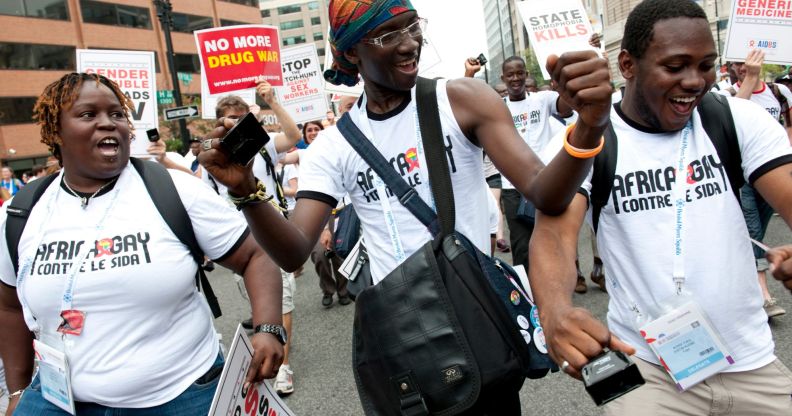
Protestors in Saint Lucia condemning the nation's homosexuality laws in 2012.

Protestors in Saint Lucia condemning the nation’s homosexuality laws in 2012. (Getty)

A Saint Lucia court has struck down a set of laws criminalising homosexuality, in a major win for LGBTQ+ rights in the Caribbean.

Judges in the eastern Caribbean nation ruled on Tuesday (29 July) that laws banning so-called “gross indecency” and “buggery” were unconstitutional.

The High Court of Saint Lucia argued that the colonial-era laws unfairly targeted LGBTQ+ people and contravene fundamental human rights, including rights to privacy, freedom of expression, and protection from discrimination.

It is now the fifth country in the Eastern Caribbean region to decriminalise same-sex activity after Antigua & Barbuda, Barbados, Dominica, and St Kitts & Nevis.

Only five countries in the Western Hemisphere continue to ban private, consensual same-sex activity – Grenada, Guyana, Jamaica, and Saint Vincent and the Grenadines. Trinidad and Tobago decriminalised homosexuality in 2018, but reversed its decision in March 2025.

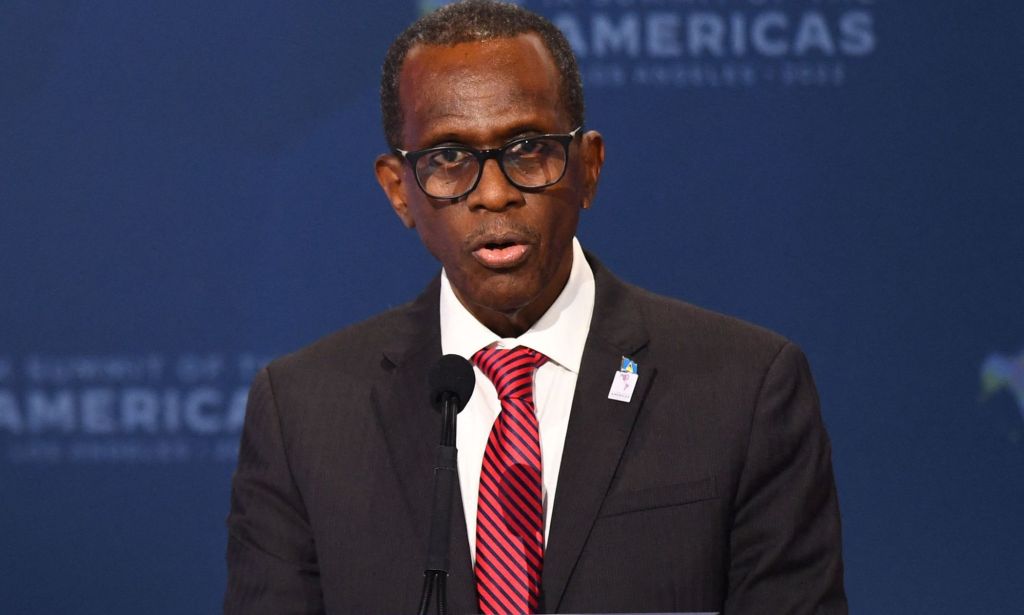
Saint Lucia prime minister, Philip J Pierre.
Saint Lucia prime minister, Philip J Pierre. (Getty)

Téa Braun, CEO of the Human Dignity Trust, told PinkNews that the ruling marked “another significant legal milestone” for the LGBTQ+ community both in the Caribbean and worldwide.

“[The ruling] demonstrates the importance of the courts when lawmakers fail to respect fundamental human rights,” Braun continued. “We extend our heartfelt congratulations to the litigants and activists who have tirelessly pursued justice.”

Saint Lucia’s anti-gay laws, which were inherited from the British during the colonial period, were retained in 2004 after the island nation updated its Criminal Code. Those found in violation of the law faced up to 10 years’ imprisonment.

In 2021, a human rights tribunal found that laws criminalising homosexuality violate international fundamental human rights laws.

You may like to watch

Issued by the Inter-American Commission on Human Rights, the ruling found that the Jamaican government had violated multiple international laws by criminalising homosexuality in the nation.

Despite the ruling, homosexuality is still illegal in the region, which is among one of the worst for LGBTQ+ rights, according to Equaldex.

More: https://www.thepinknews.com/2025/07/30/saint-lucia-court-homosexuality/

Hong Kong court rules sex-segregated public conveniences breach equality and privacy rights

Hong Kong court rules sex-segregated public conveniences breach equality and privacy rights

A Hong Kong court ruled Wednesday that the segregation of the sexes in public conveniences is unconstitutional for its disproportionate interference with transgender individuals’ right to privacy and equality. Judge Russell Coleman directed the government to review its regulations on the gender recognition scheme relating to access to public conveniences within 12 months.

The government conceded that the segregation by biological sex at birth is unconstitutional after the city’s top court ruling on another gender marker case. The only dispute that remained standing was whether the court could adopt a proper remedial construction to the statute.

Senior Counsel Tim Parker for the applicant argued that the law should recognize the real-life experience of a transgender individual and allow them, whose real-life experience is certified by a psychiatrist through a gender identity letter, to use washrooms conforming to their identified gender. Judge Coleman rejected this proposition, ruling that the government and the legislature, rather than the court, are in a better position to draw the line between male and female at law.

Judge Coleman also rejected the government’s proposal to recognize the gender marker on the individual’s HKID card for the purpose of accessing a public convenience. He reasoned that the proposal risks conflating the government’s policy with the law. He further reiterated that the gender marker on the HKID card is not conclusive on the legal recognition of a person’s gender and the associated rights under the law.

The judicial review concerns a criminal offense under the Public Conveniences (Conduct and Behaviour) Regulation, which prohibits any individuals from using opposite-sex public washrooms. In January 2023, the applicant challenged that the segregation based on biological sex at birth infringed on transgender individuals’ rights to equality and privacy.

Local transgender advocacy group Quarks welcomed the ruling. In a statement, the group urges the government to abolish the discriminatory statute and legislate for gender recognition.

In February 2023, the city’s top court ruled in another case that the requirement for full sex re-assignment surgery to alter gender marker on HKID card is unconstitutional. The court held that requiring transgender individuals to undergo the most invasive surgical intervention was disproportionate because it may not be medically necessary in the range of treatments for gender dysphoria.

In April 2024, the government revised its policy to allow pre-operative transgender individuals to change their sex entry. Nonetheless, the policy still requires the applicants to have received hormonal treatment for two years and submit blood test reports when required to have their identified gender reflected on their HKID card.

The post Hong Kong court rules sex-segregated public conveniences breach equality and privacy rights appeared first on JURIST – News.

USA: Supreme Court upholds Tennessee’s law banning gender-affirming care for youth

USA: Supreme Court upholds Tennessee’s law banning gender-affirming care for youth

POLICY NEWS       Supreme Court upholds Tennessee’s law banning gender-affirming care for youth   Today, the Supreme Court upheld Tennessee’s law banning access to gender-affirming care for transgender youth. Williams Institute research shows that an estimated 1.6 million people ages 13 and older in the U.S. identify as transgender. The decision impacts the 112,400 transgender youth ages 13-17 who live in Tennessee and 24 other states that have similar laws banning access to gender-affirming care for transgender youth.     While impacting thousands of transgender youth and their families, the decision does not affect access to care for the youth living in states that do not ban access to hormones and puberty blockers. Many of these states have shield laws that protect access to care for youth and their families and safeguard providers who offer care. These states could offer access to care for transgender youth living in states with bans who can travel to them. Research shows that these bans deny young people access to care endorsed by every major medical association in the U.S. and negatively impact providers. In response to a recent Williams Institute survey, 29% of providers in states without bans reported that they had received threats to their workplace related to the provision of gender-affirming care, and 26% had been personally threatened online. Over half (55%) of providers have experienced a recent increased demand for care among youth, and many reported long waitlists. Today’s decision upholds state laws that ban access to gender-affirming care for youth. However, it was decided on narrow grounds, which leaves open avenues to legally challenge other laws and policies that limit transgender people’s participation in areas such as the military, education, and health care.   For example, the majority opinion leaves open the question of whether sufficient evidence of animus toward transgender people by the government could result in a different outcome. It also did not determine whether classifications based on transgender status are entitled to heightened scrutiny, allowing Equal Protection challenges to other forms of discrimination against transgender people to proceed. The Court’s decision extends only to laws that implicate both minors and medical care. The opinion also doesn’t impact other constitutional arguments, including the fundamental rights of parents to make decisions about their children’s medical care, the responsibility to protect incarcerated transgender people, or the First Amendment rights to obtaining a valid passport and fully participating in public education. Additionally, Justice Alito stated in his concurring opinion that Bostock is now “entitled to the staunch protection we give statutory interpretation decisions,” so any efforts to overturn workplace nondiscrimination protections for transgender people are likely to fail. Notably, the Justices’ written opinions depart from language used in executive actions by the Trump administration, which denies the existence of transgender people or portrays them as trying to commit fraud in the military context. In its first sentence, the majority opinion cites the Williams Institute’s estimate of the transgender population and includes references that use respectful language, an marked departure from the administration’s rhetoric regarding transgender people.  “Today’s decision will directly impact the health care decisions of thousands of transgender youth and their families,” said Christy Mallory, Interim Executive Director and Legal Director at the Williams Institute. “But based on research and the personal stories of transgender people, the Supreme Court affirmed that transgender people of all ages exist, they have experienced discrimination, and constitutional and other legal arguments remain available to challenge such discrimination.”   Rectangle: Rounded Corners: Read the Decision
Alternate text
The Williams Institute at UCLA School of Law is an academic research institute dedicated to conducting rigorous, independent research on sexual orientation and gender identity law and public policy.

________________________________________________________

The US Supreme Court issued an opinion on Wednesday upholding a 2023 Tennessee law restricting minors’ access to gender affirming care in the state.

The 2023 Tennessee law, SB1, prohibits medical procedures that alter a minor’s hormonal balance, remove a minor’s sex organs, or otherwise change a minor’s physical appearance when undergone with purpose of enabling a minor to identify with an identity inconsistent with the minor’s sex, or treating discomfort from discordance between the minor’s assigned sex and asserted identity. The law emphasizes that it only prohibits the medical procedures when the purpose is for gender-affirming reasons.

Shortly before the law was supposed to take effect in 2023, three Tennessee families who have transgender children and one physician brought suit against the state of Tennessee. The plaintiffs argued that the Tennessee law violated their equal protection rights under the Fourteenth Amendment because the law classifies on the basis of sex and discriminates against transgender persons. The Biden Administration ended up joining the plaintiffs in their action, and the case later became known as US v. Skrmetti.

A district court originally blocked the law, calling it unconstitutional, but in a tight decision, the US Court of Appeals for the Sixth Circuit reversed, allowing the law to become effective as proceedings continued. The Supreme Court approved the plaintiff’s writ of certiorari and, in a 6-3 decision, upheld the law. Chief Justice John Roberts’ majority opinion, which is joined in or concurred with by all of the conservative justices, states that the Court has decided this law sets age- and use-based limits on medical care and exercises the states’ authority to regulate medicine. Therefore, this law must be reviewed under rational basis review, which passes.

Chief Justice Roberts concludes his opinion with a statement on the Supreme Court’s role in policy debates in the US:

The voices in these debates raise sincere concerns; the implications for all are profound. The Equal Protection Clause does not resolve these disagreements. Nor does it afford us license to decide them as we see best. Our role is not “to judge the wisdom, fairness, or logic” of the law before us, but only to ensure that it does not violate the equal protection guarantee of the Fourteenth Amendment. Having concluded it does not, we leave questions regarding its policy to the people, their elected representatives, and the democratic process.

In a dissent joined by the other two liberal justices, Elena Kagan and Ketanji Brown Jackson, Justice Sonia Sotomayor writes that she wholly disagrees with the majority’s use of rational basis review to analyze this law. She states this law discriminates against transgender adolescents and should have been held to intermediate scrutiny for this reason. Justice Sotomayor warns of the dangers that leaving the rights of transgender persons in the hands of a “political whim.”

The decision comes amid the strongly polarized debate over transgender rights in the US after multiple states have enacted similar laws to SB1 and laws relating to the restriction of transgender athletes’ participation in women’s sports.

The post US Supreme Court upholds Tennessee law prohibiting gender-affirming care for minors appeared first on JURIST – News.

Colombia urged to close gap between LGBT rights laws and lived realities amid rising violence

Colombia urged to close gap between LGBT rights laws and lived realities amid rising violence

While Colombia has made notable progress in protecting the rights of lesbian, gay, bisexual, transgender and gender-diverse (LGBT) individuals, the country must urgently address widespread discrimination and violence still faced by these communities, a UN human rights expert has warned Friday.

The UN Independent Expert on protection against violence and discrimination based on sexual orientation and gender identity, Graeme Reid, concluded a fact-finding mission across multiple Colombian cities. In his statement, Reid praised the government’s commitment to equality and its legal reforms, but emphasized the stark disconnect between institutional progress and the daily lived experiences of LGBT individuals.

“Despite these positive developments, many LGBT people continue to experience discrimination and violence in their daily lives,” Reid said. “This is particularly acute for trans women and for those who face intersecting forms of marginalization as migrants, Indigenous persons, youth, or persons with disabilities.”

Reid’s visit comes at a time when other international bodies are raising serious concerns about the broader human rights situation in Colombia. A recent report from the UN Committee on Enforced Disappearances revealed that enforced disappearances remain a systemic issue—especially in regions under the control of illegal armed groups—often affecting migrants, activists, and community leaders, including LGBT advocates.

Similarly, a November 2024 report by ABColombia and Colombian grassroots organizations shed light on the disproportionate violence faced by women, girls, and the LGBTQI+ community. The report highlighted how decades of conflict have embedded gender-based violence into everyday life, with Afro-Colombian and Indigenous women particularly affected. It noted the use of extreme cruelty in attacks on LGBT individuals and the alarming number of women human rights defenders killed in recent years.

“Violence against those who stand up for equality—including LGBT advocates—is not only a tragedy but a significant barrier to progress,” Reid said. He underscored the importance of comprehensive data collection, civil society collaboration, and policies that go beyond legislation to address structural inequality and social stigma.

Reid’s full findings will be presented to the UN Human Rights Council in June 2026.

The post Colombia urged to close gap between LGBT rights laws and lived realities amid rising violence appeared first on JURIST – News.

Advocacy group says major social media platforms failing LGBTQ+ users

Advocacy group says major social media platforms failing LGBTQ+ users

Major social media platforms, including TikTok, Instagram, and X (formerly Twitter), are failing to adequately protect LGBTQ+ users from hate, harassment, and disinformation, according to the 2025 Social Media Safety Index released Tuesday by the LGBTQ+ advocacy group GLAAD.

The annual report’s fifth edition, which evaluates the performance of major platforms on 14 LGBTQ-specific safety indicators and remains the most comprehensive benchmark of LGBTQ+ safety across major digital platforms, warns that platforms are not only neglecting their responsibilities but, in some cases, have actively weakened existing safety protocols. GLAAD specifically cited Meta’s Instagram and Facebook, YouTube, and X for draconian policy reversals that enable the spread of anti-LGBTQ rhetoric and contribute to real-world harms.

In the report’s foreword, GLAAD president Sarah Kate Ellis said: “In many cases, platforms are inviting harm … They are prioritizing engagement and controversy over safety, especially for trans and nonbinary communities.”

TikTok received the highest score among evaluated platforms but still failed to provide full transparency or robust user control regarding LGBTQ content and privacy. X received the lowest score (just 30 out of 100) due to its reliance on self-reporting, limited policy enforcement, and lack of workforce diversity disclosures.

GLAAD emphasized that several companies rolled back policies that once protected LGBTQ+ users from targeted misgendering, deadnaming, and “conversion therapy” content. Meta, in particular, updated its “Hateful Conduct” policy to allow harmful rhetoric under the guise of political or religious expression, a move GLAAD condemned as “dangerous and dehumanizing.” YouTube also quietly removed “gender identity and expression” from its hate speech policy without public explanation.

The report underscored how such policy changes correlate with a documented rise in online hate and disinformation targeting LGBTQ+ individuals. GLAAD warned that these trends often lead to “offline consequences,” including violence and mental health impacts for marginalized users. The Index further found that legitimate LGBTQ+ content continues to be disproportionately suppressed through wrongful account removals, demonetization, and shadow-banning.

In response, GLAAD urged tech companies to restore and strengthen LGBTQ safety policies, improve moderator training across all languages and cultural contexts, and publish detailed enforcement and diversity data. The organization also called for collaboration with independent researchers to enhance transparency and accountability.

“Social media should be a space for connection and community, not a driver of discrimination,” Ellis said. “Platforms must act now to reverse course and prioritize the dignity, safety, and rights of LGBTQ people.”

With mounting attacks on LGBTQ+ human rights across the world, the LGBTQ+ community remains vulnerable. In April, Hungary’s National Assembly passed an amendment to the Fundamental Law of Hungary that bans LGBTQ+ public events. In February, Amnesty International denounced Tunisian authorities’ increased arrests of LGBTI individuals. The organization reported that at least 84 individuals, mostly gay men and transgender women, have been arrested since September 2024.

The post Advocacy group says major social media platforms failing LGBTQ+ users appeared first on JURIST – News.

English Football Association bans transgender athletes from women’s football

English Football Association bans transgender athletes from women’s football

The English Football Association on Thursday stated that transgender women will no longer be allowed to play women’s football in England, announcing a change in its policy following a ruling by the UK Supreme Court last month.

The Football Association’s new policy will take effect on June 1. The association stated: “This is a complex subject, and our position has always been that if there was a material change in law, science, or the operation of the policy in grassroots football then we would review it and change it if necessary.”

The policy update is a response to the UK Supreme Court’s ruling on April 16, 2025, which stated that the term “woman” under the Equality Act 2010 referred to biological sex. This excludes individuals who had legally changed their gender to female through a Gender Recognition Certificate (GRC). Transgender people remain protected on the grounds of gender reassignment under Section 4 of the Equality Act. Additionally, they may invoke the provisions on direct discrimination and harassment as well as indirect discrimination. The court stated that “a certificated sex reading is not required to give them those protections.”

The Supreme Court emphasized that the ruling was only interpreting the Equality Act, stating:

It is not the role of the court to adjudicate on the arguments in the public domain on the meaning of gender or sex, nor is it to define the meaning of the word “woman” other than when it is used in the provisions of the EA 2010. It has a more limited role which does not involve making policy.

The UK’s Sports Councils previously expressed concerns over the fairness of transgender inclusion in domestic sport. Other sporting organizations, such as British Rowing, had already excluded transgender athletes from competing in the women’s category before the Supreme Court’s ruling.

The charity Stonewall criticized the Football Association’s decision on Thursday. The organization stated:

Trans people remain protected under the law and need to be treated with dignity and respect – and this announcement lacks any detail on how those obligations will be honoured. Hasty decisions, without a full understanding of the practical implications and before any changes to guidance have gone through the necessary consultation and parliamentary process, isn’t the answer.

The post English Football Association bans transgender athletes from women’s football appeared first on JURIST – News.